Sports & Leisure · Sports & Cycling · Sports Equipment
Butterfly (Tamasu)
Butterfly Sriver
Since 1967 · 59 years to 2026 · First made in Suginami, Japan
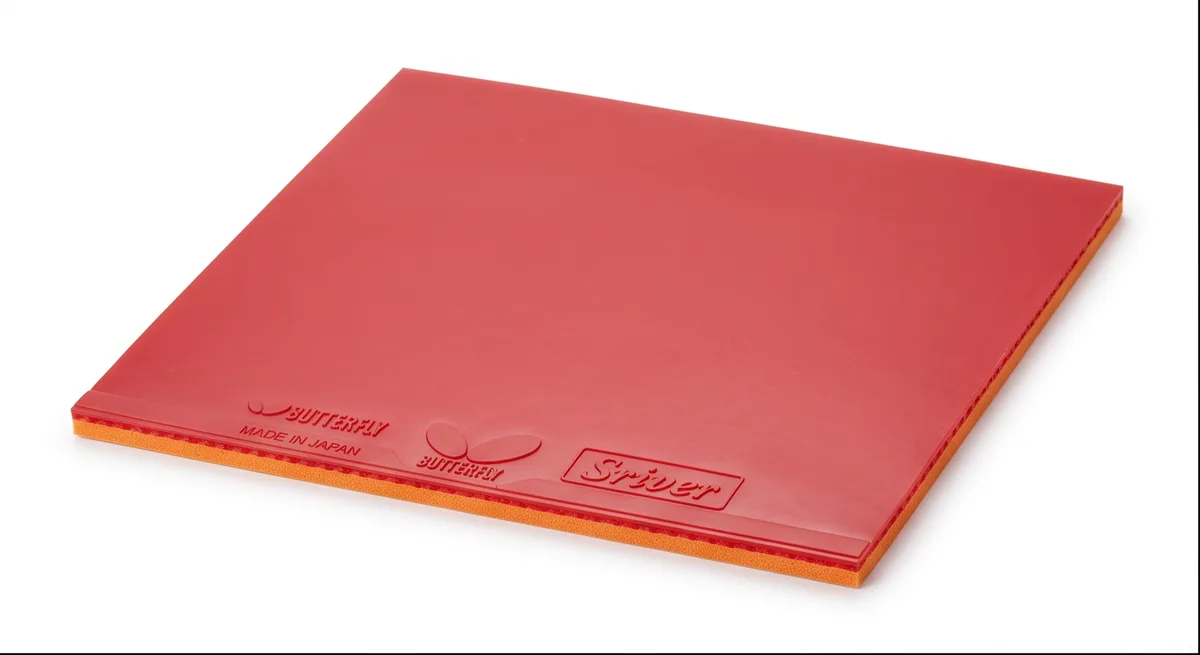
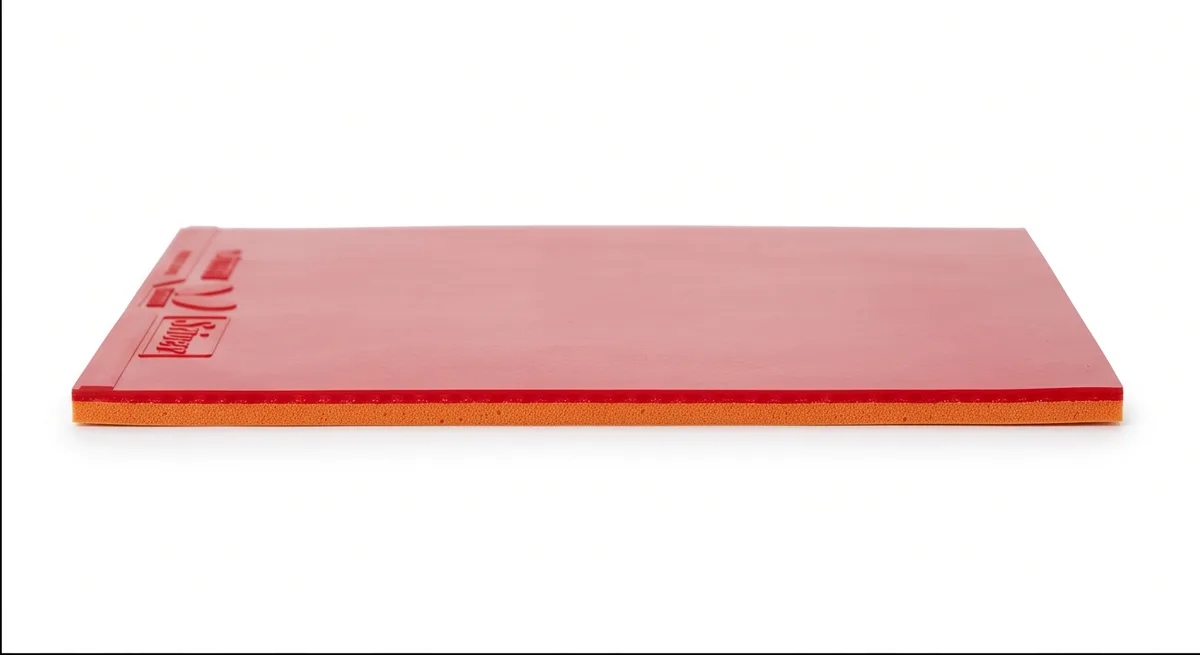
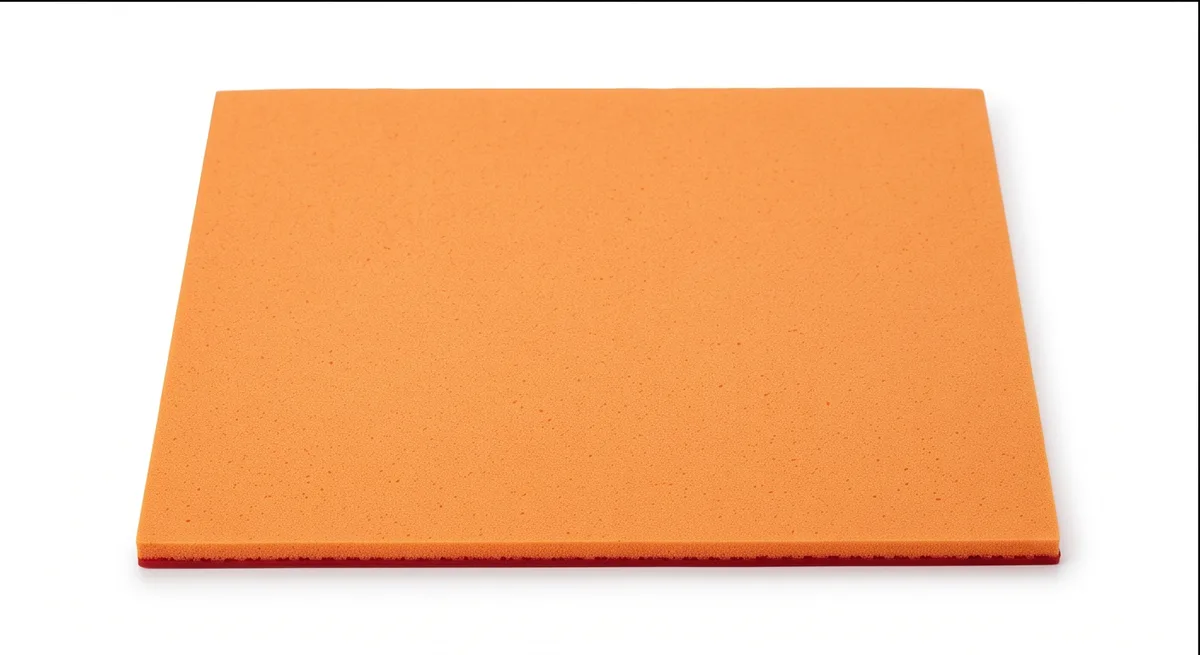
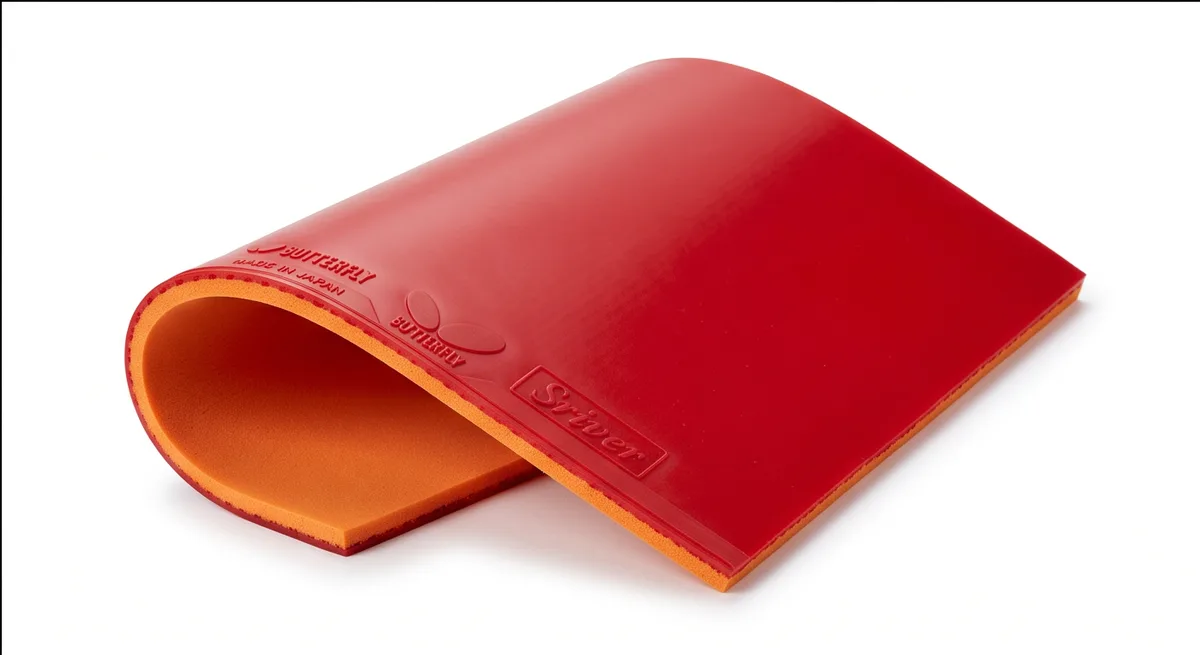
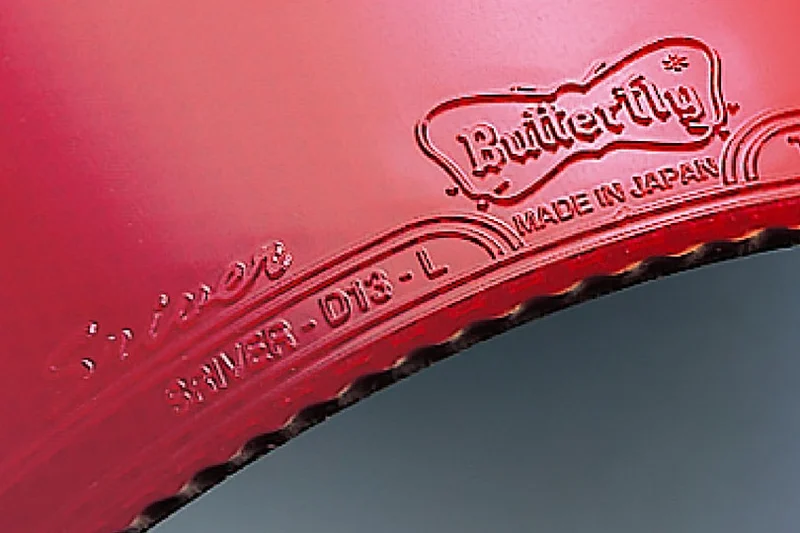
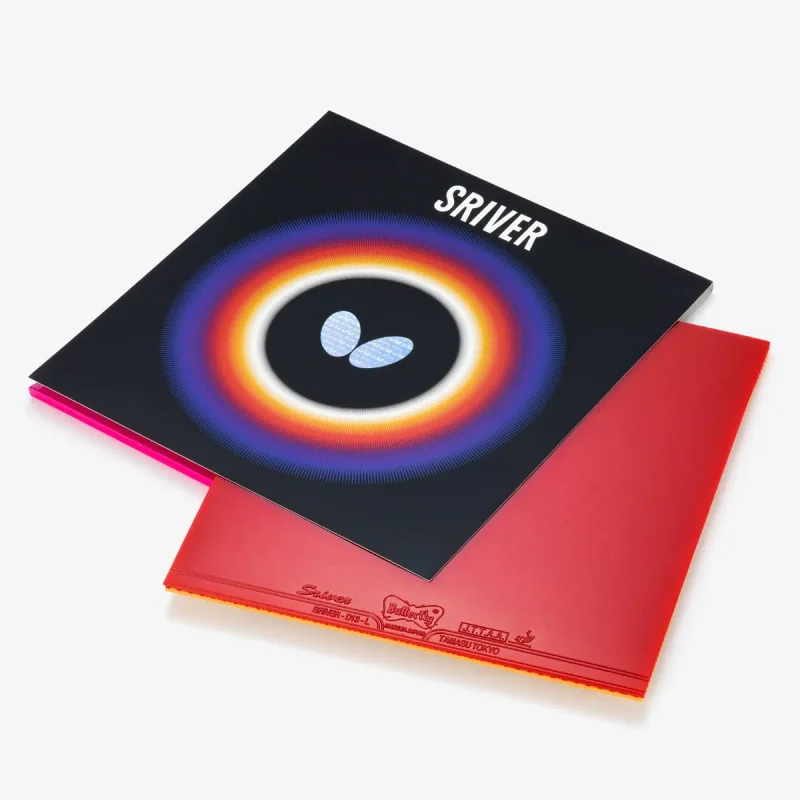
Sriver is a rubber for the face of a table-tennis bat. It is a thin sheet of red or black synthetic rubber, smooth on its playing side, with its pimples turned inward onto a layer of sponge; it is sold square in a sealed packet, and the player trims it to the outline of the blade and glues it on. Along one edge runs a moulded border carrying the Butterfly mark, the words Made in Japan and the name Sriver in script.
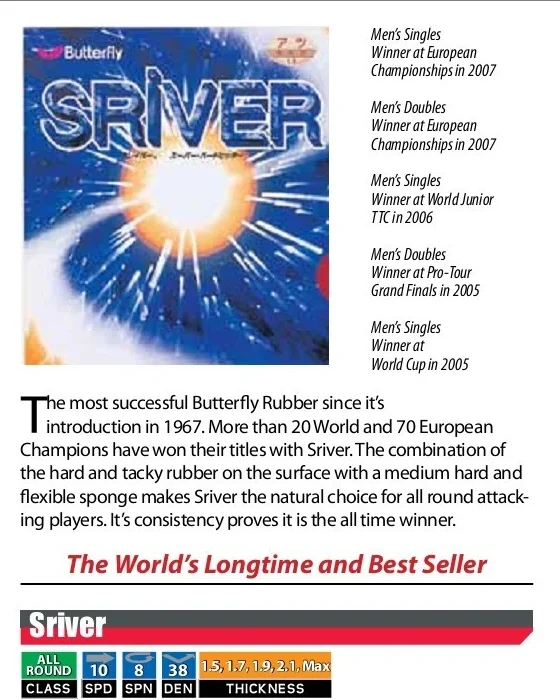
Its maker, Tamasu, was founded in 1950 by Hikosuke Tamasu, a national mixed-doubles champion who had found Japanese rubbers so poor that after the war he played with foreign ones obtained through the occupation forces. Rubbers with inverted pimples over sponge spread through the game in the 1950s. In 1967 Tamasu released Sriver, whose top sheet was made of a highly elastic synthetic rubber; the firm says this improved the rubber's performance dramatically.
It did not sell at first. The maker records that the market response was weaker than expected, and that Sriver made its name in Hungary and then elsewhere in Europe, where in 1973 Tamasu opened its first overseas subsidiary. Until the high-tension rubbers of the late 1990s, Japanese Wikipedia says, it was the standard rubber of attacking players and won title after title. A Butterfly catalogue of 2011 counted more than twenty world and seventy European champions who had used it.
Softer versions followed, with sponges of different hardness, and in 1997 Tamasu's own Bryce began the high-tension era that displaced it at the top of the game. For years Butterfly rated the speed of every other rubber against Sriver's, which was set at ten. The original has outlived most of its successors. It is still made in Japan, in red or black and three thicknesses, and is still sold as Butterfly's longtime seller.
Timeline
- 1967 First made · Claimed Butterfly Sriver enters production in Suginami, Japan.
- 1973 Production Tamasu sets up its first overseas subsidiary, Tamasu Butterfly Europa, in Moers, West Germany.
- 1997 Designed Tamasu's Bryce, the first high-tension rubber, begins the generation that ends Sriver's reign as the standard attacking rubber.
Milestones as we found them, not as we've checked them.
From the archive
More like this
-
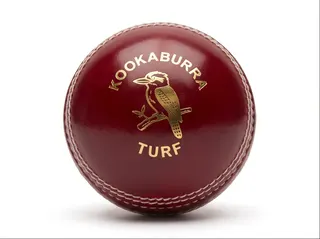 Sports Equipment · since 1946 Kookaburra Turf Cricket Ball The red ball of every Test in Australia since the first post-war series of 1946. Read the entry →
 -
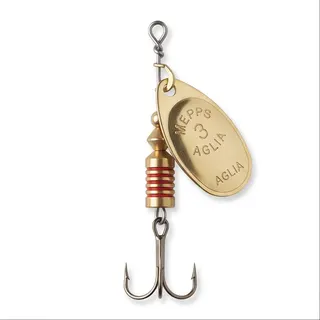 Fishing · since 1938 Mepps Aglia André Meulnart's French spinner of 1938, its stamped oval blade still turning on a steel wire. Read the entry →
 -
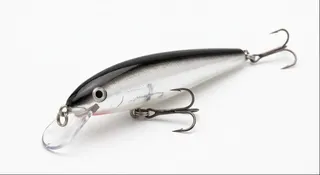 Fishing · since 1936 Rapala Original Floater A balsa minnow that swims as if wounded, first carved from cork in Finland in 1936. Read the entry →
 -
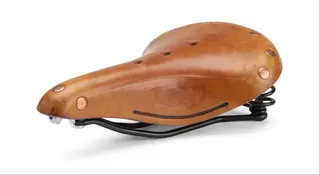 Bikes & Accessories · since 1898 Brooks B17 A slab of leather on a steel frame, broken in by the rider, since 1898. Read the entry →