Kitchen & Dining · Cooking & Baking · Knives & Chopping
Opinel
Opinel No. 6
Since 1897 · 129 years to 2026 · First made in Savoie, France
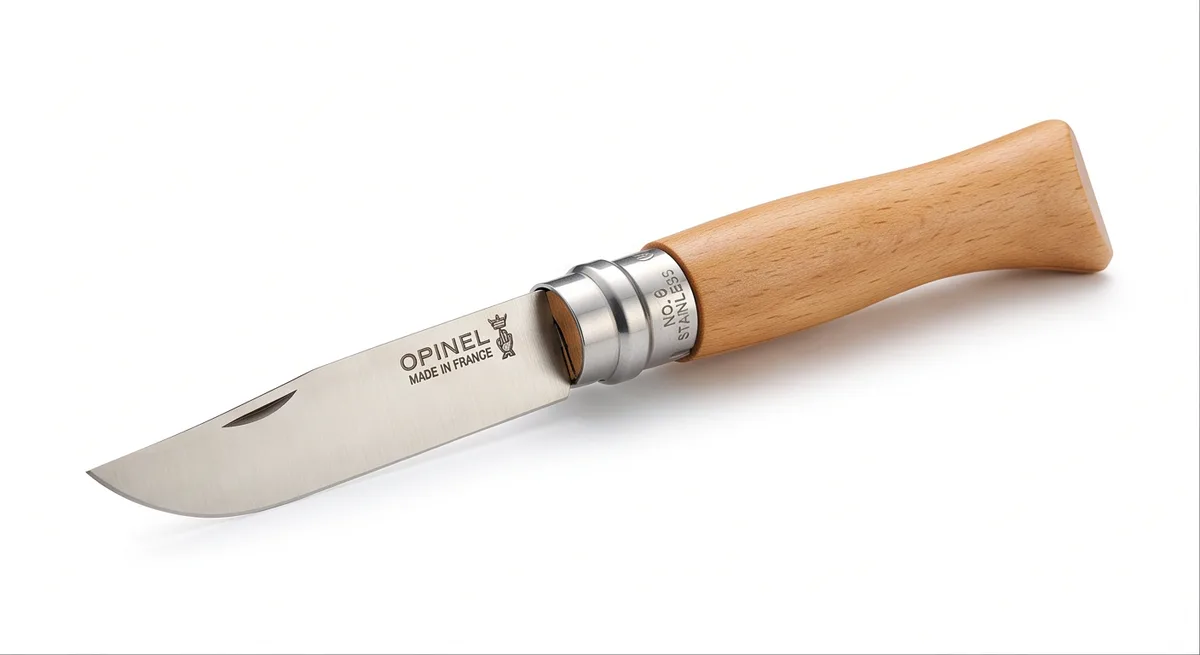
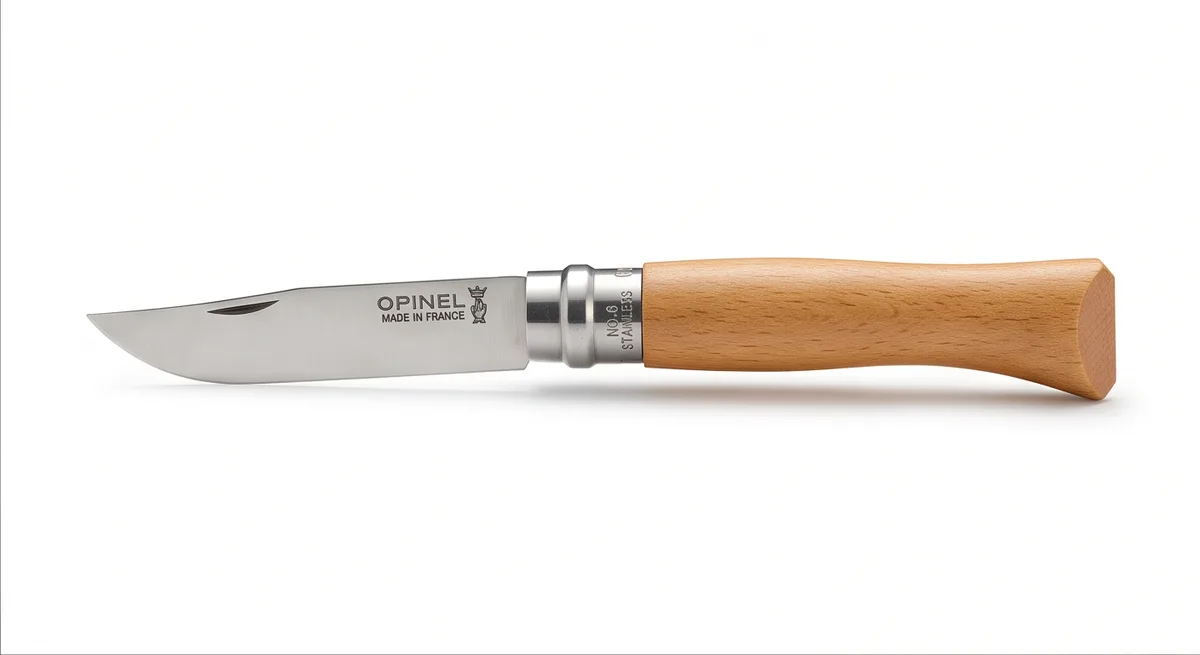
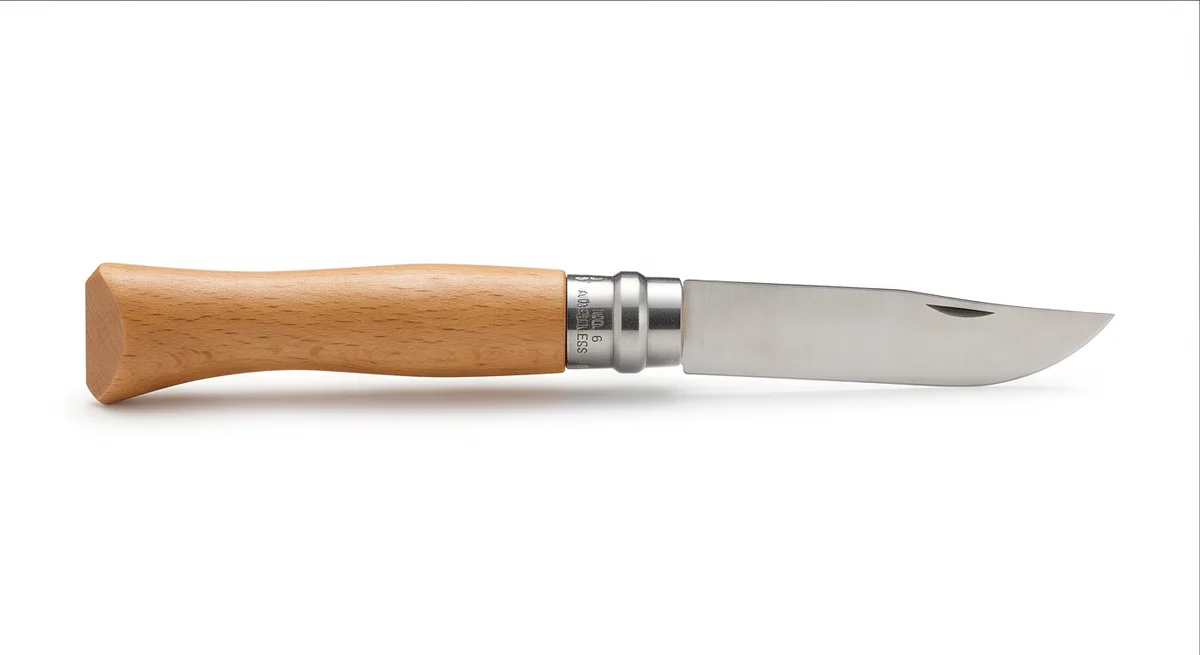
The Opinel No. 6 is a pocket knife of modest dimensions and enduring purpose. With a blade of approximately 4 centimetres, it occupies the lower end of the twelve-size range that Joseph Opinel established in 1897, making it suited to lighter tasks—opening packages, preparing food, minor repairs—and to smaller hands. Its form has altered little since its inception: a wooden handle, typically beech, fitted with a carbon or stainless steel blade ground to a convex profile inspired by the yatagan, a traditional Turkish saber.
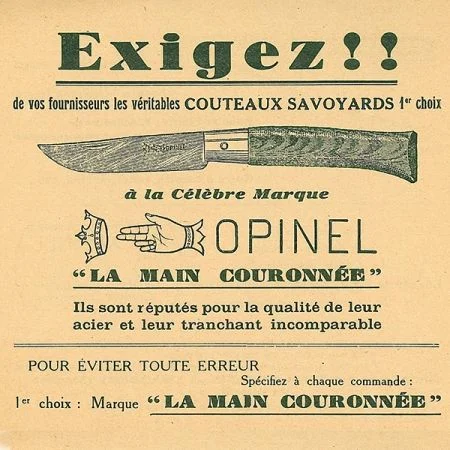
The knife emerged from a specific context. Joseph Opinel, born in 1869 in the Savoyard Alps, inherited his father's edge-tool workshop but rejected pure handcraft in favour of mechanised production. He designed the knife as an object that could be manufactured at scale using modern techniques—a deliberate inversion of his father's values. The result proved popular with the rural working population of the region: farmers, herdsmen, and peasant winemakers found in it a practical, affordable tool. By the early twentieth century, as Joseph expanded his factory and his sons took the business into industrial production, the knife had become embedded in local life. It entered the Larousse dictionary in 1989 and is now recognised as part of Savoyard and French cultural heritage.
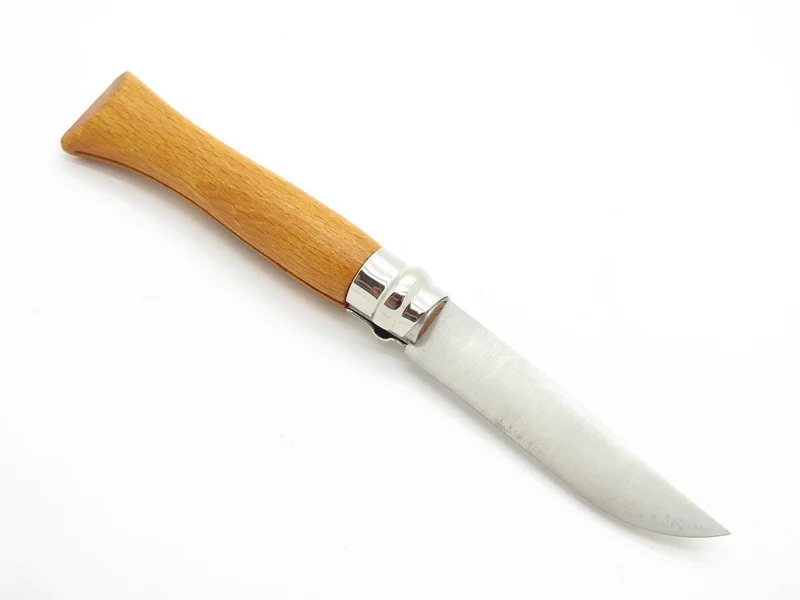
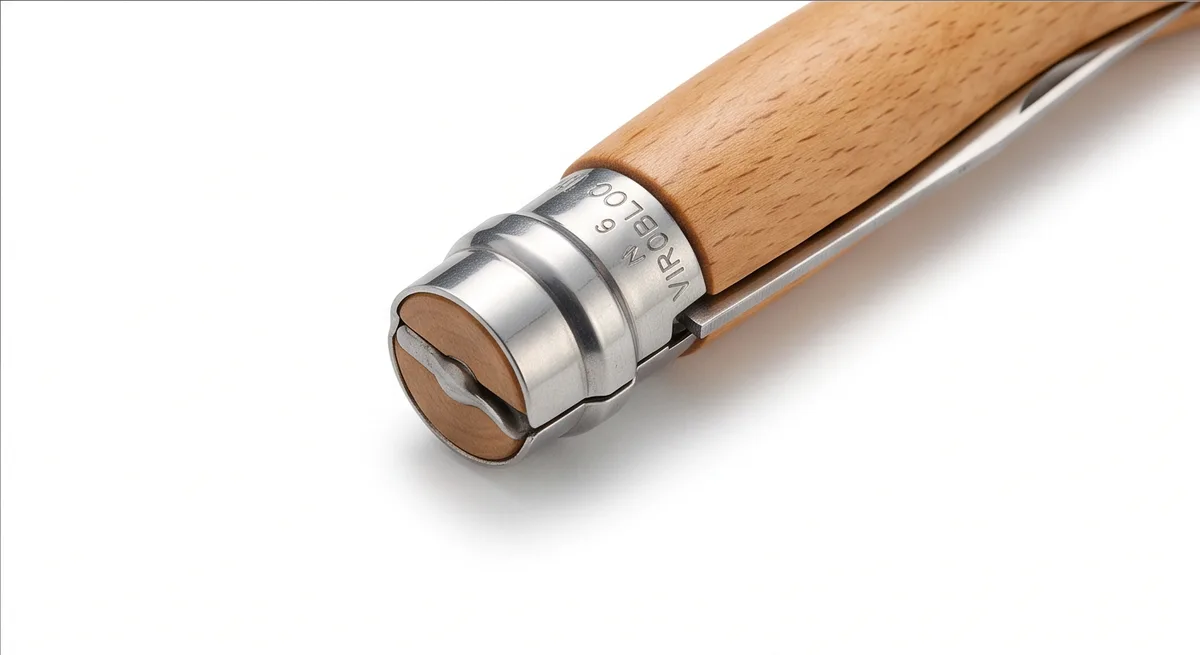
The No. 6's longevity rests partly on its restraint. It makes no claims beyond utility. The Virobloc safety ring, patented by Marcel Opinel in 1955, added a locking mechanism that secured the blade both open and closed, addressing practical concerns without altering the knife's essential character. The choice of materials—beech from managed French forests, Sandvik stainless steel from Sweden—reflects both tradition and pragmatism. The knife has been recognised by the Victoria and Albert Museum as one of the hundred best-designed objects in the world, a status it shares with the Porsche 911 and the Rolex watch. Yet this recognition came late, almost as an afterthought to a century of quiet, continuous use.
Manufactured in Chambéry since 1917, the No. 6 remains in production today under the same family ownership that has guided the company since its founding. It is a tool that has outlasted fashion, designed not to impress but to persist.
Timeline
- 1897 First made · Disputed Opinel No. 6 enters production in Savoie, France.
- 1917 Production Production relocates to Cognin on the outskirts of Chambéry, acquiring an old tannery.
- 1927 Production A modern factory is inaugurated in Chambéry.
- 1955 Designed Marcel Opinel invents the Virobloc safety ring, a double-locking mechanism retrofitted to the No. 6.
- 1989 Recognised The knife enters the Larousse dictionary and is recognised as part of French cultural heritage.
Milestone dates are taken from the production notes behind this entry and have not been checked separately.
From the archive
More like this
-
 Knives & Chopping · since 1897 Opinel No. 10 French pocket knife in continuous production since 1897. Read the entry →
 -
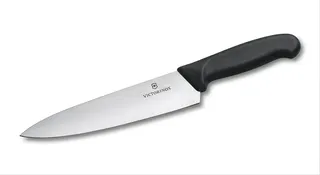 Knives & Chopping · since 1884 Victorinox Fibrox Chef's Knife Swiss cutlery workshop's stamped steel knife, continuously made since 1884. Read the entry →
 -
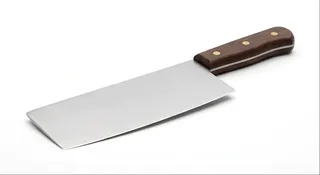 Knives & Chopping · since 1818 Dexter-Russell S5198 Chef's Knife American-made chef's knife, continuously forged since 1818. Read the entry →
 -
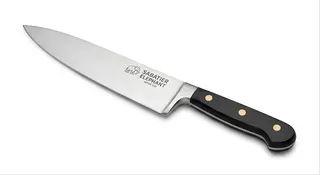 Knives & Chopping · since 1958 Sabatier Elephant Chef's Knife Hand-forged French chef's knife, marked since 1958. Read the entry →