Fashion · Clothing · Jackets & Coats
Swanndri
Swanndri Bush Shirt
Since 1927 · 99 years to 2026 · First made in Taranaki, New Zealand
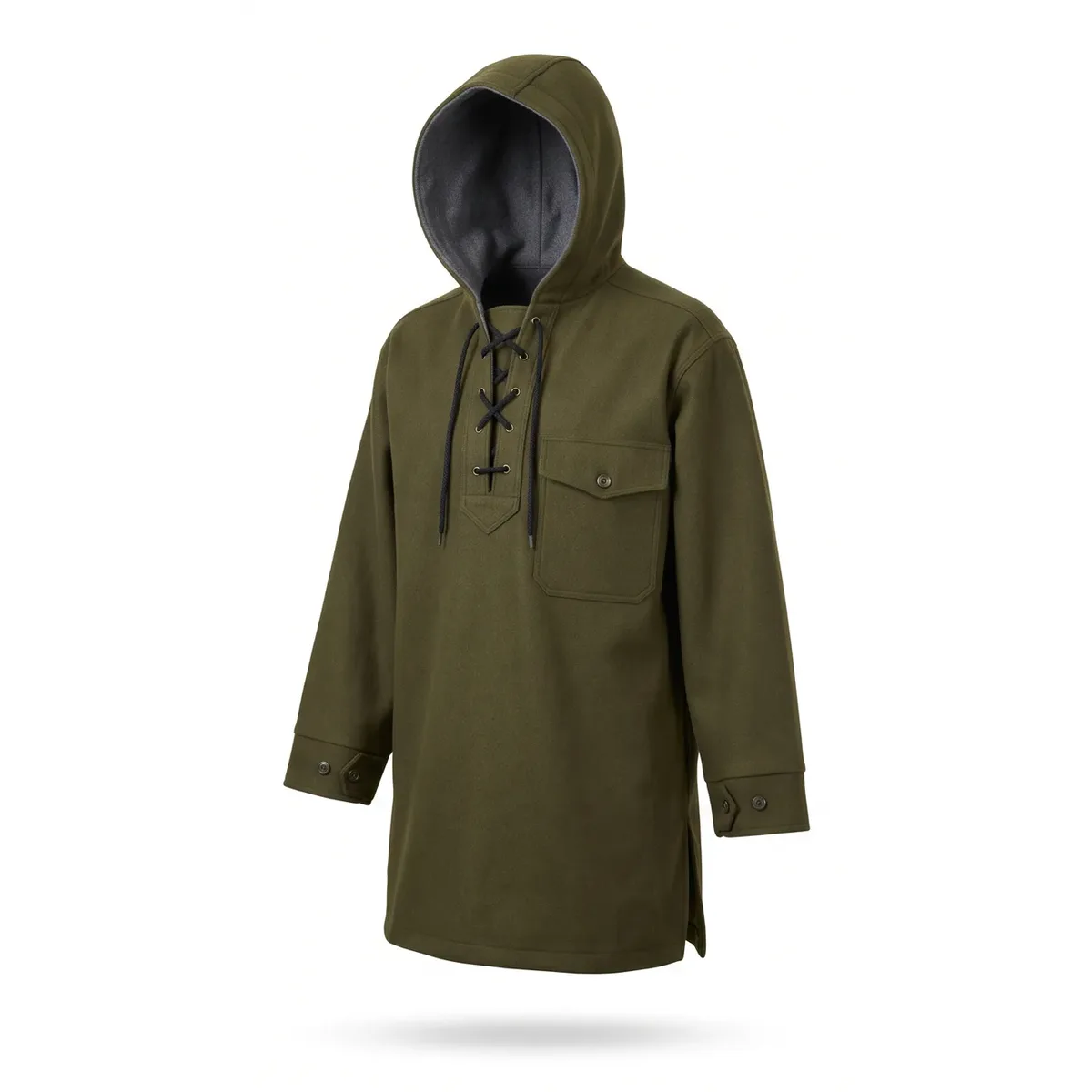
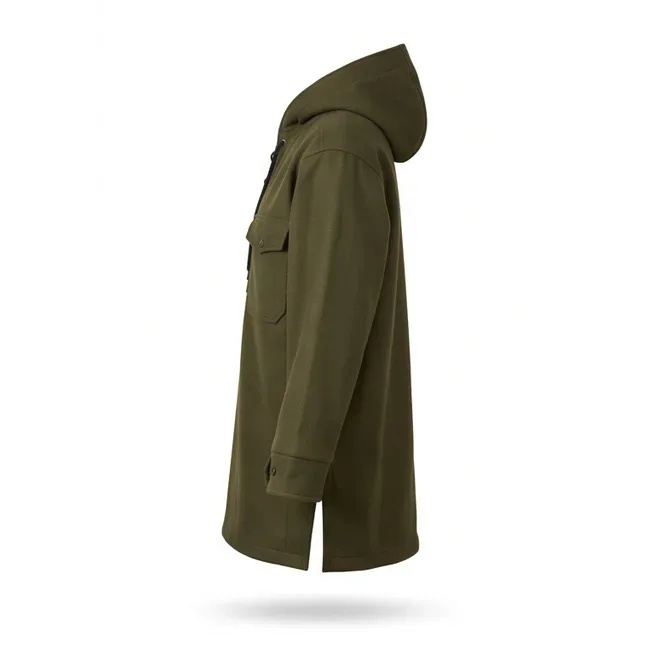
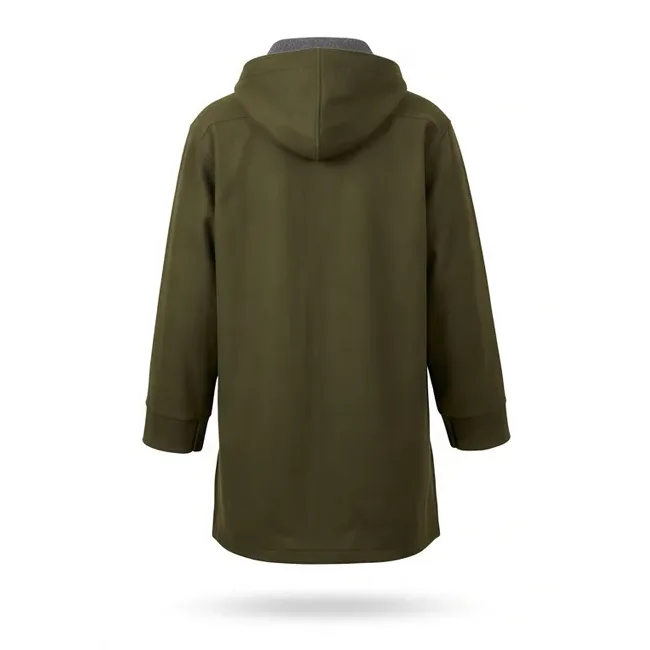
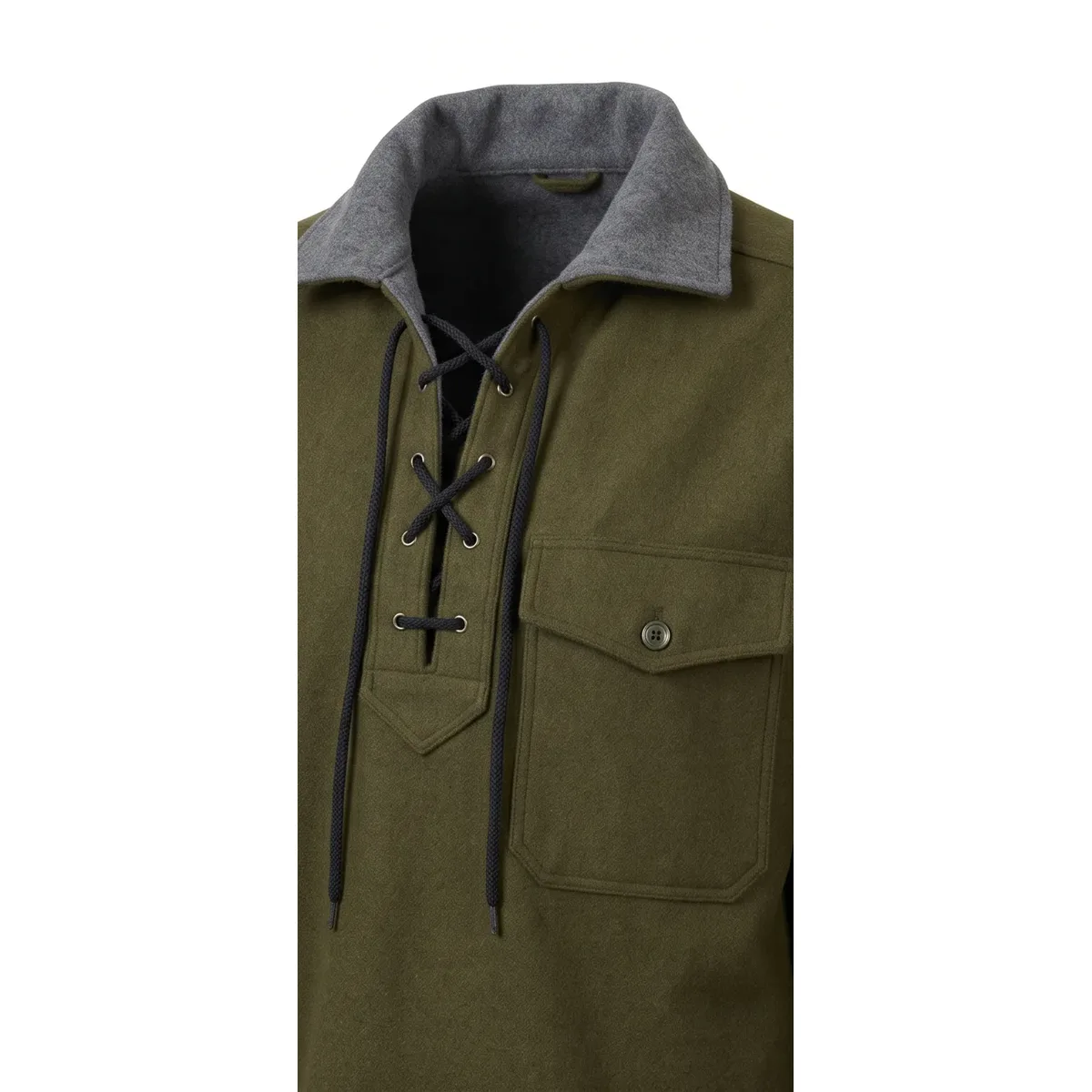
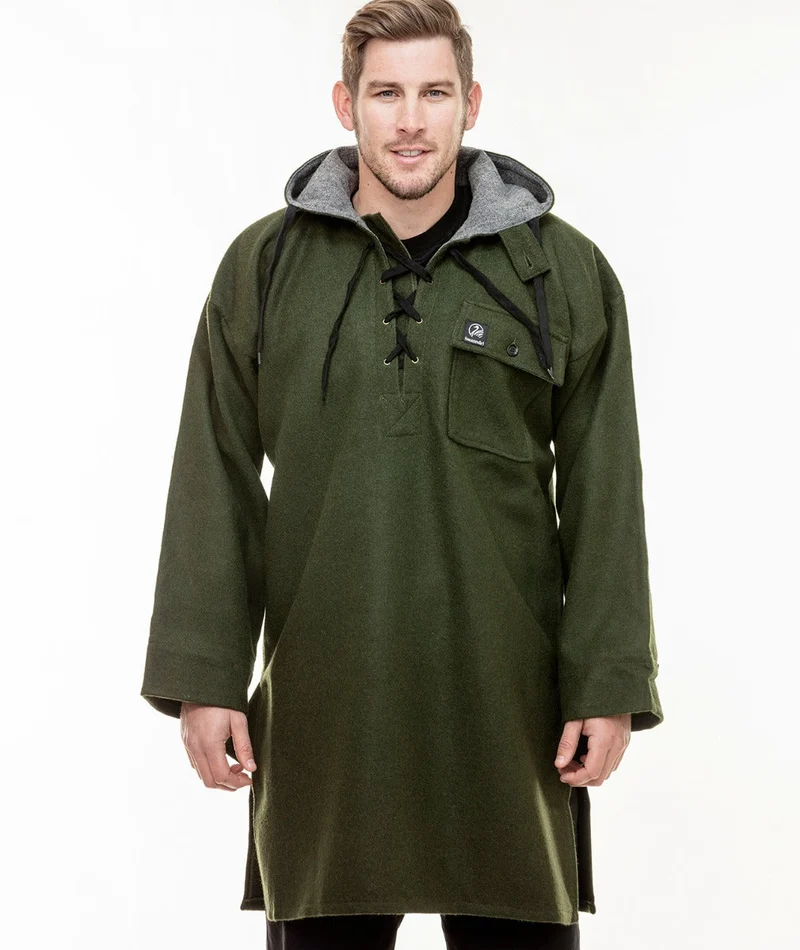
The Swanndri bush shirt is a heavy woollen pullover cut long enough to reach the thigh or knee, worn over everything as a coat. It has no opening down the front: it goes on over the head, and a short laced placket at the chest, with a storm flap, can be loosened when the wearer warms up. A deep hood, lined in grey, sits at the neck, and a single large pocket with a buttoned flap is set on the chest. The body is cut from one piece of cloth, front hem to back hem, with no shoulder seams. The classic colour is olive green; there are also checks in red and black, and blue and black.
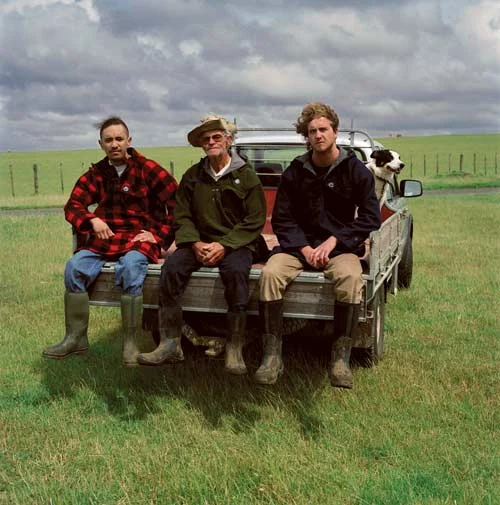
The name came first. William Broome, an English tailor in New Plymouth, registered Swanndri as a trademark two days before Christmas in 1913, for a short-sleeved woollen overshirt soaked in a waterproofing mixture whose recipe he kept secret. Water was meant to run off it as off a swan. Because the soak shrank the cloth unevenly, every shirt was sold in one size.
The garment on this page took shape in 1927, when, according to Te Papa and the company, the tailor John McKendrick added the hood, the laced front and the long sleeves and chose the olive, making it under licence from the Broome family. Accounts differ on when McKendrick took the business over, and the date rests on those two sources. It became the uniform of New Zealand's farmers, hunters and bush workers, many of whom, Te Papa found, call theirs 'Old Faithful'.
Proofing by chemical soak was dropped in favour of dense, pre-shrunk wool, so the shirt now comes in sizes. Since 2005 most Swanndri garments have been made overseas from New Zealand wool; the Original is cut from cloth weighing 475 grams a square metre. Swanndri calls the Original the longest-standing product in its range, and sells it, hood, laces and all, on both sides of the world.
Timeline
- 1913 Designed William Broome, a New Plymouth tailor, registers the Swanndri trademark for a short-sleeved, weatherproofed woollen overshirt.
- 1927 First made · Disputed Swanndri Bush Shirt enters production in Taranaki, New Zealand.
- 1927 Designed John McKendrick adds the hood, laced front and long sleeves and introduces the olive green, according to Te Papa and the company.
- 1964 Ownership McKendrick's firm buys the Swanndri trademark outright from the Broome family.
- 2005 Production Manufacture of most Swanndri garments moves to China; the wool is still grown in New Zealand.
Milestones as we found them, not as we've checked them.
More like this
-
 Jackets & Coats · since 1923 London Fog Trench Coat American waterproof trench coat, refined since 1954. Read the entry →
 -
 Jackets & Coats · since 1920 Filson Tin Cloth Jacket Waxed cotton jacket in continuous production since 1920. Read the entry →
 -
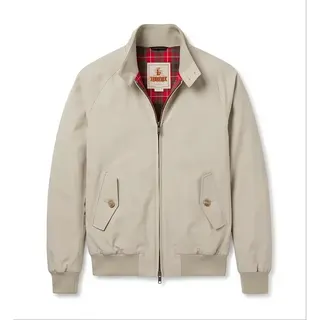 Jackets & Coats · since 1937 Baracuta G9 Harrington A golf jacket from Manchester, named after a character in an American soap. Read the entry →
 -
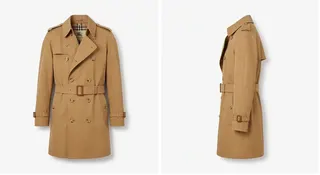 Jackets & Coats · since 1914 Burberry Trench Coat Military necessity transformed into civilian standard, 1914 to present. Read the entry →