Home & Furniture · Furniture · Chairs & Seating
Knoll
Bertoia Diamond Chair
Since 1952 · 74 years to 2026 · First made in Pennsylvania
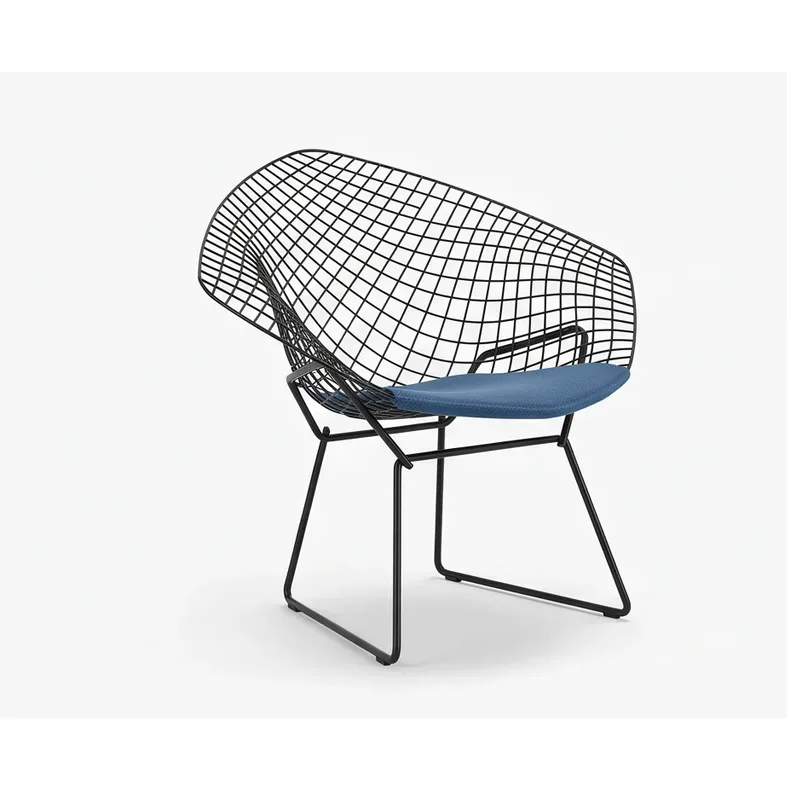
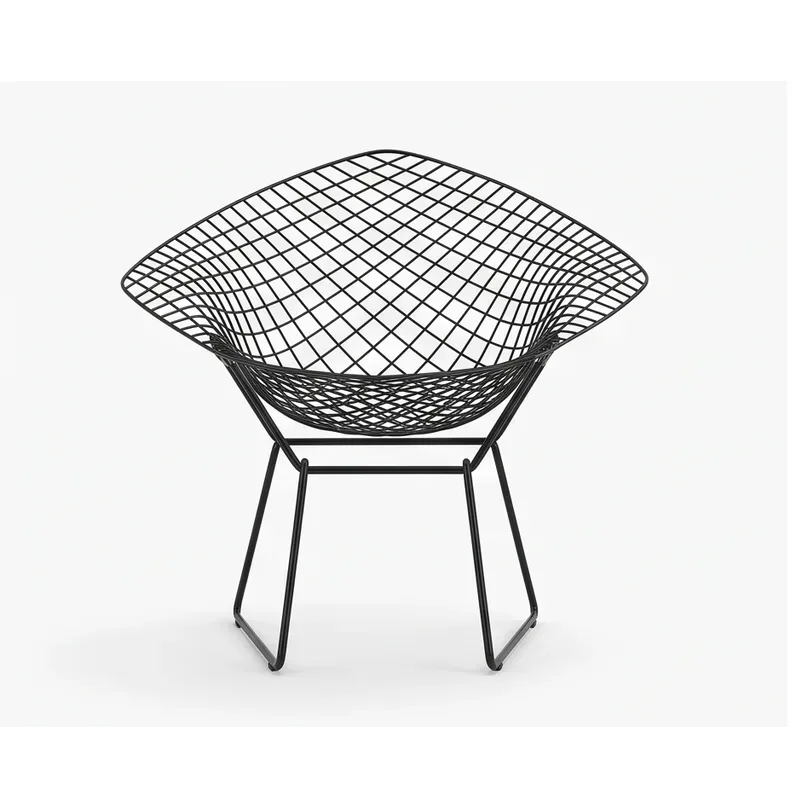
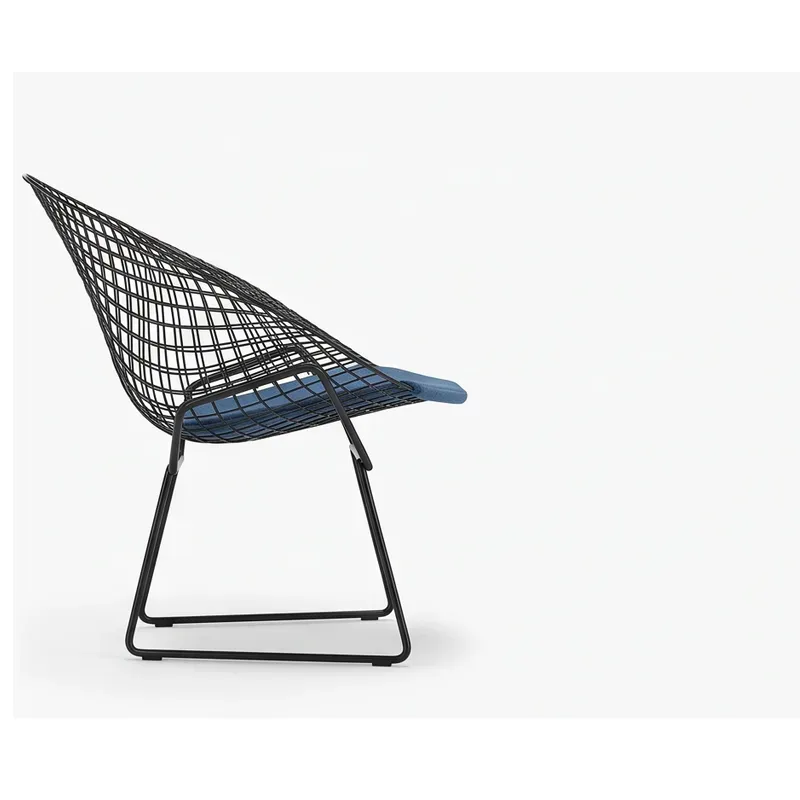
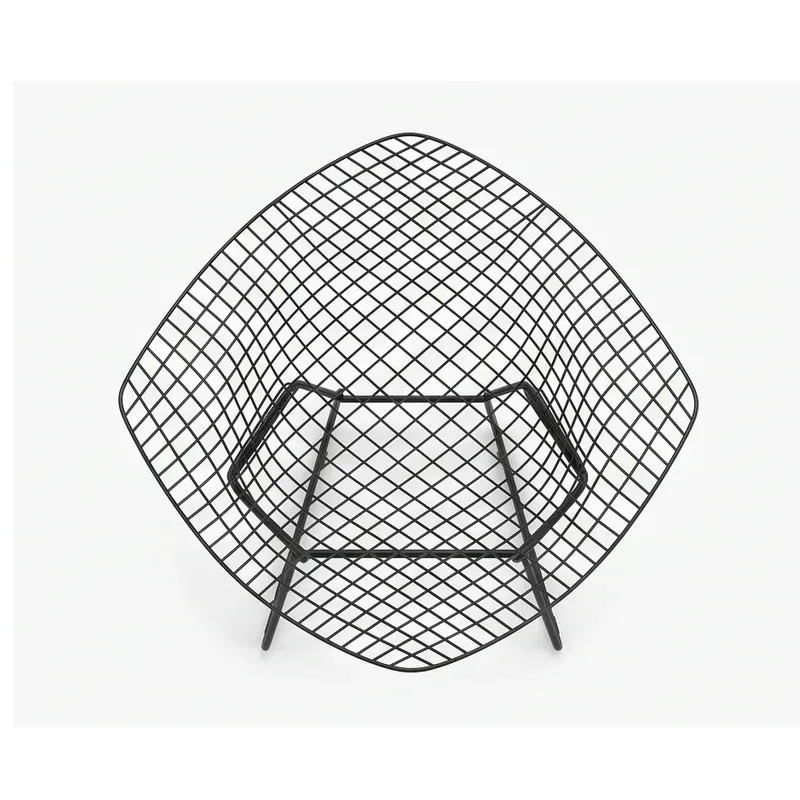
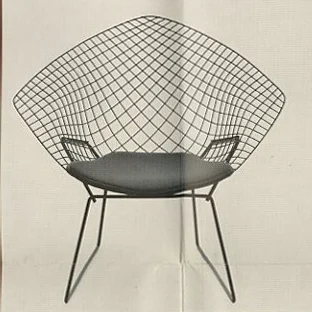
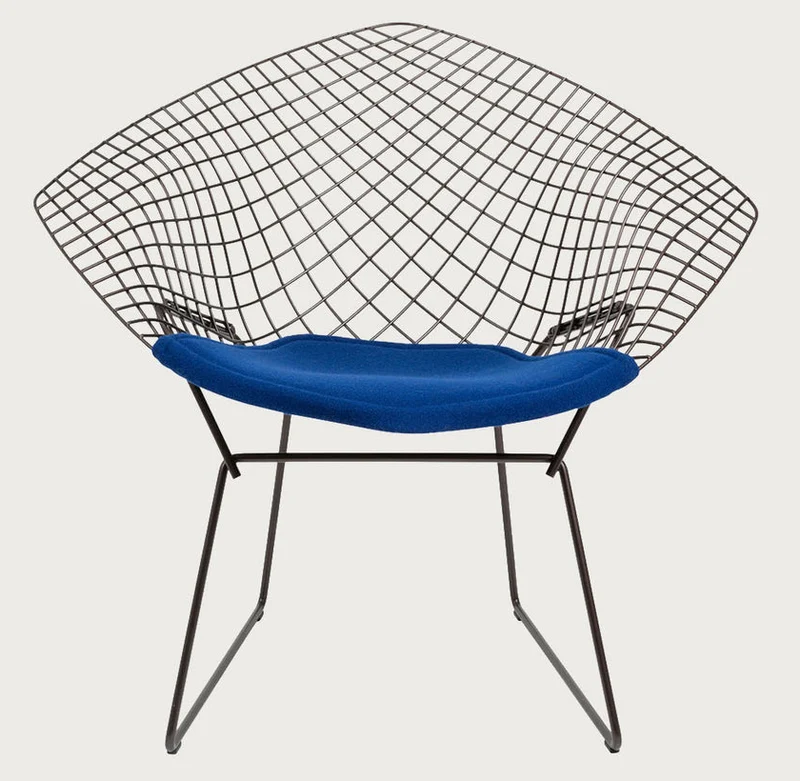
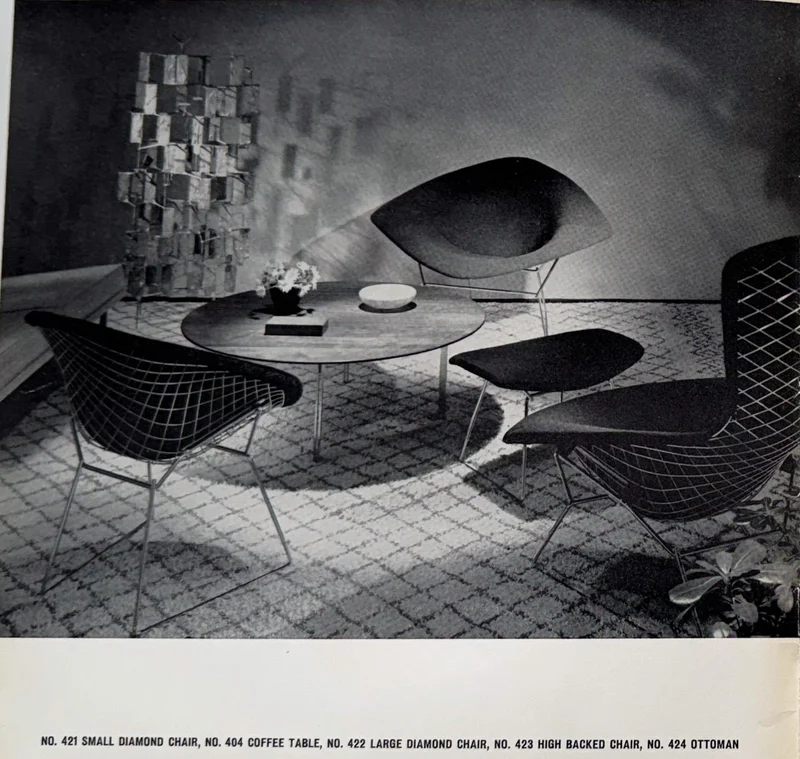
The Diamond chair is a lattice of steel rod, welded into an open grid and bent into a broad, shallow shell whose outline, seen from the front, is a diamond with softened corners. The shell rests on a separate base of bent rod that meets the floor in two long runners. It is about 85 centimetres wide and stands 75 high. A loose pad can be laid on the seat, or a cover drawn over the whole shell; bare, the chair is almost transparent.
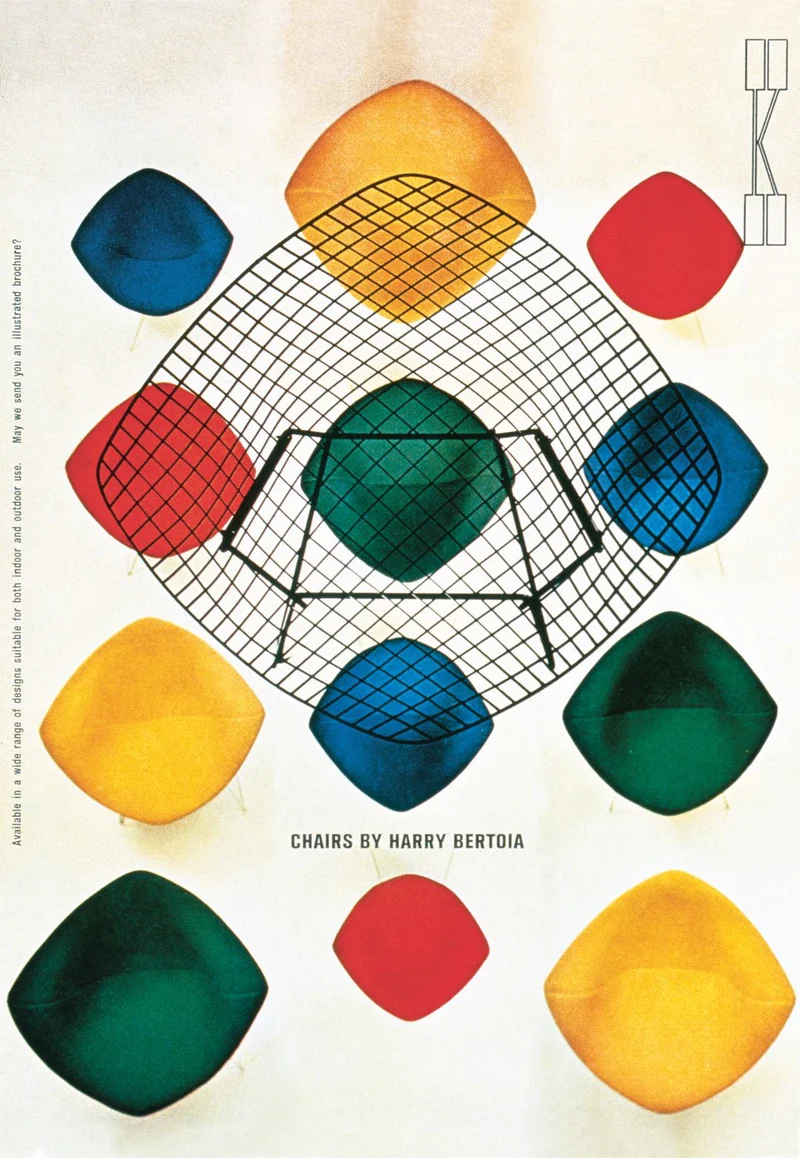
Harry Bertoia was an Italian-born metalworker and sculptor who had won a scholarship to Cranbrook in 1937, where he met Florence Schust, later Florence Knoll. He spent the mid-1940s in California working with Charles Eames on moulded plywood, and left in 1946, frustrated that his contributions went uncredited. In 1950 Hans and Florence Knoll invited him to Pennsylvania and gave him a workshop in an old garage at Bally, asking only that he show them anything interesting. He came back with a series of wire chairs, which Knoll introduced in 1952. Bertoia also designed the jigs on which they were made.
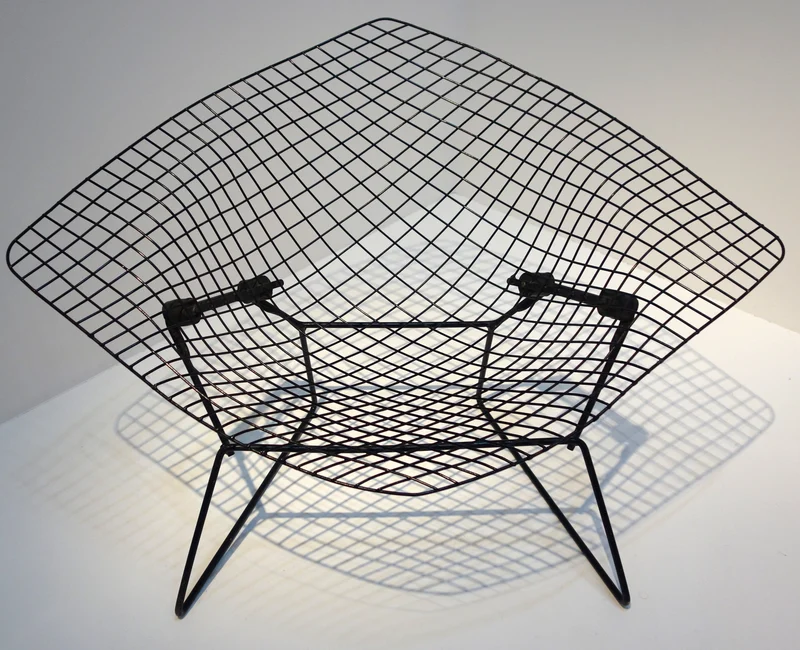

The chairs were made by hand at first, because no suitable means of mass production could be found. The original seat edge, two thin wires welded on either side of the mesh, ran into a patent held by Eames for Herman Miller's wire chair, and the edge was redrawn as a single thicker wire, the way the chairs are still made. Bertoia said they were mainly made of air, like sculpture. Knoll paid him well enough that he could give the rest of his life to sculpture.
Knoll says the Bertoia collection has been in continuous production since its introduction. The Diamond chair is still made to order with a seat pad or full cover, and in London Heal's sells it for £1,687.
Timeline
- 1950 Designed Hans and Florence Knoll invite Harry Bertoia to Pennsylvania and give him a workshop in a garage at Bally.
- 1952 First made · Verified Bertoia Diamond Chair enters production in Pennsylvania.
- 1953 Recognised Paid generously by Knoll for the chairs, Bertoia takes his first architectural sculpture commission, for the General Motors Technical Center.
- 2005 Designed Knoll adds Bertoia's Asymmetric Chaise, a design from the same early experiments that had never reached production.
Milestones as we found them, not as we've checked them.
From the archive
More like this
-
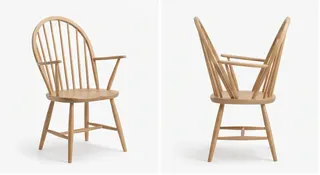 Chairs & Seating · since 1950 Ercol Windsor Chair Steam-bent ash chair in continuous production since 1950. Read the entry →
 -
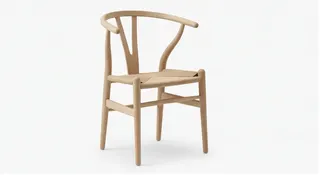 Chairs & Seating · since 1950 Carl Hansen CH24 Wishbone Chair Wegner's Y-backed dining chair, woven by hand on Funen since 1950. Read the entry →
 -
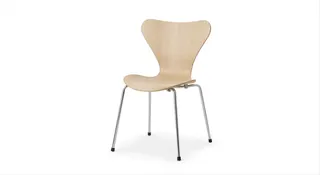 Chairs & Seating · since 1955 Fritz Hansen Series 7 Chair Arne Jacobsen's moulded-veneer stacking chair of 1955, still made only by Fritz Hansen. Read the entry →
 -
 Chairs & Seating · since 1956 Eames Lounge Chair Charles and Ray Eames's club chair of moulded plywood and leather, made by Herman Miller since 1956. Read the entry →