Home & Furniture · Furniture · Chairs & Seating
Fritz Hansen
Fritz Hansen Series 7 Chair
Since 1955 · 71 years to 2026 · First made in Denmark
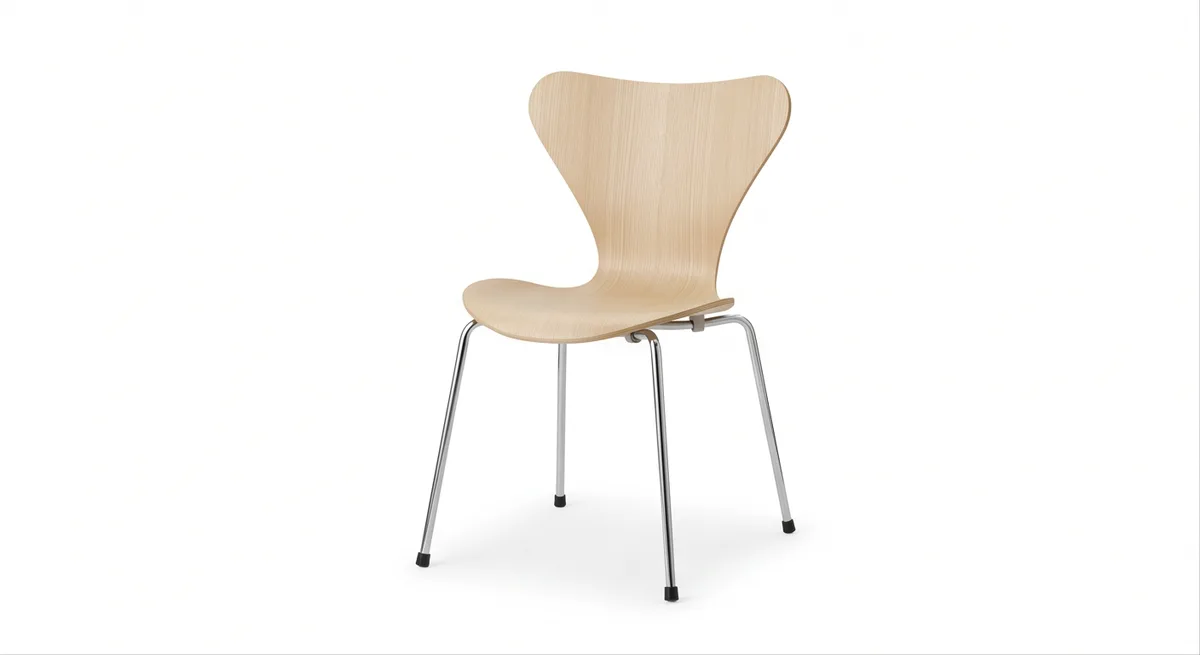
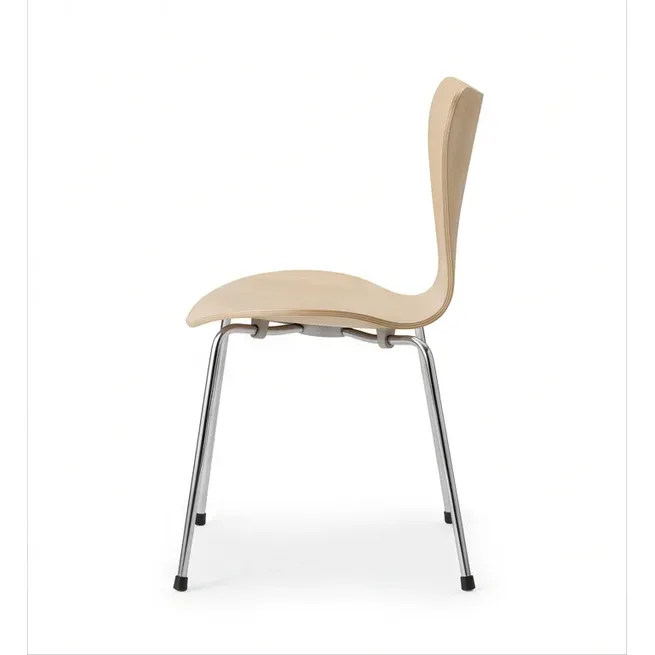
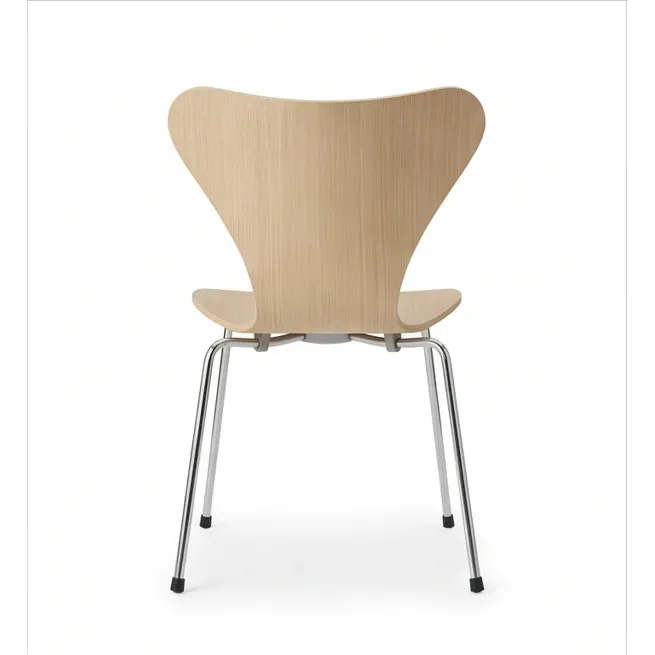
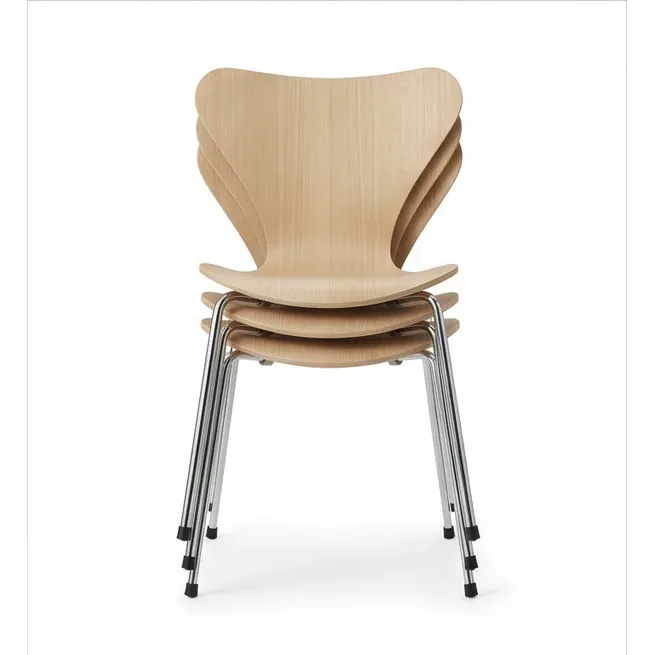
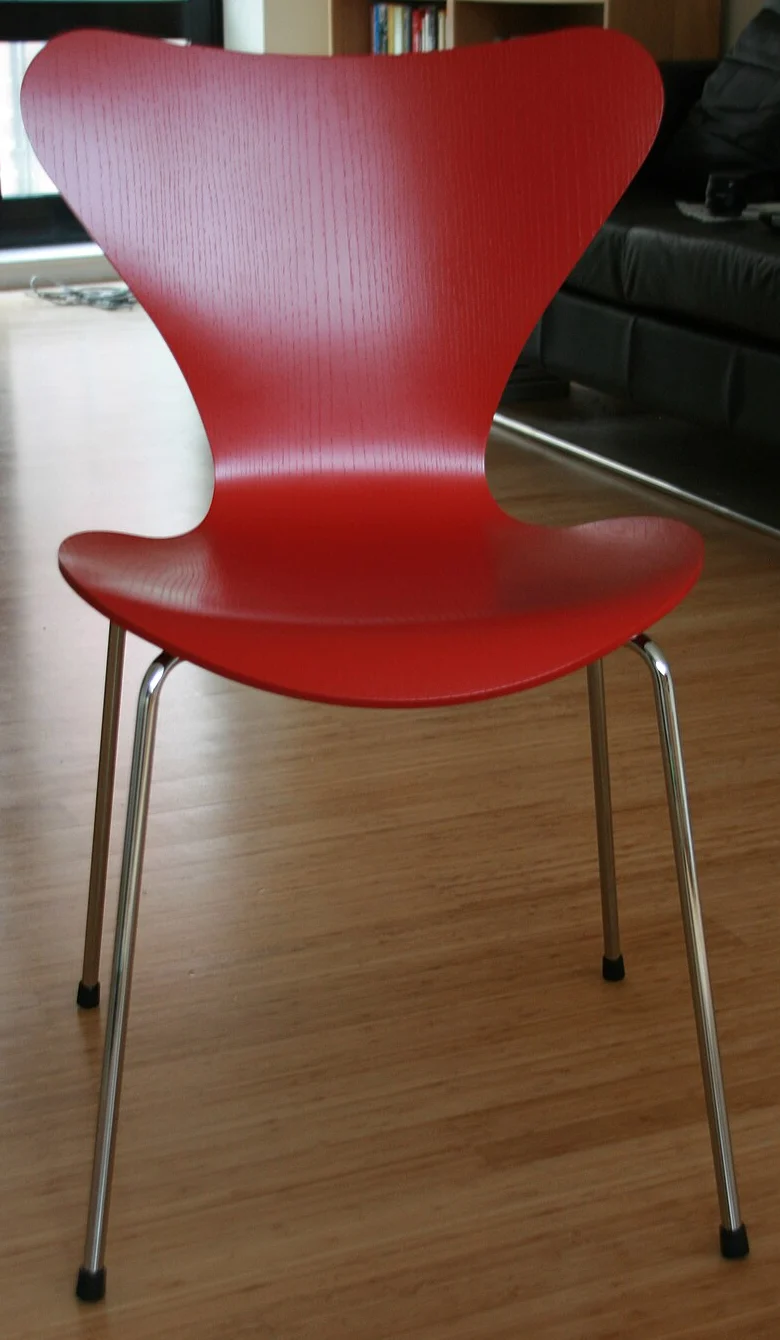
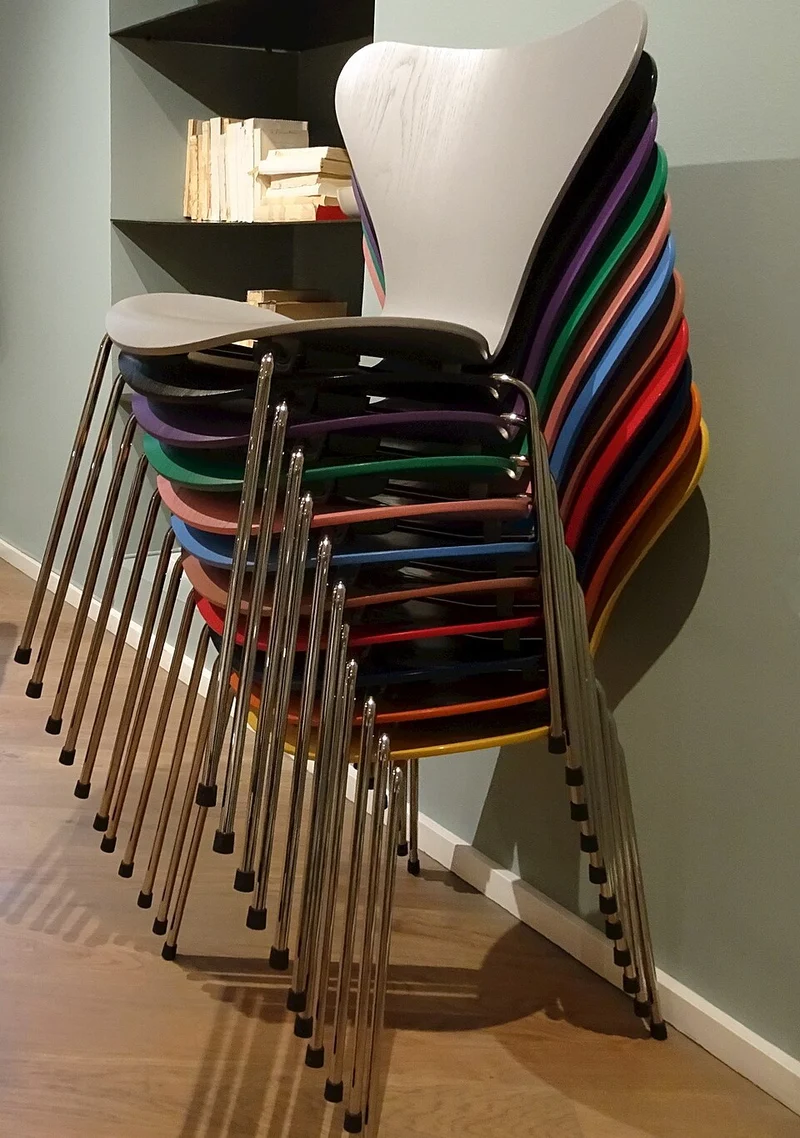
The Series 7 chair is a single sheet of moulded wood on four thin steel legs. The shell rises from a broad, gently dished seat, narrows sharply at the waist and opens again into a rounded back, so that from the front it has the outline of an hourglass. The legs are chromed steel tube, splayed slightly and fixed to a small disc under the seat; they reach just beyond the seat's edge, so the chairs line up neatly in rows and stack.
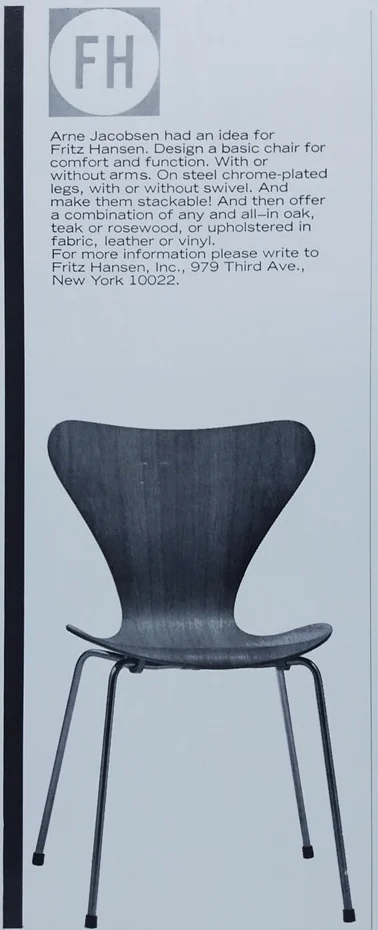
It was designed in 1955 by the Danish architect Arne Jacobsen for Fritz Hansen, a Danish furniture maker founded in 1872 that had worked with him since 1934. Three years earlier he had drawn the Ant, a three-legged stacking chair made for the canteen of the Novo pharmaceutical works; Jacobsen credited the bent plywood of Charles and Ray Eames as a starting point. The Series 7 kept the Ant's idea, a light shell of laminated veneer pressed into a curve, and made it broader, steadier and four-legged.
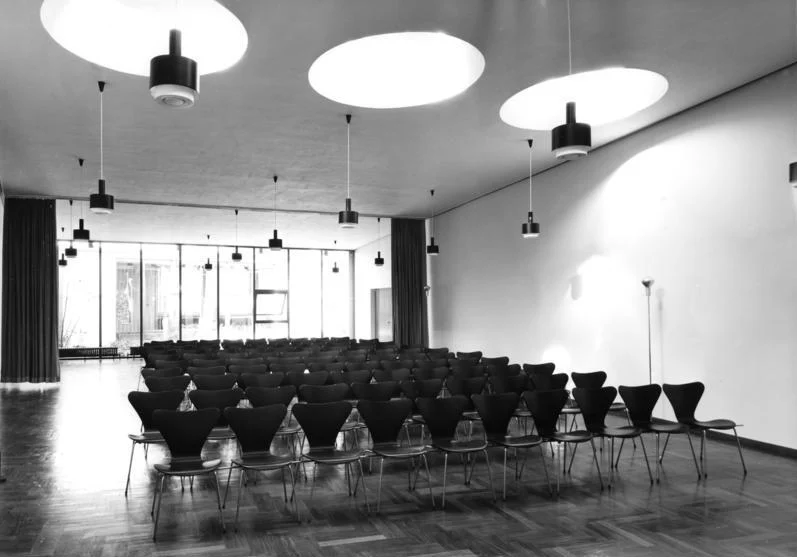

It became one of the best-known chairs of its century. Its fame grew in 1963, when Lewis Morley photographed Christine Keeler sitting astride what looked like one; the chair in the picture was in fact a copy, but sales of the original rose after it was published. Jacobsen's Grand Prix chair followed for the firm in 1957, and the Swan and the Egg in 1958. Fritz Hansen has since added an armchair, an office chair, stools and upholstered versions on the same Series 7 shell.
The chair is still made only by Fritz Hansen, which counts more than five million produced. The basic model, number 3107, has a shell of nine layers of pressure-moulded veneer, available in natural woods, stains and lacquered colours, on chromed steel legs. It costs from £459 in Britain, and it is still the shape Jacobsen drew in 1955.
Timeline
- 1934 Designed Fritz Hansen begins its collaboration with the architect Arne Jacobsen.
- 1952 Designed Jacobsen's three-legged Ant chair, the Series 7's predecessor, is made for the Novo factory canteen.
- 1955 First made · Verified Fritz Hansen Series 7 Chair enters production in Denmark.
- 1955 Designed Jacobsen designs the four-legged Series 7 chair, model 3107, for Fritz Hansen.
- 1963 Recognised Lewis Morley's photograph of Christine Keeler, on a copy of the chair, drives up sales of the original.
Milestones as we found them, not as we've checked them.
From the archive


More like this
-
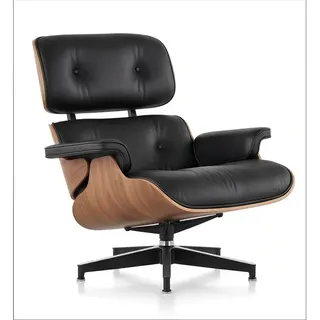 Chairs & Seating · since 1956 Eames Lounge Chair Charles and Ray Eames's club chair of moulded plywood and leather, made by Herman Miller since 1956. Read the entry →
 -
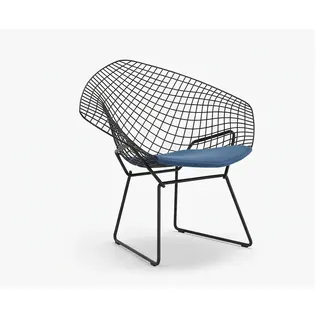 Chairs & Seating · since 1952 Bertoia Diamond Chair Harry Bertoia's chair of welded steel rod, introduced by Knoll in 1952 and mostly made of air. Read the entry →
 -
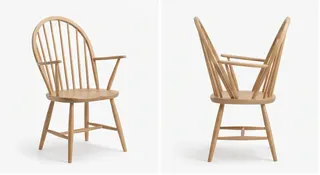 Chairs & Seating · since 1950 Ercol Windsor Chair Steam-bent ash chair in continuous production since 1950. Read the entry →
 -
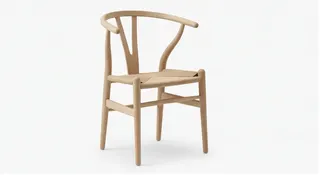 Chairs & Seating · since 1950 Carl Hansen CH24 Wishbone Chair Wegner's Y-backed dining chair, woven by hand on Funen since 1950. Read the entry →