Sports & Leisure · Games & Toys · Games & Puzzles
Si-Yat-Sa (씨앗사)
Blue Marble
Since 1982 · 44 years to 2026 · First made in Jung-gu (Chungmuro), South Korea
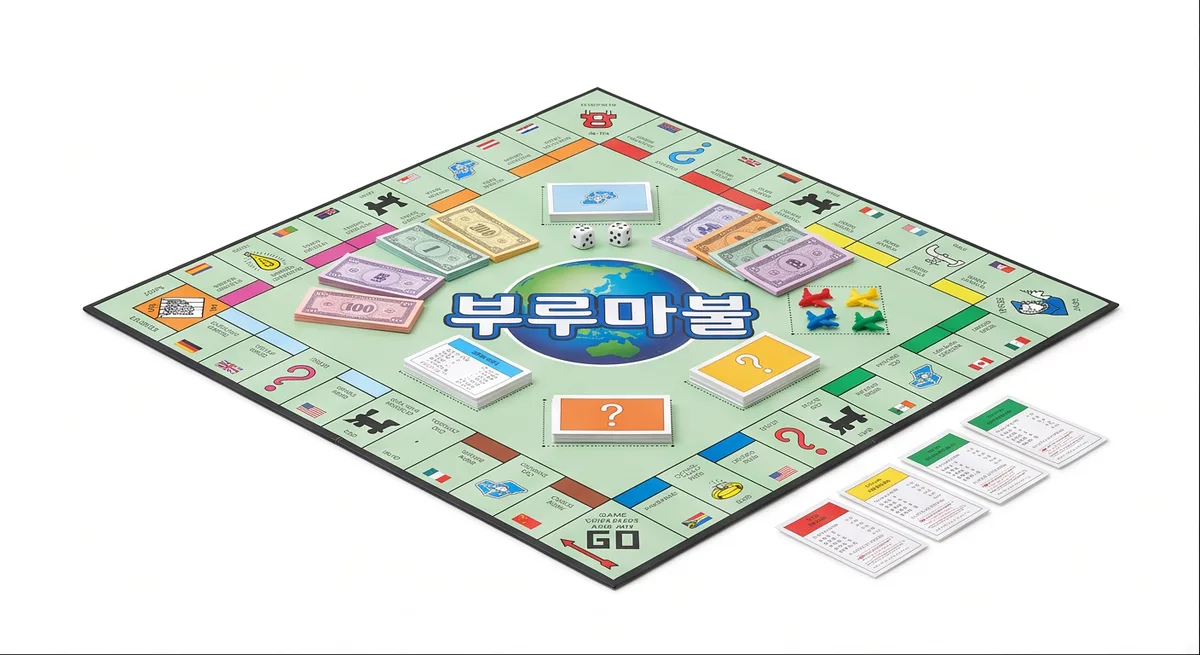
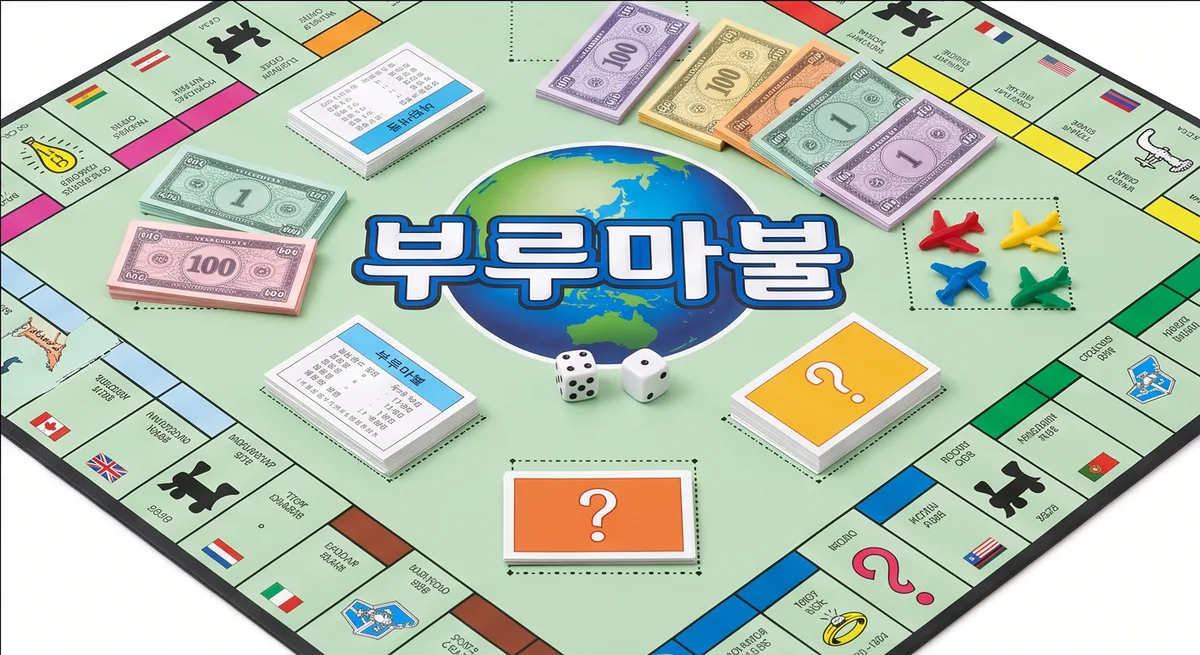
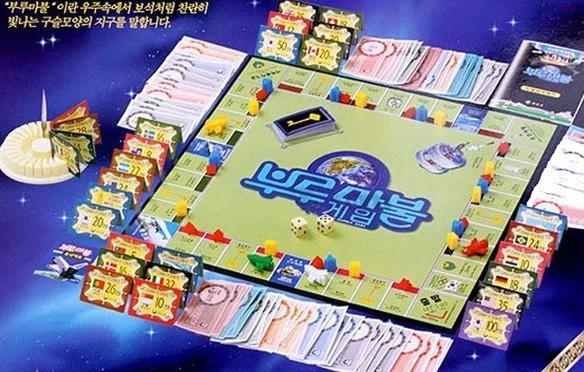
Blue Marble is a board game for two to four players in which dice carry aeroplane pieces round a green board of world cities. Players buy title deeds, build villas, buildings and hotels, and collect tolls from anyone who lands on them, paid in banknotes of the imaginary Si-Yat Bank from 1,000 to 500,000 won. Golden Key cards bring windfalls and fines, a deserted island holds players for three turns, a space-travel square sends them anywhere, and Seoul is the dearest square on the board.
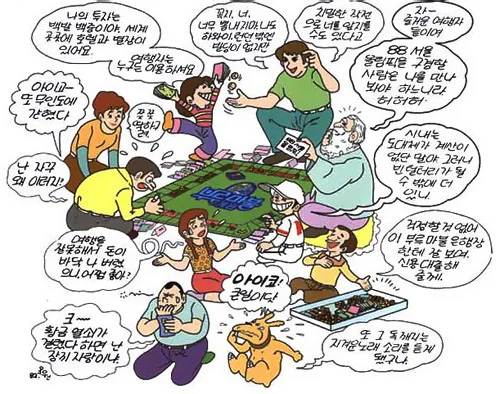
Its maker, Lee Sang-bae, was a young designer who had played Monopoly in a hotel lobby in Abu Dhabi. He wanted something similar for Korean children, but set across the whole planet, and named it after the Apollo 17 photograph of the Earth, spelling it Bu-ru-ma-bul so that children could say it. An economist introduced by the designer of its logo wrote the rules, inflating Monopoly's dollars into large won notes so that making change would teach arithmetic, and the cities were laid out in order of their countries' national product.
The launch, on Children's Day 1982, nearly failed. At 8,300 won the game was dear, and wholesalers who had never handled a board game sent back almost every set. Lee turned to small toy shops, flyposted school gates and handed out comic-strip leaflets drawn by the cartoonist Lee Hyang-won in apartment playgrounds. When children could not find it in the shops, the wholesalers came back, and by December it was on television.
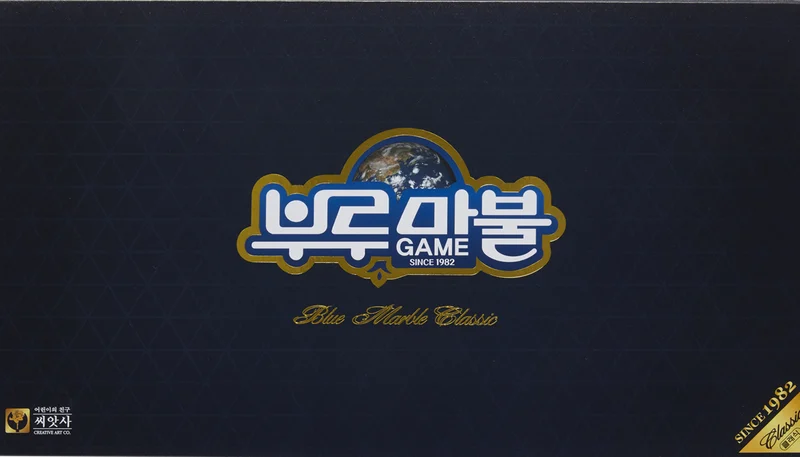
It became the national board game, the one older Koreans remember playing for hours at a time. The world on the board has been redrawn as the world changed, Beijing for Hong Kong, Bern for Zurich, but the game itself has been left alone: Lee wanted the people who played it as children to recognise it when they played with their own. Si-Yat-Sa, now run by his son, still sells it, the box marked 'Since 1982'.
Timeline
- 1982 First made · Claimed Blue Marble enters production in Jung-gu (Chungmuro), South Korea.
- 1982 Si-Yat-Sa sends 5,000 sets to Seoul toy wholesalers on 5 May; by August 99.5 per cent have come back, and the game is relaunched through toy shops (founder's account).
- 1982 Recognised In December, seven months after launch, Blue Marble's first television advertisement is broadcast (founder's account).
- 2016 The board is revised: Hong Kong, returned to China in 1997, gives way to Beijing; Zurich becomes Bern and Montreal Ottawa.
- 2019 The world-travel game is reissued with updated landmark illustrations and card texts, in five editions from Tiny to Classic.
Milestones as we found them, not as we've checked them.
From the archive
More like this
-
 Games & Puzzles · since 1983 Taki Israel's own card game, a waterfall of one colour, dealt at kitchen tables since 1983. Read the entry →
 -
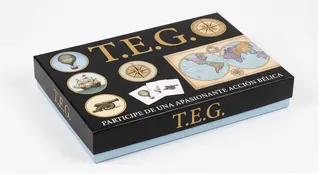 Games & Puzzles · since 1976 TEG Argentina's game of world conquest, played on an old-map planisphere of 50 countries since 1976. Read the entry →
 -
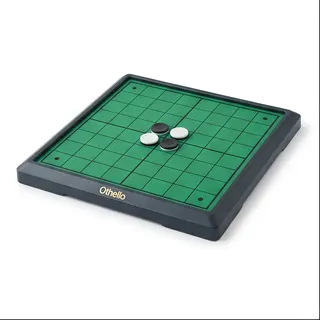 Games & Puzzles · since 1973 Othello (Official Othello) A green field, sixty-four discs and Shakespeare's names, on sale in Tokyo since April 1973. Read the entry →
 -
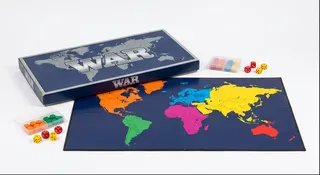 Games & Puzzles · since 1972 War Brazil's own game of world conquest, assembled by hand in a São Paulo garage in 1972 and still on the shelves. Read the entry →