Home & Furniture · Furniture · Chairs & Seating
Emeco
Emeco 1006 Navy Chair
Since 1944 · 82 years to 2026 · First made in Pennsylvania
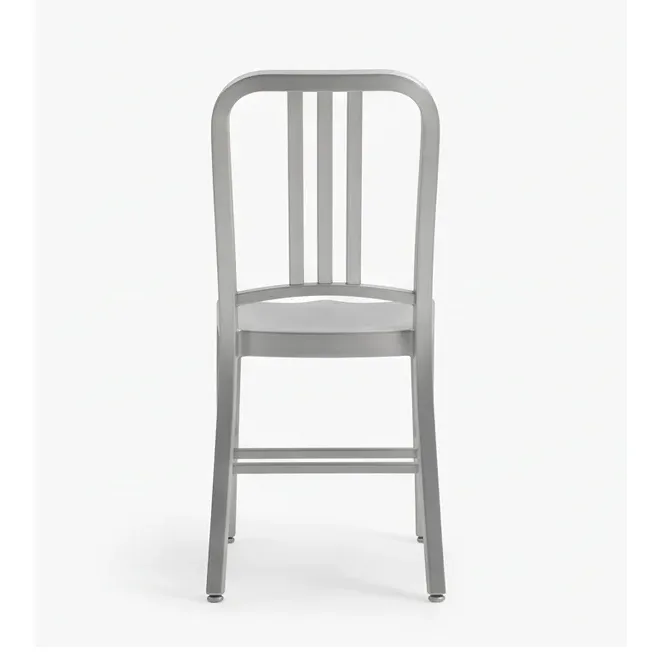
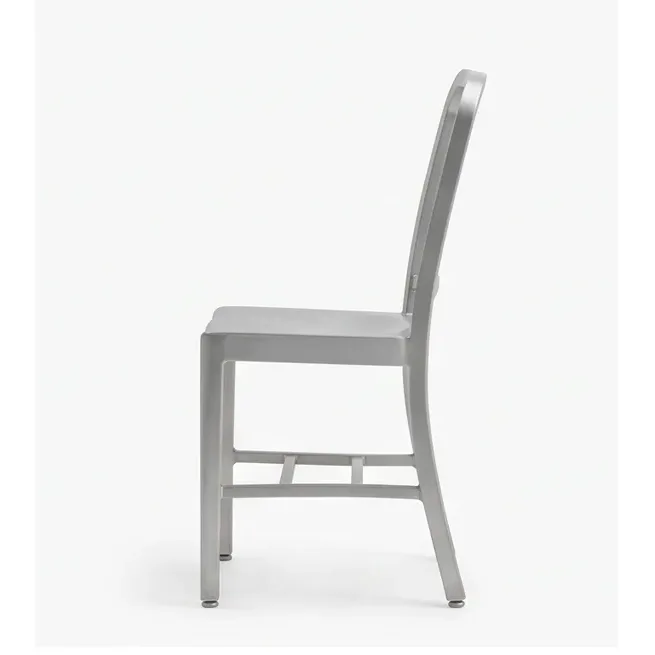
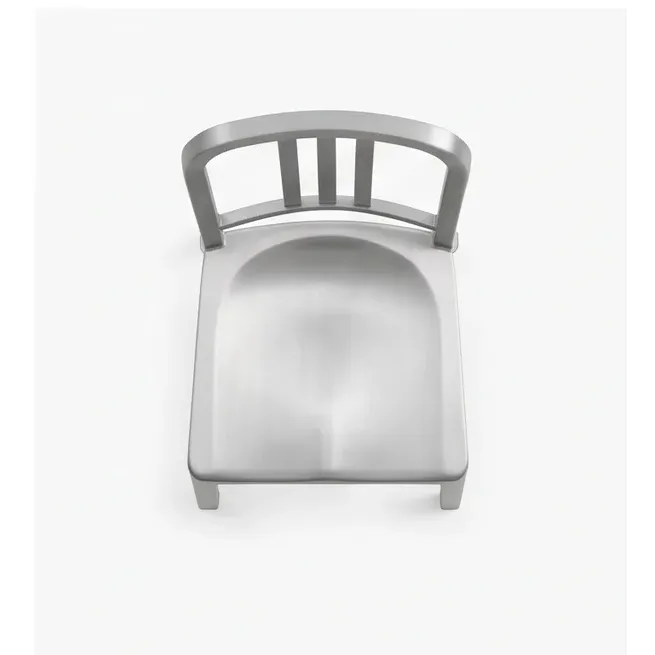
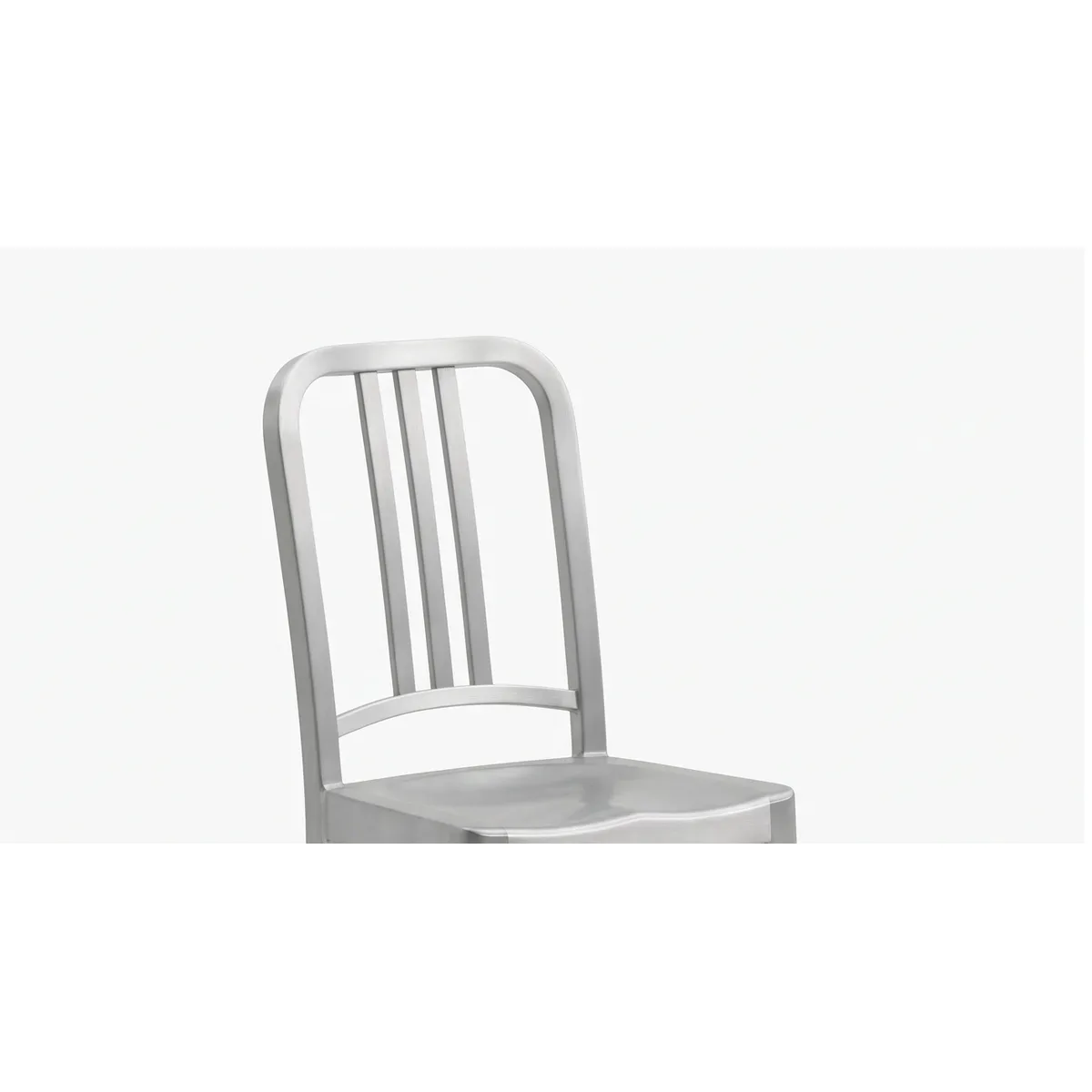
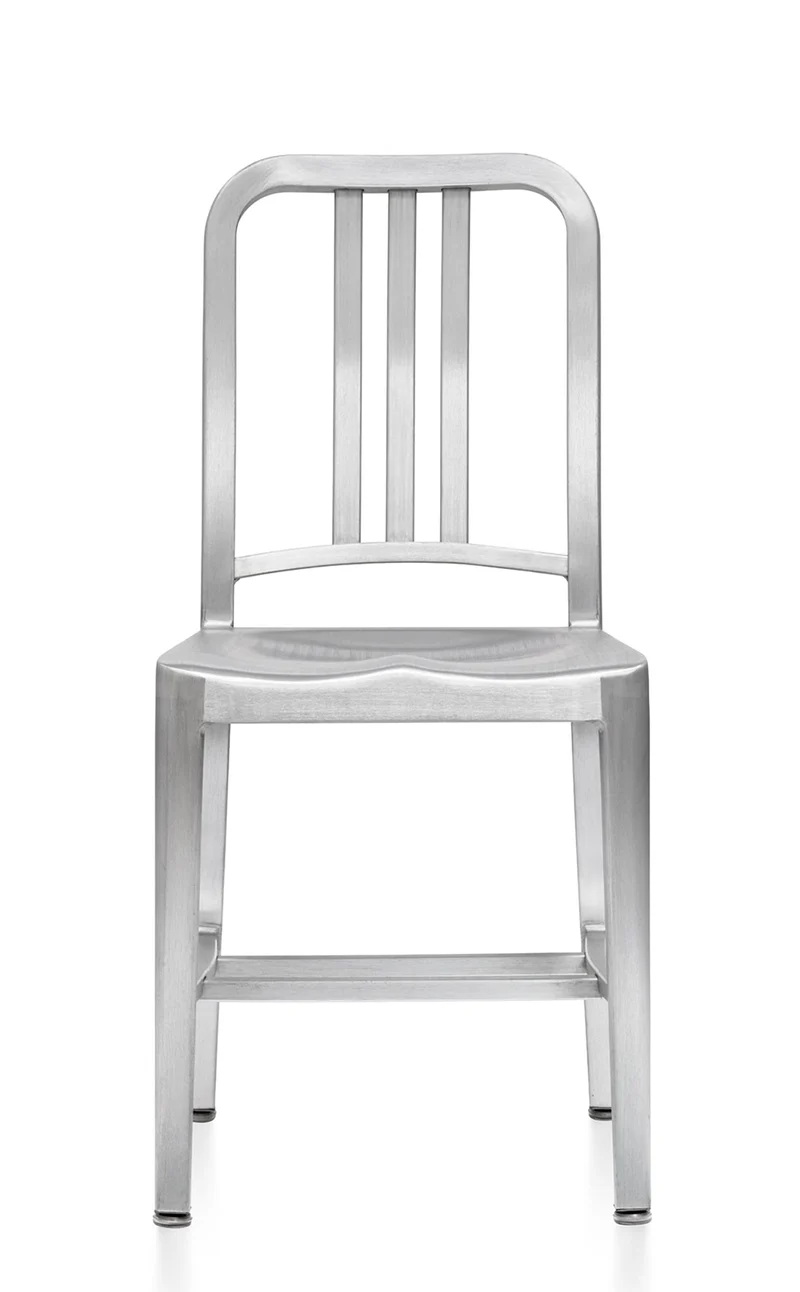
The 1006 is a plain side chair made entirely of aluminium. Its back is a rounded hoop holding three narrow vertical slats that stop at a curved crossbar above the seat; the seat is a single shallow-dished pan; the four square legs splay slightly and are braced by a stretcher at the front and sides. Brushed, it has a soft grey sheen. It weighs about three kilograms, and looks as though it were cast in one piece, though it is welded from twelve.
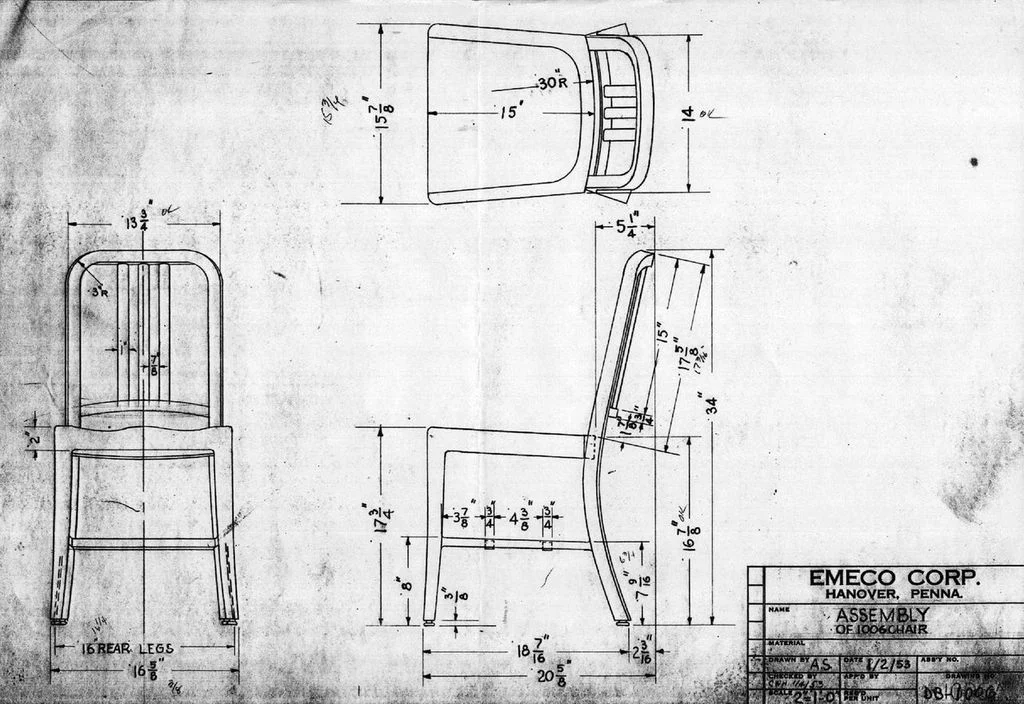
It was made for war. In 1944 the US Navy wanted a chair for its ships that would be light, would not rust in salt air and would not burn, and Wilton C. Dinges, who had just founded the Electrical Machine and Equipment Company, developed one with the help of Alcoa. Eye bolts under the seat let crews lash it to the deck. To win the contract, the story goes, Dinges threw a chair from an eighth-floor hotel window in Chicago; it bounced and did not break.
Emeco settled in Hanover, Pennsylvania, and after the war sold the chair to prisons, hospitals and government offices, by the mid-1950s at the rate of 200,000 a year. When the contracts dwindled the company nearly failed, was sold in 1979, and survived by selling to restaurants. In the 1990s designers, among them Giorgio Armani and Philippe Starck, began to buy it for its plain, durable form, and the chair passed from mess decks and waiting rooms into cafés and showrooms.
The 1006 is still made in Hanover, by hand, in a sequence of 77 steps: aluminium tube is bent, notched and welded, the joints ground smooth, the frame heat-treated to harden it and anodised to protect it. The metal is now largely recycled. More than a million had been made by 2012, and Emeco, which calls the chair unimproved since 1944, still sells it with a guarantee for life.
Timeline
- 1944 First made · Verified Emeco 1006 Navy Chair enters production in Pennsylvania.
- 1944 Designed Wilton C. Dinges develops the 1006 with Alcoa for the US Navy, which wants a light, non-corrosive, fire-resistant chair for its ships and submarines.
- 1955 Production Emeco, by now with four factories in Hanover, Pennsylvania, is producing 200,000 chairs a year.
- 1979 Ownership With government contracts drying up and Emeco near bankruptcy, the company is sold to Jay Buchbinder; his son Gregg takes over in 1998.
- 2024 Recognised Emeco marks eighty years of the 1006 with an exhibition designed by Jasper Morrison at Triennale Milano.
Milestones as we found them, not as we've checked them.
More like this
-
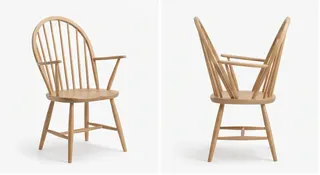 Chairs & Seating · since 1950 Ercol Windsor Chair Steam-bent ash chair in continuous production since 1950. Read the entry →
 -
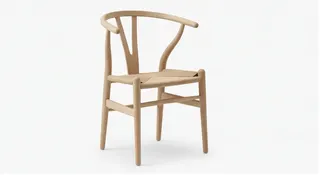 Chairs & Seating · since 1950 Carl Hansen CH24 Wishbone Chair Wegner's Y-backed dining chair, woven by hand on Funen since 1950. Read the entry →
 -
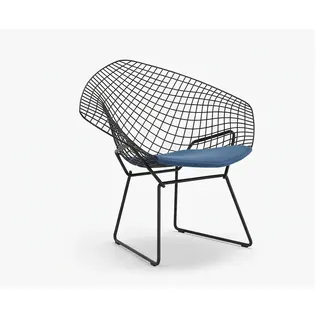 Chairs & Seating · since 1952 Bertoia Diamond Chair Harry Bertoia's chair of welded steel rod, introduced by Knoll in 1952 and mostly made of air. Read the entry →
 -
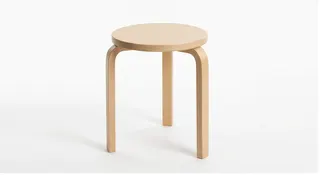 Chairs & Seating · since 1933 Artek Stool 60 Three-legged birch stool, unchanged since 1933. Read the entry →