Gaggia
Gaggia Classic
Since 1991 · 35 years to 2026 · First made in Lombardy, Italy
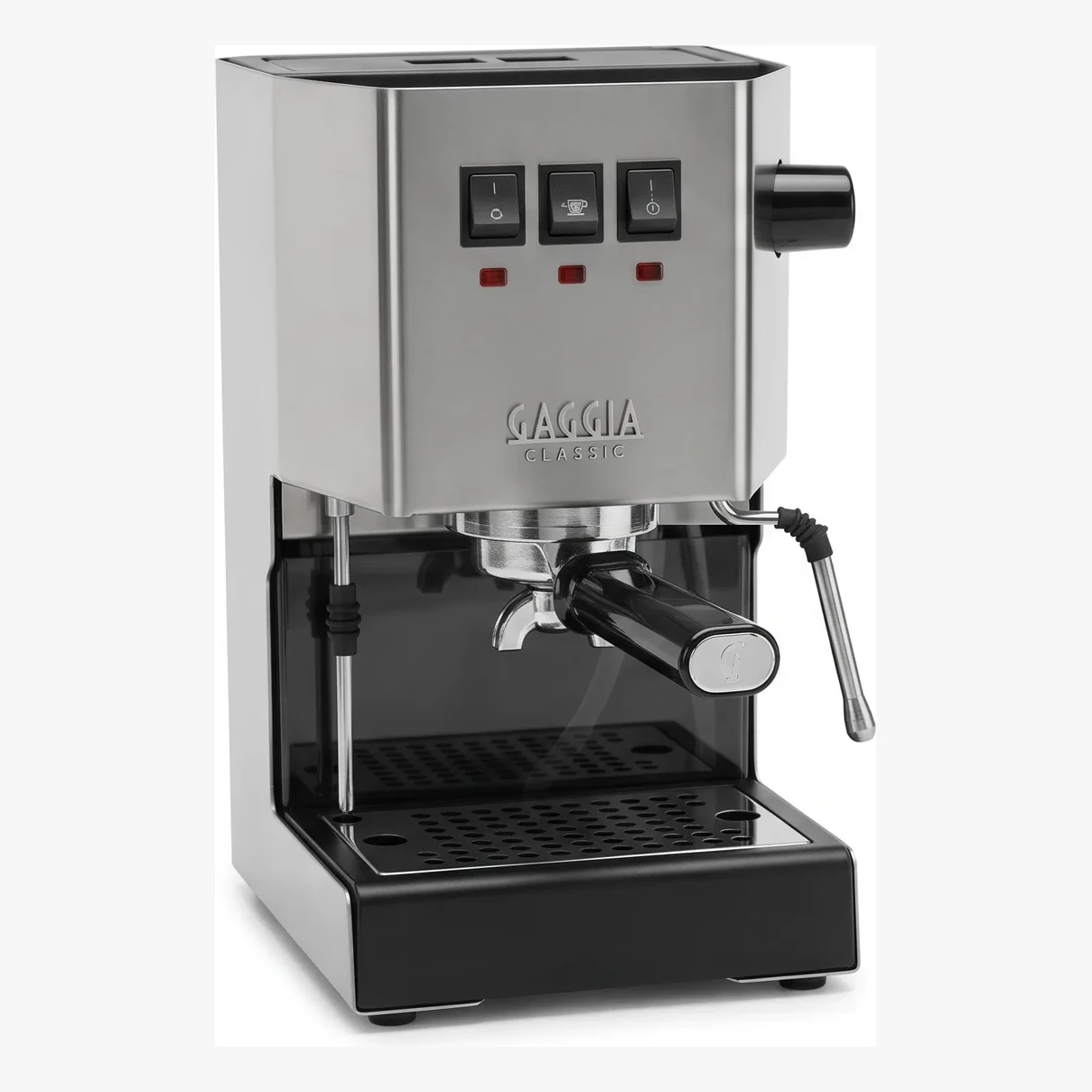
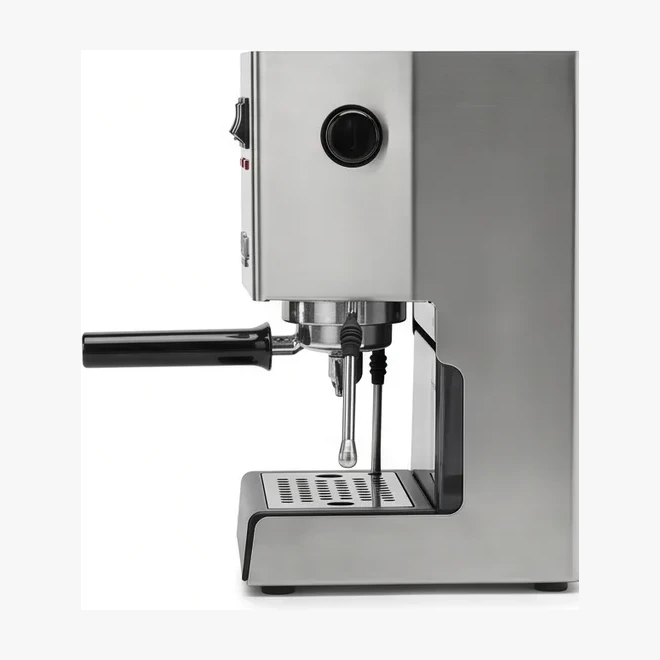
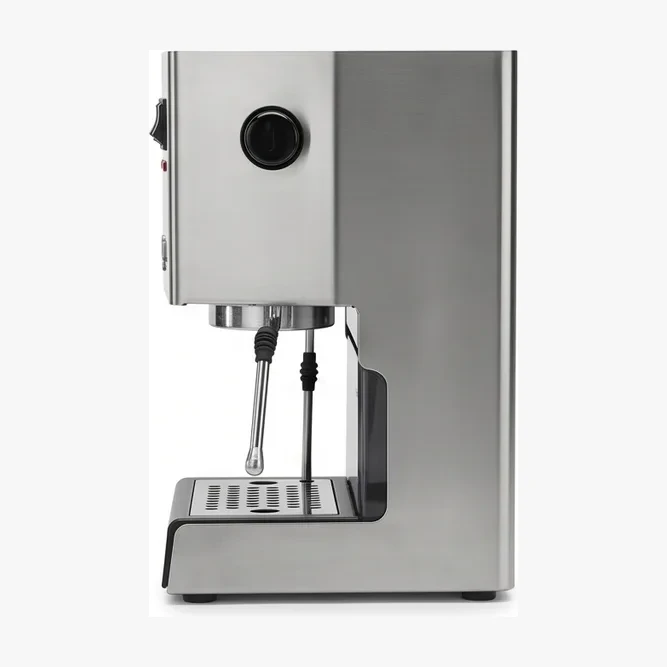
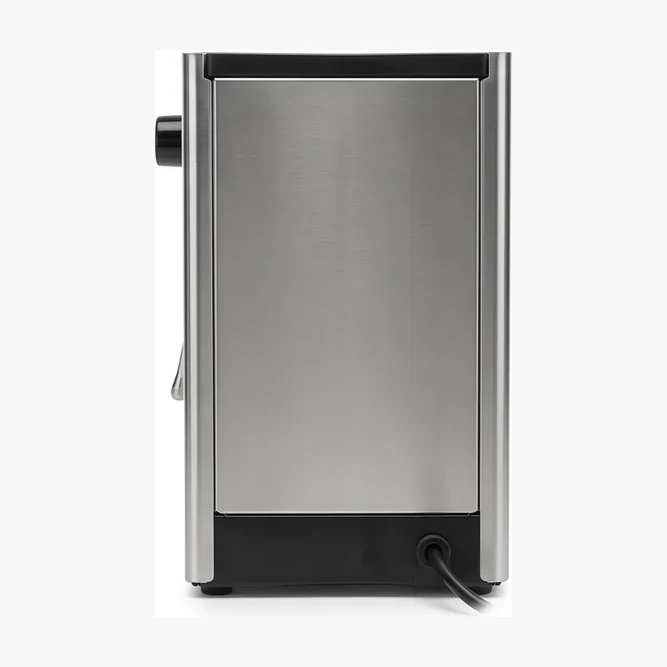
The Gaggia Classic is a home espresso machine shaped like a tall stainless-steel box, about twenty centimetres wide and thirty-five high. Three rocker switches with small red lamps sit high on the front, for power, coffee and steam, with a steam knob on the right side. Below, a heavy portafilter fifty-eight millimetres across, the size used on café machines, locks into a brass group, and a steam wand hangs beside a grilled drip tray over a clear water tank.
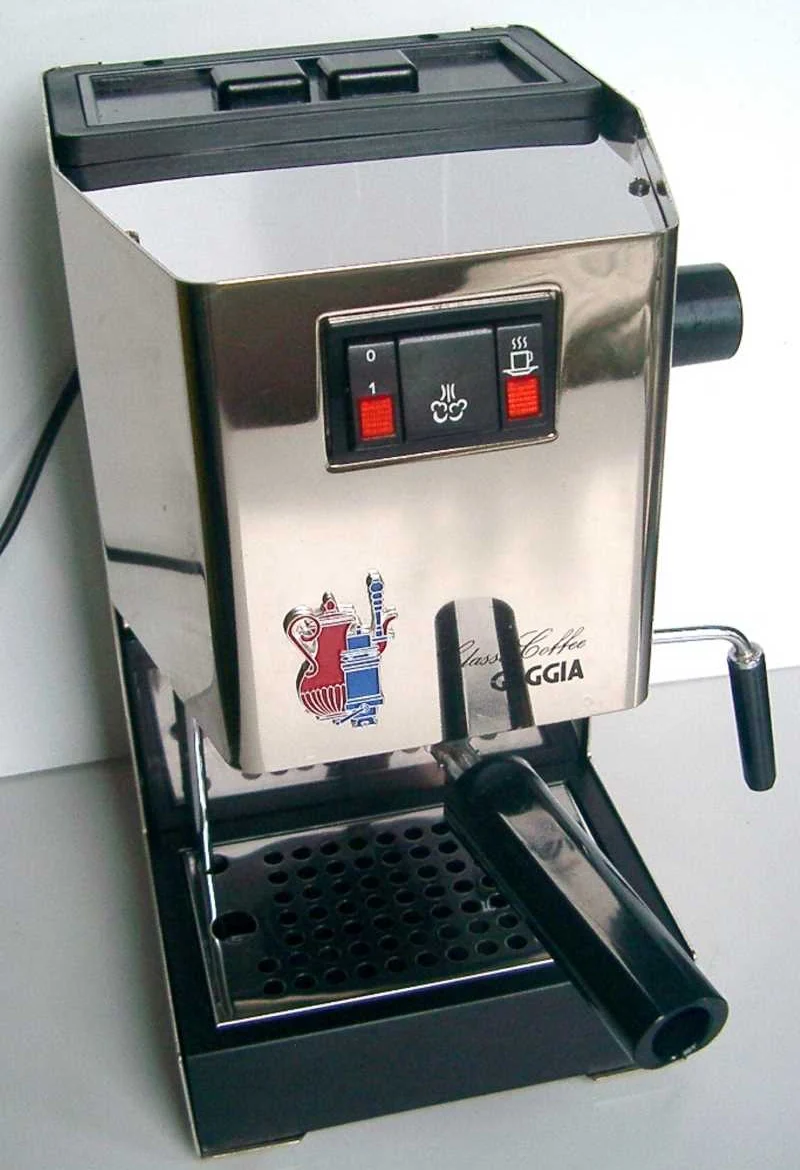
Its maker came to the home late. Achille Gaggia patented a way of forcing water through coffee without steam in 1938, and his company spent its first thirty years making machines for bars. The Baby Gaggia of 1977 took espresso into the kitchen, and in 1991 the Classic, first named the Classic Coffee, gave home users a professional group and a solenoid valve in a plain steel case.
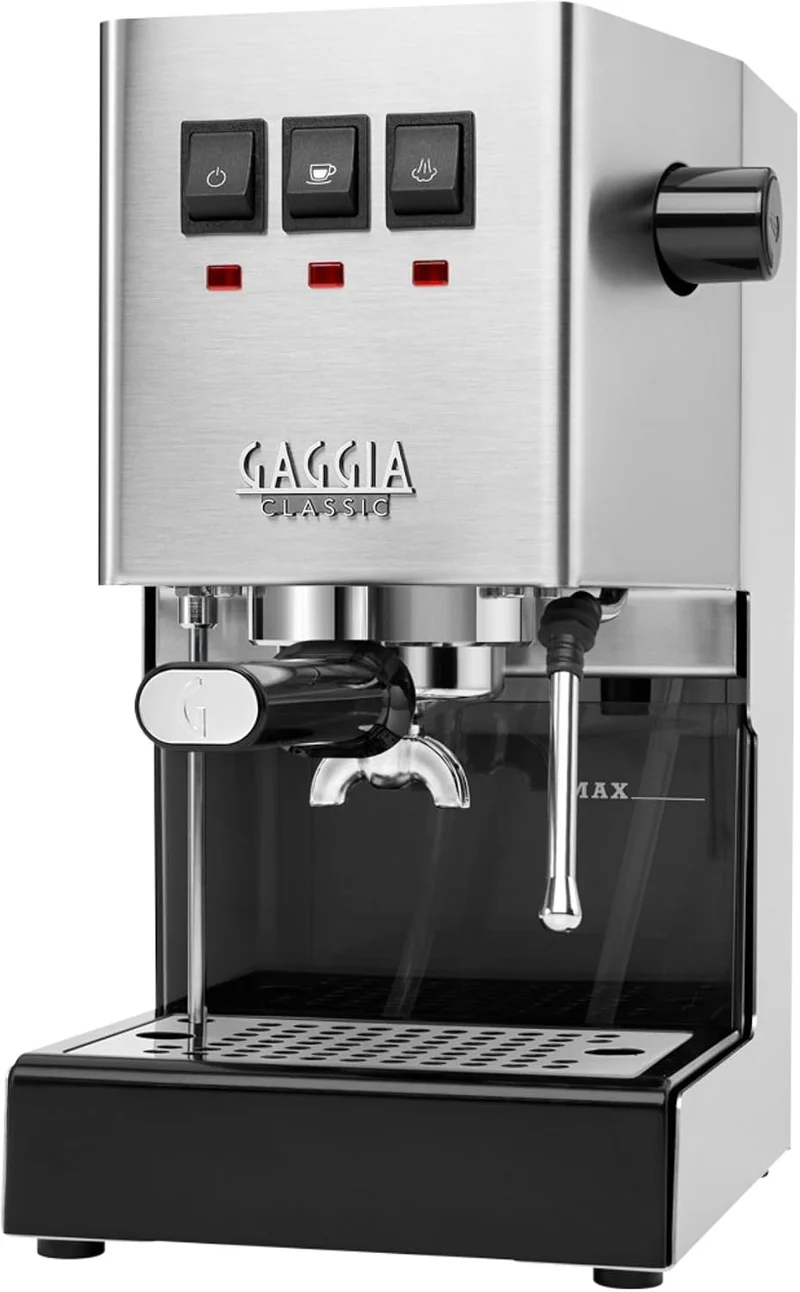
Those parts made its reputation. The large portafilter takes the same baskets and tampers as a café machine, the valve releases pressure after each shot so that the puck comes out dry, and the simple wiring and common parts invited owners to repair and modify their machines. The Classic outlasted its first owners: Saeco bought Gaggia in 1999, Philips bought Saeco in 2009, and the brand passed to the vending-machine maker Evoca in 2017, while production moved from Milan to Romania and then back to Italy.
Only once did the machine stray. The 2015 version dropped the solenoid valve and replaced the rocker switches with push buttons, and owners objected; the Classic Pro of 2019 restored both. Later versions added a solid brass group, a stainless-steel portafilter and, in 2024, a brass boiler. Gaggia now sells two more elaborate machines under the Classic name, but the single-boiler Classic remains the one most home baristas mean by it.
Timeline
- 1991 First made · Verified Gaggia Classic enters production in Lombardy, Italy.
- 1991 Gaggia launches the Classic, first named 'Classic Coffee': a stainless-steel home espresso machine with a 58 mm commercial-size portafilter, a small aluminium boiler and a three-way solenoid valve.
- 2015 A redesigned Classic, built in Romania, swaps the rocker switches for push buttons and drops the solenoid valve; it is widely criticised.
- 2019 The Classic Pro returns to the original layout, made in Italy with the solenoid valve, rocker switches and aluminium boiler.
- 2024 The Classic E24 replaces the aluminium boiler with a brass one; it is the version sold now.
Milestones as we found them, not as we've checked them.
From the archive
More like this
-
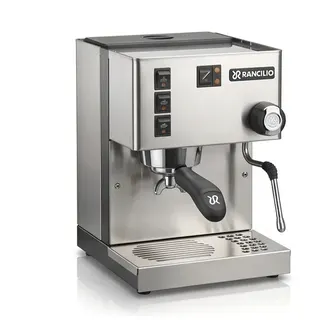 Coffee & Tea · since 1997 Rancilio Silvia Rancilio's café machine shrunk for the kitchen in 1997, revised six times and never replaced.
-
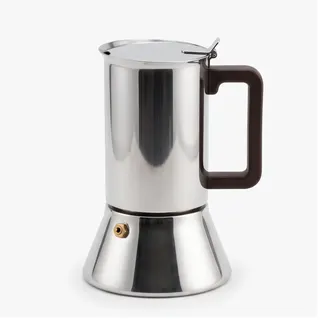 Coffee & Tea · since 1980 Alessi 9090 Espresso Maker Richard Sapper's 'little steam engine': a steel cylinder on a flared base that opens with one hand, Alessi's first espresso maker.
-
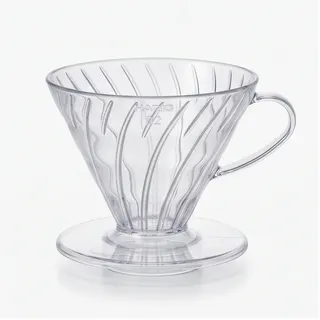 Coffee & Tea · since 2005 Hario V60 A laboratory funnel, given ribs and one large hole, that taught the world's baristas to pour.
-
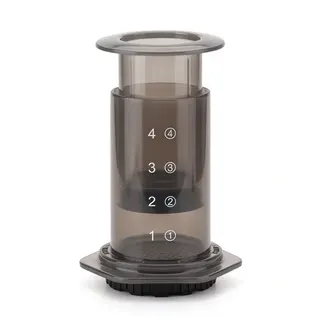 Coffee & Tea · since 2005 AeroPress A plastic syringe for coffee: steep, then press through a paper disc. Alan Adler's brewer of 2005, still made in the same three parts.