Hills
Hills Hoist
Since 1945 · 81 years to 2026 · First made in Glenunga, Australia
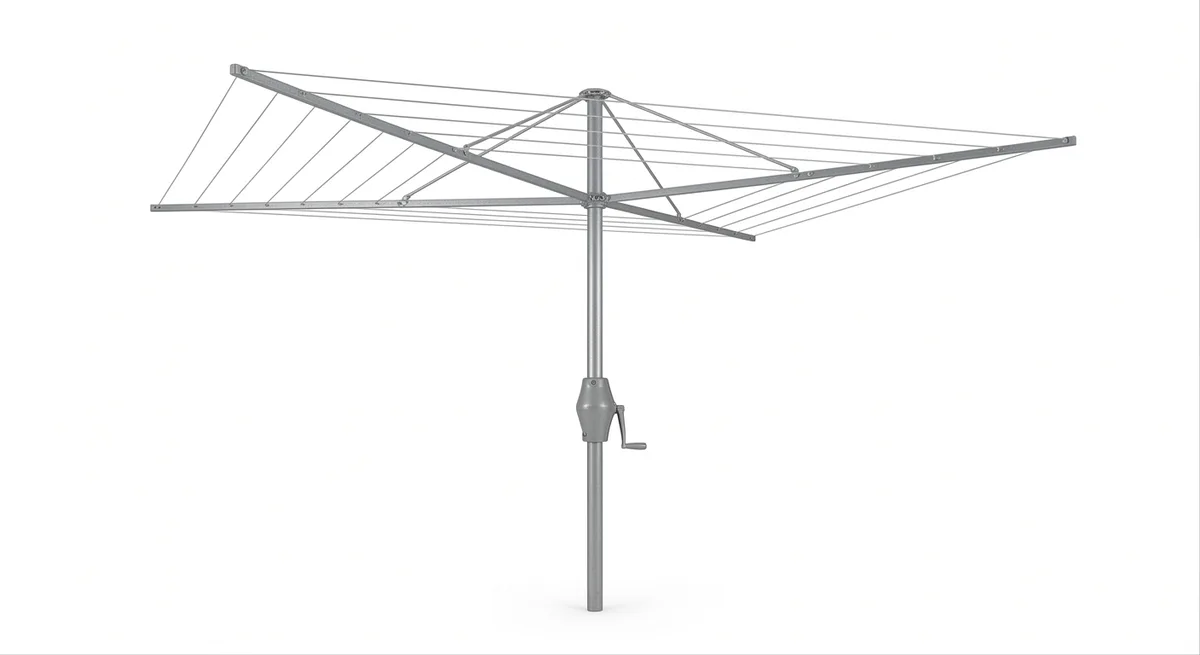
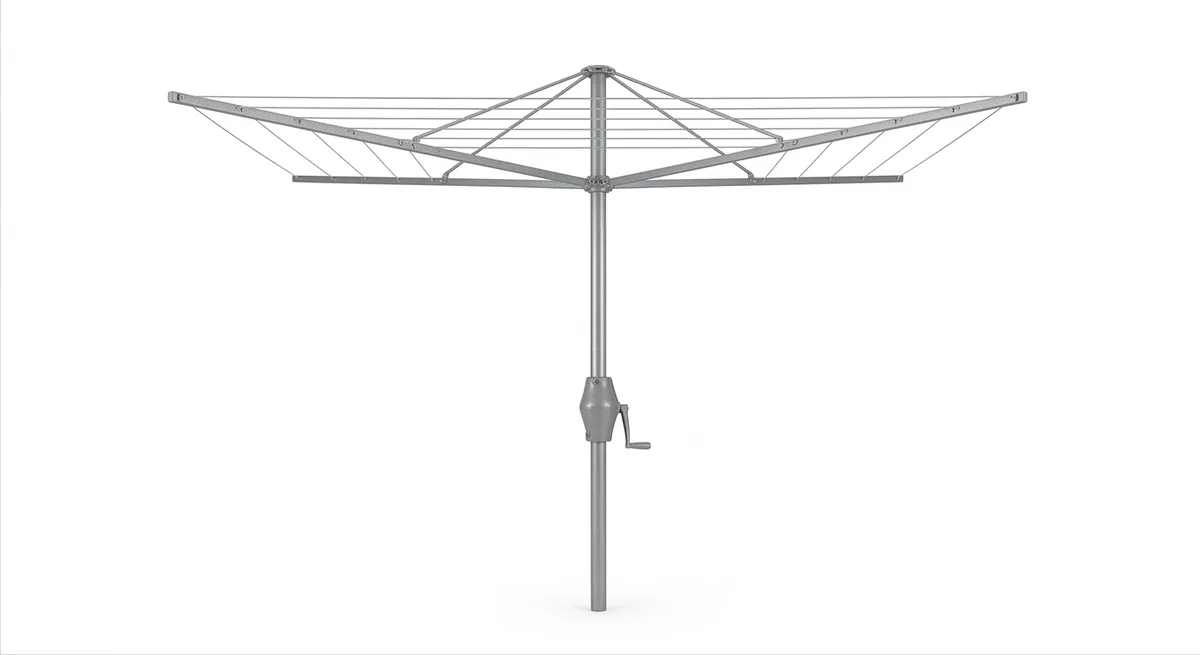
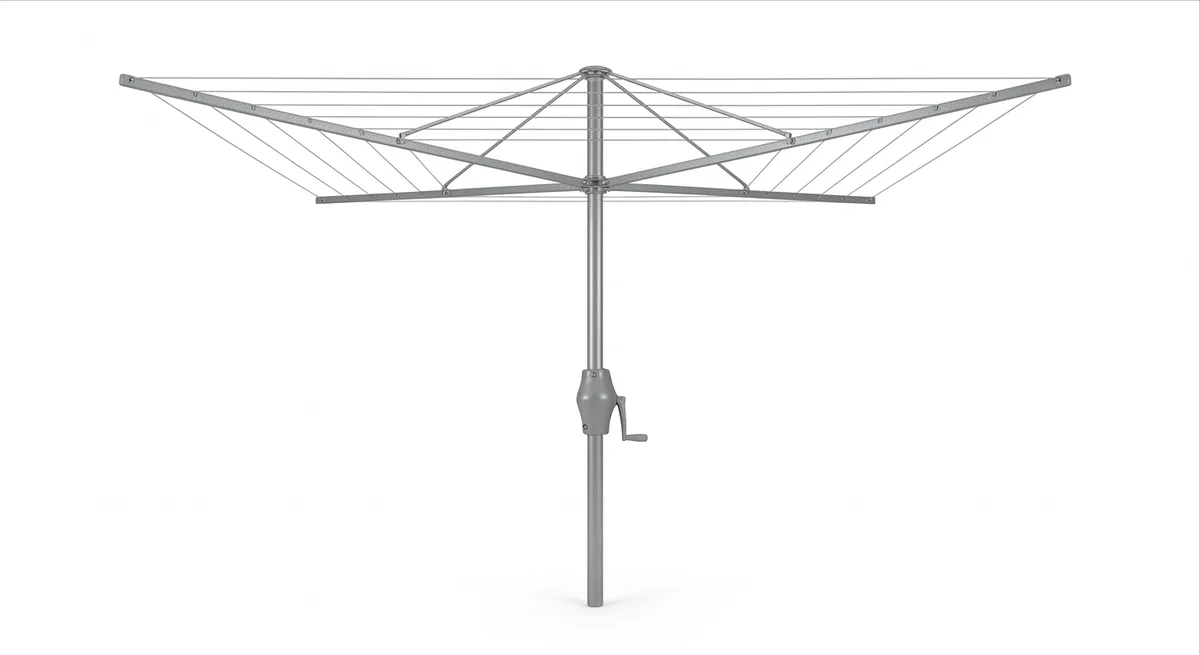
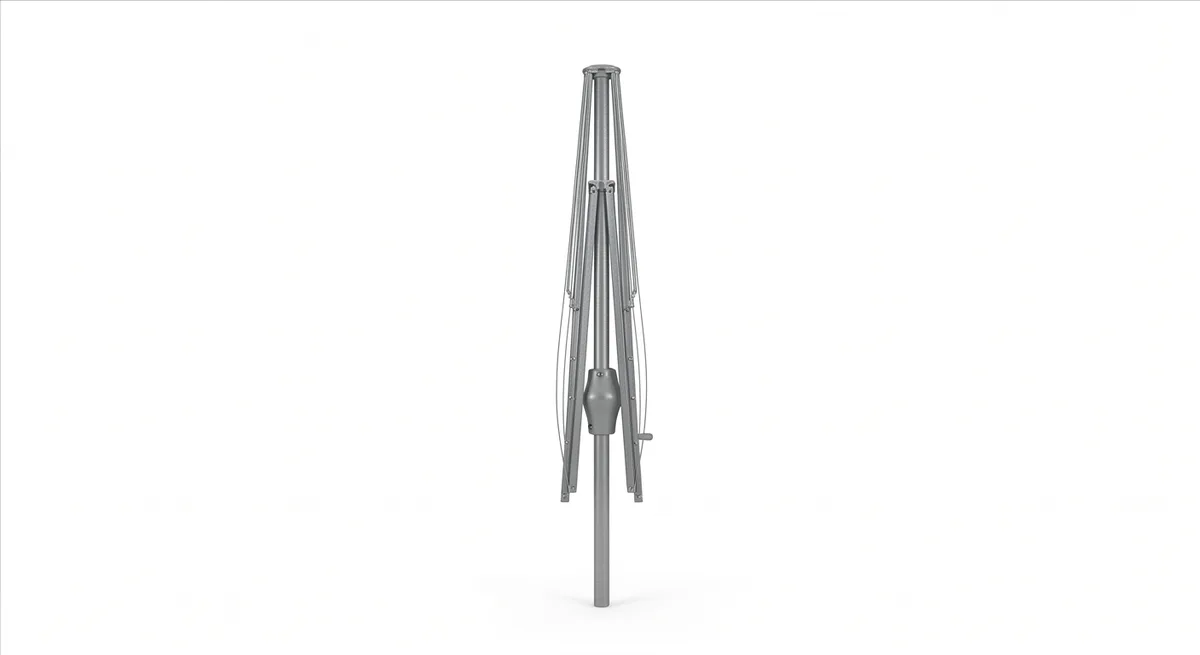
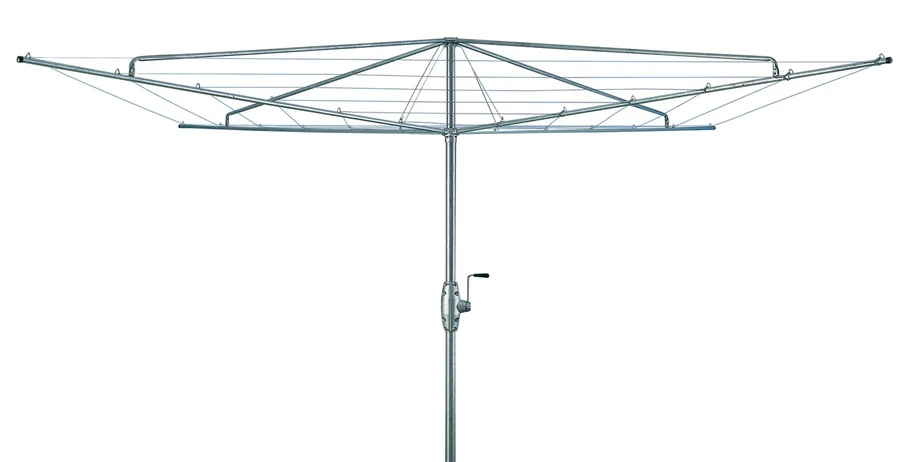
The Hills Hoist is a rotary clothes line on a single galvanised steel post. At the top, four arms radiate from a hub, braced by stays, with wire lines strung in squares between them, so that a whole wash can be pegged out from one spot and turned into the wind. Halfway up the post sits a cast winding case with a crank: a few turns raise the loaded head clear of the ground, and lower it again for the next wash.
Lance Hill made the first one in 1945, in his backyard in the Adelaide suburb of Glenunga, for a wife whose line had run out of room beside a lemon tree. He was not the inventor of the rotary hoist. Gilbert Toyne had patented one in 1911 and a crown-wheel winder in 1925, and Hill bought earlier designs from the South Australian inventor Gerhard Kaesler. What Hill and his brother-in-law Harold Ling did was make it cheaply, in quantity, and sell it. By 1954 the factory at Edwardstown was turning out six hundred hoists a week.
The timing was everything. The post-war suburbs were filling with quarter-acre blocks and young families, and the hoist became so common that its name is used in Australia for any rotary line. It has stood in paintings, films and the closing ceremony of the Sydney Olympics, and in 1974 a Darwin family reported it as the only thing left standing in their yard after Cyclone Tracy.
The company has since become something else, sold its clothesline business and moved most of its making abroad, and its folding models now carry the Hills Hoist name too. The fixed-head hoist, galvanised and wound by hand, is still sold as the Classic: the same post, the same crank, the same square of wire, and the form most Australians still picture when they hear the words.
Timeline
- 1945 First made · Disputed Hills Hoist enters production in Glenunga, Australia.
- 1945 Lance Hill builds and sells his first rotary hoists from his home in Glenunga, Adelaide.
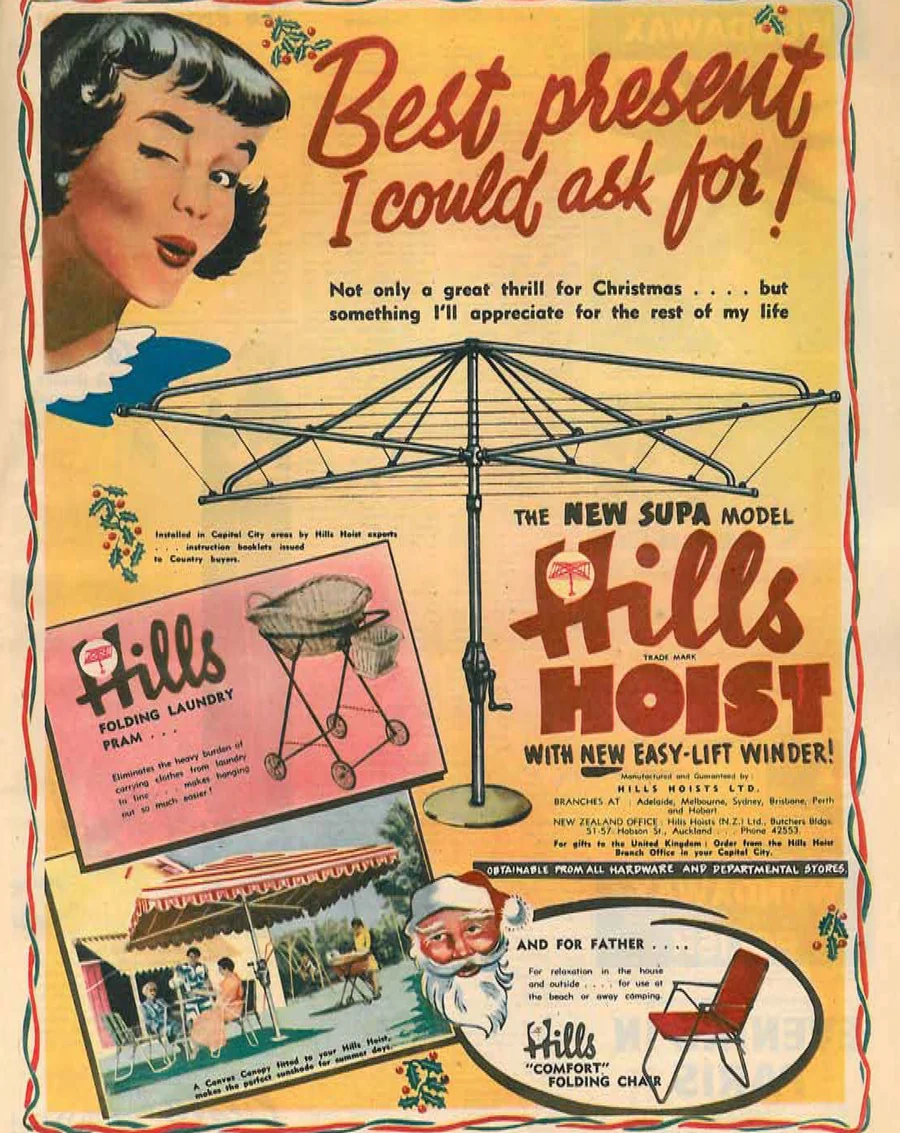
- 1956 Designed Hills advertises the new Supa model Hills Hoist, with an 'easy-lift winder'.
- 1994 Production Hills celebrates the sale of its five millionth hoist.
- 2017 Ownership Hills sells the rights to make and sell the Hills Hoist to AMES Australasia, part of Griffon Corporation.
Milestones as we found them, not as we've checked them.
From the archive
More like this
-
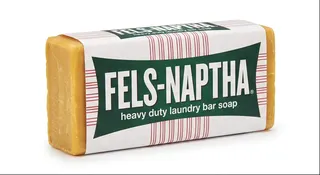 Laundry · since 1894 Fels-Naptha Philadelphia's golden laundry bar of the 1890s, still rubbed into collars and grated into the wash.
-
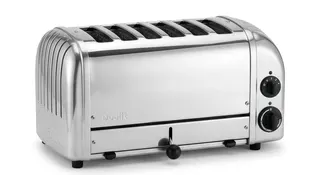 Toasters & Kettles · since 1952 Dualit 6 Slice Classic Toaster A caterer's toaster with a mechanical timer, first made in south London in 1952.
-
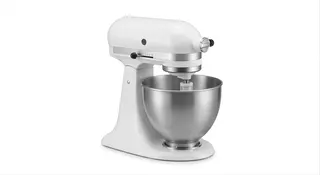 Mixers & Food Prep · since 1937 KitchenAid Tilt-Head Stand Mixer Egmont Arens's streamlined mixer of 1937, with a hub that still takes its first attachments.
-
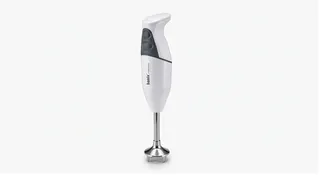 Mixers & Food Prep · since 1954 bamix hand blender The first hand blender, patented in Switzerland in 1950 and made since 1954.