Musical Instruments · Guitars & Basses · Acoustic Guitars
C.F. Martin & Company
Martin D-28
Since 1931 · 95 years to 2026 · First made in Nazareth, Pennsylvania
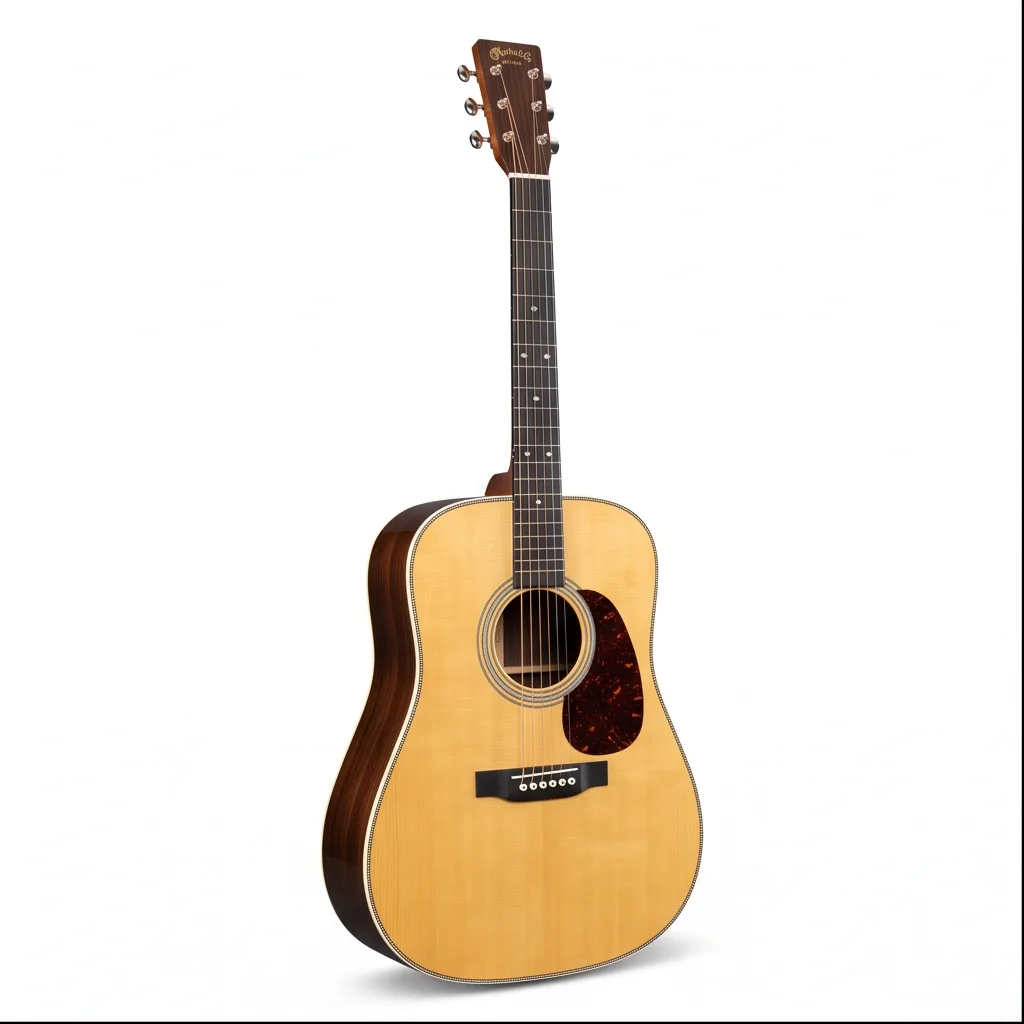
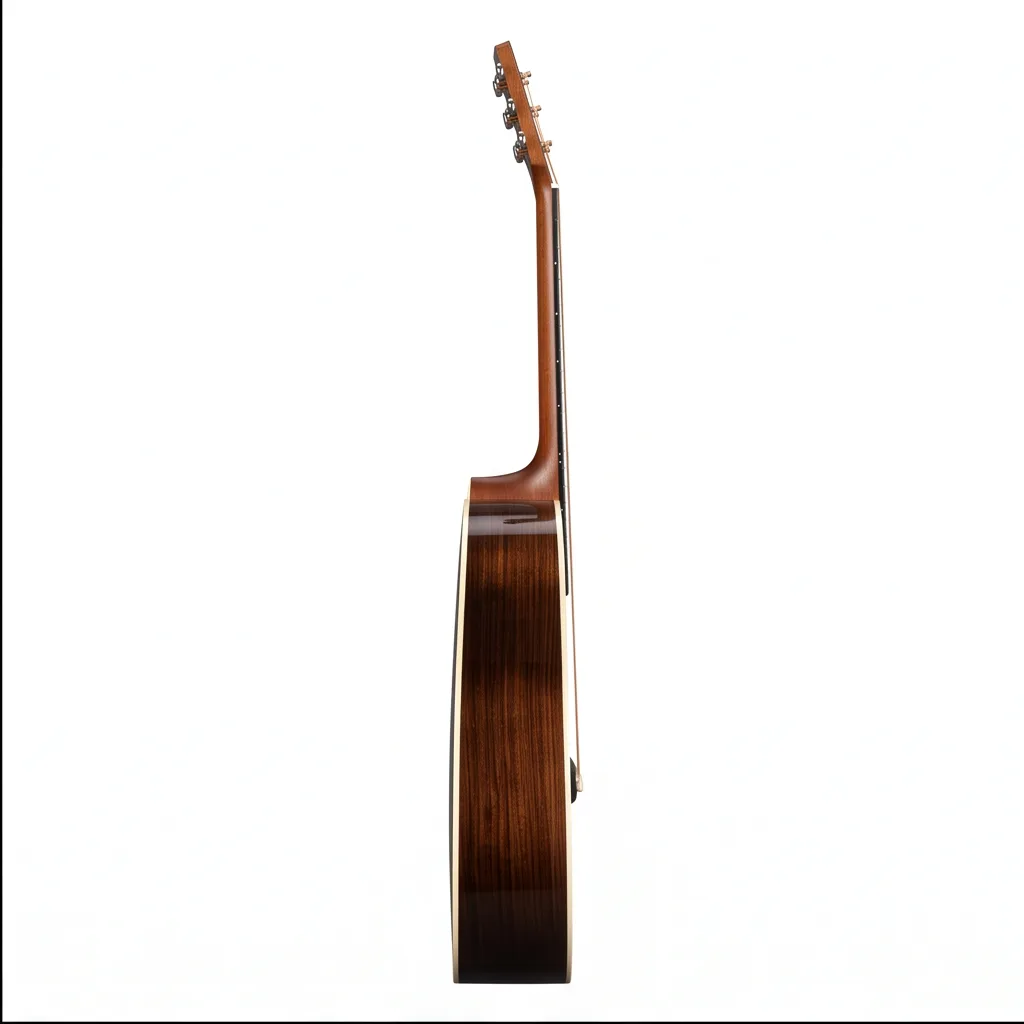
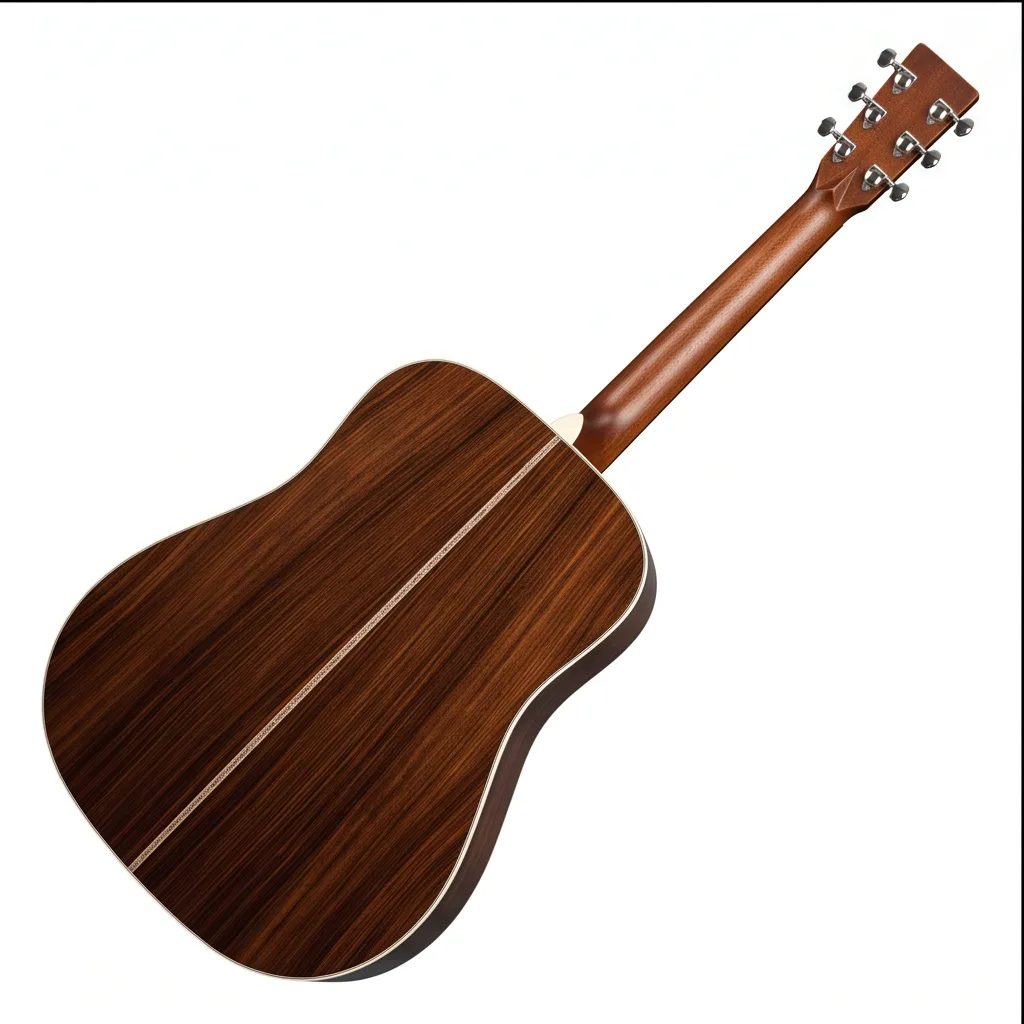
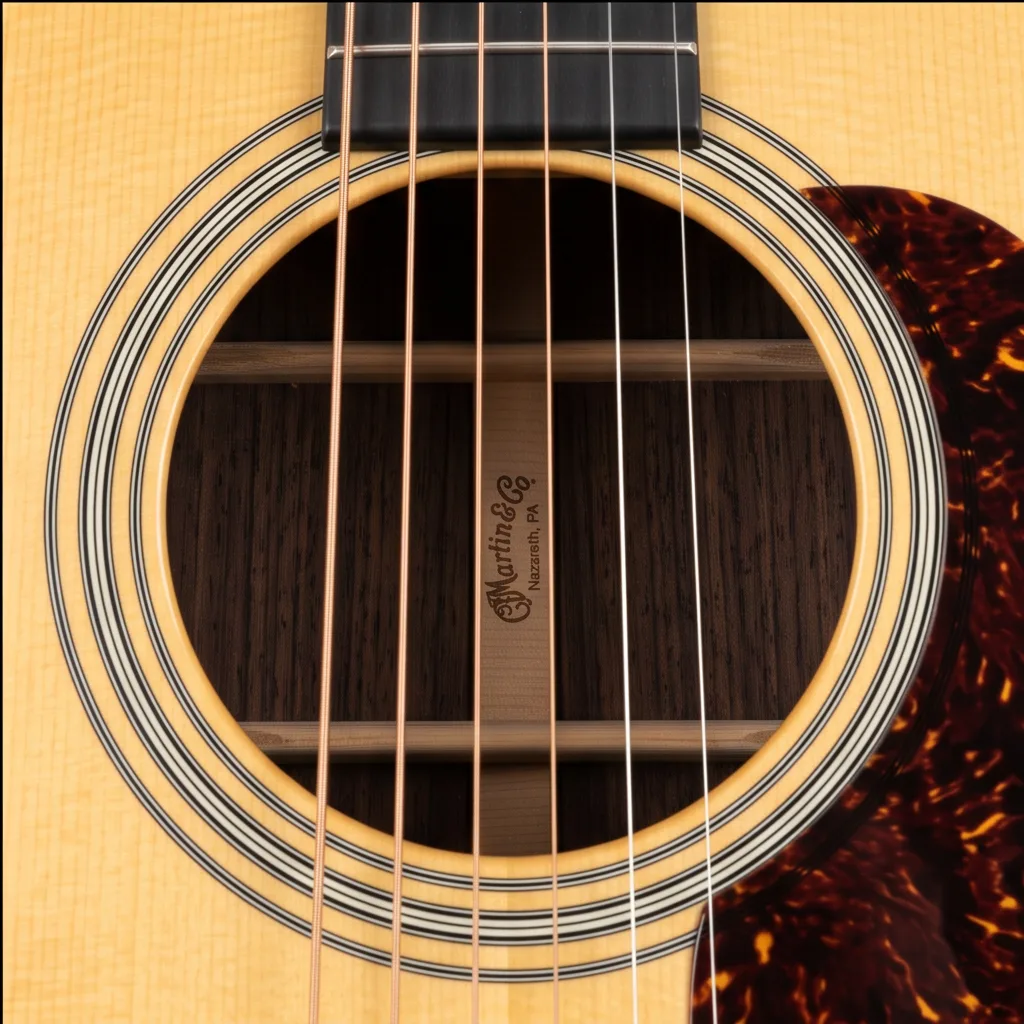
The Martin D-28 is the most widely recognized acoustic guitar in the world, a position earned through nearly a century of consistent manufacture and adoption by musicians across folk, country, rock, and classical traditions. Introduced by C.F. Martin & Company in 1931, the D-28 represents the refinement of a body style—the dreadnought—that Martin had developed for the Ditson Company in the preceding decades. When Ditson ceased operations, Martin recognized the commercial potential of the large-bodied design and released it to the broader market under the D-28 designation, paired with the slightly smaller D-18. The model's early adoption by country musicians in the 1930s and 1940s established it as the instrument of choice for generations of players.
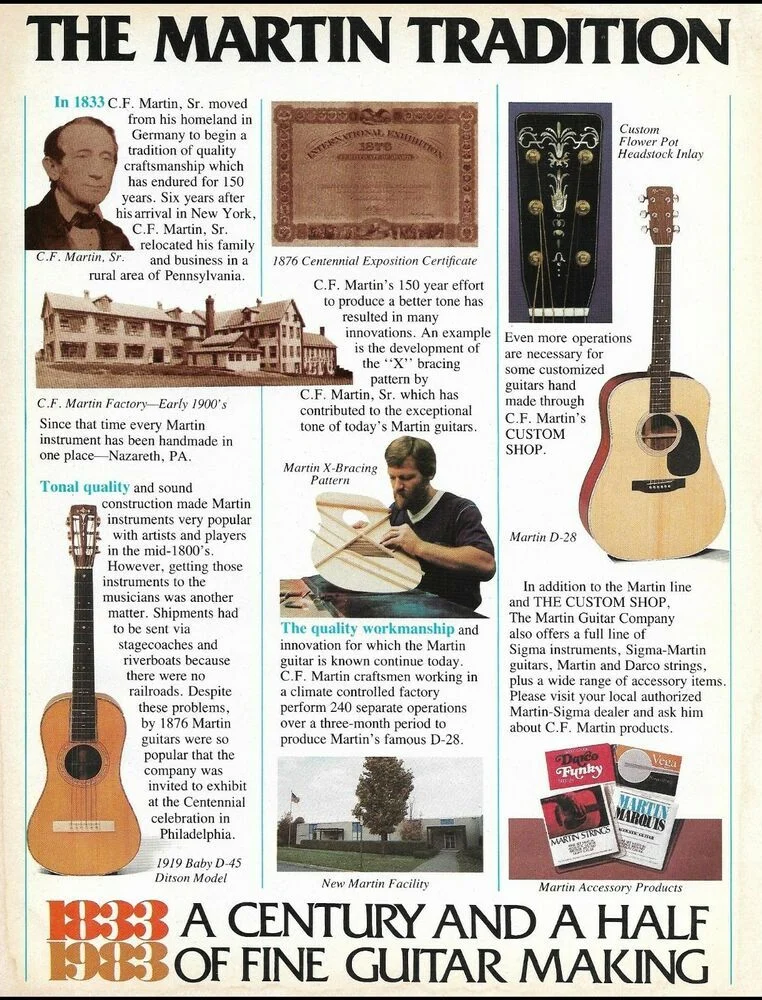
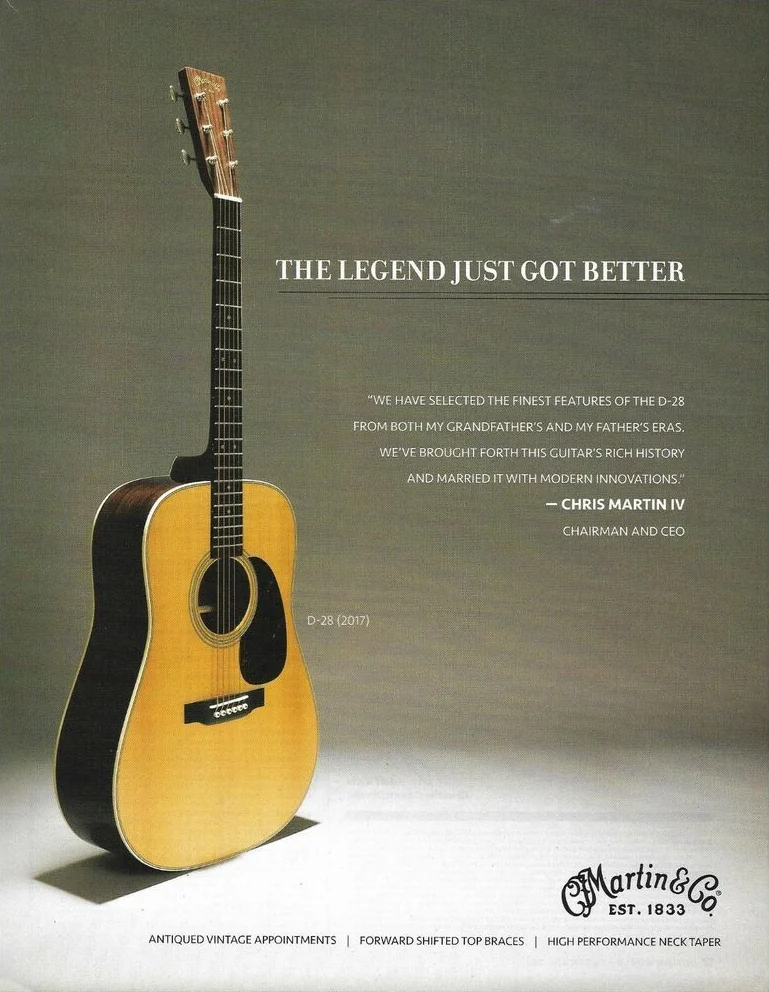
The D-28's construction embodies Martin's commitment to tonal quality through material selection and hand-crafted assembly. The guitar pairs a solid Sitka spruce top with solid East Indian rosewood back and sides, a combination that produces the characteristic bold, projective tone with strong bass and clear trebles for which the model is prized. The neck is mahogany, the fingerboard and bridge ebony, and the bracing pattern—originally scalloped in pre-war examples, now non-scalloped or forward-shifted depending on production year—is engineered to maximize resonance while maintaining structural integrity. Each instrument is finished in nitrocellulose lacquer, a labor-intensive process that contributes to the guitar's tonal development over time.
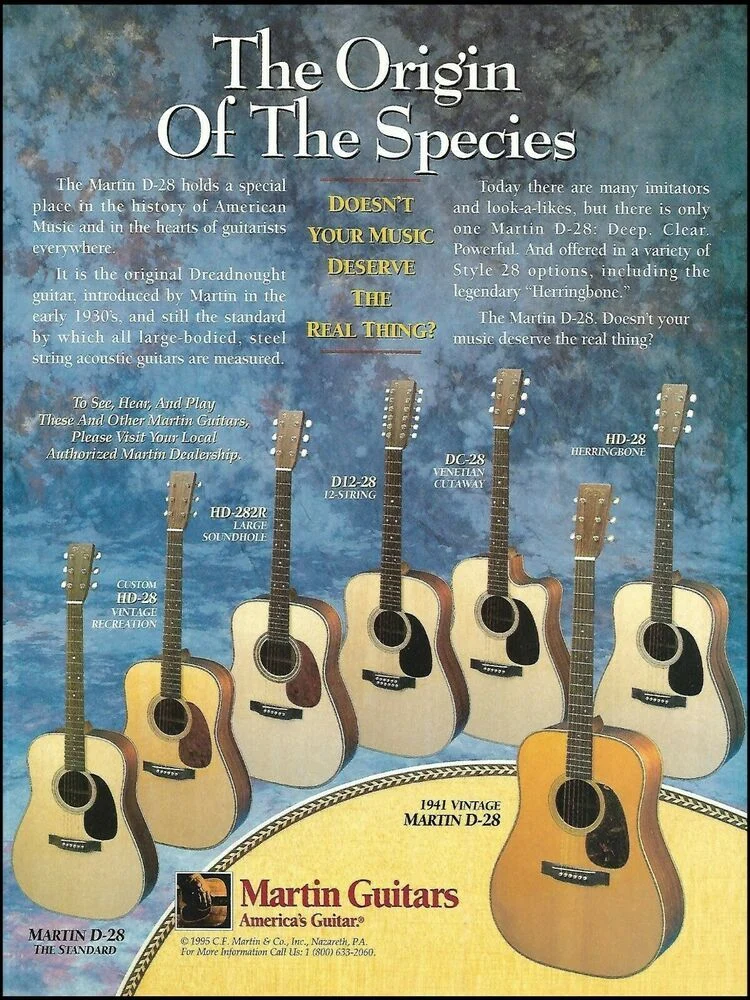
The D-28's longevity reflects both its acoustic performance and its cultural embedding in American music. Pre-war examples with scalloped bracing command prices in the six figures, while post-war models from the 1950s and 1960s remain highly sought by professional musicians. The modern D-28, produced with a blend of hand assembly and computer-aided manufacturing, maintains the specifications established in the 1930s while incorporating refinements to playability and finish quality. As of 2025, Martin continues to produce the D-28 in multiple configurations—gloss and satin finishes, varying fret counts—ensuring that the model remains accessible to both professional and amateur players. The guitar's persistence in production for over ninety years, without fundamental redesign or discontinuation, testifies to the soundness of its original conception and the stability of demand for acoustic instruments of genuine quality.
Timeline
- 1931 First made · Verified Martin D-28 enters production in Nazareth, Pennsylvania.
- 1946 Production Martin discontinues the herringbone trim pattern on the D-28.
- 1947 Production Martin begins using Sitka spruce tops and Indian rosewood on the D-28.
Milestone dates are taken from the production notes behind this entry and have not been checked separately.
From the archive
More like this
-
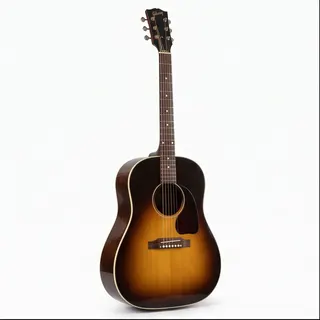 Acoustic Guitars · since 1942 Gibson J-45 The workhorse acoustic, in continuous production since 1942. Read the entry →
 -
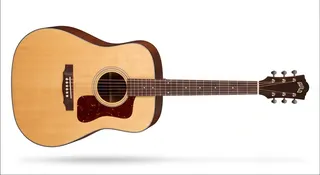 Acoustic Guitars · since 1963 Guild D-40 Dreadnought acoustic guitar in continuous production since 1963. Read the entry →
 -
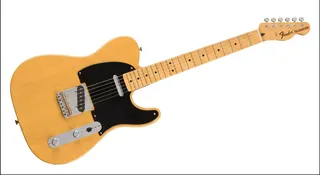 Electric Guitars · since 1950 Fender Telecaster The first mass-produced solid-body electric guitar, still in production. Read the entry →
 -
 Electric Guitars · since 1954 Gretsch 6120 Hollow-body electric guitar in continuous production since 1954. Read the entry →