Sports & Leisure · Games & Toys · Games & Puzzles
Hasbro
Scrabble
Since 1948 · 78 years to 2026 · First made in Newtown, Connecticut
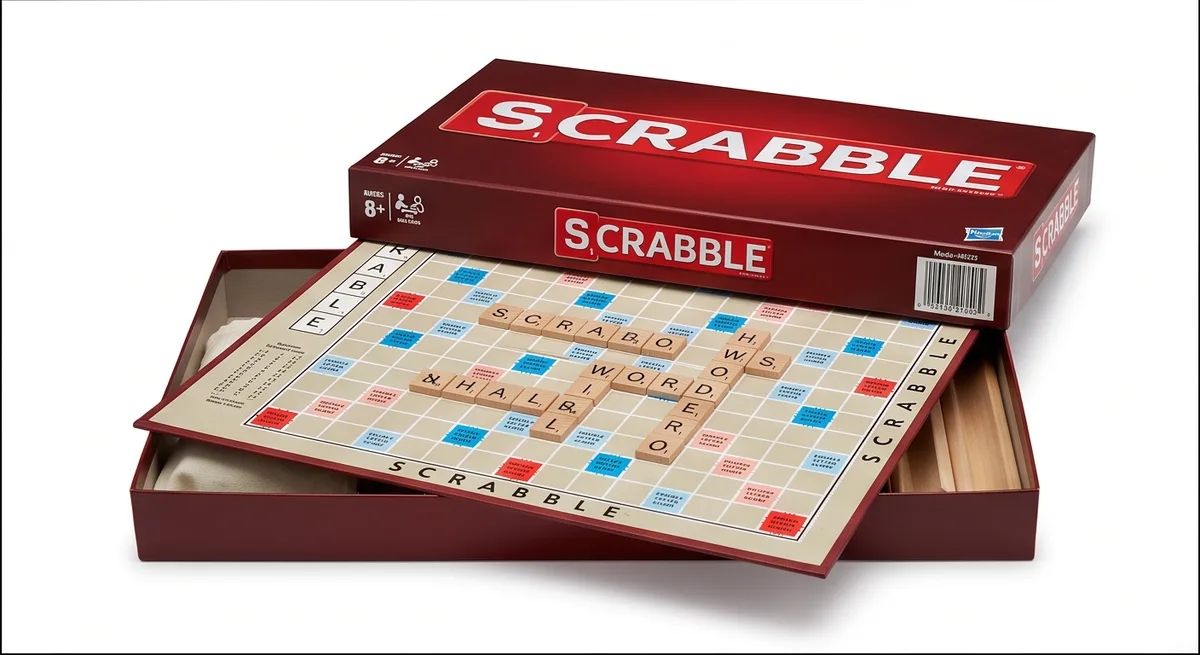
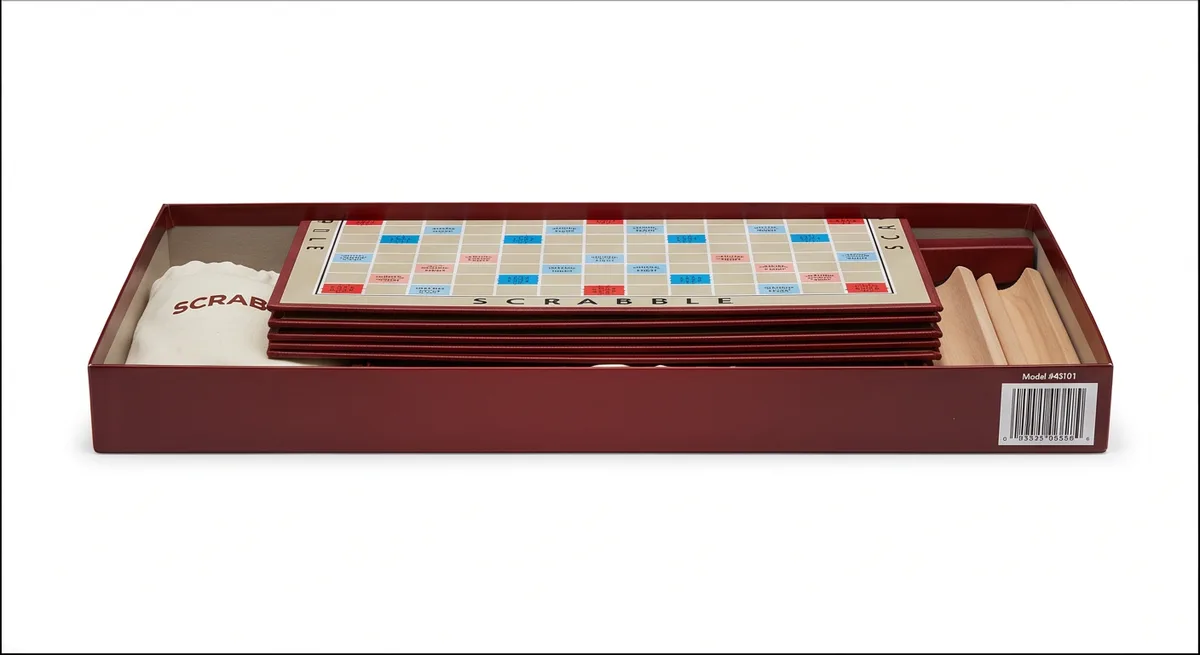
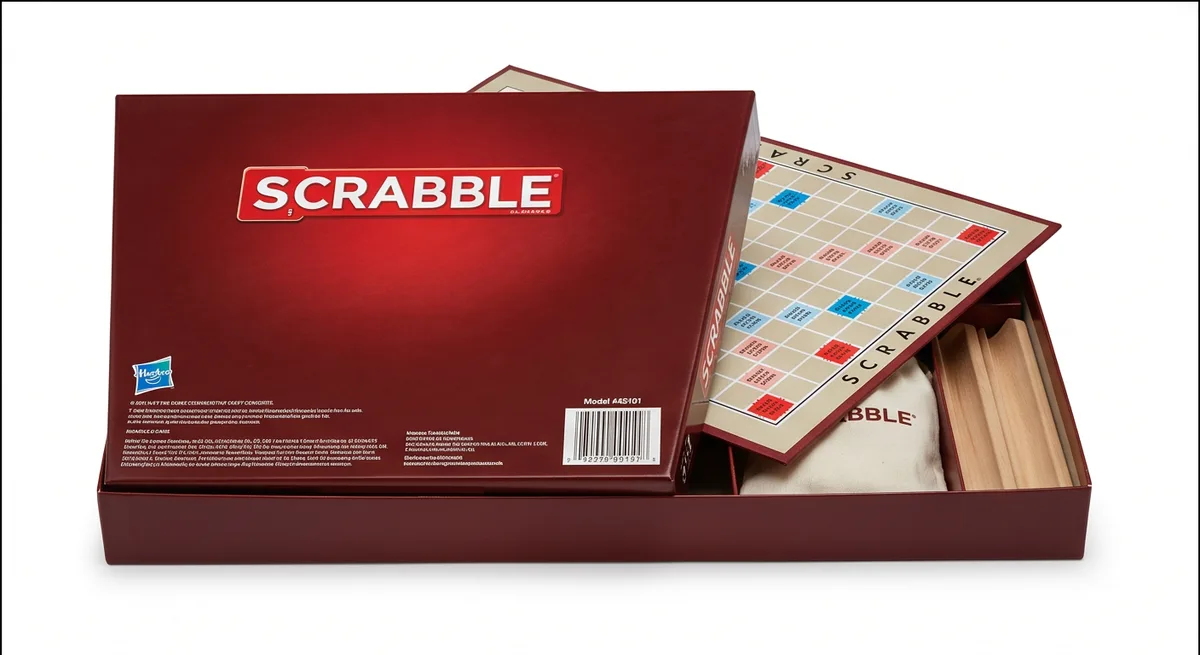
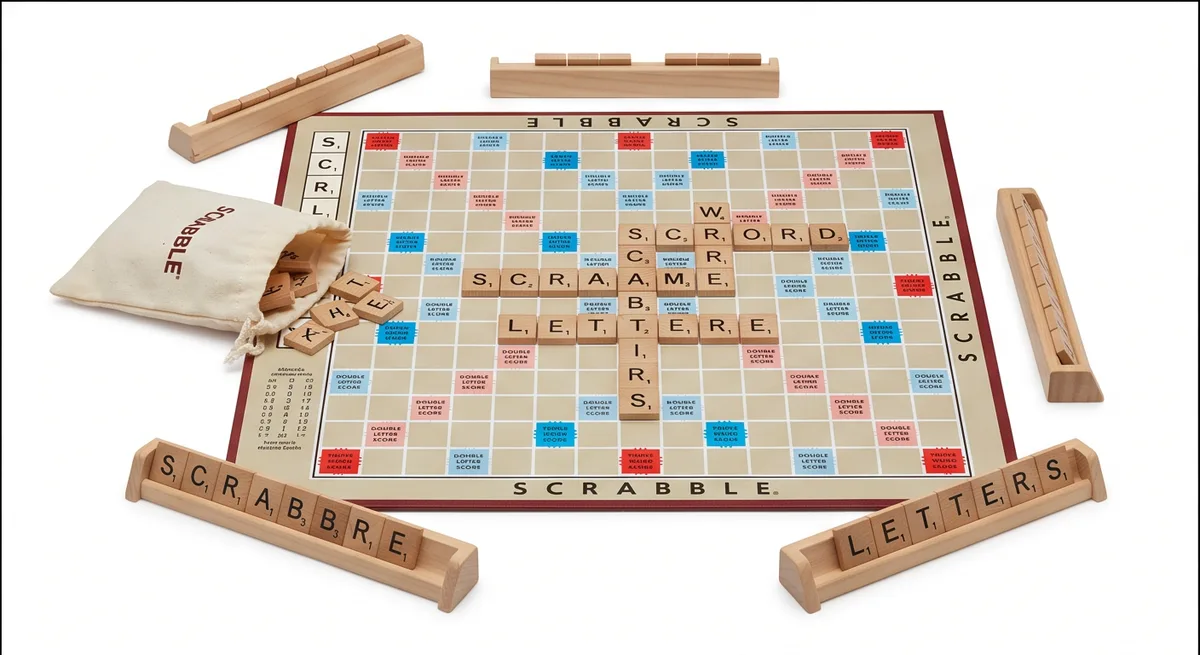
Scrabble is a word-formation game for two to four players, played on a gridded board using lettered tiles drawn from a pool. Each player forms words horizontally and vertically on the board, earning points based on letter values and premium squares—double and triple letter scores marked in pale and dark blue, word multipliers in red. The game requires both vocabulary knowledge and strategic placement, as words must intersect with existing plays and connect to form valid English words.
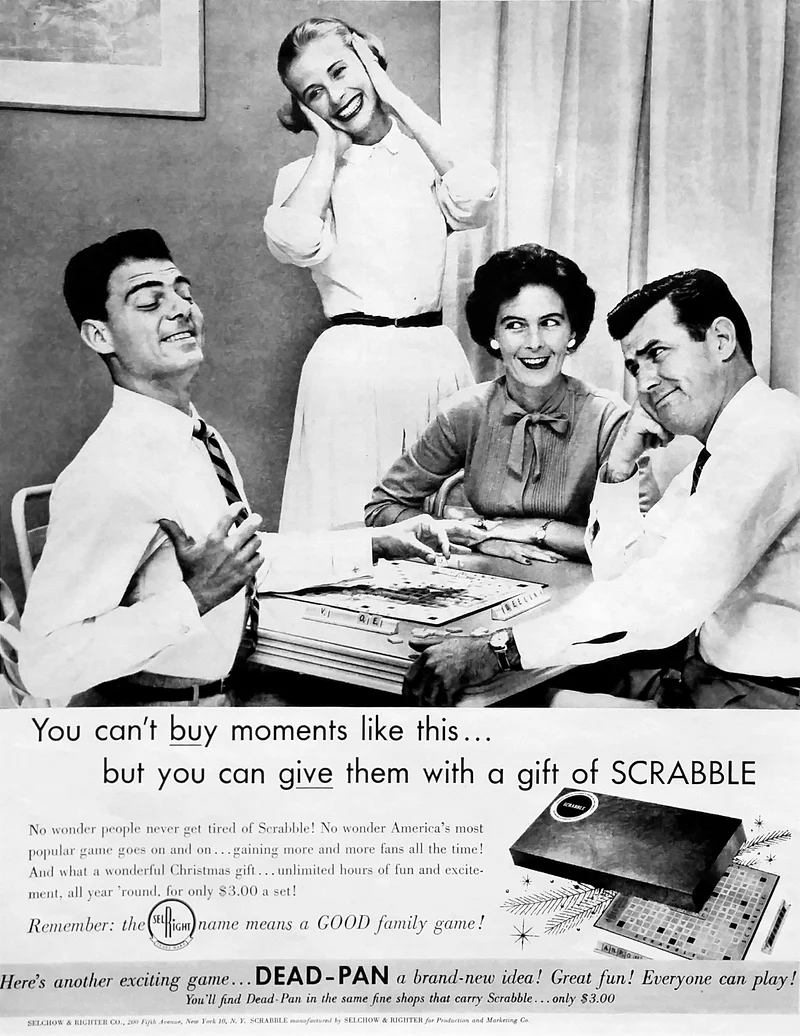
Alfred Mosher Butts, an American architect, developed the game's core mechanics in 1931, calculating letter frequencies from newspaper analysis to assign point values. His early prototypes circulated among game manufacturers throughout the 1930s and 1940s without commercial success. James Brunot, a Connecticut entrepreneur and game enthusiast, acquired manufacturing rights in 1948 and refined both the rules and board design. Brunot's key contribution was the name itself—Scrabble, meaning to grasp or collect frantically—which captured the game's competitive essence. The trademark was registered in 1948.
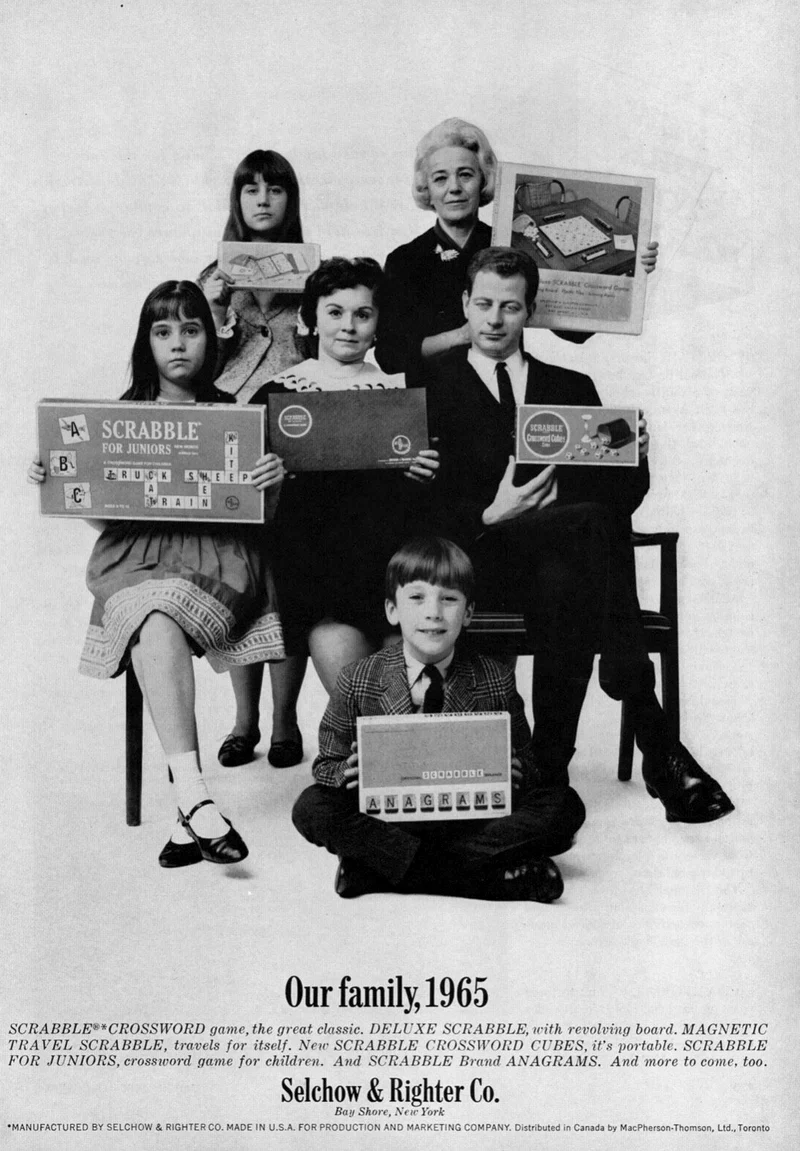
Initial production was labour-intensive and modest in scale. The Brunots and friends stamped letters onto wooden tiles individually in their converted schoolhouse factory, producing approximately 12 games per hour. Slow but steady consumer adoption through word-of-mouth recommendation eventually attracted the attention of established game manufacturers. Selchow & Righter Company, which had previously rejected the game, licensed manufacturing rights in 1952 and transformed Scrabble into a mass-market product. By 1954, annual sales exceeded four million units. The game's appeal transcended demographic boundaries; by the 1980s, it was found in three of every five American homes, and similar penetration occurred in British households.
Scrabble's longevity reflects both its elegant rule system and its cultural function as a social activity combining competition, vocabulary building, and accessible gameplay. The game has been adapted into numerous formats—junior editions, travel versions with magnetic or pegboard tiles, electronic variants, and deluxe sets—ensuring relevance across generations and contexts. As of 2008, approximately 150 million sets had been sold worldwide in 121 countries and more than 30 languages, with competitive play organized through approximately 4,000 clubs globally. The consistency of its core design, combined with strategic manufacturing adaptations and ownership by major toy companies, has sustained continuous production for over seven decades.
Timeline
- 1931 Designed Alfred Mosher Butts invents the game as Lexiko, calculating letter frequencies from newspaper analysis to assign point values.
- 1948 First made · Disputed Scrabble enters production in Newtown, Connecticut.
- 1949 Production The Brunots manufacture 2,400 sets in their converted schoolhouse factory.
- 1952 Ownership Selchow & Righter Company licenses manufacturing rights and begins mass production.
- 1972 Ownership Ownership of the trademark passes from Brunot to Selchow & Righter.
- 1989 Ownership Hasbro purchases the brand after Coleco declares bankruptcy.
- 1994 Ownership Mattel acquires rights to produce Scrabble outside the U.S. and Canada.
Milestone dates are taken from the production notes behind this entry and have not been checked separately.
More like this
-
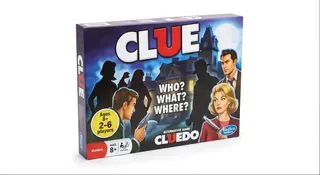 Games & Puzzles · since 1949 Clue (Cluedo) Murder mystery deduction game, continuously manufactured since 1949. Read the entry →
 -
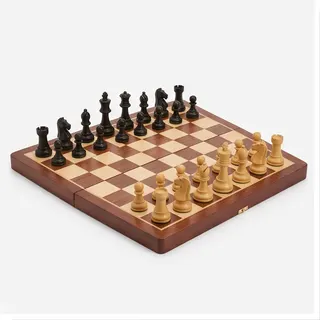 Games & Puzzles · since 1849 Jaques Chess Set The standard chess set design, unchanged since 1849. Read the entry →
 -
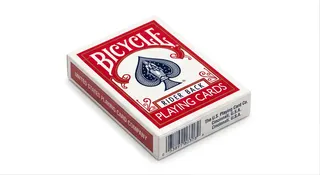 Games & Puzzles · since 1885 Bicycle Playing Cards The world's bestselling playing cards, continuously manufactured since 1885. Read the entry →
 -
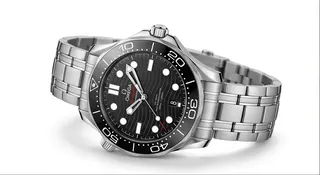 Watches · since 1948 Omega Seamaster Water-resistant sports watch born from wartime precision, 1948 to present. Read the entry →