Garden & Outdoor · Camping & Outdoor · Lanterns & Stoves
Trangia
Trangia 25 Storm Cooker
Since 1951 · 75 years to 2026 · First made in Trångsviken, Sweden
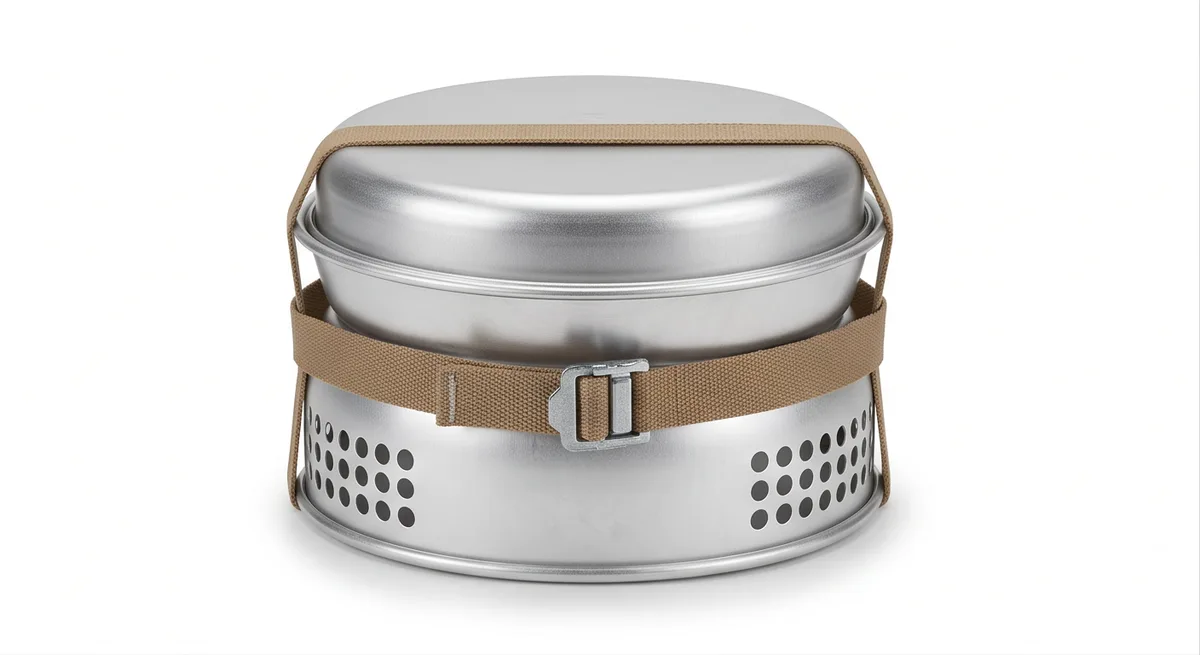
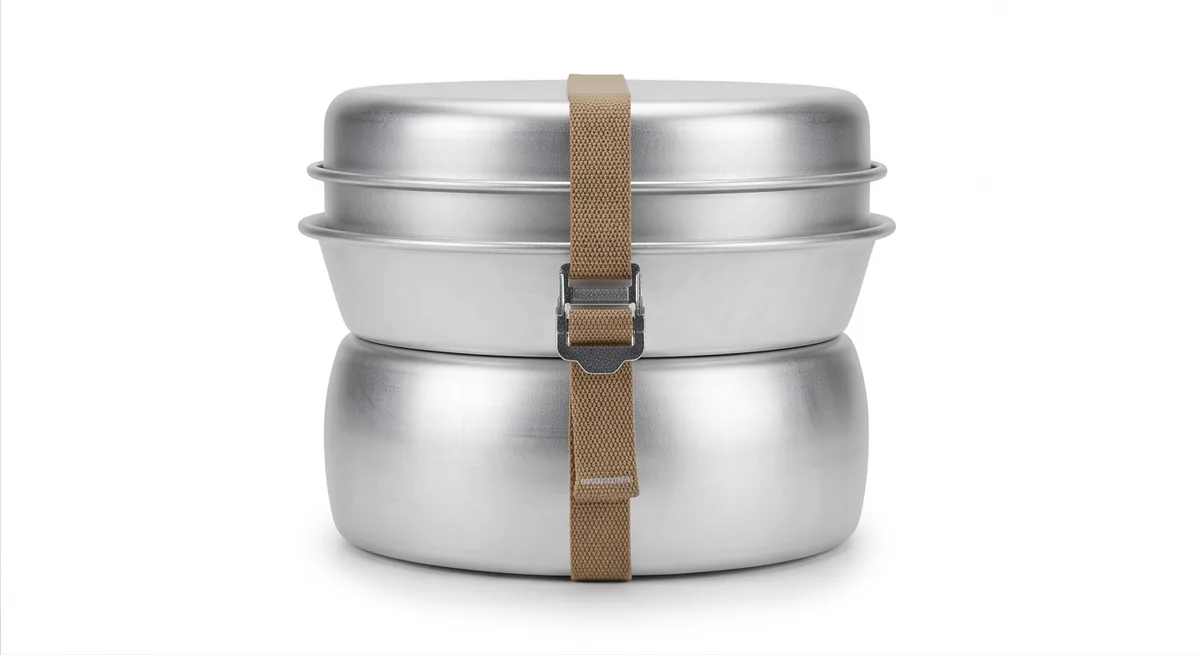
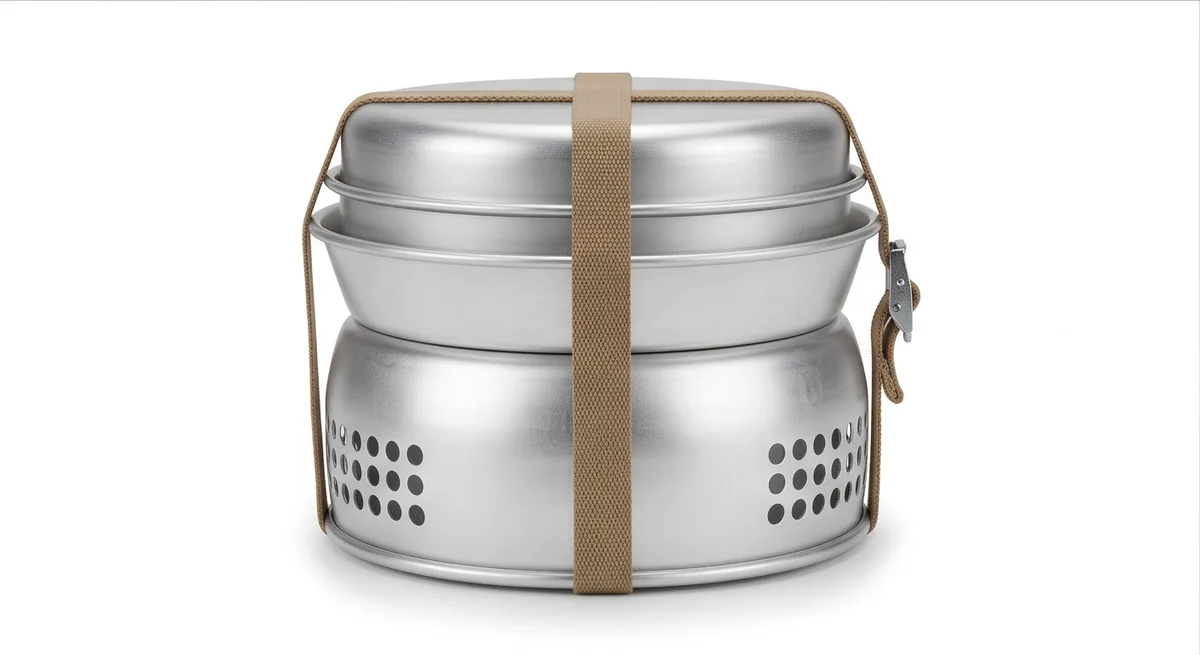
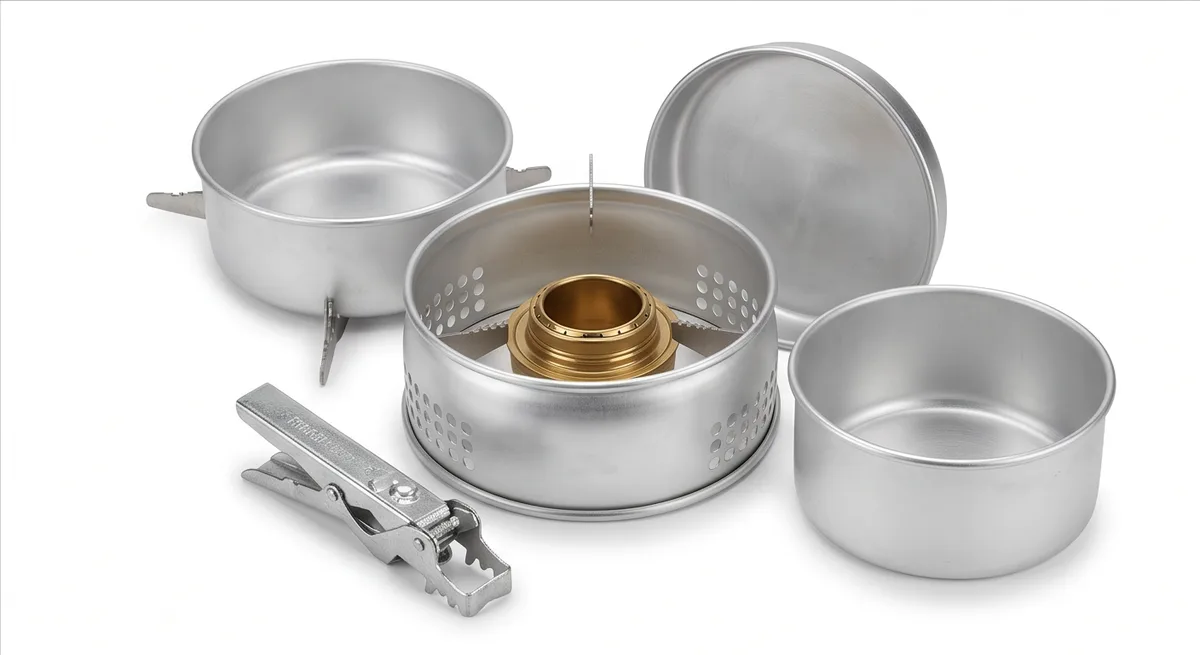
Packed, the Trangia 25 is a squat aluminium drum about 22 centimetres across and ten high, held shut by a strap. Opened, it becomes a kitchen. A perforated lower windshield stands on the ground and holds a small brass spirit burner; the upper windshield sits on it, carries the pot and shields the flame on every side. Two saucepans of one and a half and one and three-quarter litres nest inside, a frying pan serves as their lid, and a single gripping handle fits them all.
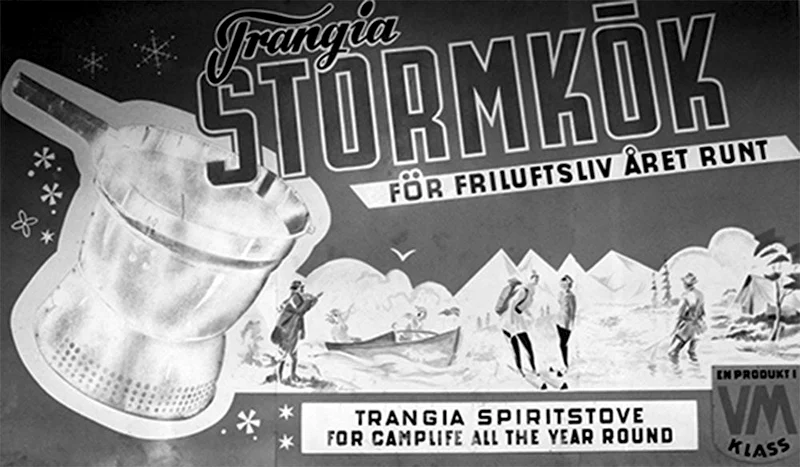
It was made by a firm of pot-makers. Trangia was founded in 1925 in Trångsviken, a village in Jämtland in northern Sweden, making aluminium cookware for farmhouses. When Sweden's holiday reform of 1938 gave people time to camp, John E. Jonsson and his sons turned to stoves, and the company dates the first Trangia, burner, pot and windshield as one system, to 1951. In its own archive the set appears on a supplement to the 1950 catalogue as Stormkök Nr 25, the storm cooker, weighing 800 grams.
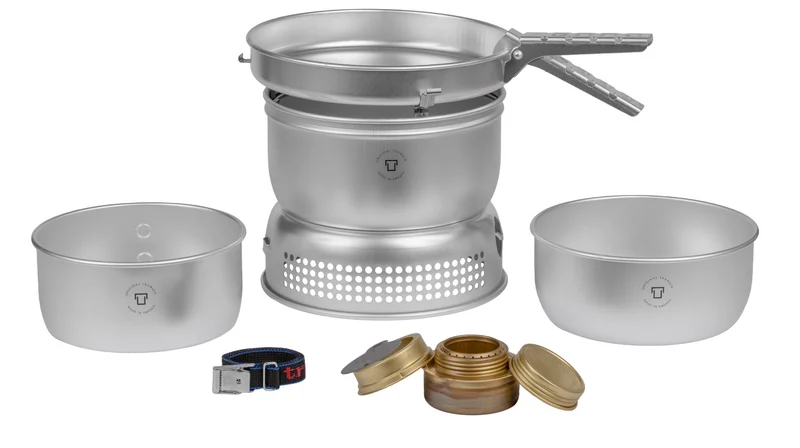
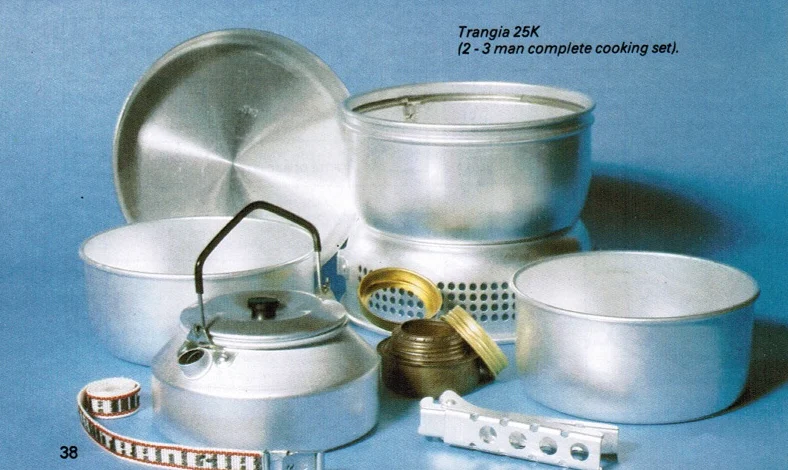
The list of parts on that page is the list of parts today: a frying pan of 22 centimetres, pots of one and a half and one and three-quarter litres, an upper and a lower windshield, a spirit burner, a handle that doubles as tongs, and a strap. By 1957 the burner had gained a way of turning the flame down, and a smaller model, the 27, had appeared. Since then the changes have been to materials, with non-stick, hard-anodised and steel-lined pans, and the option of a gas burner.
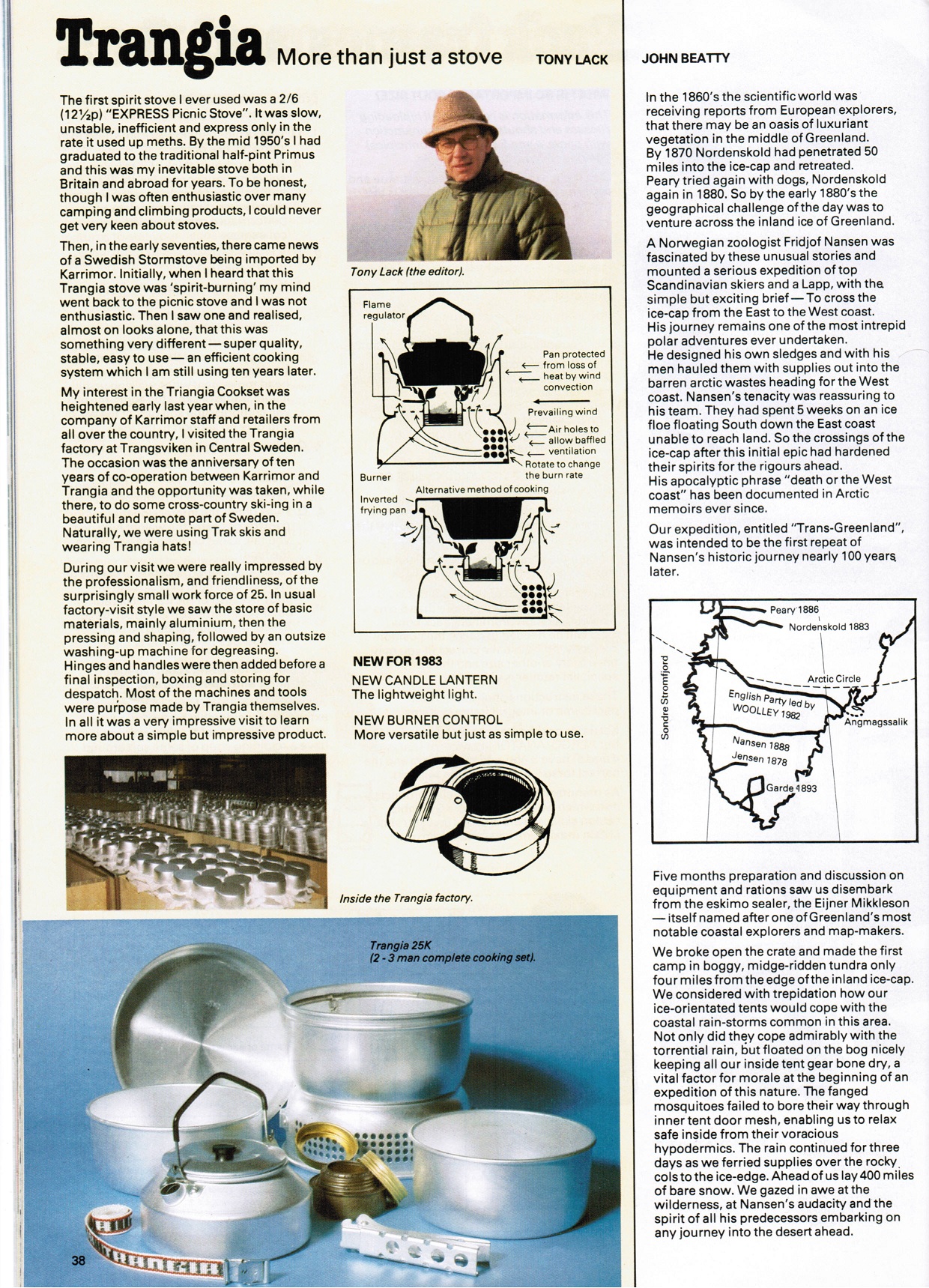
The stoves are still made in Trångsviken, where the company moved into a new factory in 1978 and says some of its machines date from the 1950s. The appeal has not changed much either. The fuel is cheap and found almost everywhere, the burner has no moving parts, and the whole kitchen packs into the space of one pot.
Timeline
- 1951 First made · Claimed Trangia 25 Storm Cooker enters production in Trångsviken, Sweden.
- 1957 Designed The catalogue lists the 25 with a simmer arrangement on the burner, alongside the new, smaller 27.
- 1978 Production A new factory opens in Trångsviken, where the stoves are still made.
- 2021 Production Over half a million stoves and mess tins leave the Trångsviken plant in a single year.
Milestones as we found them, not as we've checked them.
From the archive
More like this
-
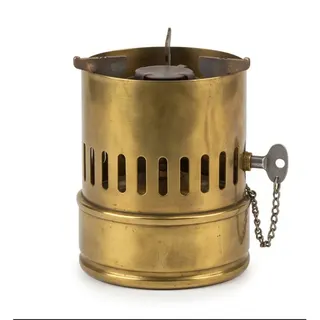 Lanterns & Stoves · since 1955 Optimus Svea 123 A brass pocket stove from Sundbyberg that has roared on the same priming cup since the mid-1950s. Read the entry →
 -
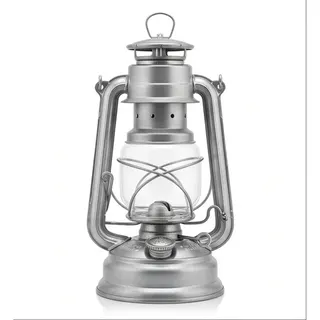 Lanterns & Stoves · since 1933 Feuerhand Baby Special 276 A small German storm lantern of 1933, still made in Holstein and still lit by raising its globe with a lever. Read the entry →
 -
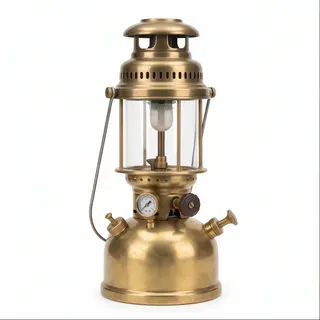 Camping & Hiking · since 1919 Tilley Lamp Pressurised paraffin lamp in continuous production since 1919 Read the entry →
 -
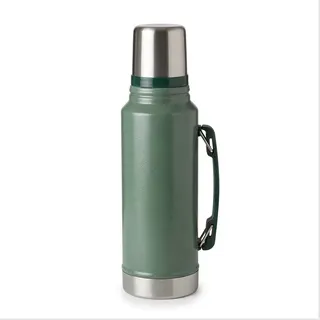 Flasks & Bottles · since 1913 Stanley Vacuum Bottle All-steel vacuum flask, patented 1913, continuously produced. Read the entry →