Stationery & Office · Paper & Desk · Notebooks & Paper
Tsubame Note
Tsubame Note
Since 1947 · 79 years to 2026 · First made in Tokyo, Japan
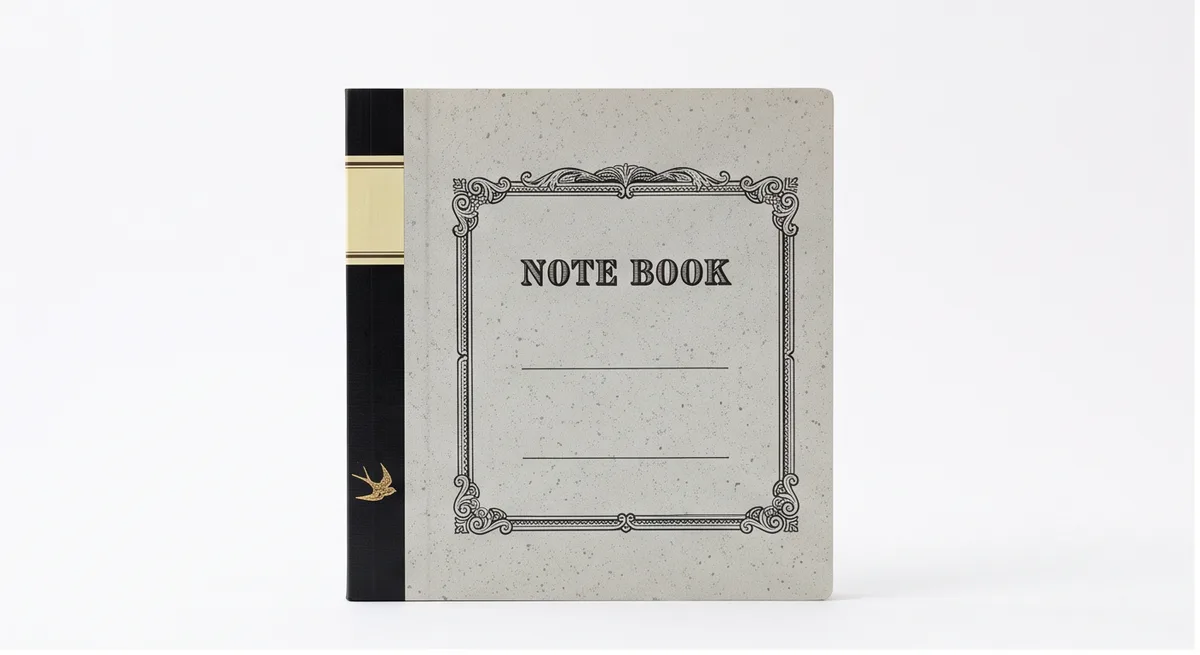
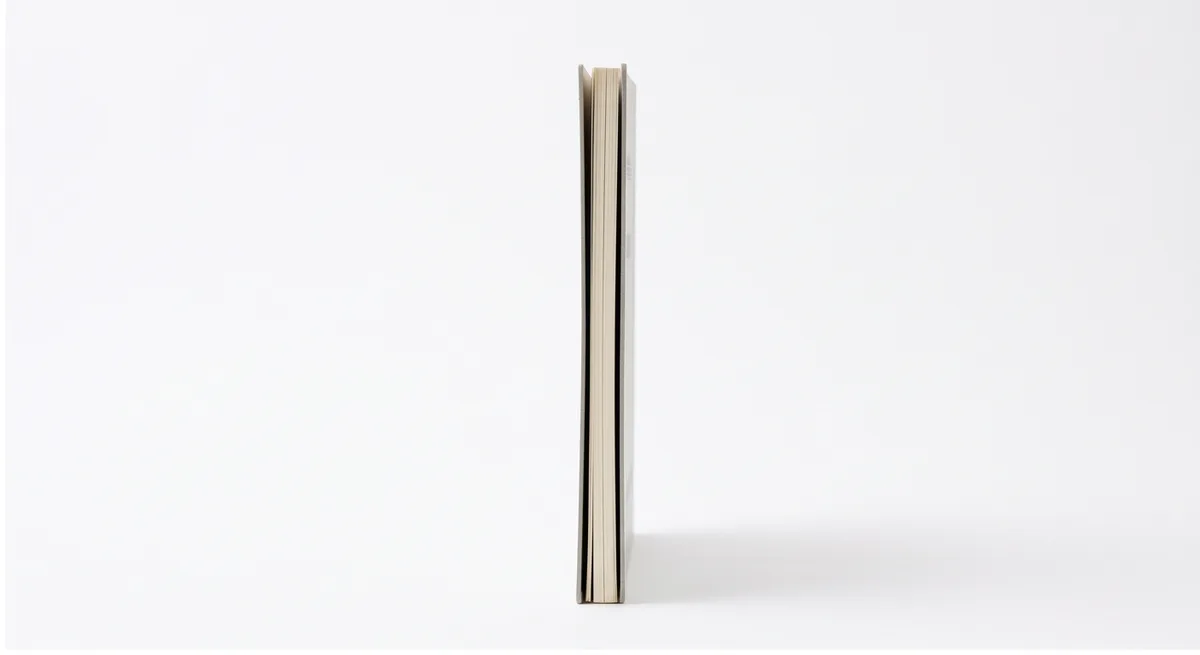
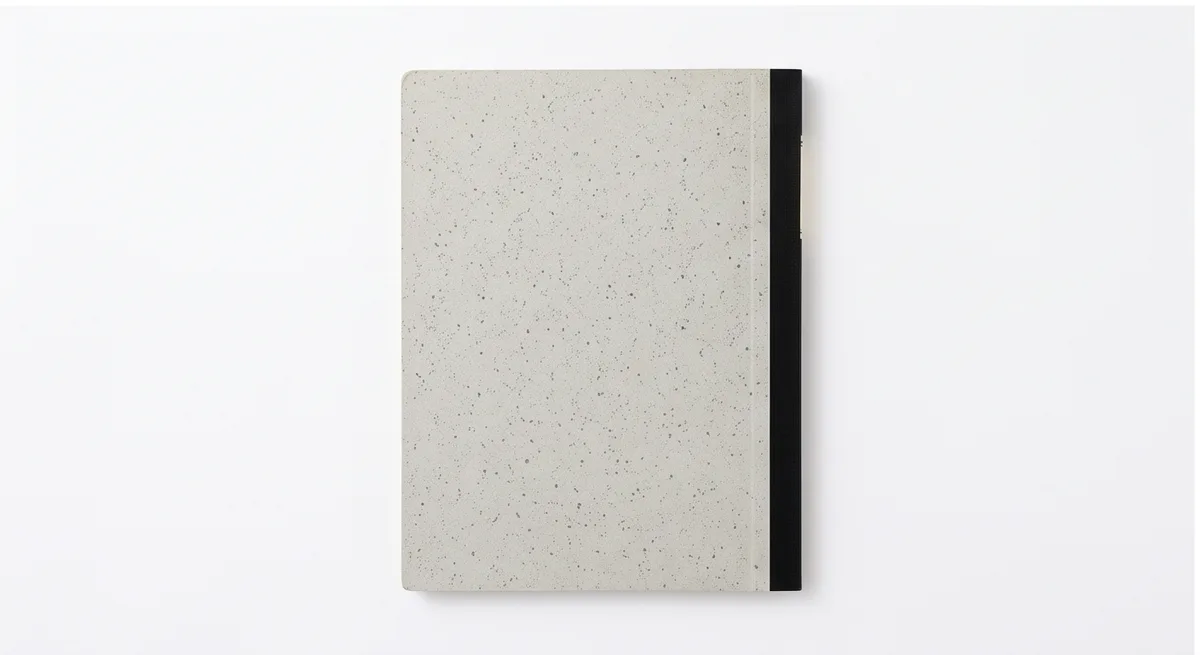
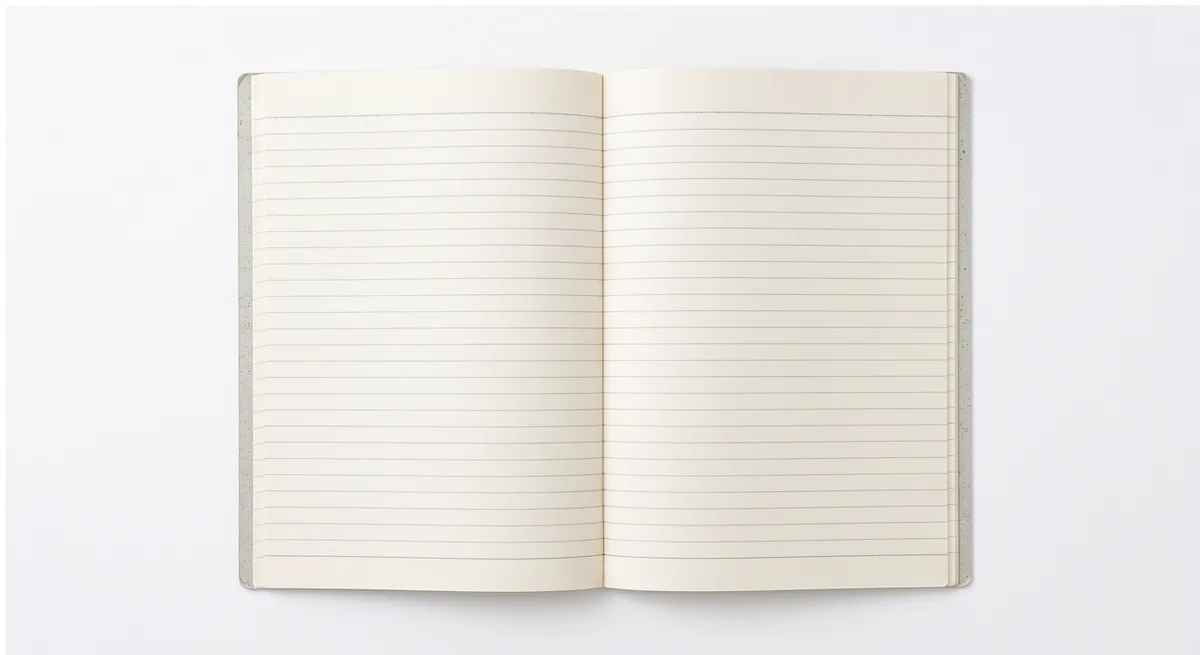
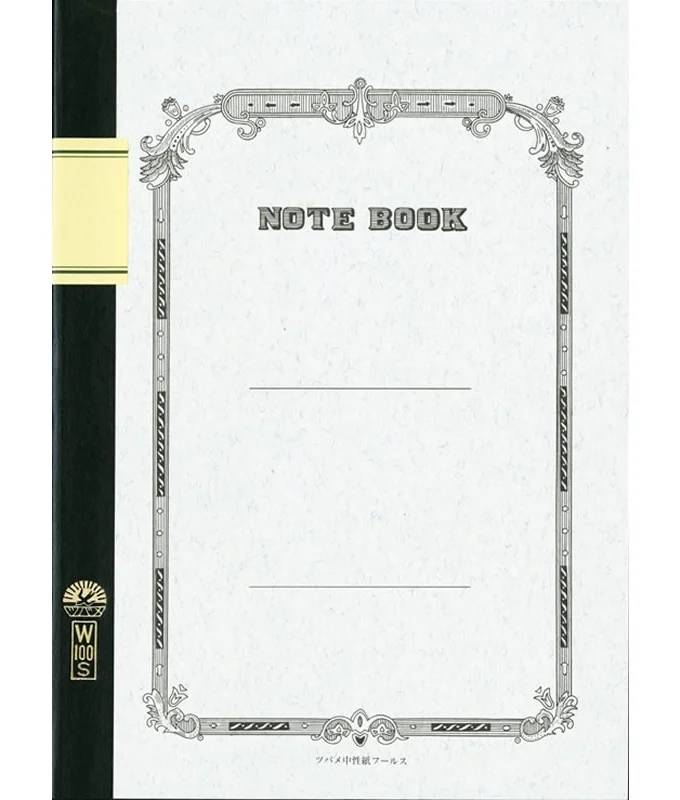
The Tsubame Note is a Japanese exercise book of the kind called a daigaku nōto, or University Notebook: a semi-B5 book of thread-sewn pages under a soft card cover of pale grey, flecked like stone. A black strip runs down the spine, crossed near the top by a band of pale yellow, and a small gold swallow sits near its foot above the model code. On the cover an engraved ornamental frame, scrolled at the corners, encloses the words NOTE BOOK in heavy capitals and two ruled lines for a name.
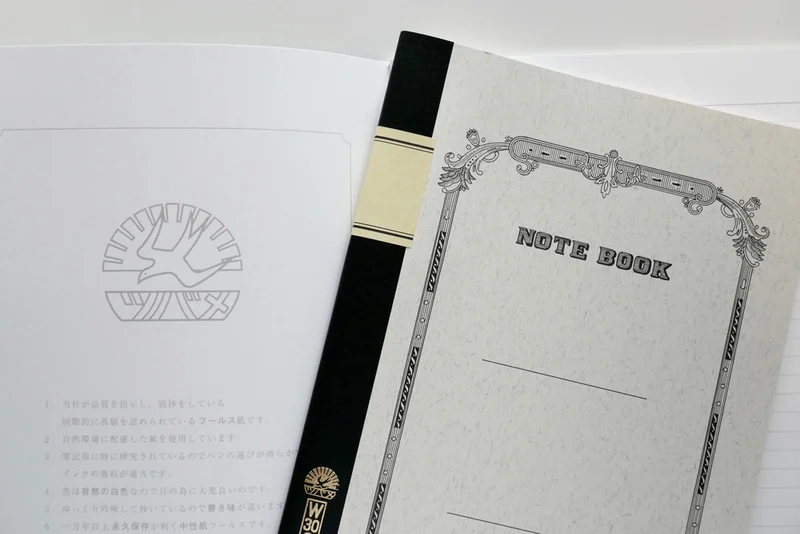
The maker says the book was first sold in 1947, shortly after the war, by Watanabe Hatsusaburō Shōten, the Tokyo stationer that became Tsubame Note the following year. The design has no named author. The company's own account is that a passing fortune-teller called at the shop, said he could also draw, and offered to design a notebook; the frame he drew has been printed ever since. Why the book is called the swallow is no clearer: one story credits a handsome salesman named Tsubame, another the Tsubame express train.
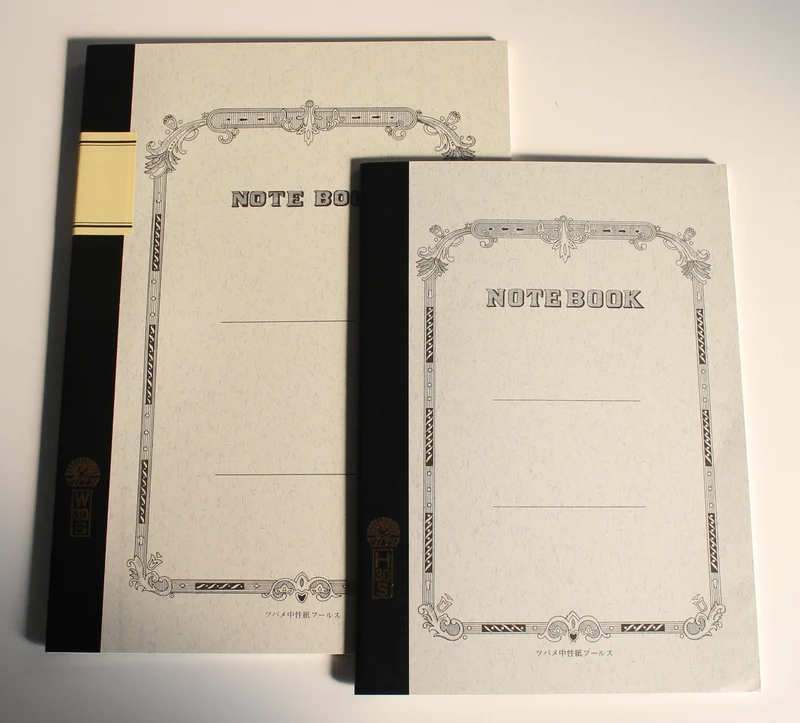
What the maker has kept is the making. The paper is its own neutral fool's paper, named after the English foolscap, made without fluorescent dye; until the 1980s it carried a watermark. The lines are not printed but drawn in water-based ink by a ruling machine at Iguchi, a small works near the company's office in Asakusabashi, which @DIME reported in 2018 to be the last such works in Japan. The pages are sewn with thread rather than glued.
The model codes still carry the founder's initials: W for Watanabe on the B5 books, H for Hatsusaburō on the A5. A barcode has been added to the back. Otherwise the company announces each spring, half in jest, that the design will not change. The B5 notebook is sold in thicknesses from 30 to 100 sheets.
Timeline
- 1947 First made · Claimed Tsubame Note enters production in Tokyo, Japan.
- 1947 Watanabe Hatsusaburō Shōten launches the University Notebook with its framed 'NOTE BOOK' cover.
- 1948 Tsubame Note is founded as the successor business.
- 2012 Recognised The notebook receives a Good Design Long Life Design Award.
Milestones as we found them, not as we've checked them.
From the archive
More like this
-
 Notebooks & Paper · since 1975 Kokuyo Campus Notebook Japan's student notebook since 1975: thirty ruled sheets, glued at the spine and wrapped in coloured tape. Read the entry →
 -
 Desk Accessories · since 1959 Fevicol SH The white glue that replaced the carpenter's melting pot in India, and became the country's word for glue. Read the entry →
 -
 Desk Accessories · since 1960 Poxipol Argentina's two-part cure for broken things, mixed one to one since 1960. Read the entry →
 -
 Desk Accessories · since 1932 UHU Der Alleskleber A pharmacist's clear synthetic glue of 1932, named after an owl and still sold in the yellow tube with black capitals. Read the entry →