Baccarat
Baccarat Harcourt Glass
Since 1841 · 185 years to 2026 · First made in Baccarat, France
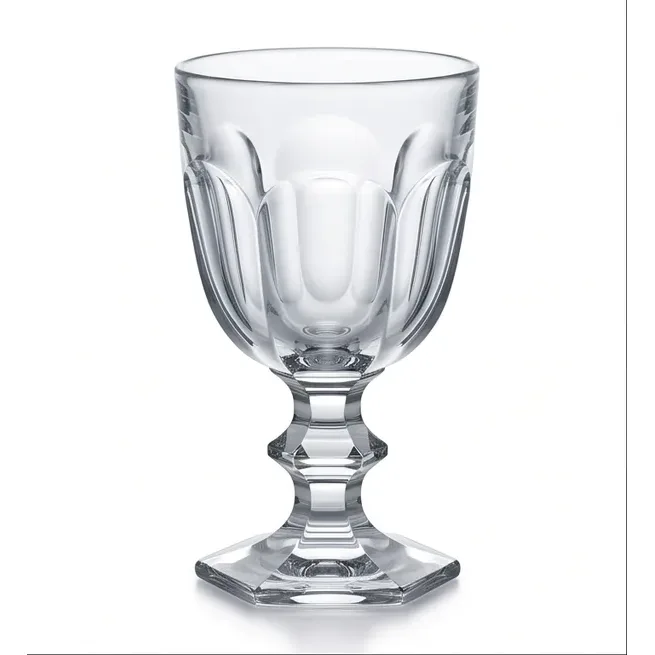
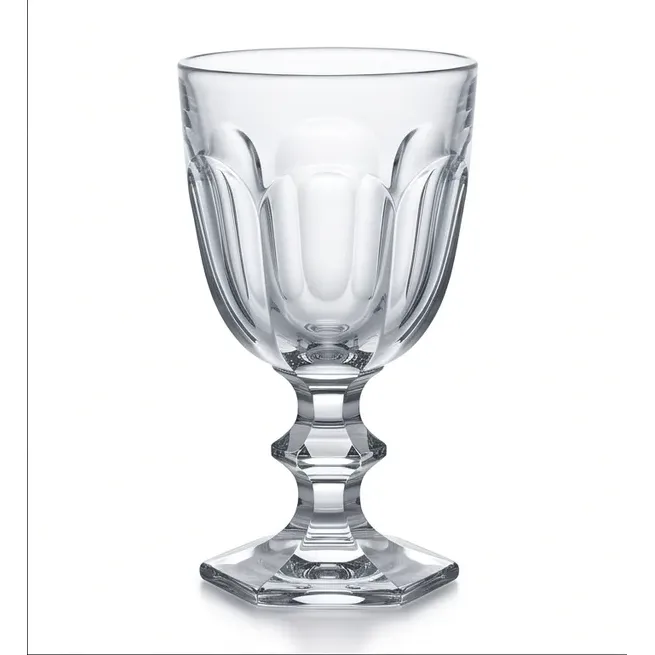
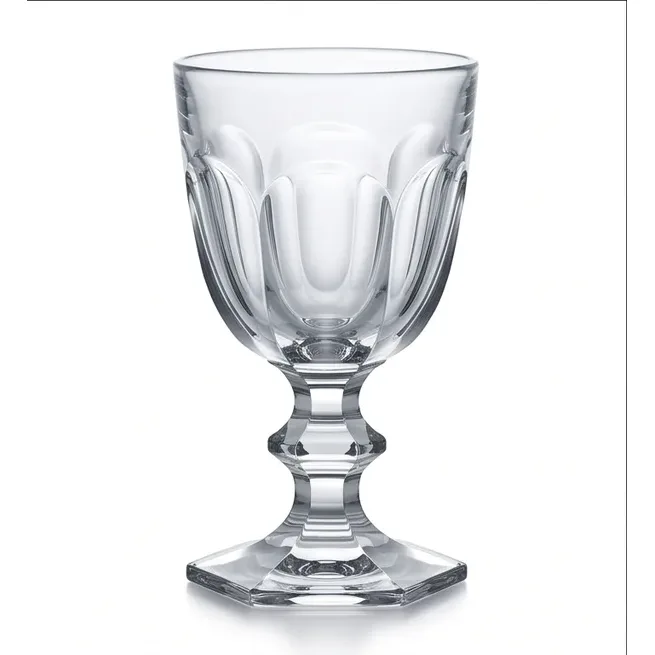
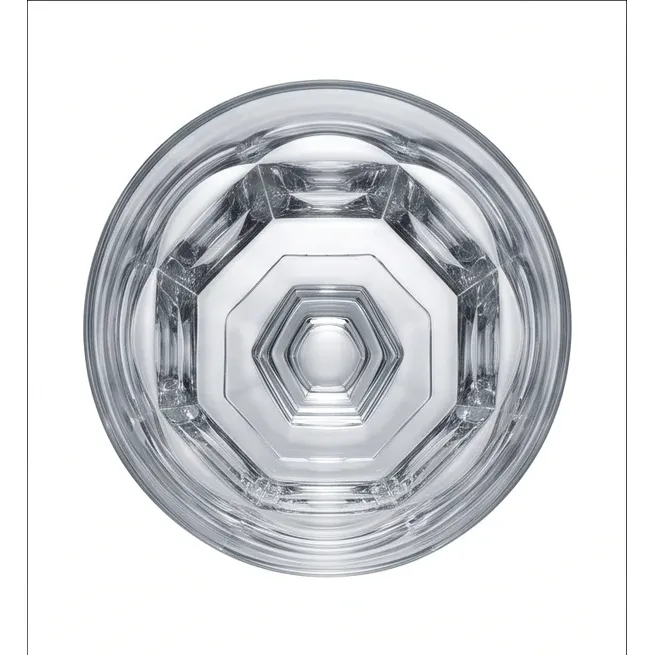
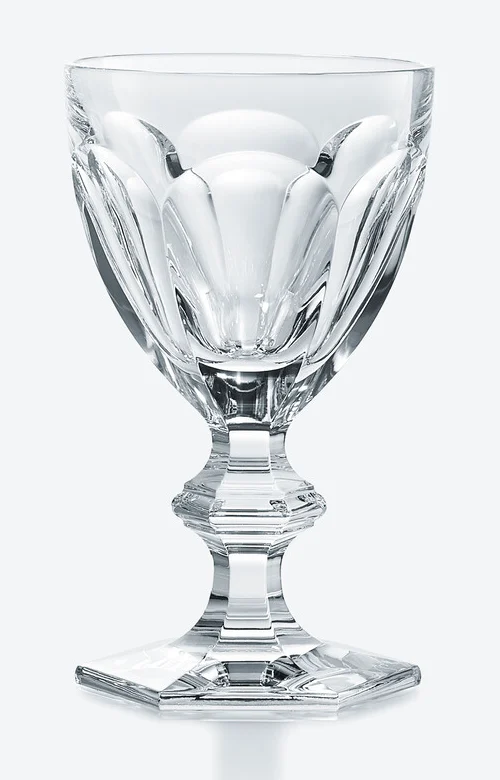
The Harcourt is a stemmed glass of heavy, colourless lead crystal. Its deep bowl is cut with broad, flat facets that run down from the rim and round off at the base, so that light breaks across them in long bands. Below the bowl the stem swells into a faceted knop between two collars, and the whole stands on a thick hexagonal foot. It is weighty in the hand and sits low and square on the table.
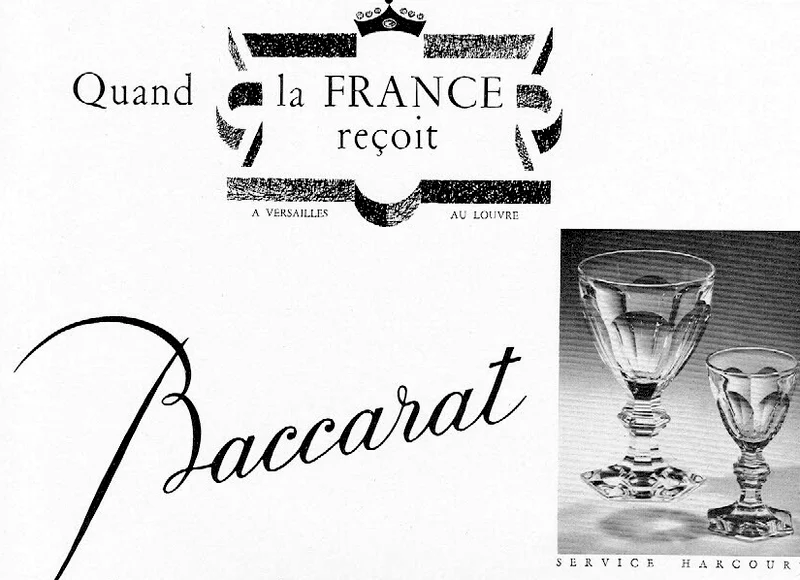
Baccarat made it first in 1841, at its works in Lorraine, after a ceremonial chalice it had cut for Louis-Philippe the year before. For more than eighty years it had no grand name: in the factory it was the 'gondole à triple bouton', the boat-shaped bowl with three buttons on the stem. Only at the Paris exhibition of 1925 did Baccarat christen it Harcourt, after one of the oldest families of the French nobility and a long-standing customer.
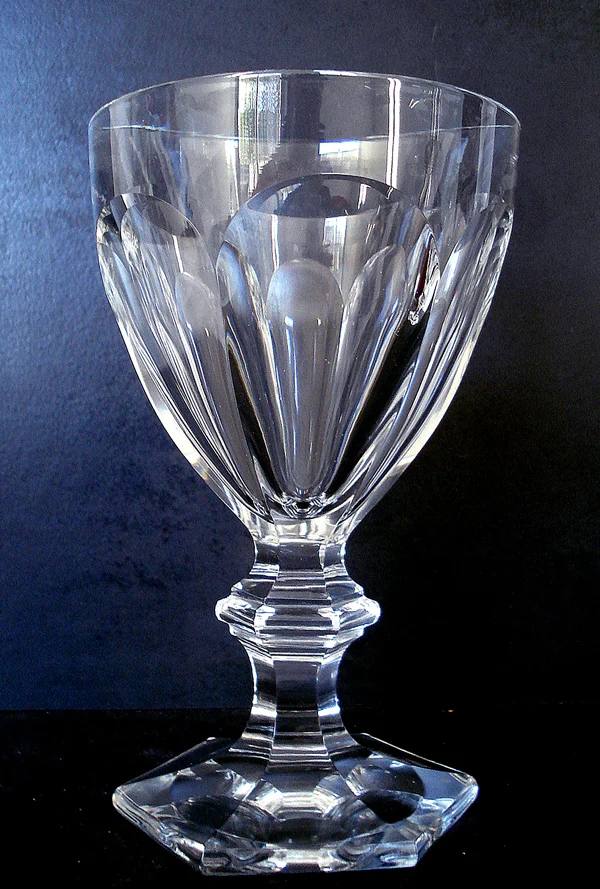
By then it was already the house glass of official France. Baccarat says it was on the table of Napoleon III and the Empress Eugénie, and it has since served at presidential dinners, embassy receptions and the papal table. In April 1957, when Elizabeth II was received in Paris, Baccarat could advertise the Harcourt as the service laid for the dinner at the Louvre. Its plainness made it easy to copy, and it has been copied many times; it also made it a canvas, and from 2002 Baccarat let Philippe Starck and others blacken, colour and engrave it.
What Baccarat sells now as the Harcourt 1841 Glass is the plain original: six facets, the triple-knopped stem, the hexagonal foot. It comes in three sizes, from 17 centilitres upwards, made in the same town where the shape was first blown and cut. The name is a twentieth-century addition, but the glass itself is close to two centuries old.
Timeline
- 1841 First made · Disputed Baccarat Harcourt Glass enters production in Baccarat, France.
- 1841 Designed The glass is created at Baccarat, after Louis-Philippe's ceremonial chalice of 1840; it is known as the 'gondole à triple bouton' shape.
- 1925 At the Paris exhibition of decorative arts the shape is renamed Harcourt, after the Norman noble family.
- 1957 Recognised Baccarat advertises the Harcourt service as the one set for the Louvre dinner of 10 April 1957.
- 2021 Baccarat marks the glass's 180th year with designer editions shown at Paris Fashion Week.
Milestones as we found them, not as we've checked them.
From the archive
More like this
-
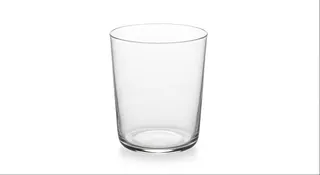 Tableware & Glassware · since 1856 Lobmeyr Drinking Set No. 4 Water Tumbler A tumbler of wafer-thin Viennese crystal from the first muslin glass service Ludwig Lobmeyr designed, in 1856.
-
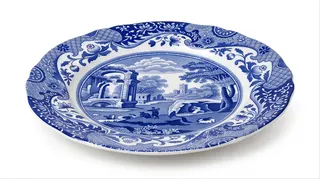 Tableware & Glassware · since 1816 Spode Blue Italian Dinner Plate A composed Italian landscape inside a copied Imari border, printed in blue by Spode since 1816.
-
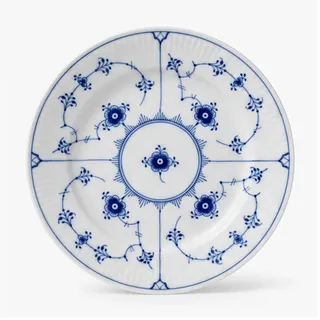 Tableware & Glassware · since 1775 Royal Copenhagen Blue Fluted Plain Plate Pattern No. 1 of the Copenhagen porcelain factory, painted in cobalt by hand since 1775.
-
 Tableware & Glassware · since 1915 Georg Jensen Acorn Dinner Fork Johan Rohde's restrained silver fork of 1915, with an acorn caught in scrolls at the end of the handle.