Kitchen & Dining · Dining & Drinks · Tableware & Glassware
Royal Copenhagen
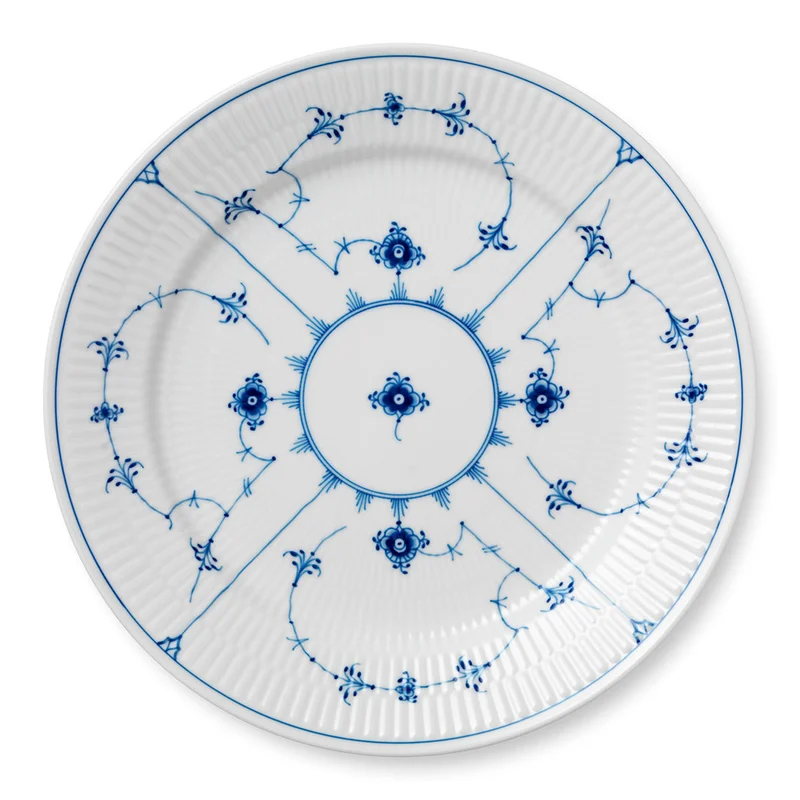
Royal Copenhagen Blue Fluted Plain Plate
Since 1775 · 251 years to 2026 · First made in Copenhagen, Denmark
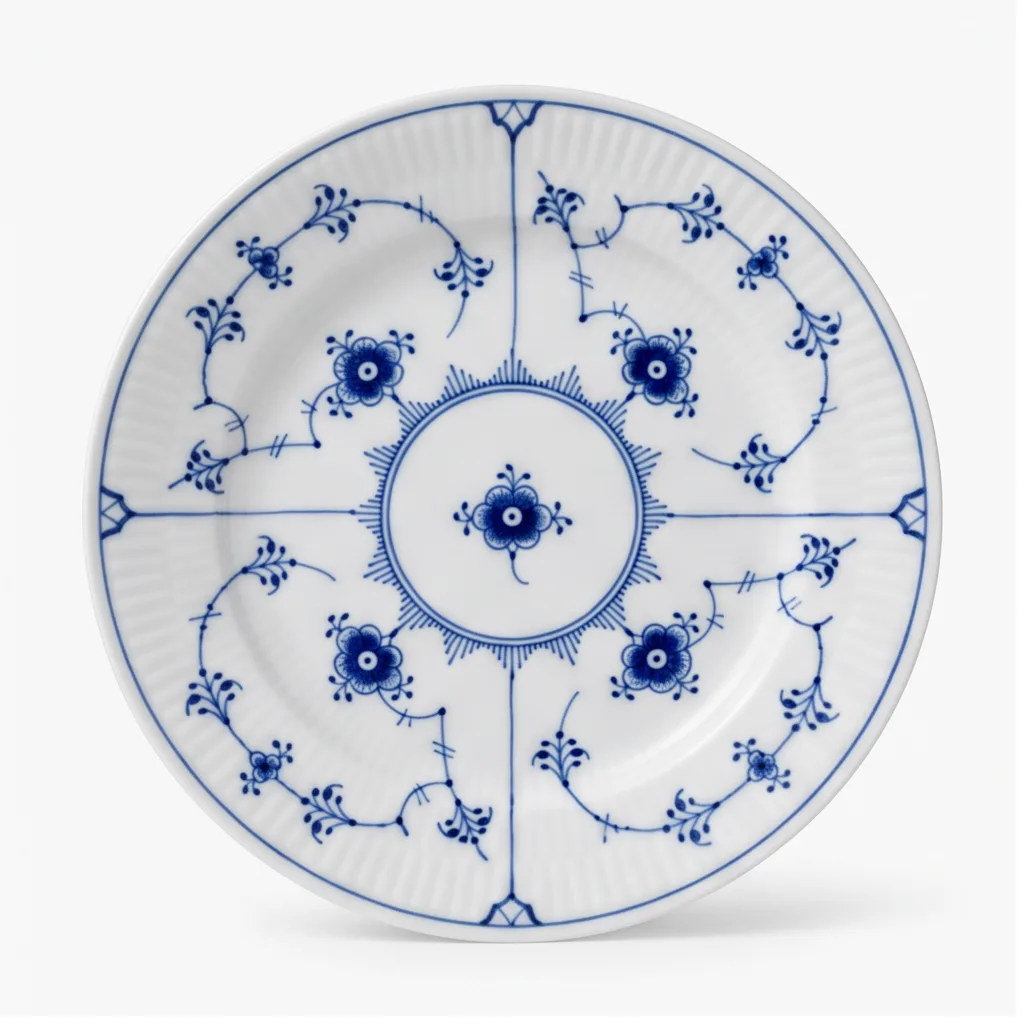
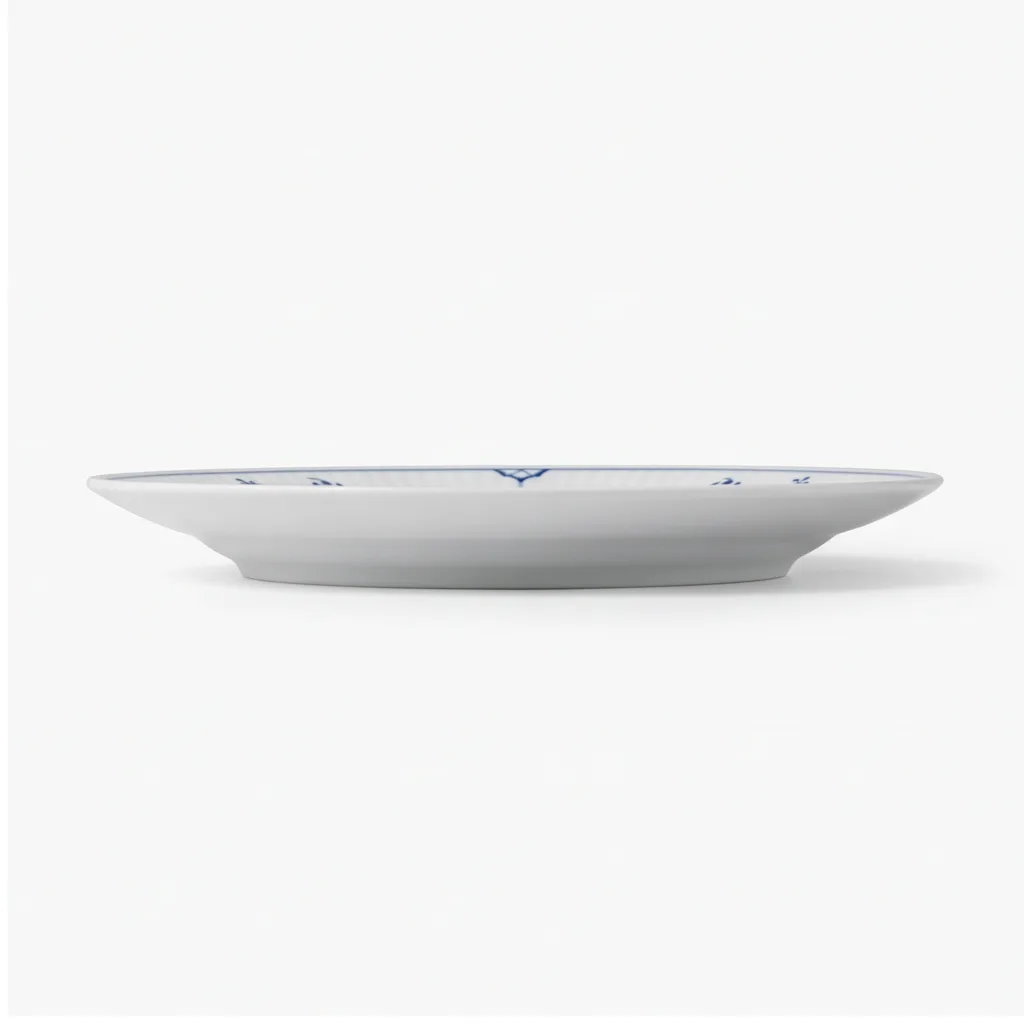
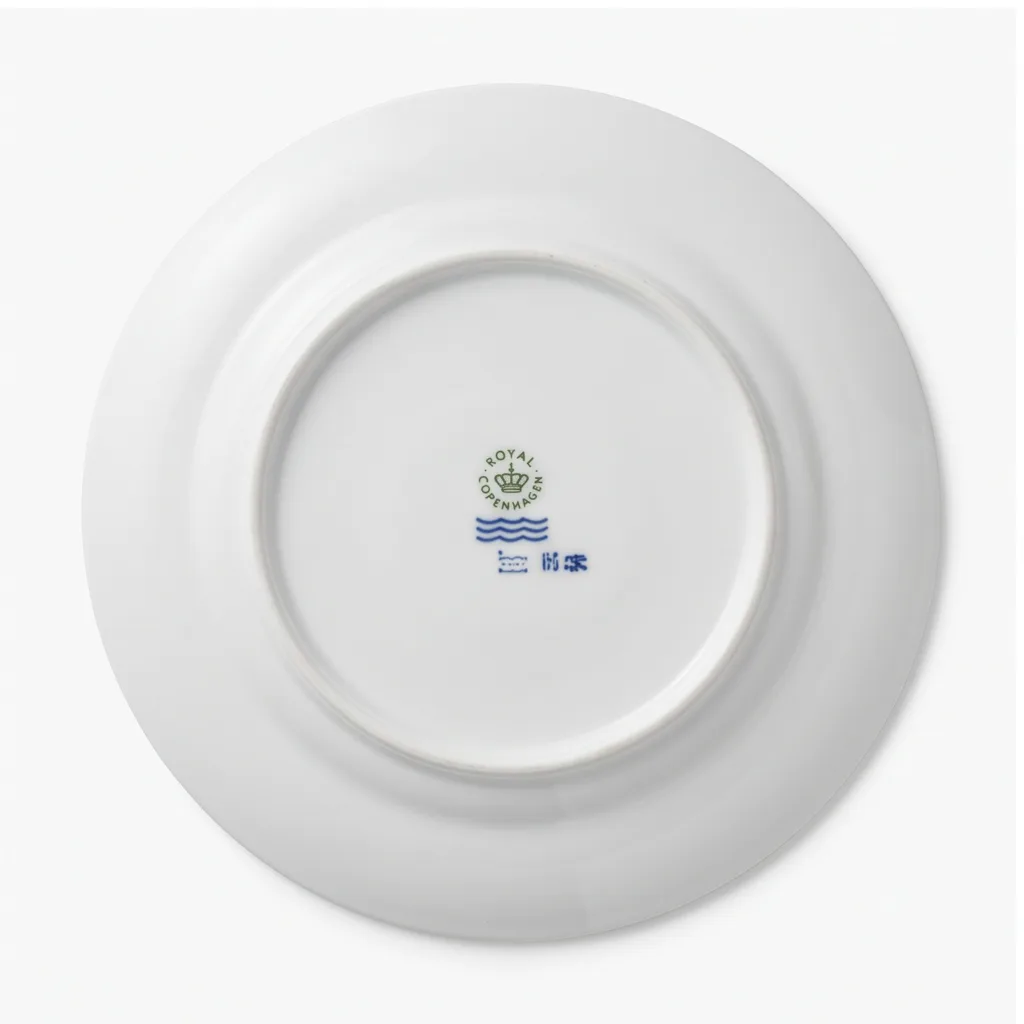
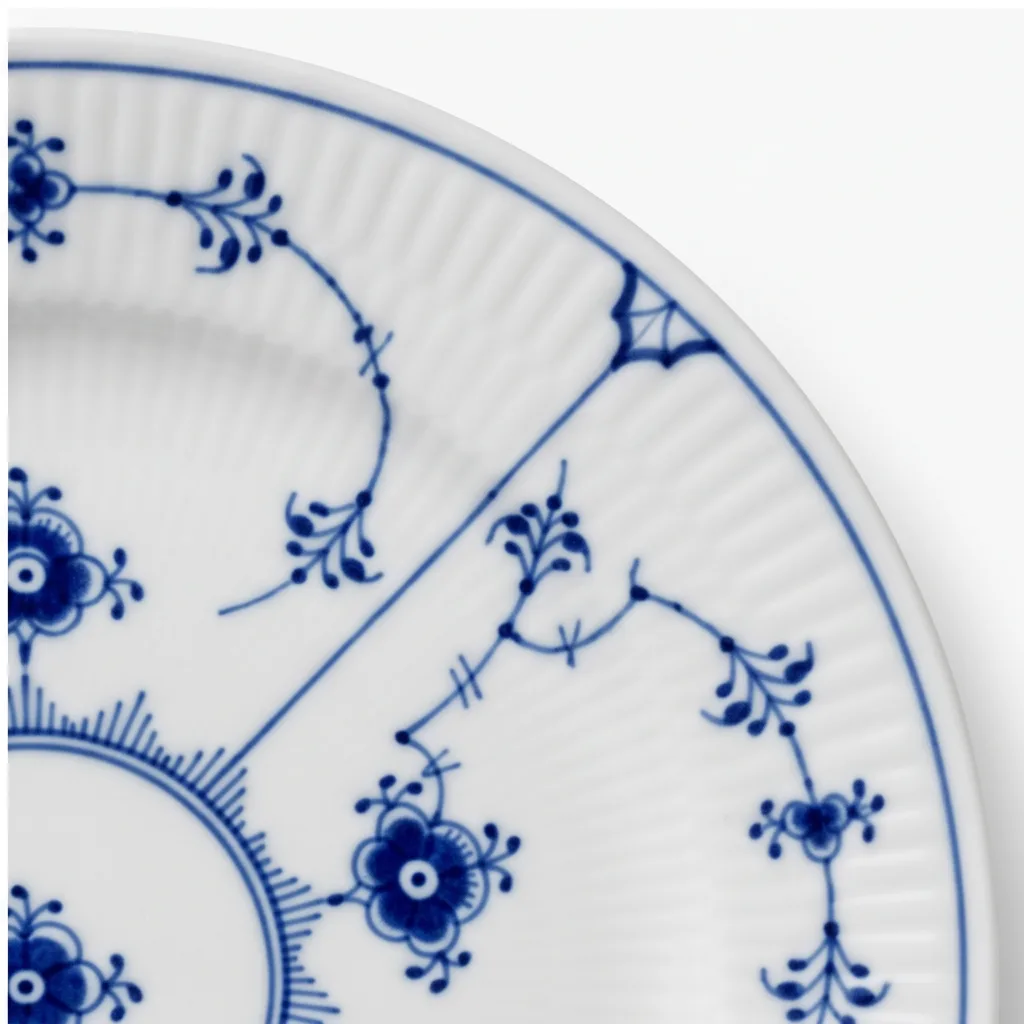
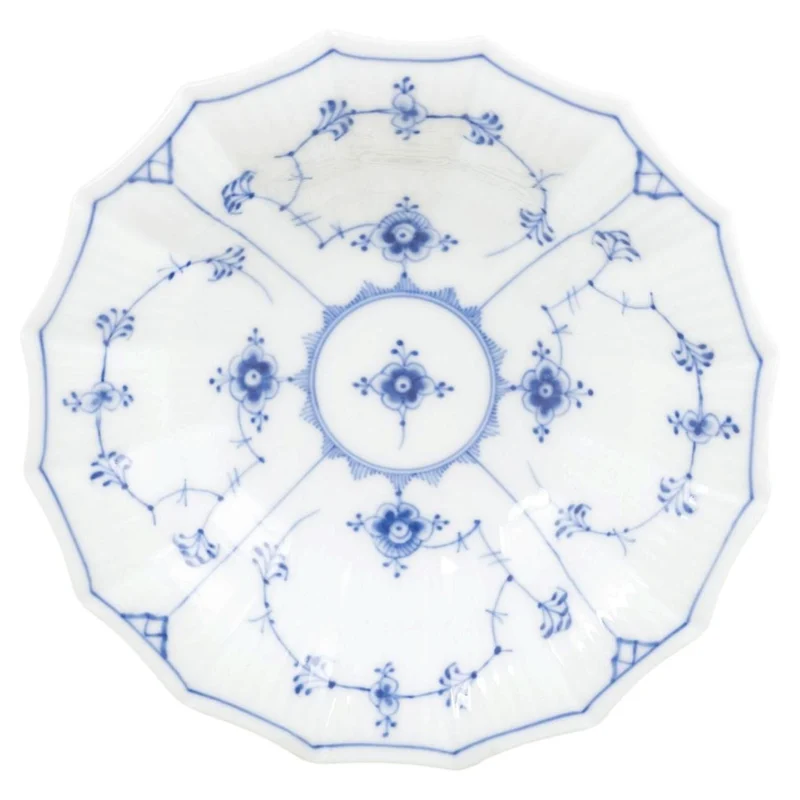
The Blue Fluted Plain plate is a round dish of hard-paste porcelain whose rim and well are moulded with fine radiating flutes, like the ribs of a shell. Over the white body, under the glaze, a painter works in cobalt blue: a small flower at the centre inside a fringed ring, four stems dividing the well into quarters, and sprays of stylised chrysanthemum and small leaves running out to a thin blue line at the edge. Turned over, it carries the numeral 1, the factory's three waves and the painter's initials.
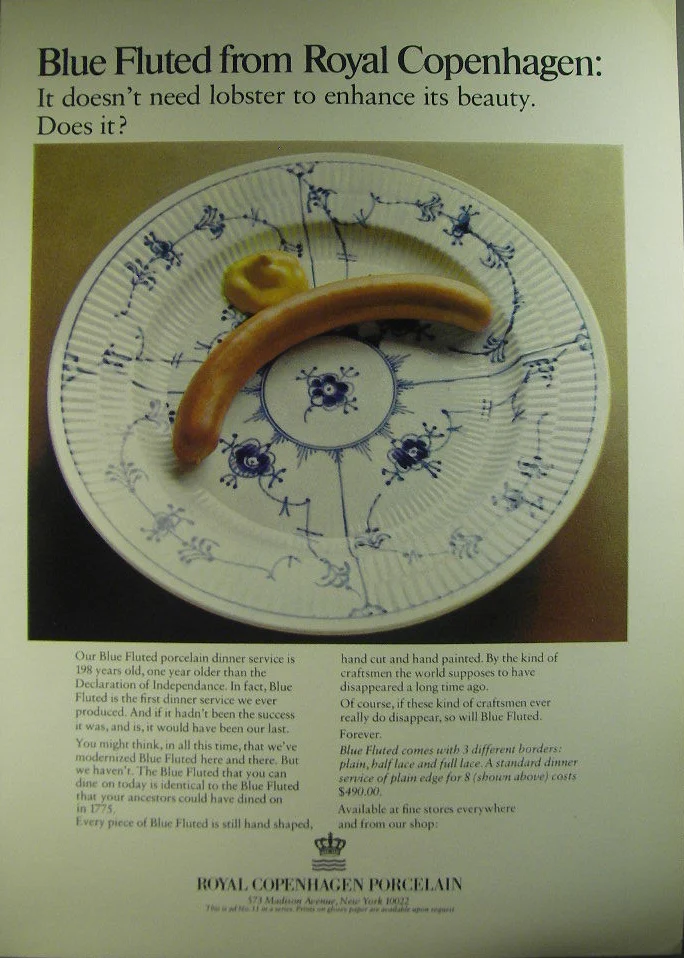
The pattern was the first made by the porcelain manufactory founded in Copenhagen in 1775 under the patronage of the Dowager Queen Juliane Marie, and it has been numbered first ever since. Its source was older. Fluted porcelain painted in blue with flowers after Chinese models had appeared at Meissen in the 1740s and spread among European factories; in Danish it is musselmalet, mussel-painted, after the shell-like fluting. Copenhagen's painters gave it a fish-scale motif of their own, and Norwegian cobalt, found in 1772, supplied the blue.
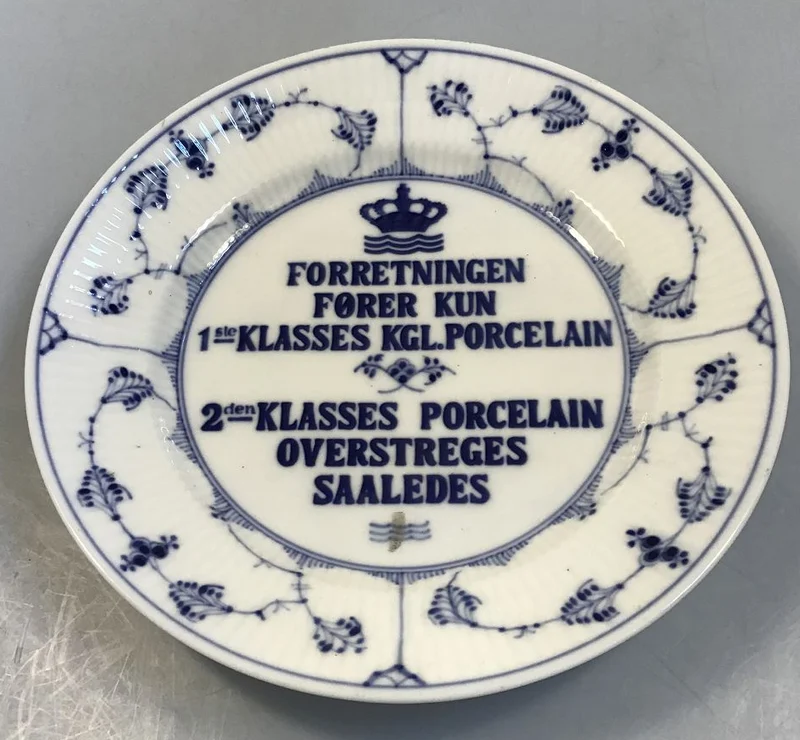
In 1885 the new artistic director, Arnold Krog, revised the pattern, and in the following years he developed pierced lace borders as separate services while the plain edge continued. Lex, the Danish encyclopaedia, describes the decoration as in use at the factory without interruption since about 1775, and it became so familiar that it is now thought of as typically Danish, though it began in Saxony.
The factory now makes its porcelain in Thailand, and Royal Copenhagen says each piece is still painted by hand. In 2000, for the factory's 225th year, the designer Karen Kjældgaard-Larsen enlarged its flowers into a new service, Blue Fluted Mega, but the plain pattern was not retired. A dinner plate now costs about £140, and every piece still carries the number that marked it as the first.
Timeline
- 1775 First made · Verified Royal Copenhagen Blue Fluted Plain Plate enters production in Copenhagen, Denmark.
- 1775 The porcelain manufactory is founded in Copenhagen and Blue Fluted Plain becomes its Pattern No. 1.
- 1885 Arnold Krog, artistic director, revises the pattern and adds Half Lace and Full Lace borders as separate services.
- 2000 Blue Fluted Mega, an enlarged reinterpretation, is introduced for the factory's 225th year; the plain service continues.
Milestones as we found them, not as we've checked them.
From the archive
More like this
-
 Tableware & Glassware · since 1856 Lobmeyr Drinking Set No. 4 Water Tumbler A tumbler of wafer-thin Viennese crystal from the first muslin glass service Ludwig Lobmeyr designed, in 1856. Read the entry →
 -
 Tableware & Glassware · since 1931 Arzberg Form 1382 Teapot Hermann Gretsch's plain white teapot of 1931, still cast to the same round form. Read the entry →
 -
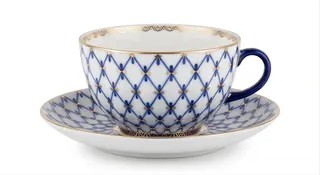 Tableware & Glassware · since 1944 Lomonosov Cobalt Net Teacup A net of cobalt and gold painted in Leningrad in 1944, still on the cup it was drawn for. Read the entry →
 -
 Tableware & Glassware · since 1947 Copo Americano One hundred and ninety millilitres, faceted, and in every bar in Brazil since 1947. Read the entry →