Spode
Spode Blue Italian Dinner Plate
Since 1816 · 209 years to 2026 · First made in Stoke-on-Trent, Staffordshire
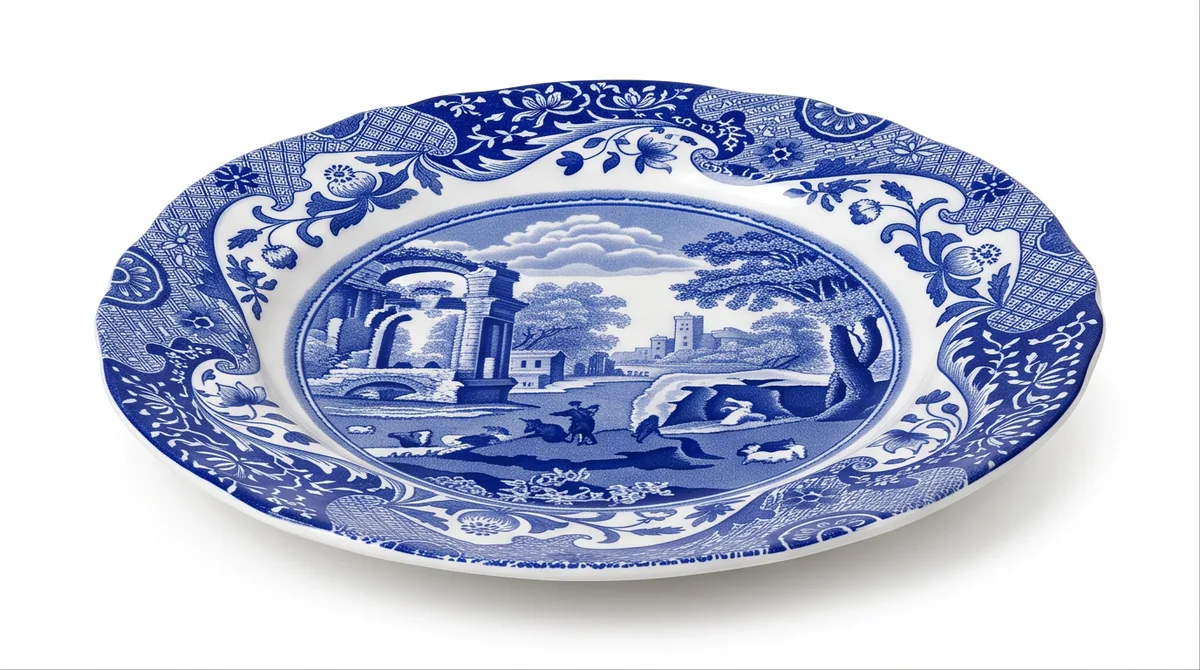
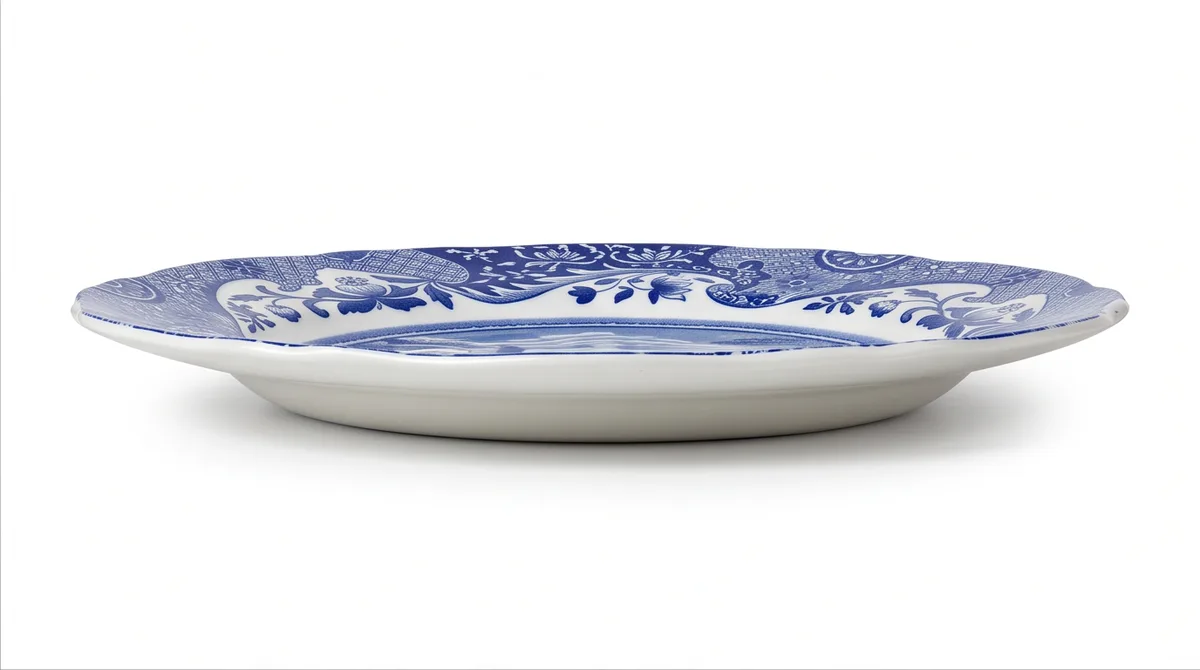
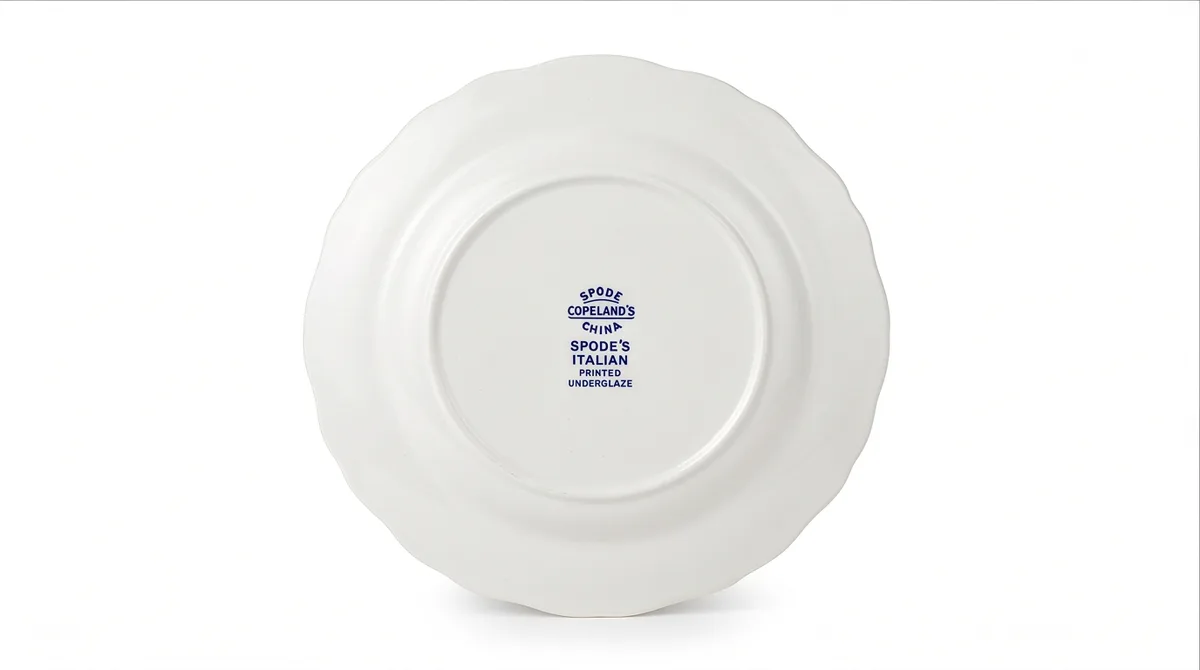
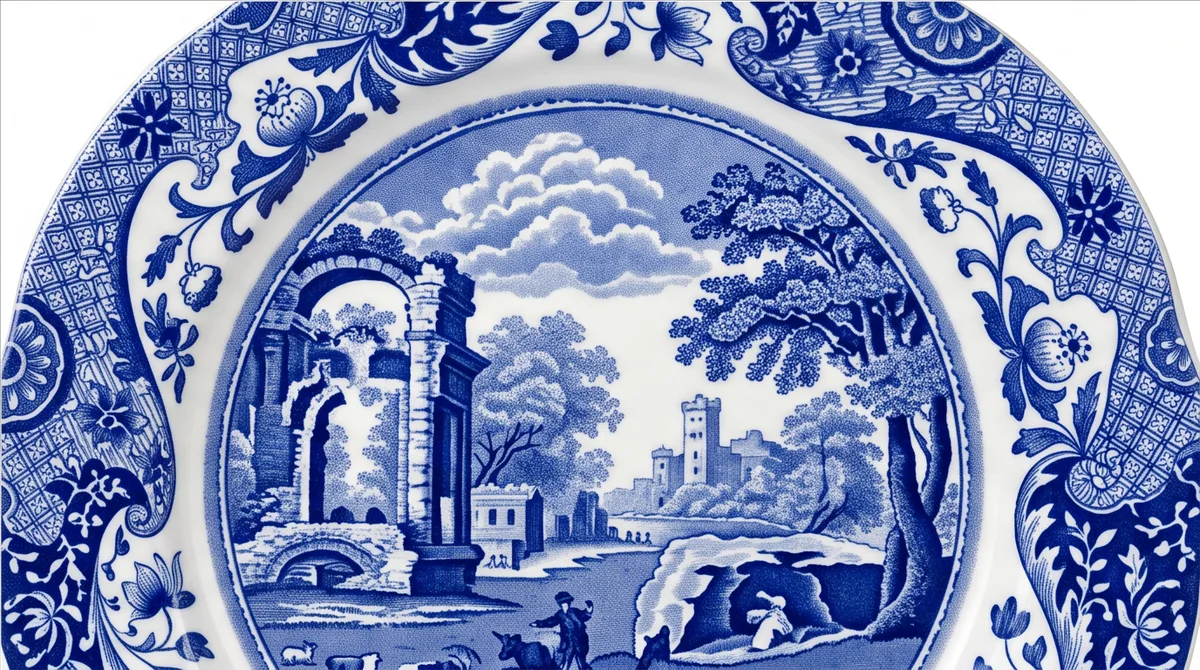
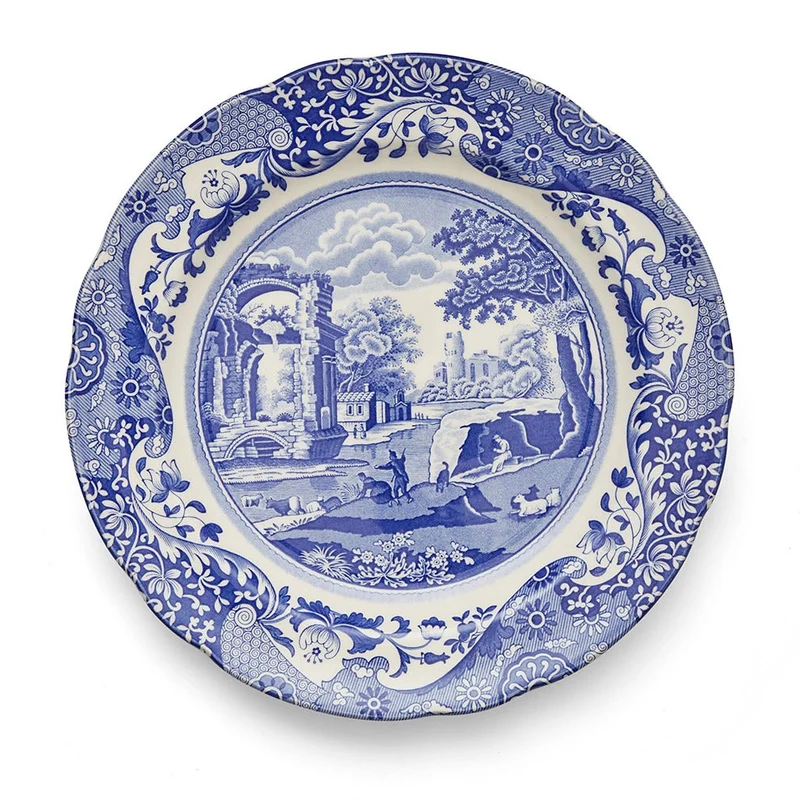
The Blue Italian dinner plate is a round earthenware plate twenty-seven centimetres across, with a gently waved rim, printed underglaze in a single deep cobalt blue on white. In the well sits a landscape: a ruined classical arch on the left, a cluster of houses and a river beyond, a castle on a far hill, a herdsman and companions in the foreground with cattle and sheep, and a woman seated beneath a tree. A wide border of scrolling flowers and diaper panels runs around the rim.
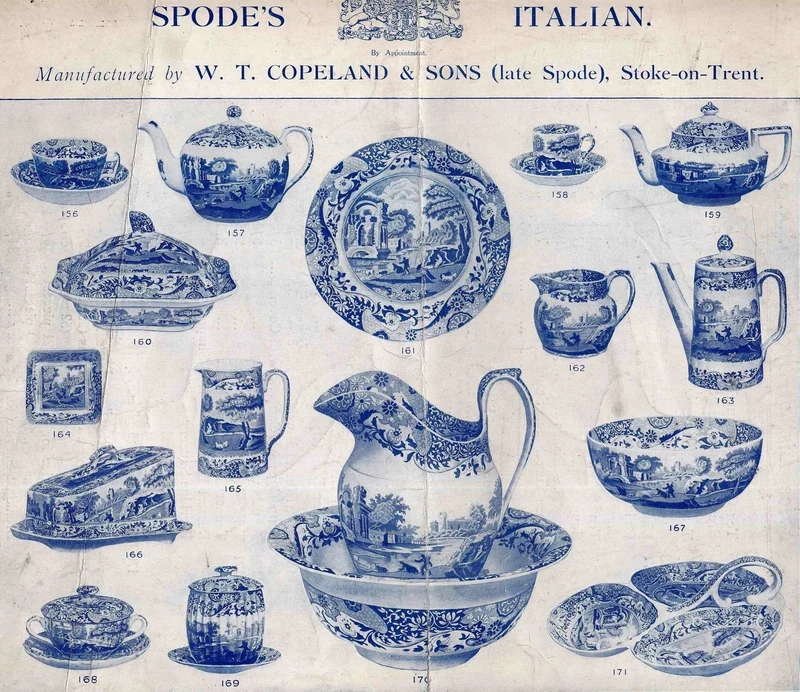
The border and the scene come from two different worlds. The border is copied from an Imari design on Chinese export porcelain of about 1735; the scene is Italian in spirit but not in fact, since no single place has been found that matches it, and researchers think it was composed from a traveller's sketches. Spode's engravers cut the design into copper plates in 1816, and the pattern was printed on earthenware from the first.
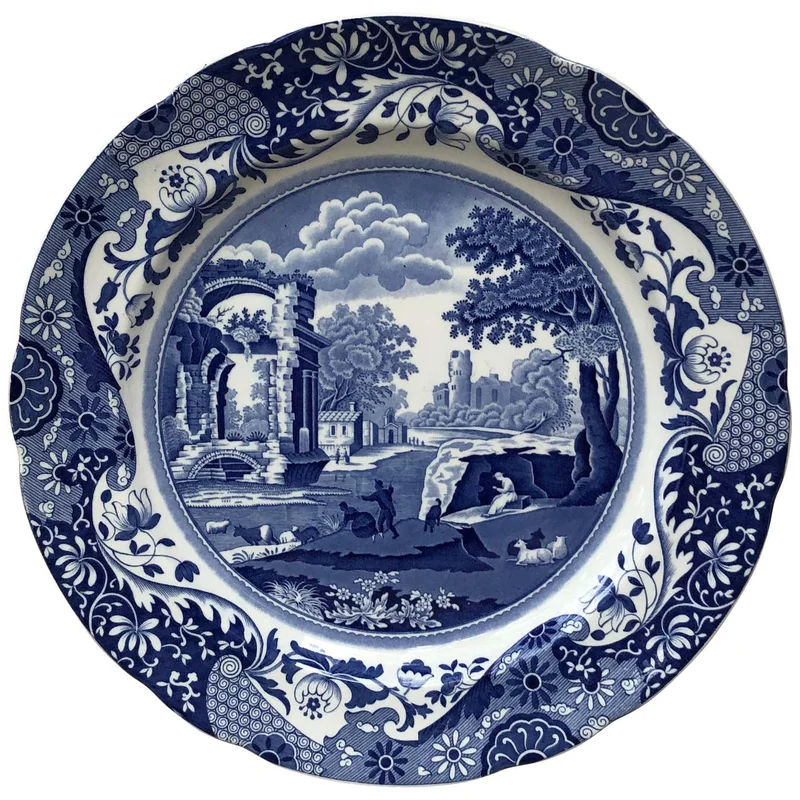
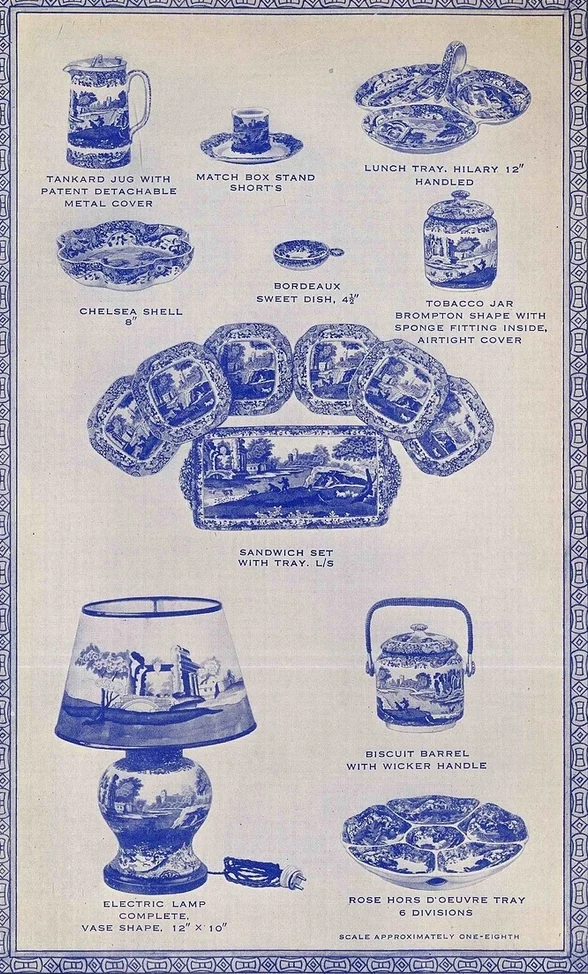
Its maker had made such printing possible. Josiah Spode I is credited with perfecting underglaze blue printing on earthenware in the 1780s, and his son introduced the Italian pattern at the Stoke works. It sold at once and kept selling: through the Copeland family's long ownership, when it carried the mark 'Spode's Italian', and through the twentieth century, when catalogues listed hundreds of shapes in it, from teapots and tureens to an electric lamp.
The historic Spode factory closed in 2008, after some 230 years at work, and by then much of the pattern was being made abroad. Portmeirion Group bought the Spode name and designs the following year and brought Blue Italian back to Stoke, to a factory a short walk from the original works. Production methods have changed, with the engraved copper plates long since retired, but a dinner plate from about 1920 and one bought today show the same arch, castle and figures within the same border.
Timeline
- 1816 First made · Verified Spode Blue Italian Dinner Plate enters production in Stoke-on-Trent, Staffordshire.
- 1816 Josiah Spode II introduces the Italian pattern, printed underglaze in blue on earthenware, at the Spode works in Stoke.
- 1833 Ownership Copeland and Garrett succeed the Spode family; the business runs as W. T. Copeland & Sons from 1847 and the pattern is sold as 'Spode's Italian'.
- 2008 Production With much of the pattern already made overseas, the merged Royal Worcester Spode enters administration and the historic Spode works closes.
- 2008 Paused Spode went into administration in November 2008 and its Stoke factory closed; a former Spode Museum curator writes that the pattern was in continuous production until the closure and is now in production again, after Portmeirion bought the brand in April 2009. No source dates the restart exactly, so the stop is disclosed rather than assumed away.
- 2009 Ownership Portmeirion Group buys the Spode brand and brings Blue Italian back to its own factory in Stoke, about 500 metres from the old works.
- 2009 Resumed Production resumes.
Milestones as we found them, not as we've checked them.
From the archive
More like this
-
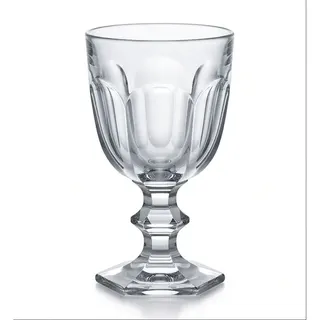 Tableware & Glassware · since 1841 Baccarat Harcourt Glass Six flat facets, a knotted stem and a hexagonal foot: the glass France has set for state dinners since 1841.
-
 Tableware & Glassware · since 1856 Lobmeyr Drinking Set No. 4 Water Tumbler A tumbler of wafer-thin Viennese crystal from the first muslin glass service Ludwig Lobmeyr designed, in 1856.
-
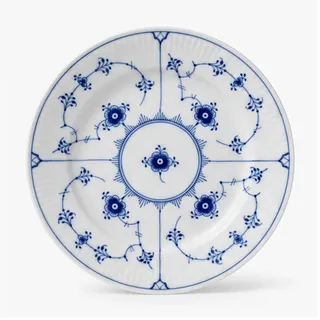 Tableware & Glassware · since 1775 Royal Copenhagen Blue Fluted Plain Plate Pattern No. 1 of the Copenhagen porcelain factory, painted in cobalt by hand since 1775.
-
 Tableware & Glassware · since 1915 Georg Jensen Acorn Dinner Fork Johan Rohde's restrained silver fork of 1915, with an acorn caught in scrolls at the end of the handle.