Kitchen & Dining · Cooking & Baking · Kitchen Utensils
Bjørklund1925 (formerly Thor Bjørklund & Sønner)
Bjørklund Cheese Slicer
Since 1925 · 101 years to 2026 · First made in Lillehammer, Norway
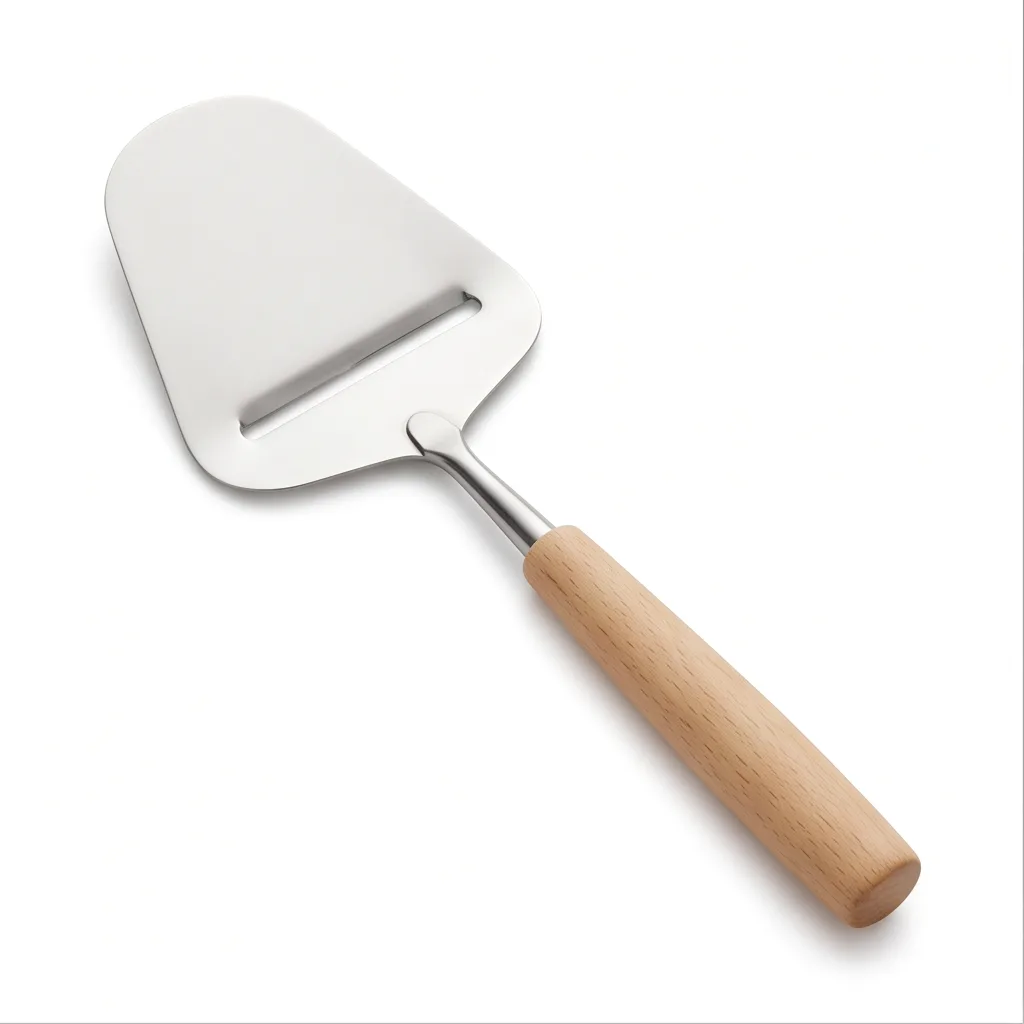
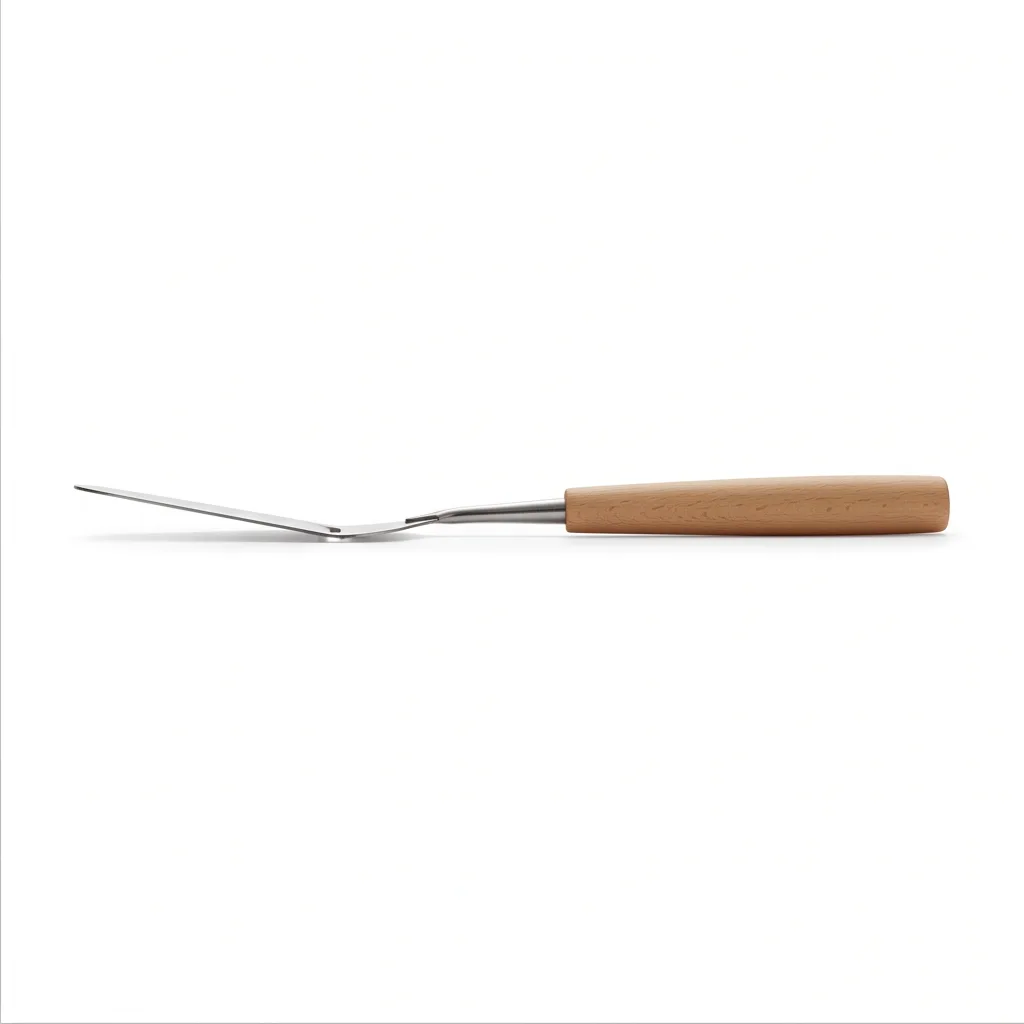
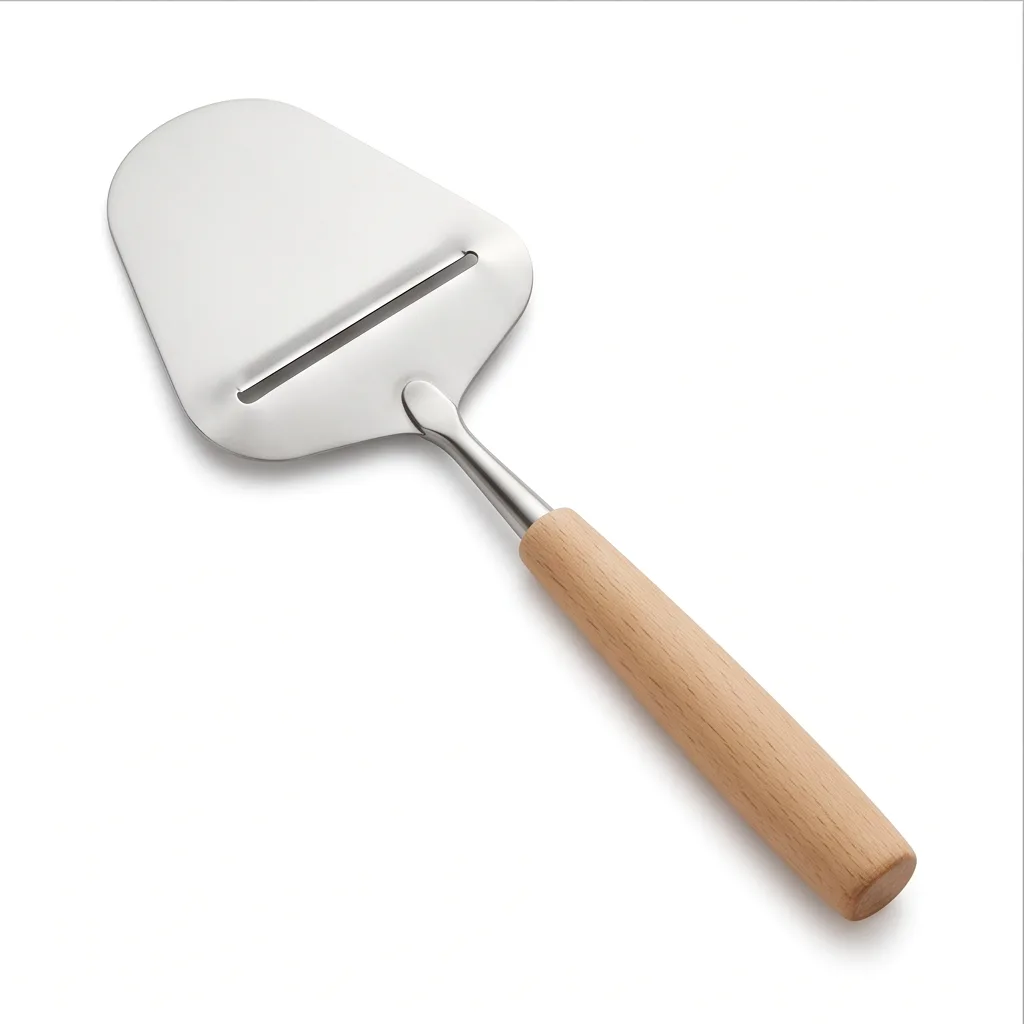
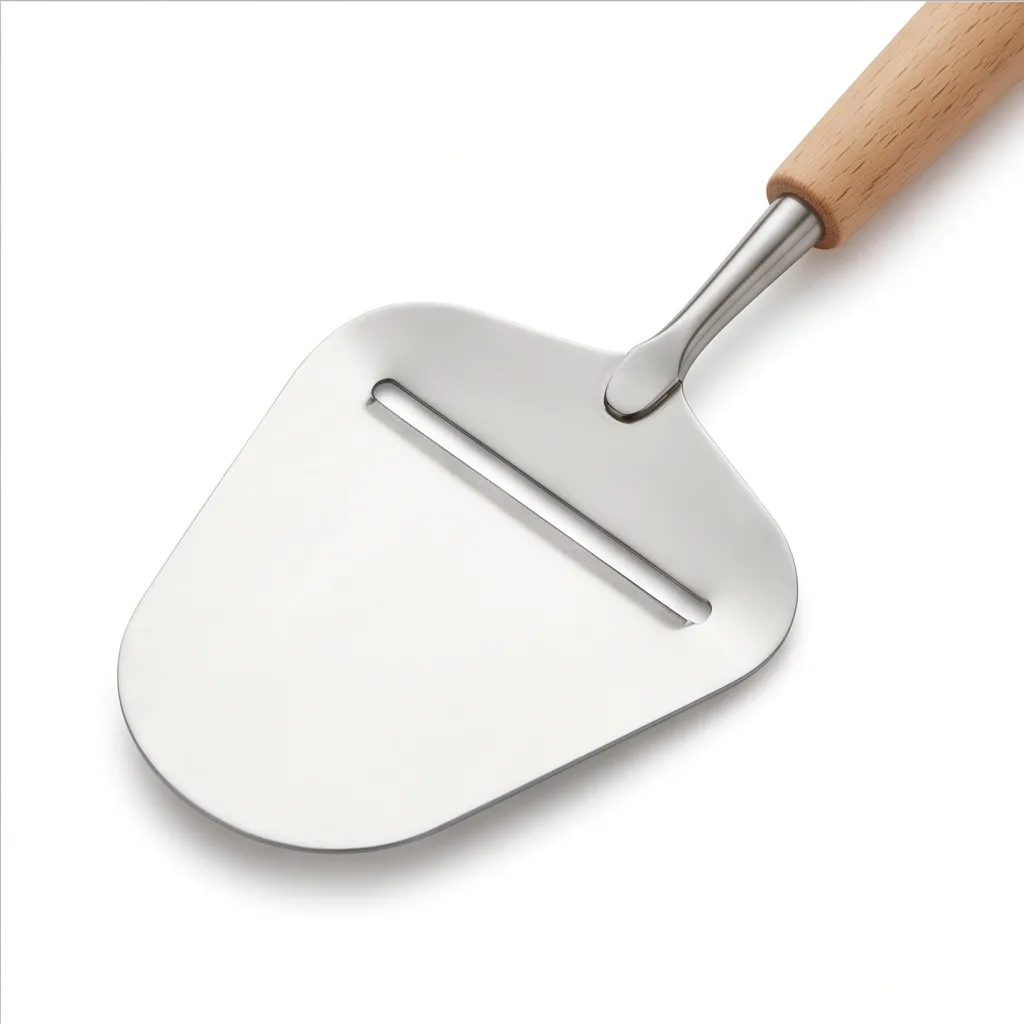
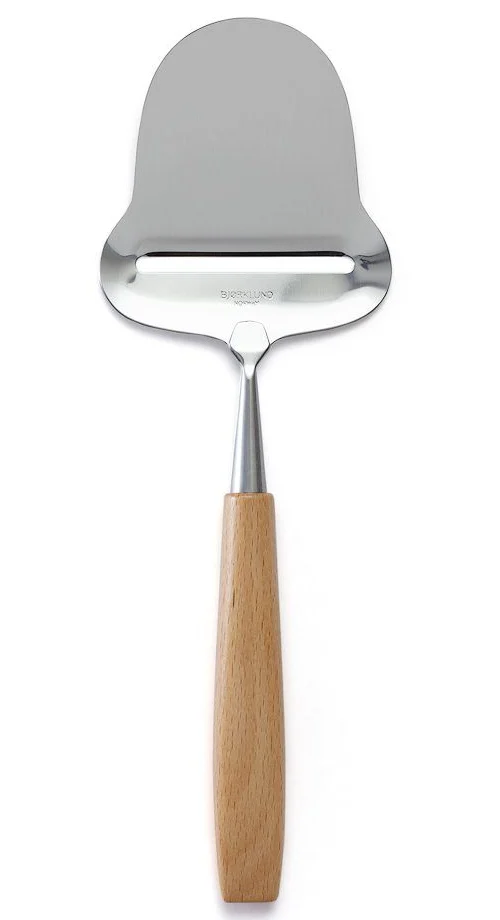
The Bjørklund cheese slicer is a small plane for the table. A flat, rounded blade of stainless steel, shaped something like a bell, is pierced near its base by a narrow transverse slit, and the edge of the slit is pressed down into a cutting lip. A short steel tang joins the blade to a handle, in the current standard model of plain beech. Drawn towards the user across a block of cheese, it lifts off a slice of even thinness, which rests on the blade until served.
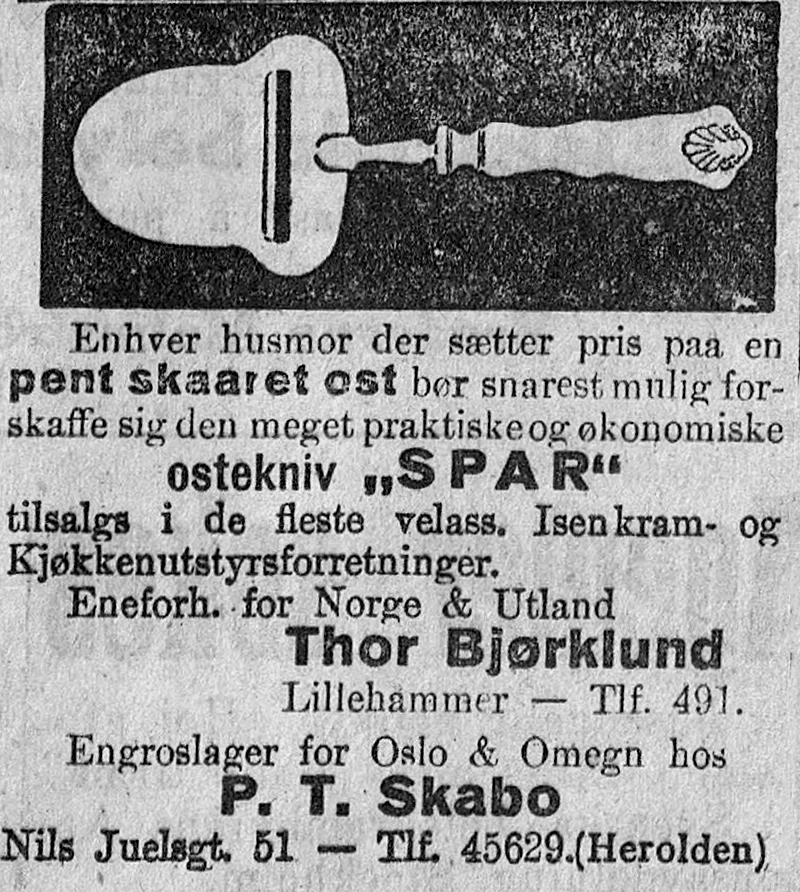
Its inventor, Thor Bjørklund, was a cabinet maker in Lillehammer, and the debt to his own tools is direct: the plane's slit and blade, turned through ninety degrees and pulled rather than pushed. He applied for a patent in February 1925 and put the slicer on sale that year as the "Spar", a name that commended economy. The first had a curved metal handle in a rococo manner, ending in a cast scallop shell.
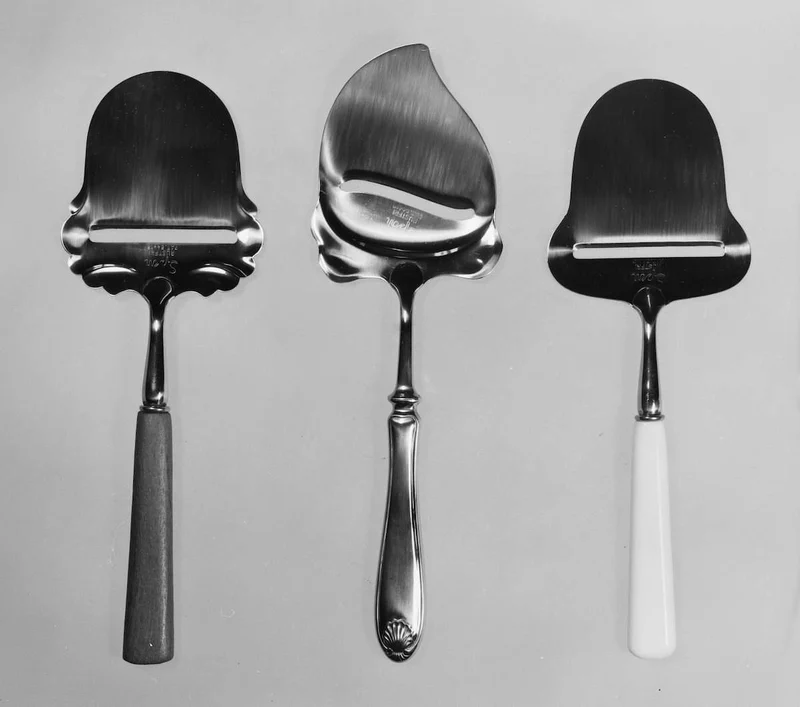
Thrift was the selling point in the lean years between the wars, and not everyone welcomed it. The dairies' sales organisation, fearing Norwegians would eat less cheese, is said to have urged households to throw their slicers away. Bjørklund opened a factory in Lillehammer in 1927 and fought imitators through the courts, a contest that ended when the patent lapsed in 1942 and the slicer became a common form, made by firms such as Fiskars and Brabantia.
The family firm made it for more than eighty years, latterly in eight or more models. After its bankruptcy in 2009 a Gudbrandsdal workshop took over the line, and the slicers are still assembled by hand at Ringebu from the same four parts: blade, tang, pin and handle. A cheese slicer is a type; this one is the original, still made by the lineage that began it, and still sold under its inventor's name.
Timeline
- 1925 First made · Verified Bjørklund Cheese Slicer enters production in Lillehammer, Norway.
- 1925 Thor Bjørklund applies for a patent on a "knife for cutting cheese" on 27 February and begins production; the slicer is sold as the "Spar".
- 1927 Production Bjørklund opens his own cheese-slicer factory in Lillehammer, making 40,000 slicers that year by his own account.
- 1942 The patent expires, and other makers in Norway and abroad begin making cheese slicers.
- 2009 Ownership After the firm's bankruptcy, Gudbrandsdal Industrier (GIAX) buys the business; production moves to Ringebu in 2010 under the name Bjørklund1925.
Milestones as we found them, not as we've checked them.
From the archive
More like this
-
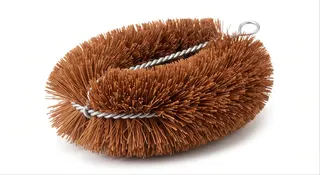 Kitchen Utensils · since 1907 Kamenoko Tawashi A hand-sized oval of palm fibre twisted in wire, invented in a Tokyo back street in 1907 and named after a baby turtle. Read the entry →
 -
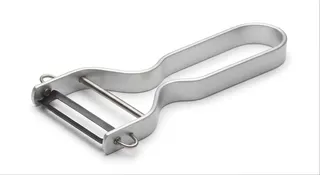 Kitchen Utensils · since 1947 Rex Peeler The first peeler with its blade across the handle, pressed from one strip of aluminium in Switzerland since 1947. Read the entry →
 -
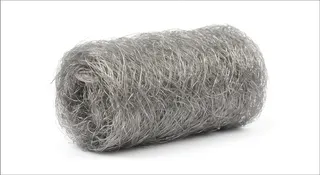 Kitchen Utensils · since 1948 Bombril A roll of fine steel wool from São Paulo, made since 1948 to keep aluminium pans bright. Read the entry →
 -
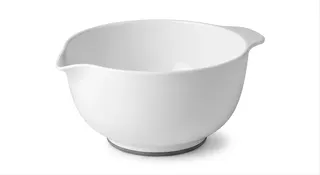 Kitchen Utensils · since 1950 Rosti Margrethe Bowl A melamine mixing bowl drawn from a survey of Danish housewives and named, with royal permission, after a 13-year-old princess. Read the entry →