Kitchen & Dining · Cooking & Baking · Cookware
Le Creuset
Le Creuset Enamelled Cast Iron Dutch Oven
Since 1925 · 101 years to 2026 · First made in Fresnoy-le-Grand, France
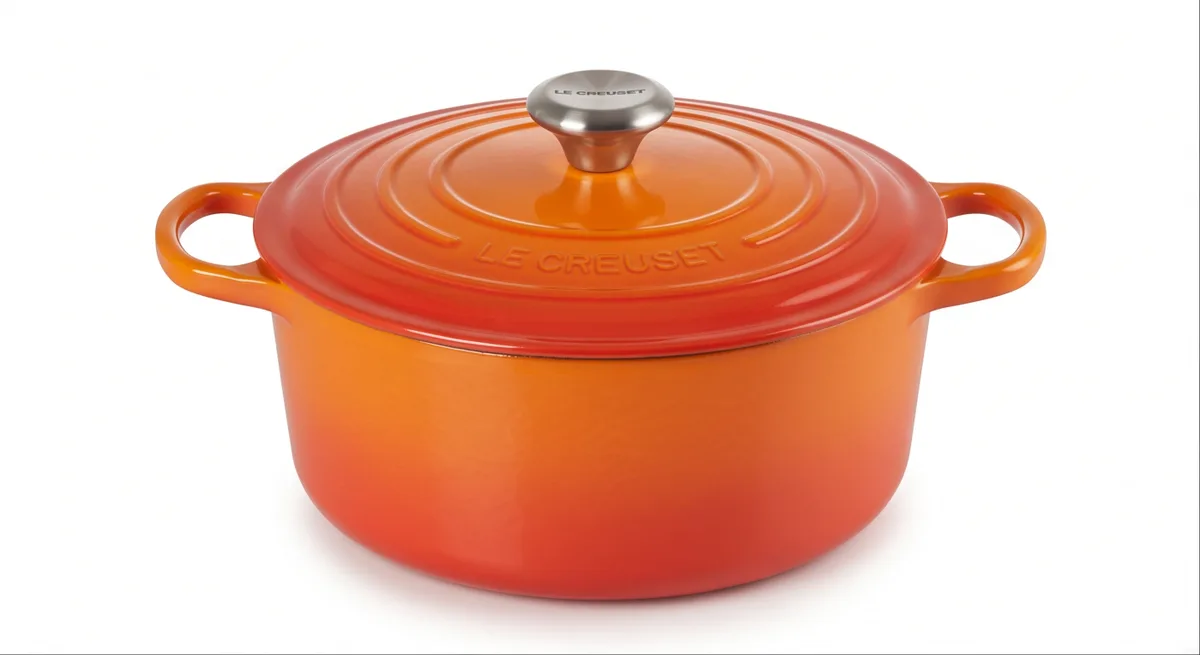
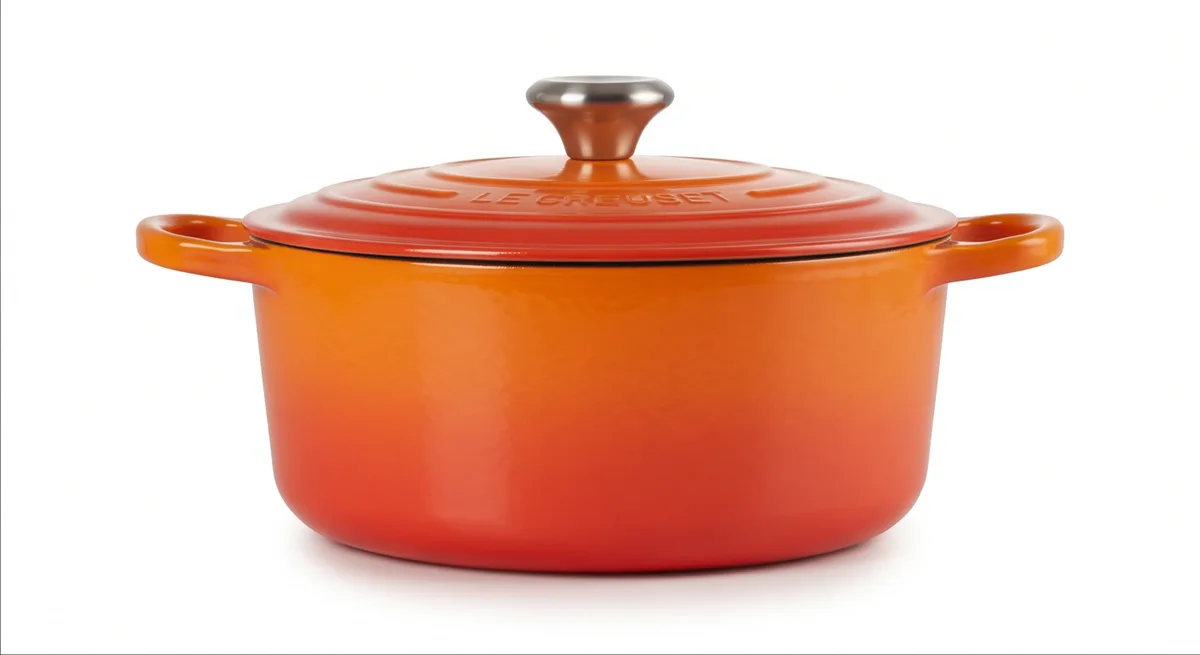
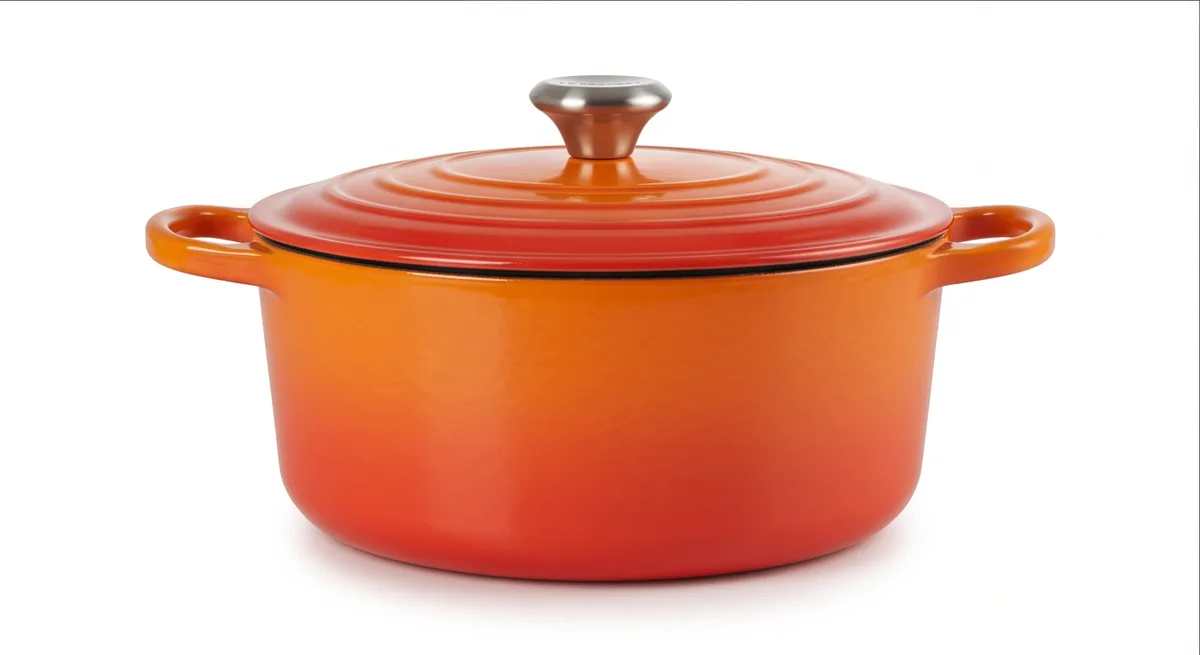
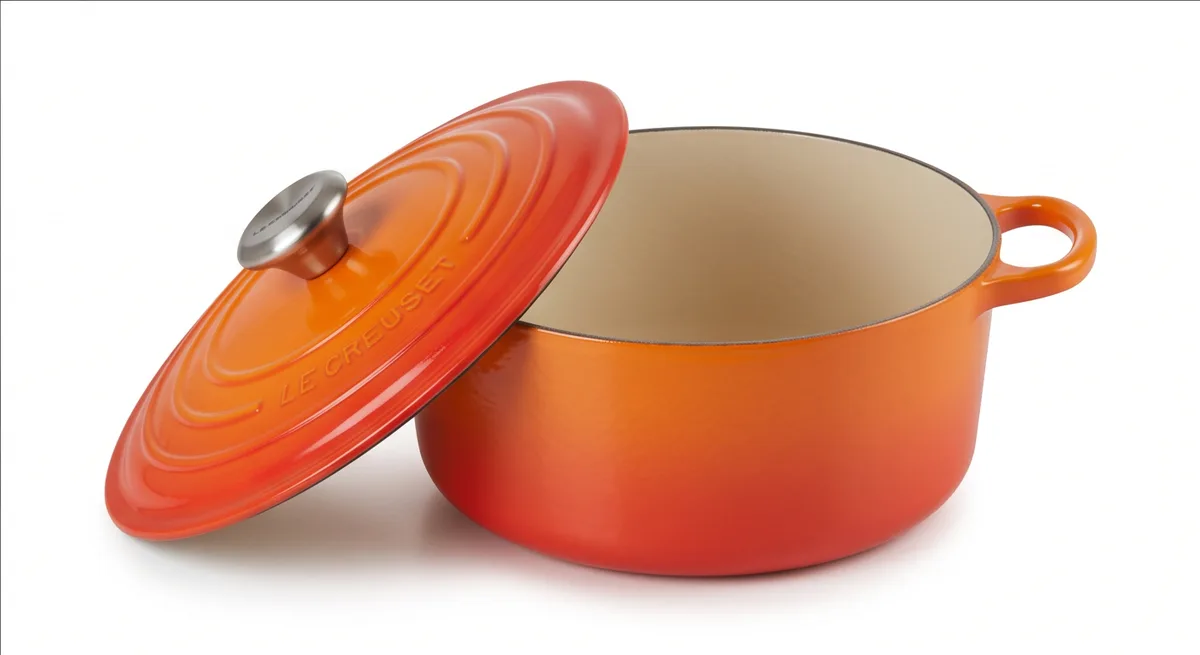
The Le Creuset Dutch Oven represents a fundamental innovation in cookware design. In the 1920s, when Belgian industrialists Armand Desaegher and Octave Auberg combined their expertise in casting and enamelling, they transformed the traditional 18th-century Dutch oven by replacing bare cast iron with enamelled cast iron. This seemingly modest change improved heat retention, durability, and performance while making the cookware easier to clean and more versatile in application. The resulting Round French Oven, introduced in 1925 in the signature Volcanique orange, became the foundation of a brand identity that has endured for a century.
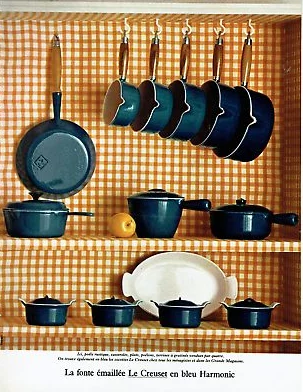
The object itself is deceptively simple: a thick-walled pot with a tight-fitting lid designed to lock in heat, flavour, and moisture during cooking. Each piece is cast in an individual mould and hand-inspected by French artisans, ensuring that the lid fits precisely enough to create a self-basting cycle. The enamelled cast iron walls trap moisture as ingredients slow-cook, while the distinctive three-ring design introduced in the early 1970s serves both aesthetic and functional purposes, creating a vent that allows the lid to remain securely locked during simmering. The cookware is suitable for slow-cooking, braising, roasting, baking, and frying—functions that have made it a multipurpose staple in professional and domestic kitchens alike.
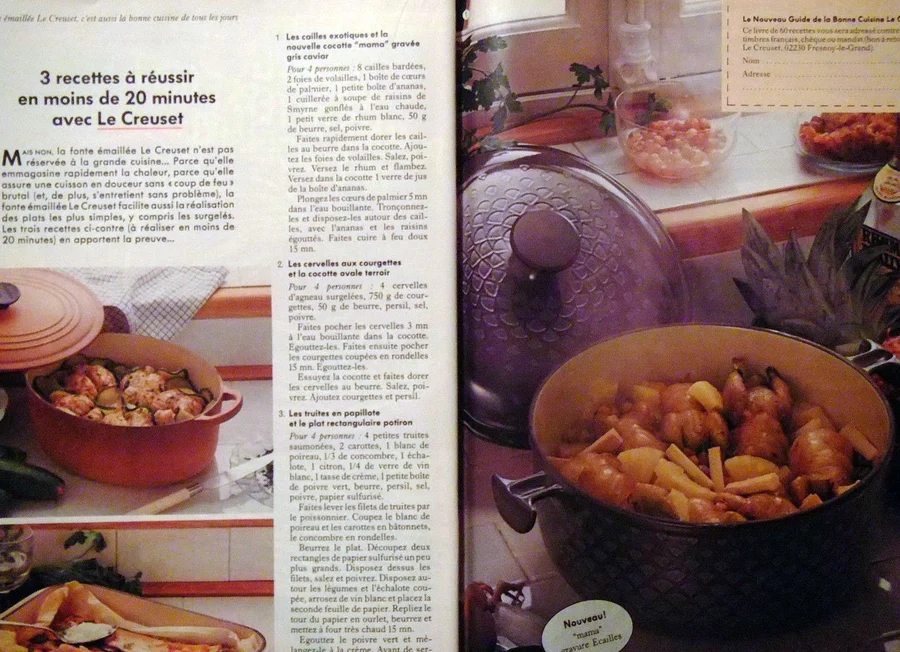
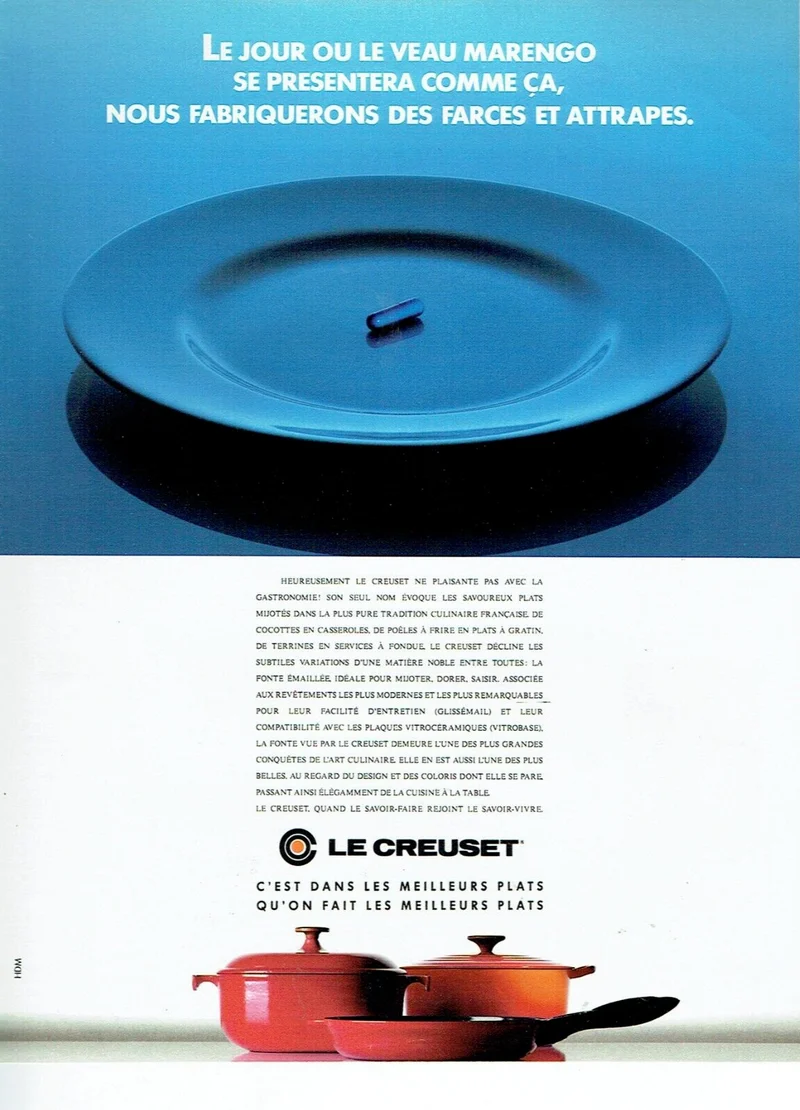
What distinguishes the Dutch Oven's cultural trajectory is its transformation from utilitarian workhorse to luxury object. The brand's commitment to lifetime durability and its refusal to compromise on quality—despite major expansion into other product categories—has positioned Le Creuset cookware as an heirloom item. The restricted palette of colours in circulation at any given time, typically between 12 and 16 shades, has created a collector's market that sustains demand across generations. The cookware has appeared in the homes of celebrities from Sarah Jessica Parker to Meghan, Duchess of Sussex, cementing its status as both a functional tool and a marker of domestic aspiration. The object endures because it performs its function exceptionally well and because ownership carries cultural meaning.
Timeline
- 1925 First made · Claimed Le Creuset Enamelled Cast Iron Dutch Oven enters production in Fresnoy-le-Grand, France.
- 1957 Production Le Creuset acquires Hauts Fourneaux of Cousances and introduces the Doufeu model.
- 1988 Ownership Paul van Zuydam purchases Le Creuset and expands it into new product categories.
Milestone dates are taken from the production notes behind this entry and have not been checked separately.
From the archive
More like this
-
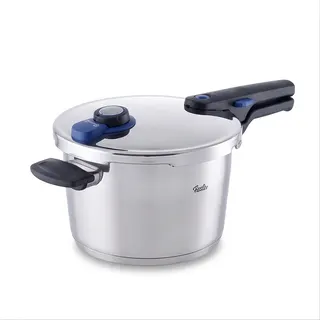 Cookware · since 1953 Fissler Pressure Cooker Safe pressure cooking for the home kitchen, since 1953. Read the entry →
 -
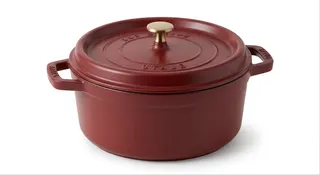 Cookware · since 1974 Staub Cocotte French enameled cast iron cocotte, continuously cast since 1974. Read the entry →
 -
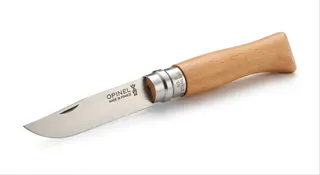 Knives & Chopping · since 1897 Opinel No. 6 French pocket knife in continuous production since 1897. Read the entry →
 -
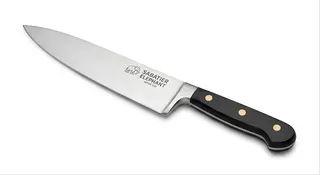 Knives & Chopping · since 1958 Sabatier Elephant Chef's Knife Hand-forged French chef's knife, marked since 1958. Read the entry →