Kitchen & Dining · Cooking & Baking · Kitchen Utensils
Kamenoko Tawashi Nishio Shoten
Kamenoko Tawashi
Since 1907 · 119 years to 2026 · First made in Hongō, Japan
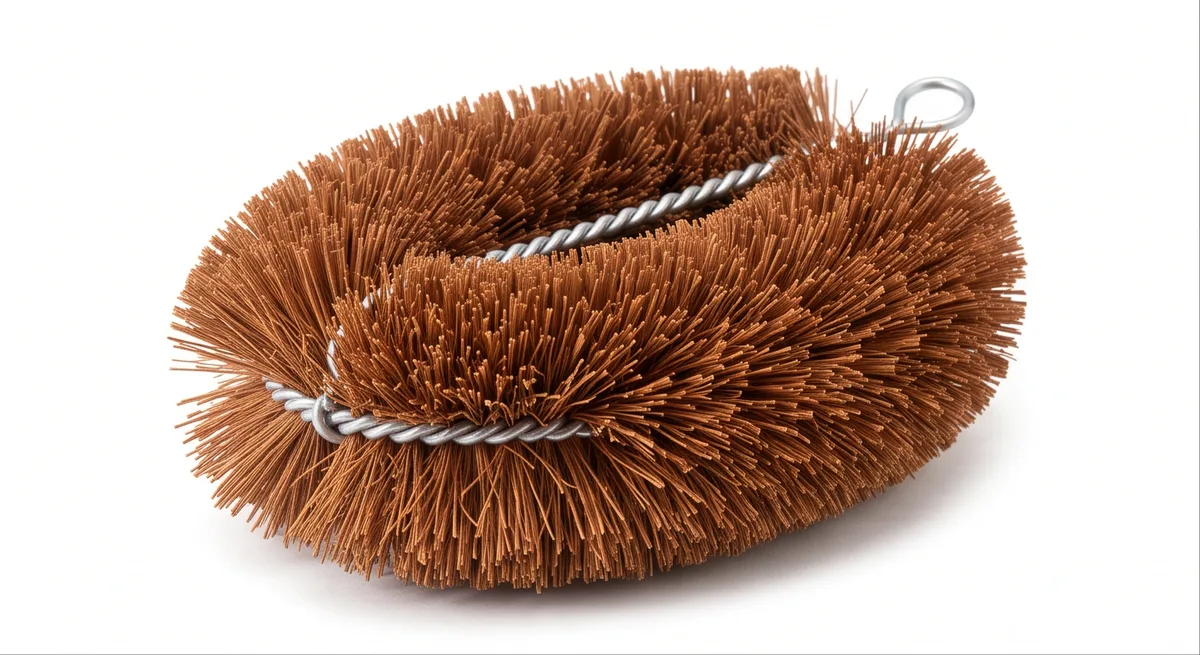
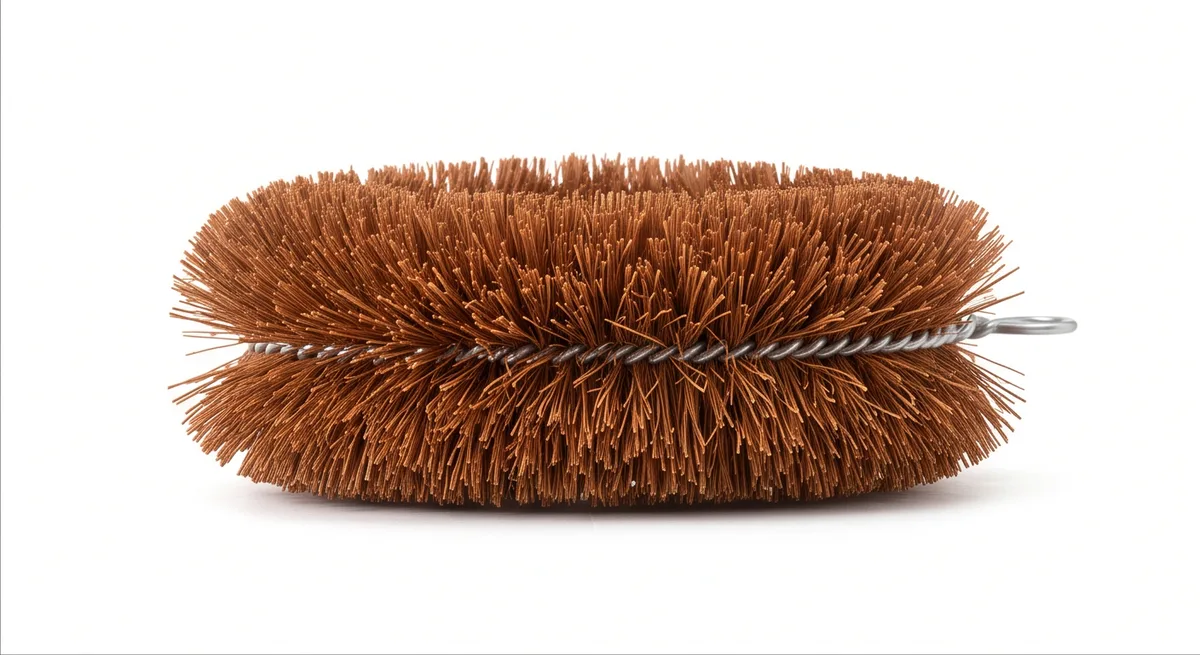
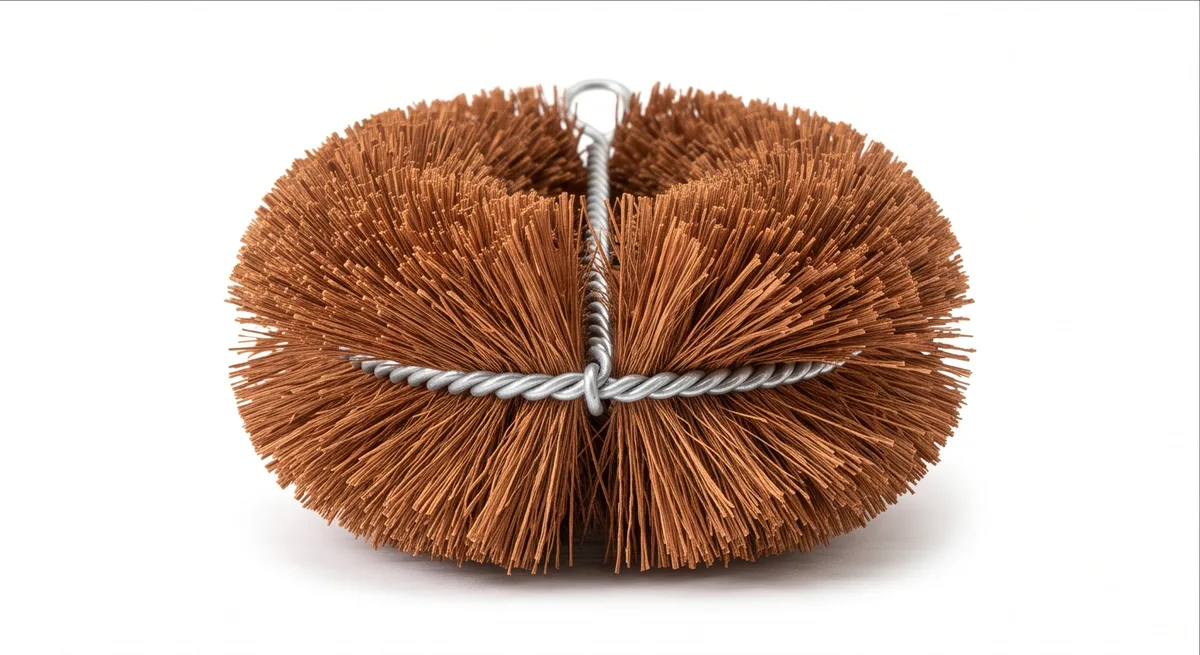
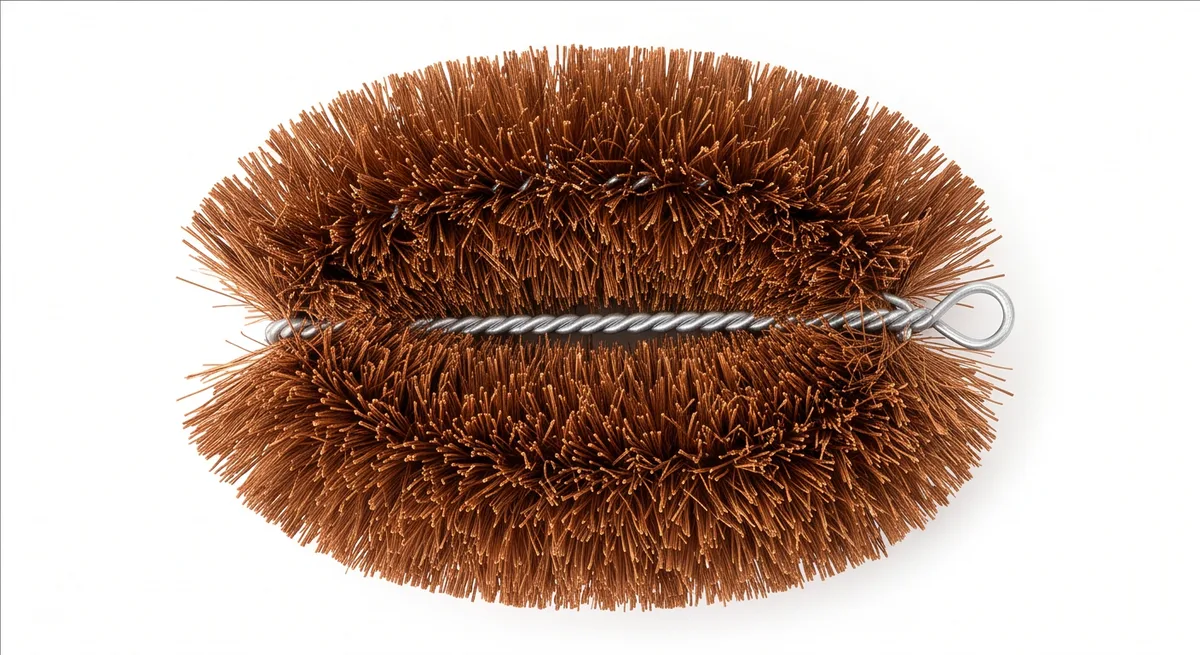
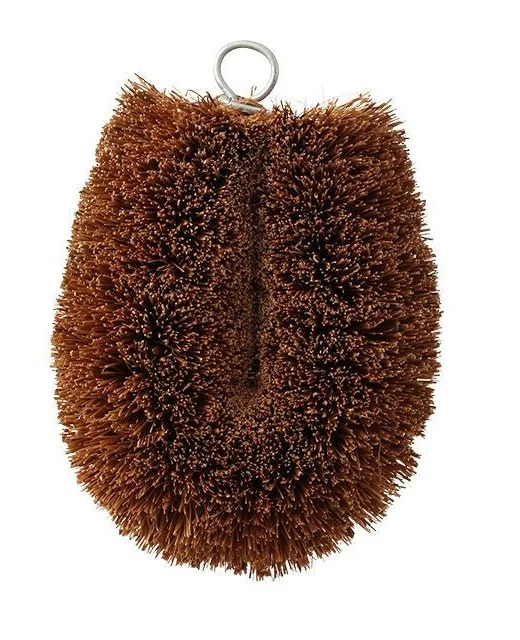
The Kamenoko Tawashi is a scrubbing brush with no handle. A bundle of stiff brown coconut fibres is clamped between two strands of twisted wire, like a bottle brush, and the resulting rod is bent double into a rounded oval that fits the palm, about ten centimetres long, with a small wire loop at the top for hanging. Held fibres downward it has, as its name says, something of the outline of a young turtle.
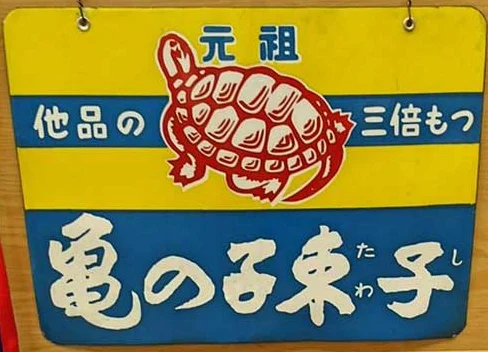
It was invented in Tokyo by Nishio Shōzaemon. His first product, a doormat of hemp-palm fibre wound on wire, failed: the bristles flattened underfoot, and the maker's account says much of the stock came back. Then he saw his wife Yasu bend one of the fibre rods to clean the latticed frames of the paper screens. In the hand, bent, it would not flatten. He worked the size and weight to suit her hand, named it after the turtles his son was watching, and in 1907 put it on sale. Before then the Japanese had scrubbed with bundles of straw or rope.
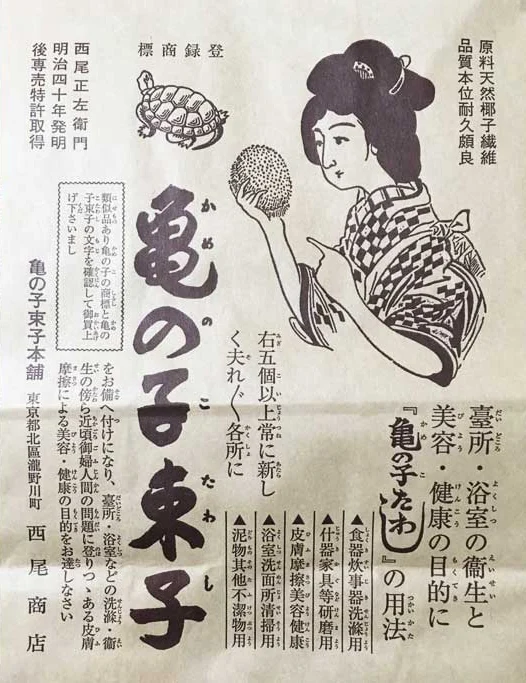
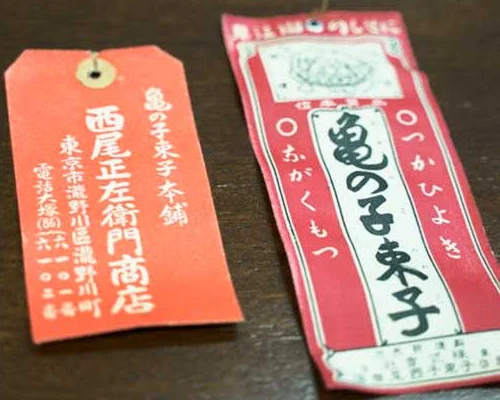
It did not sell at first; shopkeepers hung the brushes in strings of twenty under paper labels explaining what they were for. But it caught on, and by 1915 Nishio held a patent. Imitations followed, and the company wrapped its brushes in paper from 1919 so that customers could tell them apart. The family business moved to Takinogawa in 1923, and its head office and shop are there still. During the war, when coconut fibre could not be imported, the brushes were made of hemp palm.
The company now makes many tawashi, in palm, hemp palm and sisal, as well as sponges. Its No. 1, the original size, remains coconut fibre and galvanised wire, sold for scrubbing root vegetables, iron pans and colanders. It received a Good Design Long Life Design Award in 2013, and the company is now led by its fifth president, again a Nishio.
Timeline
- 1907 First made · Claimed Kamenoko Tawashi enters production in Hongō, Japan.
- 1907 Designed Nishio Shōzaemon bends a wire-bound rod of palm fibre into an oval hand brush at Hongō, Tokyo, names it after a baby turtle and puts it on sale.
- 1908 Recognised A utility-model registration is granted, and the turtle mark is registered as a trademark.
- 1915 Recognised Patent No. 27983 for the tawashi is granted on 2 July.
- 2013 Recognised The Kamenoko Tawashi No. 1 receives a Good Design Long Life Design Award.
Milestones as we found them, not as we've checked them.
From the archive
More like this
-
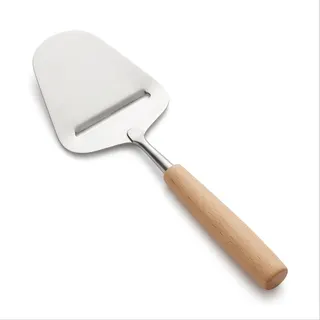 Kitchen Utensils · since 1925 Bjørklund Cheese Slicer A joiner's plane turned round for the breakfast table, made in Gudbrandsdalen since 1925. Read the entry →
 -
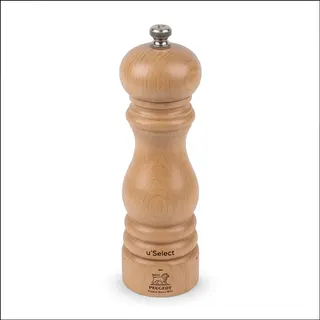 Kitchen Utensils · since 1874 Peugeot Pepper Mill The first pepper mill, still made by hand in France since 1874. Read the entry →
 -
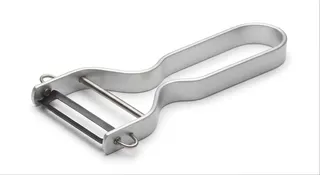 Kitchen Utensils · since 1947 Rex Peeler The first peeler with its blade across the handle, pressed from one strip of aluminium in Switzerland since 1947. Read the entry →
 -
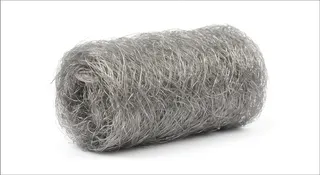 Kitchen Utensils · since 1948 Bombril A roll of fine steel wool from São Paulo, made since 1948 to keep aluminium pans bright. Read the entry →