DIY & Tools · Tools · Knives & Multi-tools
Buck Knives
Buck 110 Folding Hunter
Since 1964 · 62 years to 2026 · First made in San Diego, California
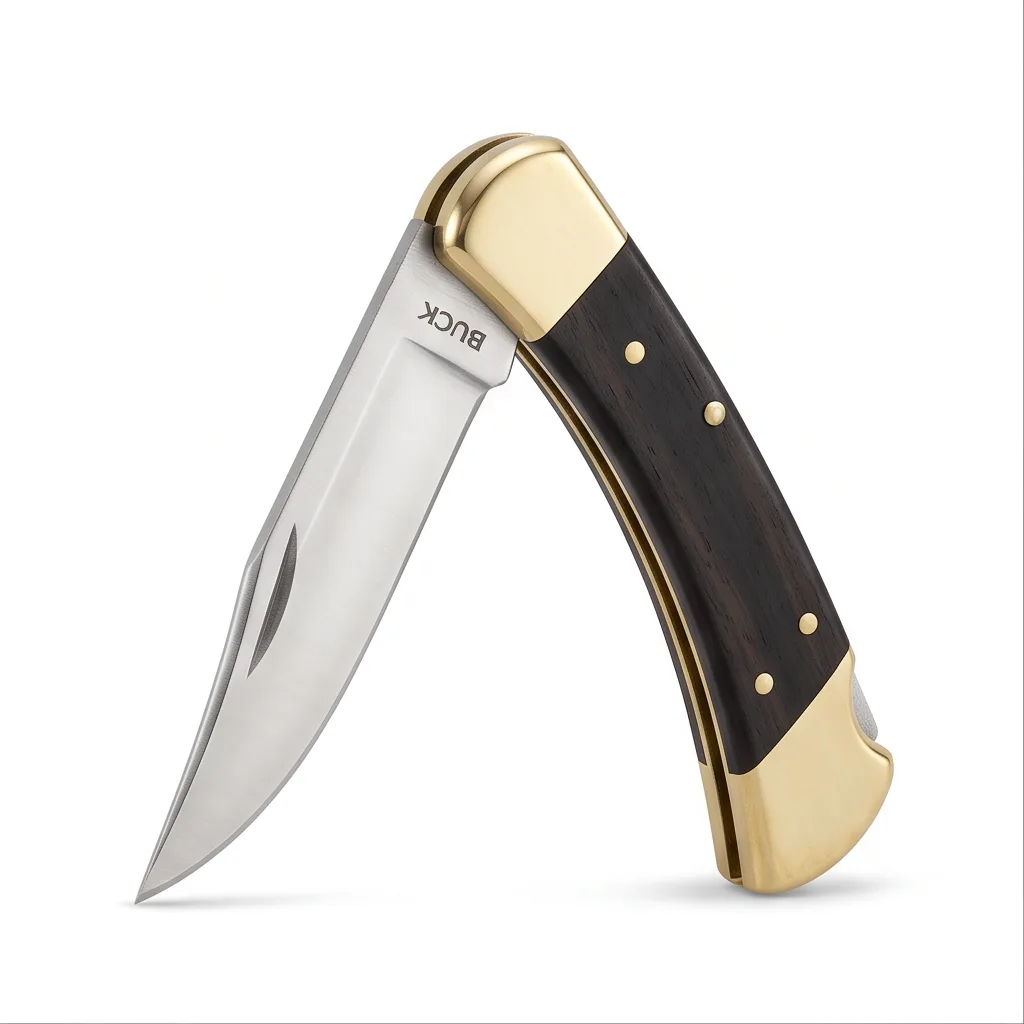
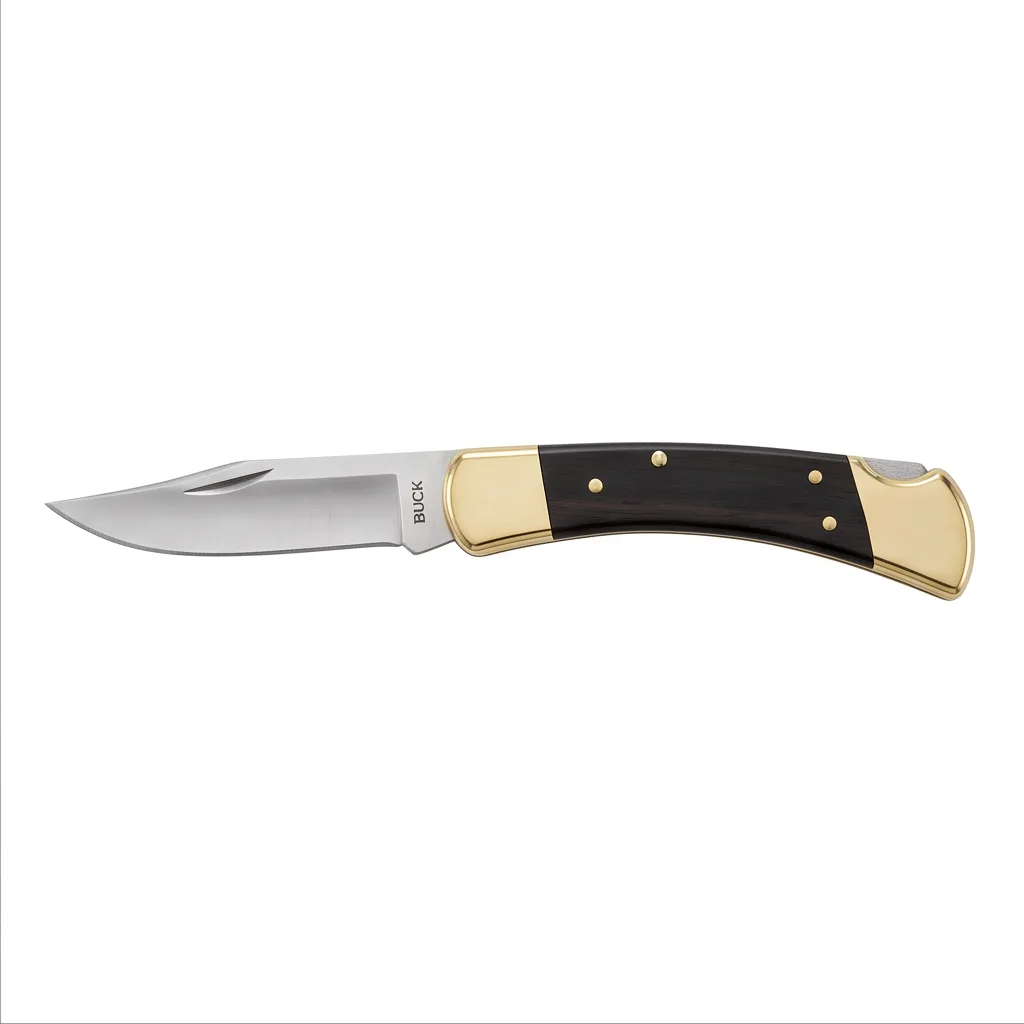
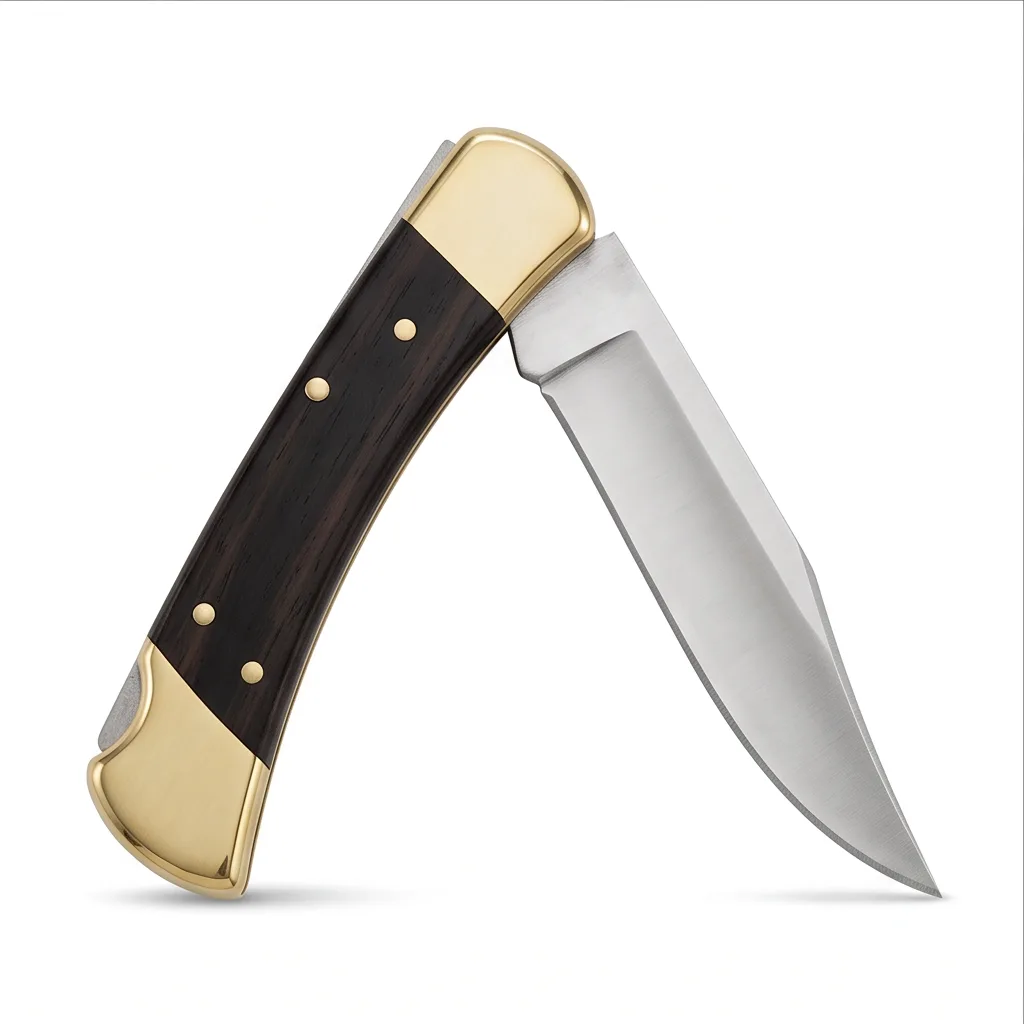
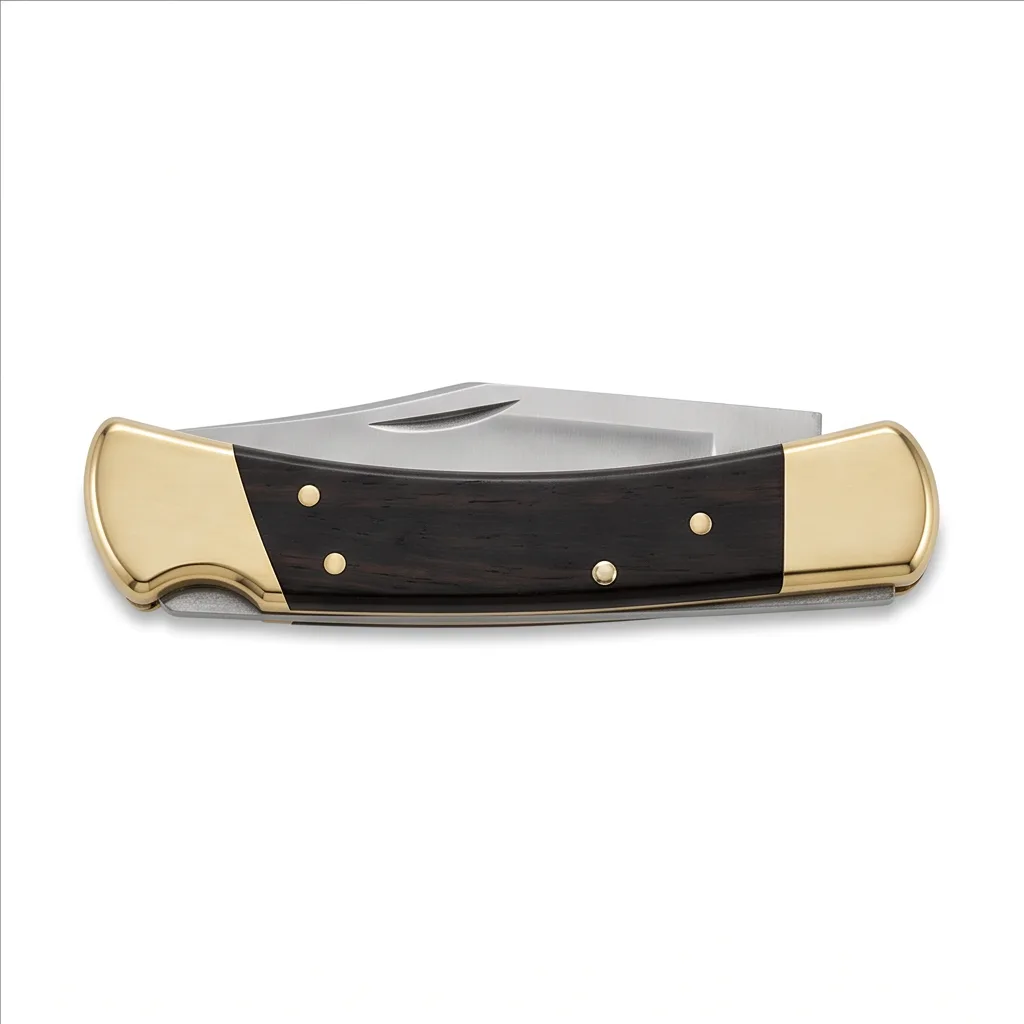
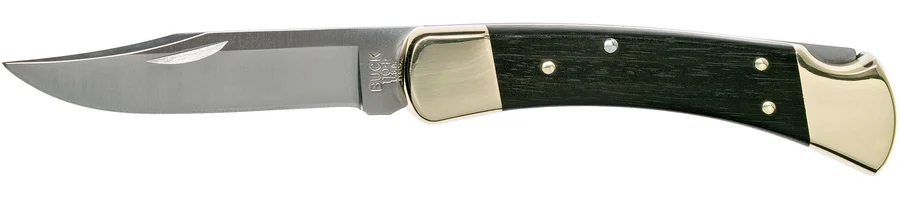
The Buck 110 Folding Hunter is a large lockback pocket knife. A clip-point blade of polished stainless steel, three and three-quarter inches long, folds into a handle of dark ebony scales held between heavy brass bolsters, which are shaped to the hand at both ends. When the blade is opened a spring-loaded bar locks it rigidly in place; pressing a notch at the back of the handle releases it. Closed, it is about five inches long and weighs more than most pocket knives, and it is usually carried in a leather belt sheath.
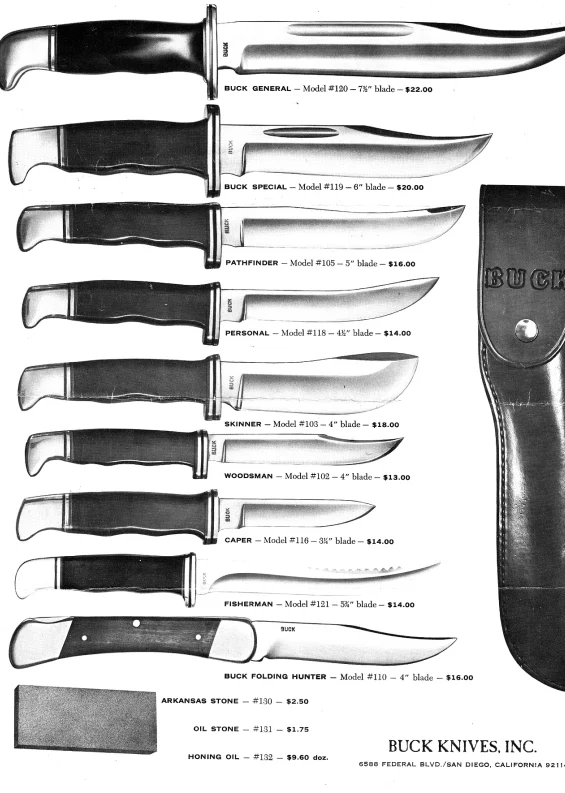
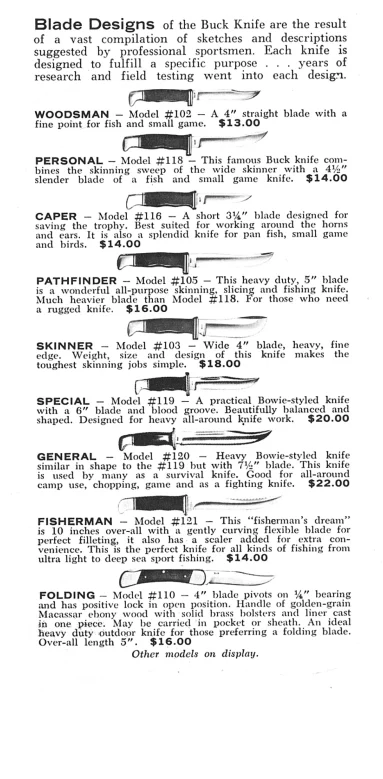
It was developed at Buck Knives in San Diego, a family firm whose founder, Hoyt Buck, had made his first blades in Kansas at the turn of the century. In 1963 his son Al Buck and the board resolved to make a folding knife strong enough for hunters who did not want to carry a fixed blade. Rival lock knives were bought, used and taken apart, and after a summer of prototypes and difficulties with tooling the first Folding Hunter came off the line in June 1964.

It was an immediate success, and its outline was soon copied so widely that 'buck knife' became a common name for any folding lockback. Popular Mechanics counted more than eleven million sold by 1990. Over the years the blade steel, rivets, pins and logo stamp have all changed, and collectors date old examples by these details, but the knife has kept the shape, the brass and wood, and the lock that it had in 1964.
Buck left California for Post Falls, Idaho, in 2004, and the 110 is still made in the United States and sold today. It remains a working tool rather than a collector's piece, bought by hunters for dressing game and by others simply as a heavy, dependable knife.
Timeline
- 1964 First made · Verified Buck 110 Folding Hunter enters production in San Diego, California.
- 1969 Production Buck moves into a new plant on North Magnolia Avenue, El Cajon, California.
- 1981 Designed Blade steel changes from 440C to 425M, and from 1993 mostly to 420HC, according to Wikipedia.
- 2004 Production Buck Knives moves its manufacturing from California to Post Falls, Idaho.
Milestones as we found them, not as we've checked them.
From the archive
More like this
-
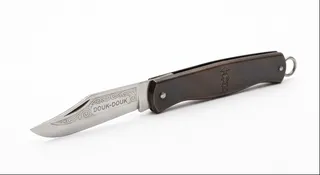 Knives & Multi-tools · since 1929 Douk-Douk A Thiers pocket knife named after a Melanesian spirit, folded from one strip of steel since 1929. Read the entry →
 -
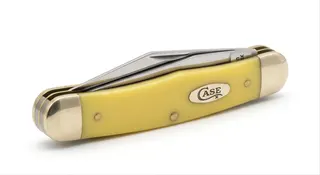 Knives & Multi-tools · since 1920 Case Trapper Knife Two-blade pocket knife designed for trappers, in continuous production since 1920. Read the entry →
 -
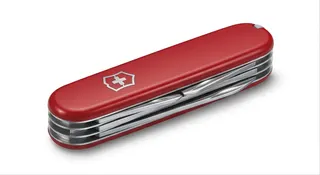 Knives & Multi-tools · since 1897 Victorinox Swiss Army Knife The Original Swiss Officer's and Sports Knife, patented 1897. Read the entry →
 -
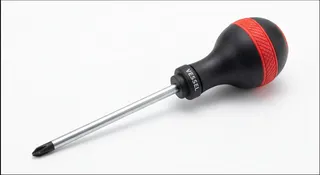 Hand Tools · since 1984 Vessel Ball Grip Screwdriver No. 220 An Osaka electricians' screwdriver with a ball for a handle, sold since 1984. Read the entry →