DIY & Tools · Tools · Knives & Multi-tools
M.C. Cognet
Douk-Douk
Since 1929 · 97 years to 2026 · First made in Thiers, France
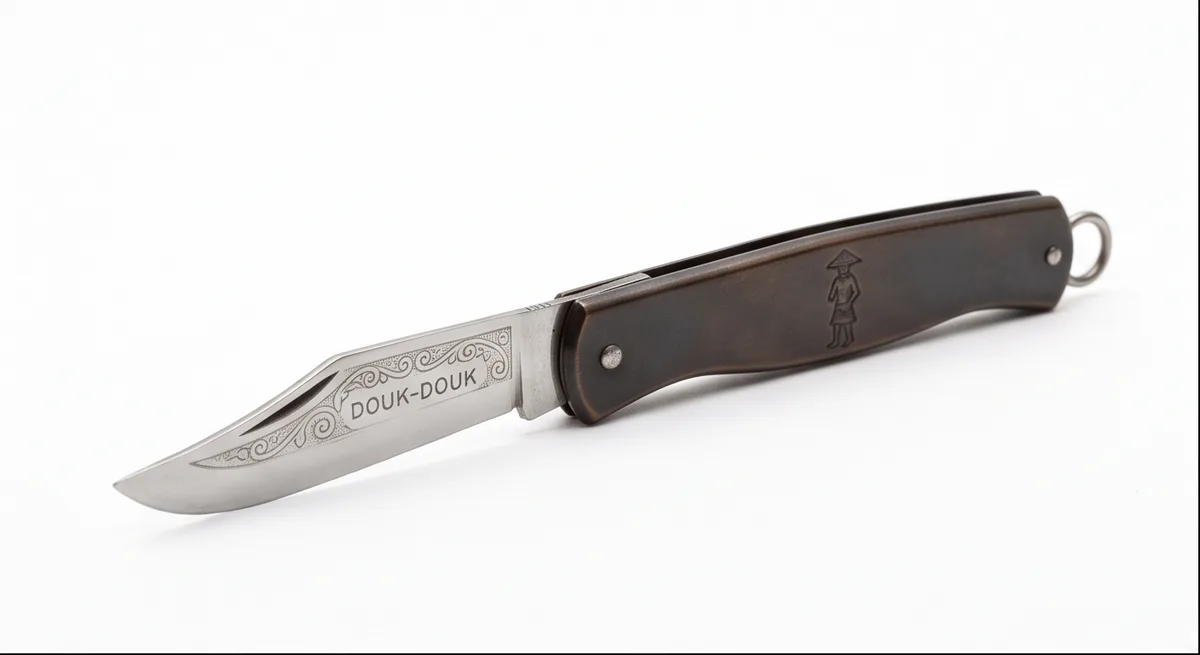
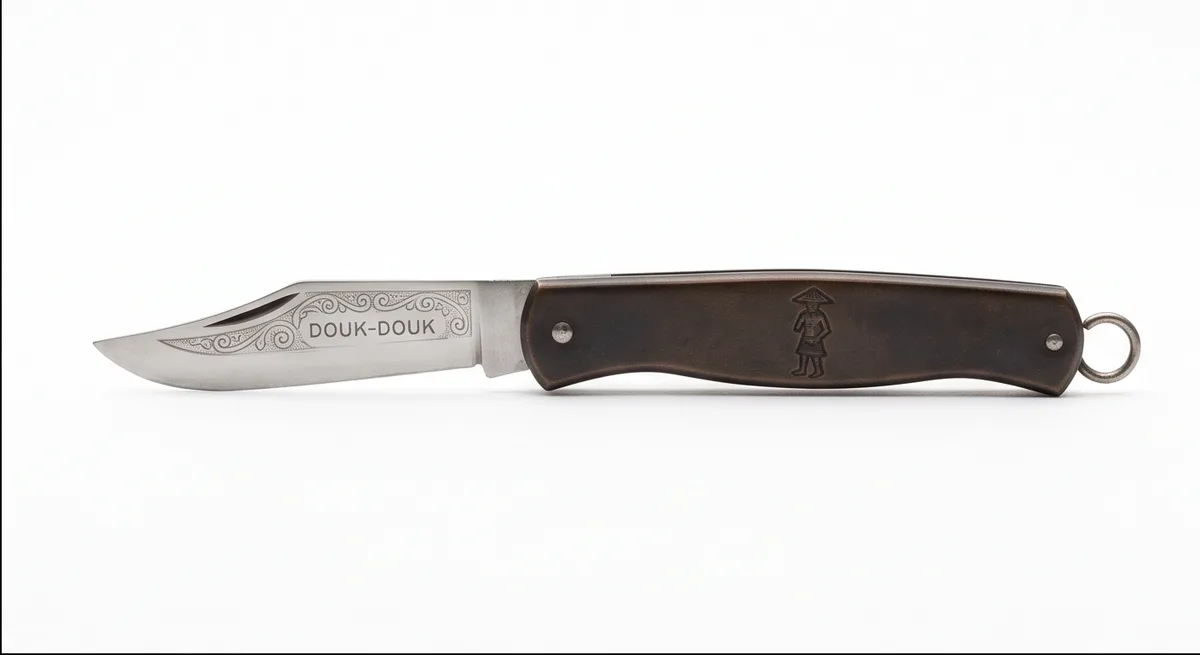
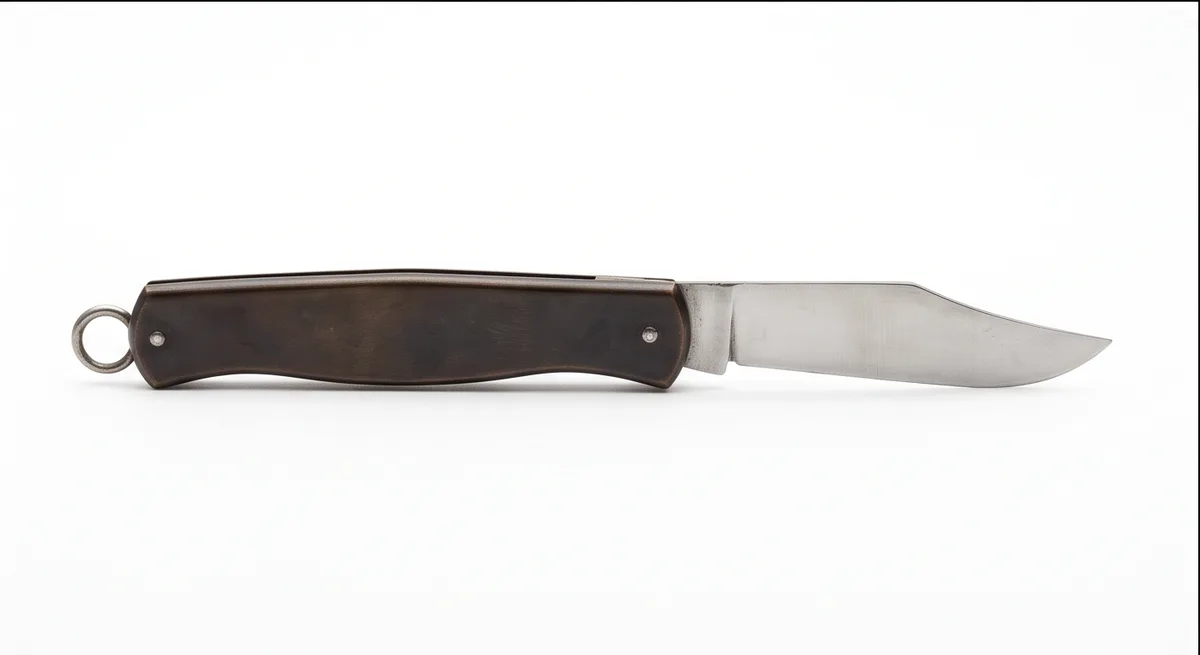
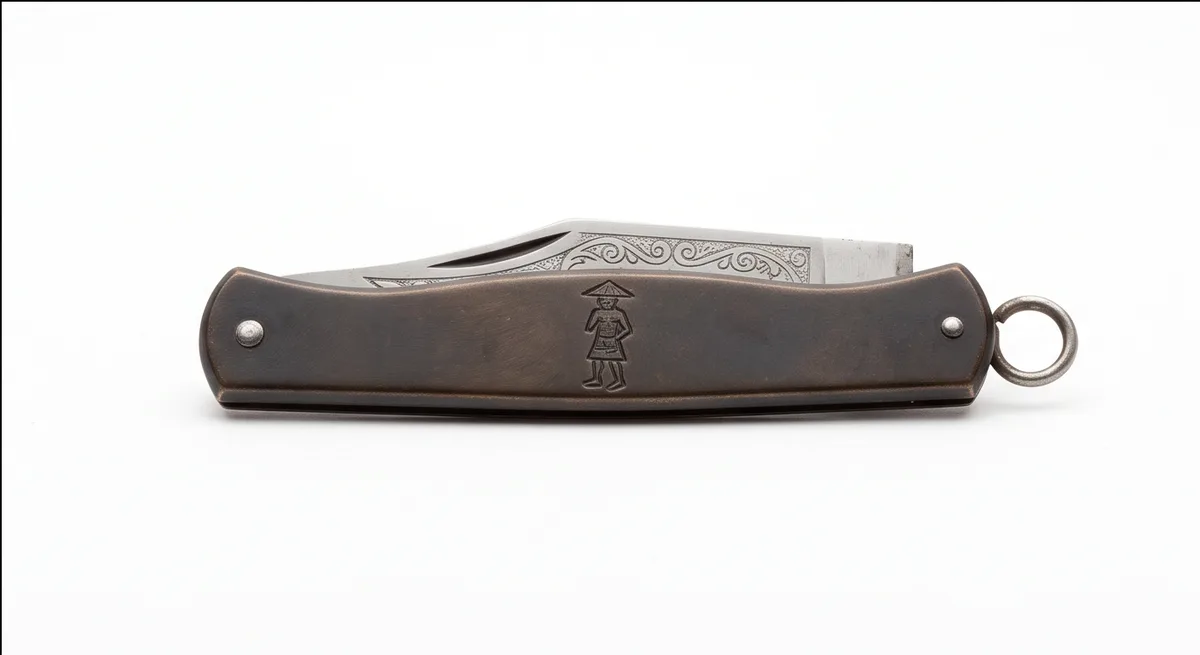
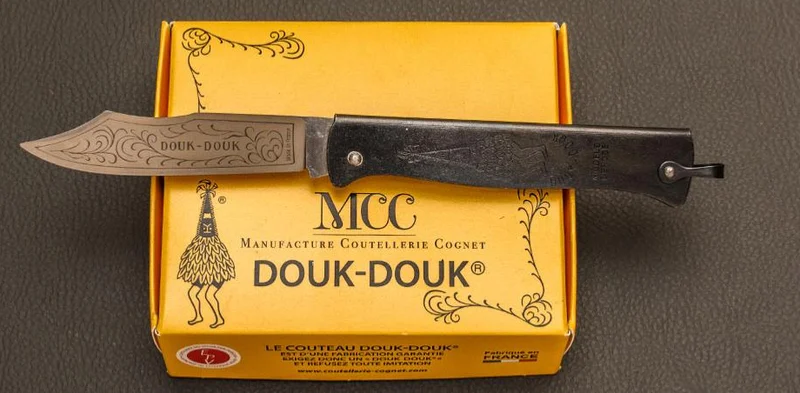
The Douk-Douk is a French pocket knife made from six parts. Its handle is a single strip of steel folded into a narrow channel and darkened by a bronzing bath of the kind used on gun barrels. Stamped into one side is a standing figure in a conical hat and a cloak of leaves. The blade, a curved Turkish-style clip point in carbon steel, is etched with arabesques and the name DOUK-DOUK. A spring lies in the channel, two rivets hold everything together, and a small ring hangs at the back. The standard model is 200 millimetres long when open.
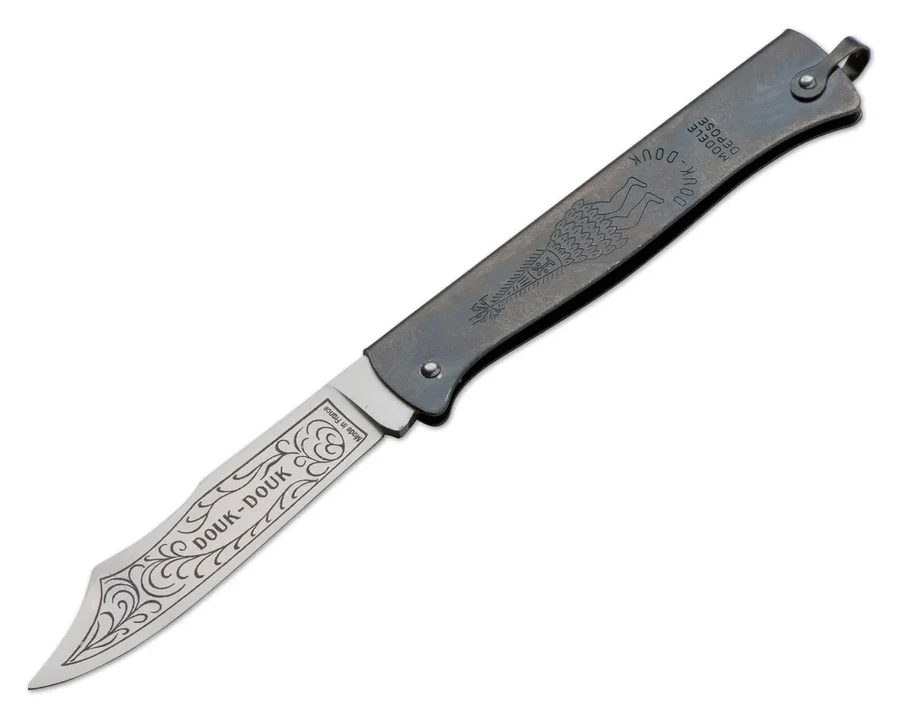
It was devised at Thiers, the French cutlery town, by Gaspard Cognet, known as Gaston, in 1929; J.R. Clergeau, writing in the Gazette des Couteaux, gives 1928 to 1929 and says the mark was registered in 1930. Cognet meant it for Melanesia, and took its name and emblem from an illustration of the duk-duk, a masked spirit figure of New Guinea, found in a dictionary.
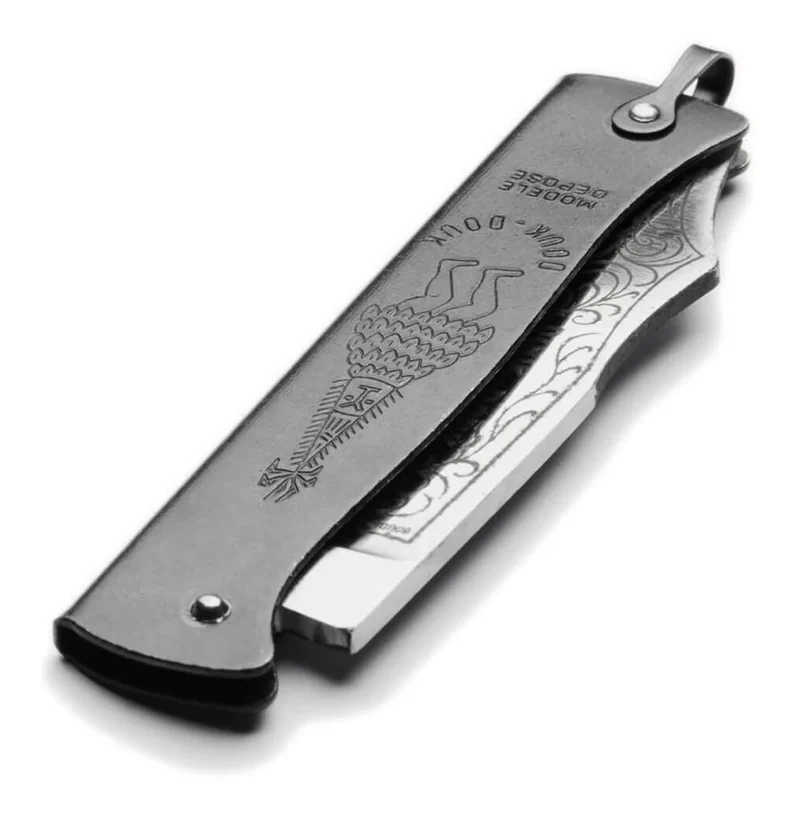
The Melanesian market proved small, and the knife found its customers in French North Africa and then south of the Sahara, where it spread widely, followed by derived models, the El Baraka and the Tiki. It was cheap but not crude: Clergeau notes that the folded handle, which he credits to its inventor, saved enough cost to pay for a forged and properly ground blade. Its reputation also had a darker side, as a weapon of the Algerian war.
The Manufacture de Coutellerie Cognet still makes it at Thiers, run by the founder's descendants, and French Wikipedia says it is made by the same methods as before. The family has added variants under other names, colours, stainless blades and a giant model, but the black-handled 200-millimetre knife with its carbon blade remains the standard, sold for about €40.
Timeline
- 1929 First made · Verified Douk-Douk enters production in Thiers, France.
- 1929 Designed Gaspard 'Gaston' Cognet devises the folded-steel Douk-Douk at Thiers for the Melanesian market.
- 1930 Production The Douk-Douk mark is registered, according to J.R. Clergeau.
Milestones as we found them, not as we've checked them.
From the archive
More like this
-
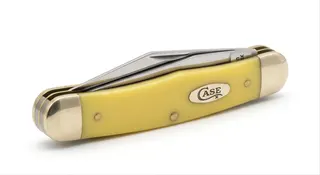 Knives & Multi-tools · since 1920 Case Trapper Knife Two-blade pocket knife designed for trappers, in continuous production since 1920. Read the entry →
 -
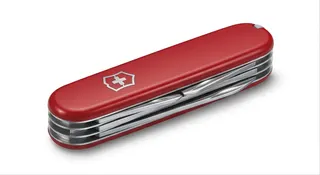 Knives & Multi-tools · since 1897 Victorinox Swiss Army Knife The Original Swiss Officer's and Sports Knife, patented 1897. Read the entry →
 -
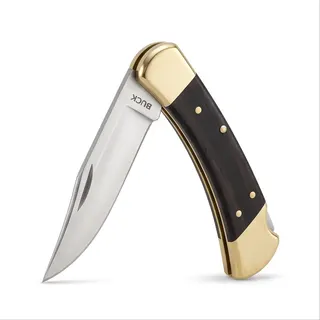 Knives & Multi-tools · since 1964 Buck 110 Folding Hunter Buck's brass-and-ebony lockback of 1964, the folding knife strong enough to do a sheath knife's work. Read the entry →
 -
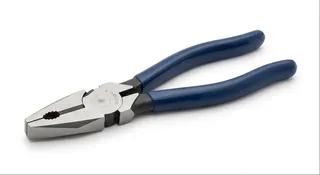 Hand Tools · since 1857 Klein Lineman's Pliers The pliers a telegraph lineman commissioned in 1857, still forged today. Read the entry →