DIY & Tools · Tools · Knives & Multi-tools
Victorinox
Victorinox Swiss Army Knife
Since 1897 · 129 years to 2026 · First made in Ibach, Switzerland
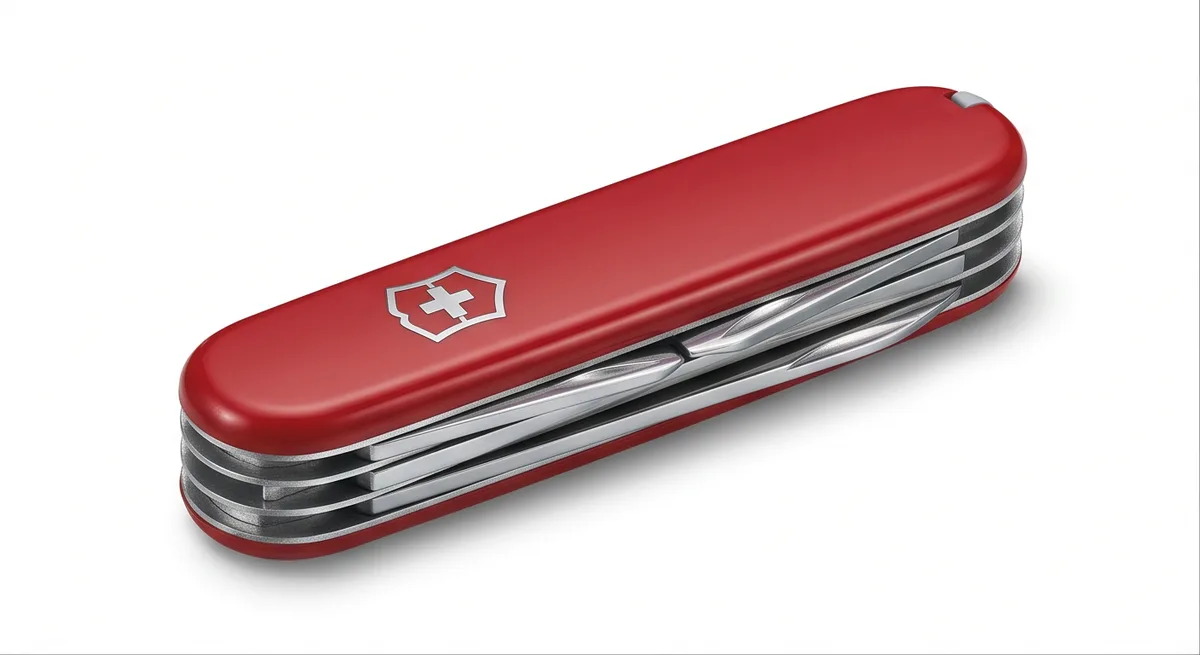
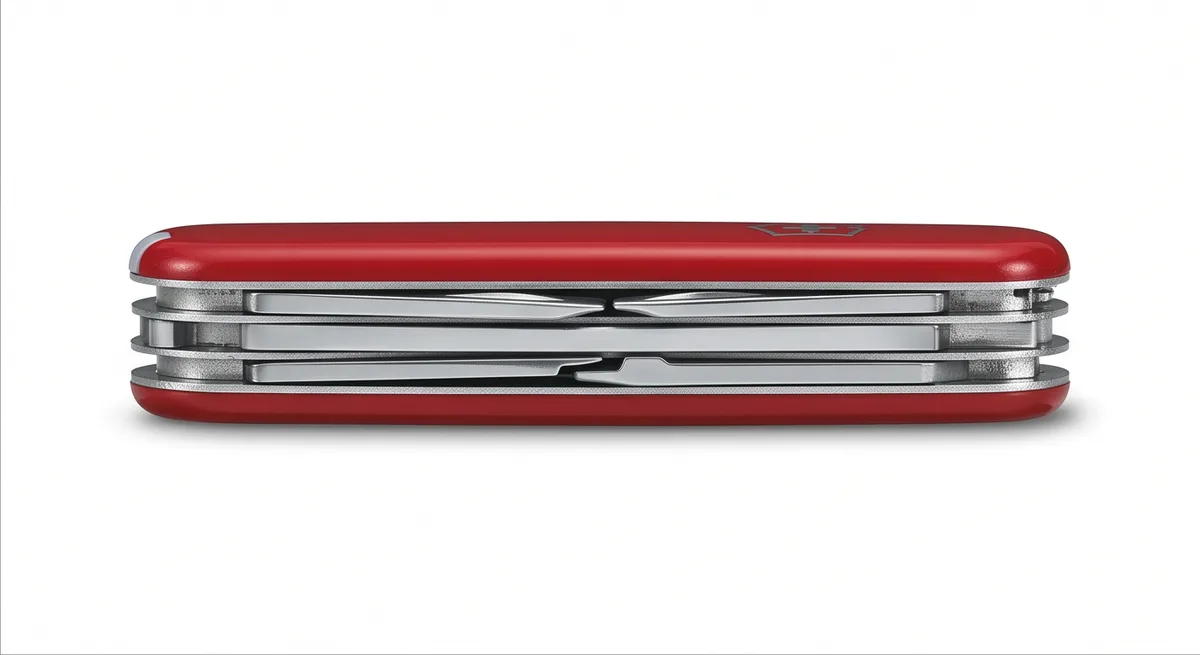
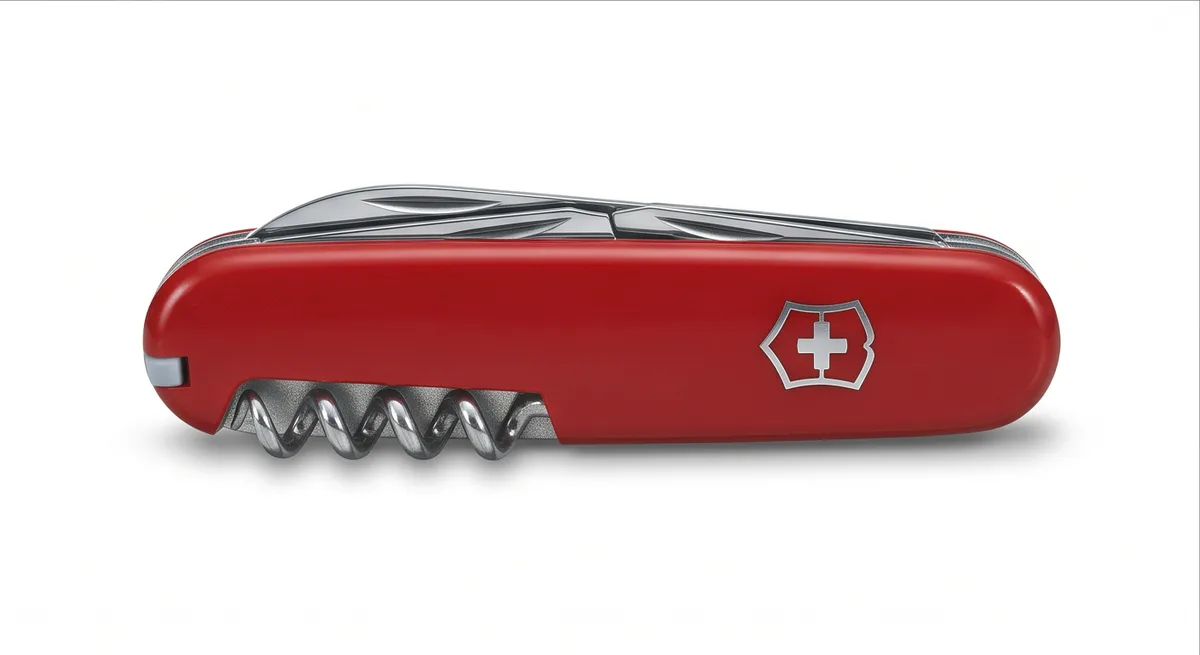
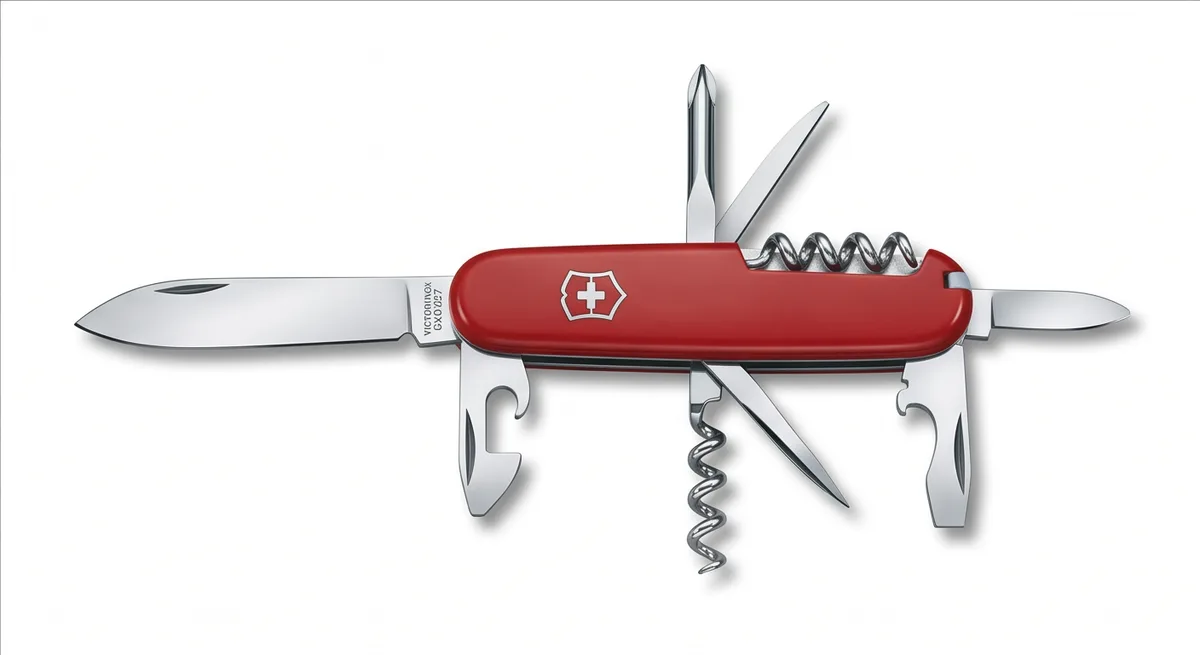
The Swiss Army Knife represents an unusual case of industrial longevity: a tool born from international collaboration that became a symbol of Swiss precision. When Karl Elsener developed his folding officer's knife in 1896, he combined a German multipurpose concept with a French corkscrew and his own engineering refinement. The resulting design—patented in 1897—proved commercially successful enough to sustain his small workshop through financial difficulty, even though the Swiss military never formally adopted it as standard issue. What began as a civilian product eventually became the official knife of the Swiss Armed Forces, a status it has maintained for over 125 years.
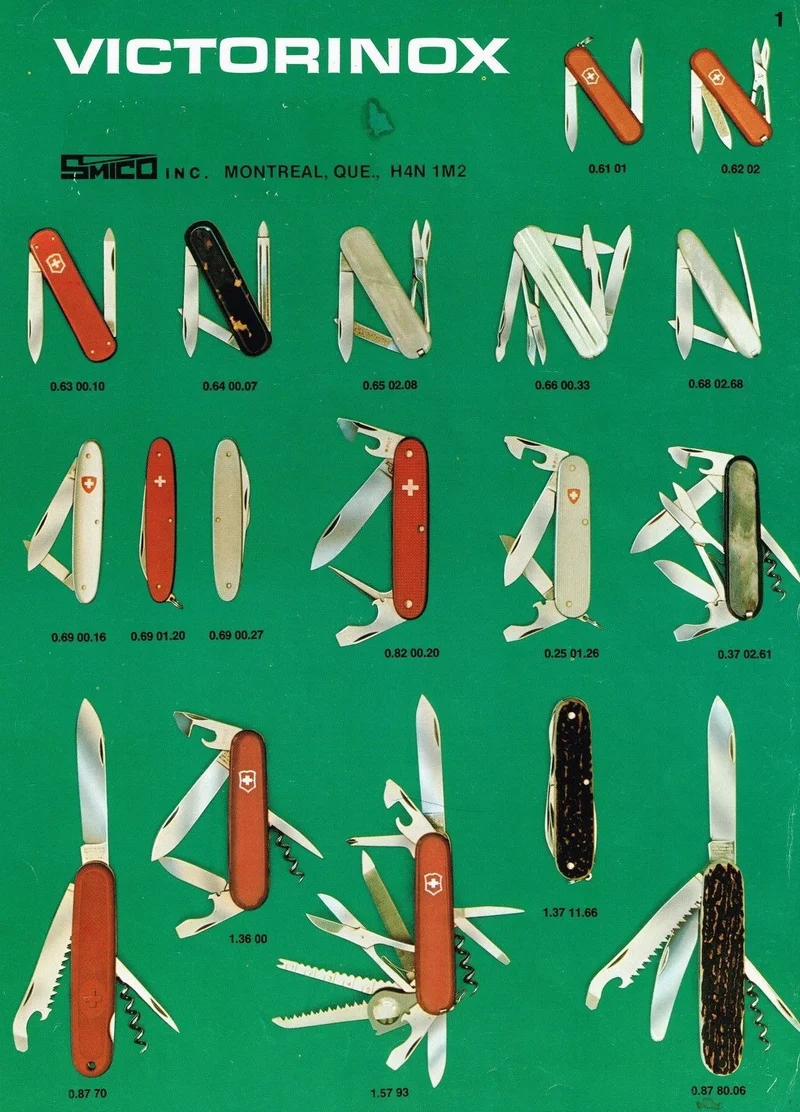
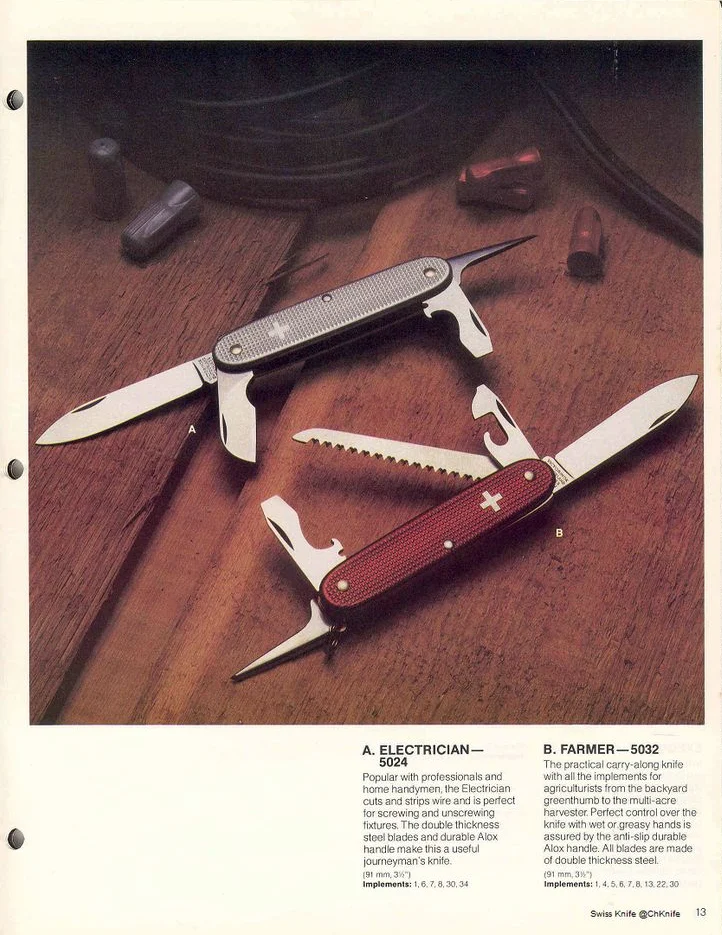
The knife's material composition has been central to its identity and durability. Victorinox sources martensitic stainless steel from European suppliers, some relationships spanning nearly a century, chosen specifically for its capacity to be hardened into strong blades and tools. Since 1957, the company has also employed Alox—an anodised aluminium with a distinctive waved pattern—which provides lightweight robustness and improved grip. Wood scales remain in use for certain models, ensuring that no two knives are identical. The company's commitment to material stewardship extends to production waste: grinding powder and offcuts are collected and returned to suppliers to be reconstituted into new steel, closing the material loop.
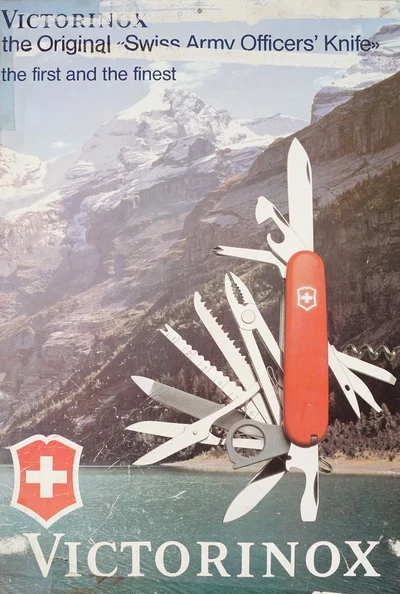
By 2006, Victorinox was producing approximately 34,000 Swiss Army knives daily, alongside 38,000 multi-tools and 30,000 household kitchen knives, with roughly 90 percent exported to more than 100 countries. The knife's cultural reach extends beyond utility: the design has been held in the permanent collections of the Museum of Modern Art in New York since 1977, the Design Museum in London, and the Neue Sammlung in Munich. The company now offers over 300 models with up to 80 functions, from the minimalist Classic SD to the 33-function Swiss Champ. In 2017, Victorinox marked the production of its 500-millionth Original Swiss Army Knife, a milestone that underscores both the product's constancy and its evolution across more than fourteen decades of continuous manufacture.
Timeline
- 1897 First made · Disputed Victorinox Swiss Army Knife enters production in Ibach, Switzerland.
- 1921 Production Victorinox begins using stainless steel in knife production.
- 1957 Ownership Elsener's company formally adopts the name Victorinox.
- 1977 Recognised The Swiss Army Knife design enters the permanent collection of the Museum of Modern Art in New York.
- 2005 Ownership Victorinox acquires Wenger, consolidating military knife production.
- 2017 Recognised Victorinox marks the production of its 500-millionth Original Swiss Army Knife.
Milestone dates are taken from the production notes behind this entry and have not been checked separately.
From the archive
More like this
-
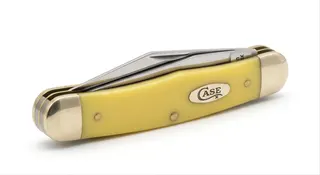 Knives & Multi-tools · since 1920 Case Trapper Knife Two-blade pocket knife designed for trappers, in continuous production since 1920. Read the entry →
 -
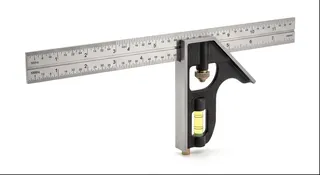 Hand Tools · since 1880 Starrett Combination Square The adjustable square that replaced a workshop full of single-use tools. Read the entry →
 -
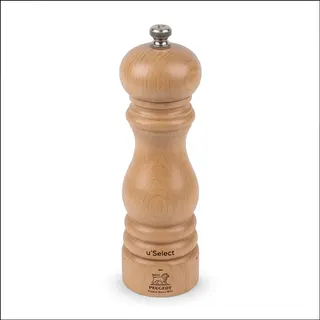 Hand Tools · since 1874 Peugeot Pepper Mill The first pepper mill, still made by hand in France since 1874. Read the entry →
 -
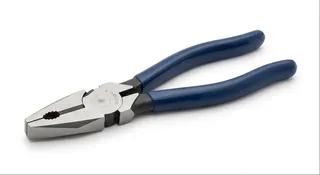 Hand Tools · since 1857 Klein Lineman's Pliers The pliers a telegraph lineman commissioned in 1857, still forged today. Read the entry →