Stationery & Office · Paper & Desk · Desk Accessories
Cléopâtre
Colle Cléopâtre P'tit Pot
Since 1930 · 96 years to 2026 · First made in Paris, France
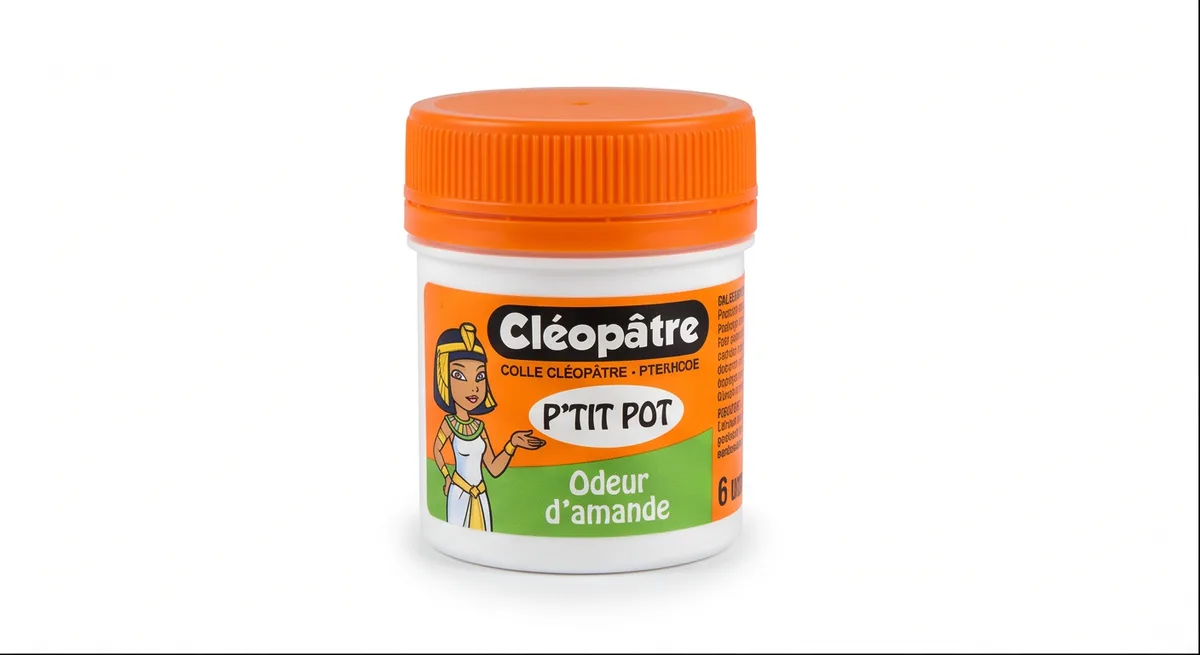
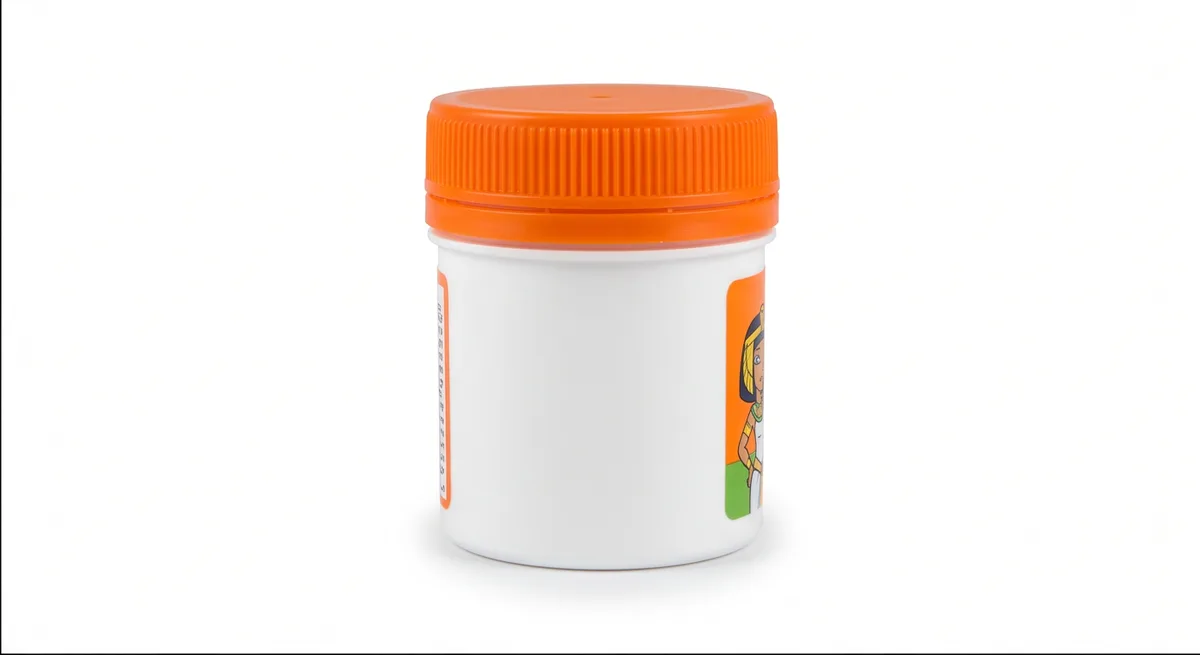
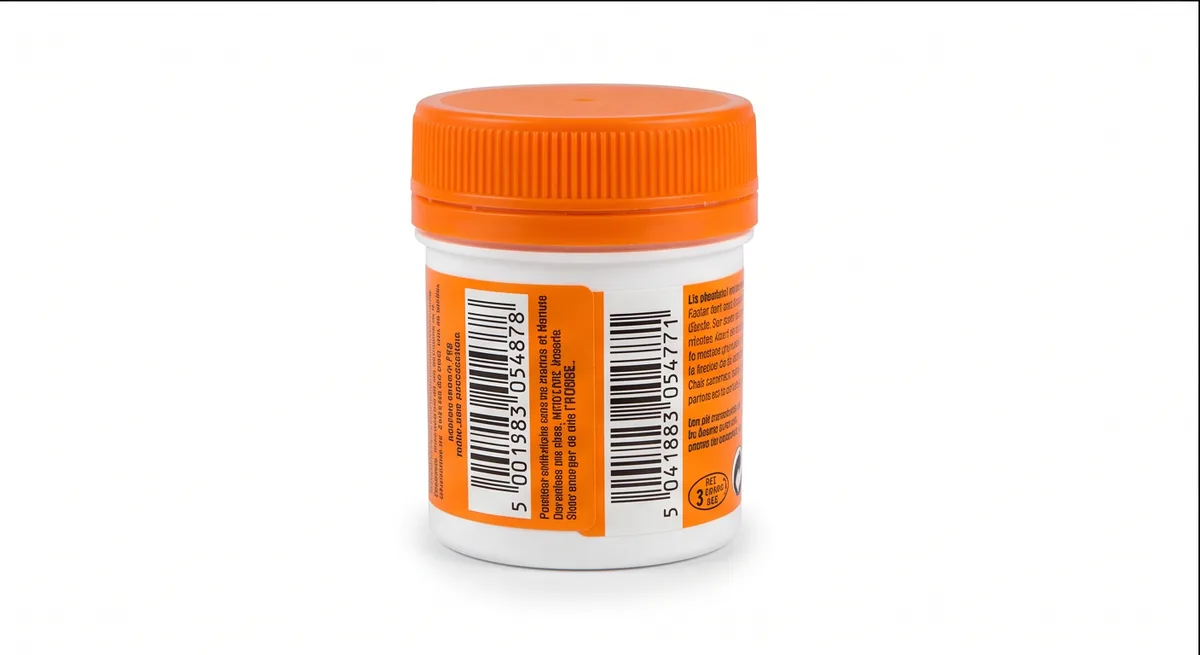
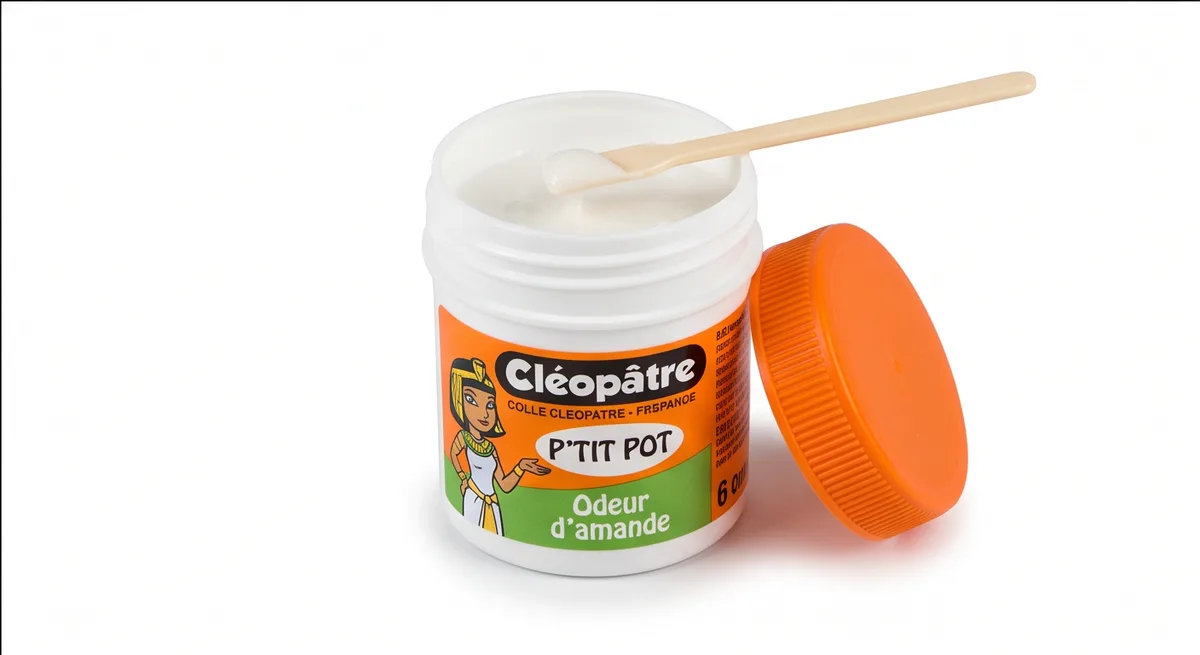
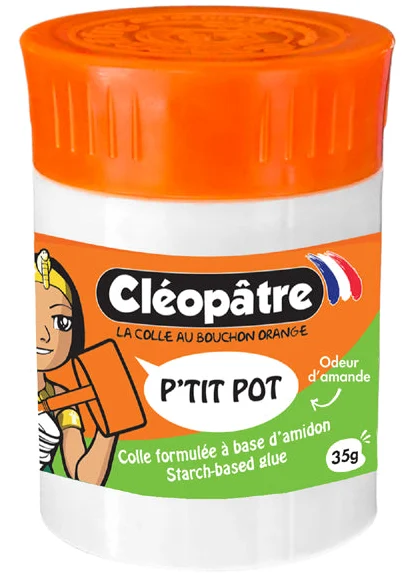
The P'tit Pot is a small cylindrical pot of white plastic with a ribbed orange cap, holding thirty-five grams of a soft white paste made from starch and water. The label carries the brand's cartoon queen and the words 'odeur d'amande', for the paste smells unmistakably of almonds. A flexible applicator set in the cap is used to spread it on paper, and it washes off with water once dry.
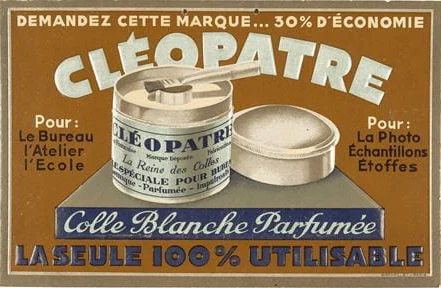
It was first made in 1930 by Pierre Chamson, in a flat in the rue Chapon in the Marais, in round aluminium tins of potato-starch paste. It was named after Cleopatra and sold as 'la reine des colles', the queen of glues, to offices, photographers, drapers and schools. Around 1935 a brush was added to the pot and, crucially, a scent of almonds.
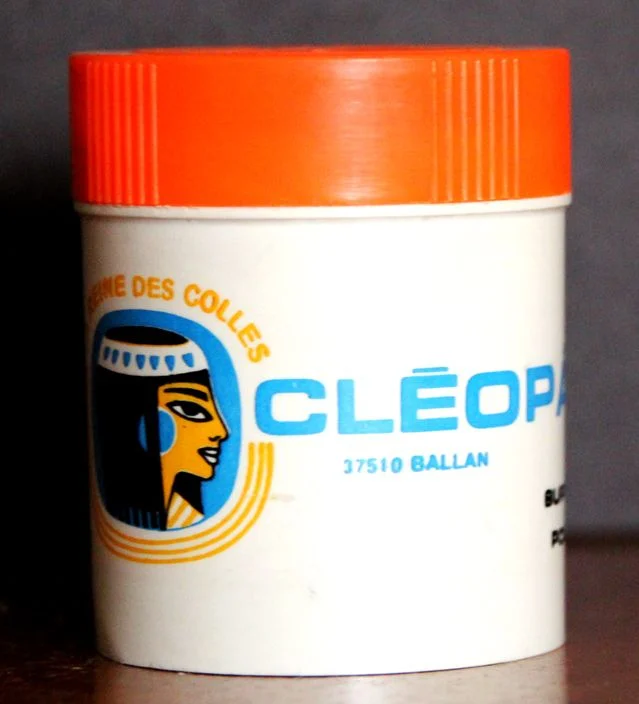
That scent is the reason the pot is remembered. Generations of French schoolchildren spread it with a spatula, smelled it, and sometimes tasted it, which did them no harm: the paste is made of natural materials, and in 2016 it was still being made from potato starch, as the first tins had been. After 1954 the tins gave way to plastic, and in 1963 the pot was reshaped around a central well, with the spatula held in the orange lid that became, with the smell, the brand's signature.
The firm left Paris for Ballan-Miré, near Tours, in 1971, where it went on to make glue sticks, paints and craft materials, and where the firm is still based. The firm marked its ninetieth year in 2020 with a collector's edition of the white pot, still sold beside the everyday one. The latest redesign, of 2025, gave the P'tit Pot a screw lid and an applicator like a brush, returning, by a long road, to the brush of the 1930s, around the same almond-scented paste.
Timeline
- 1930 First made · Claimed Colle Cléopâtre P'tit Pot enters production in Paris, France.
- 1935 Designed A brush is set in the pot and the paste is scented with almond (1934 in some accounts).
- 1963 Designed The plastic pot is reshaped with a central well for a spatula held in the orange lid.
- 1971 Production The firm moves from Paris to Ballan-Miré, near Tours, where the pots are still made.
Milestones as we found them, not as we've checked them.
From the archive
More like this
-
 Desk Accessories · since 1932 UHU Der Alleskleber A pharmacist's clear synthetic glue of 1932, named after an owl and still sold in the yellow tube with black capitals. Read the entry →
 -
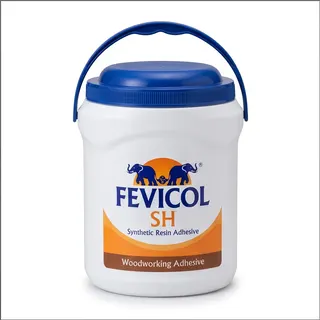 Desk Accessories · since 1959 Fevicol SH The white glue that replaced the carpenter's melting pot in India, and became the country's word for glue. Read the entry →
 -
 Desk Accessories · since 1960 Poxipol Argentina's two-part cure for broken things, mixed one to one since 1960. Read the entry →
 -
 Desk Accessories · since 1899 Yamato Nori A Tokyo starch paste that keeps, sold in a lidded pot since 1899. Read the entry →