Eno (Haleon)
Eno Fruit Salt
Since 1852 · 174 years to 2026 · First made in Newcastle upon Tyne, Tyne and Wear
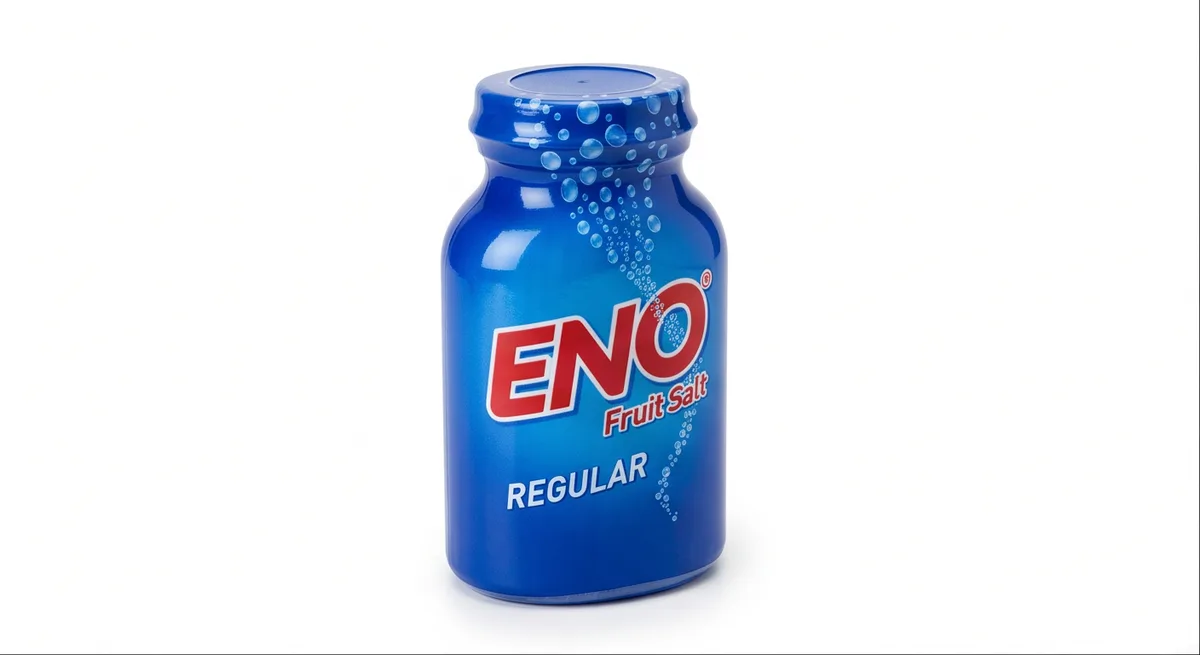
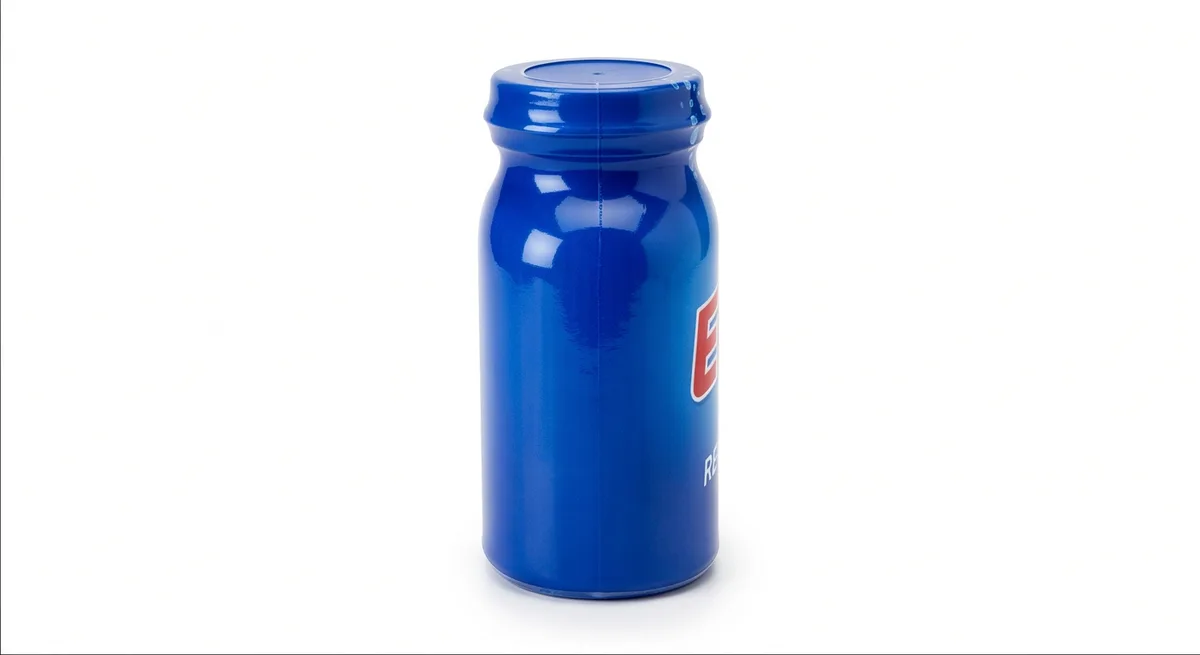
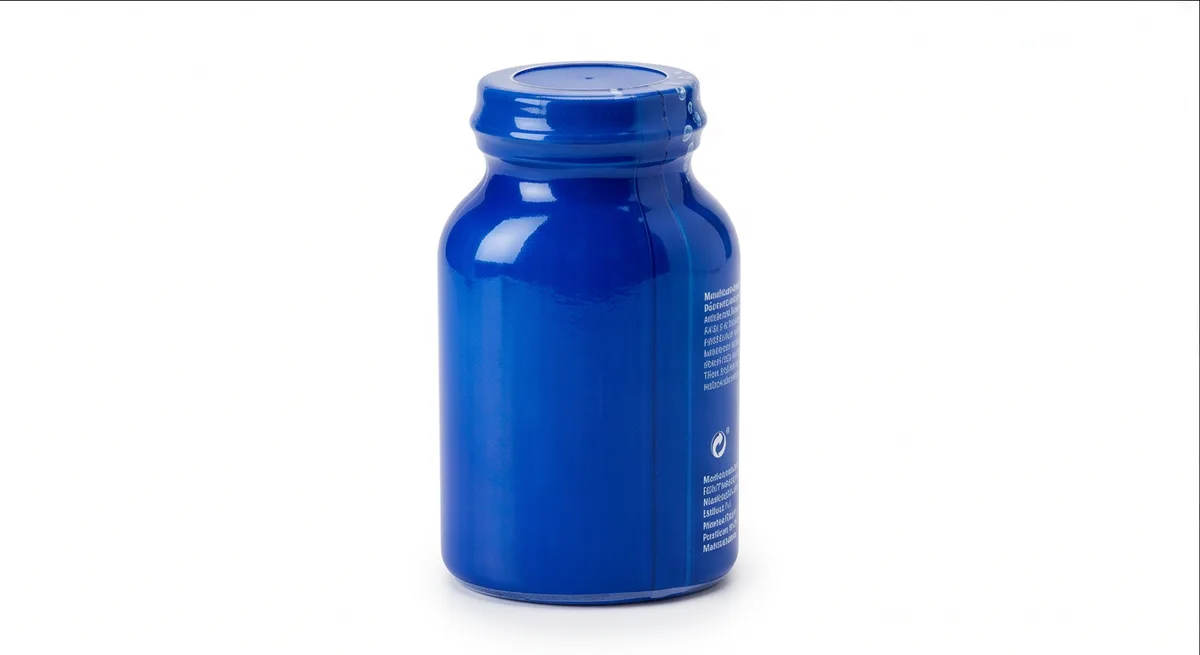
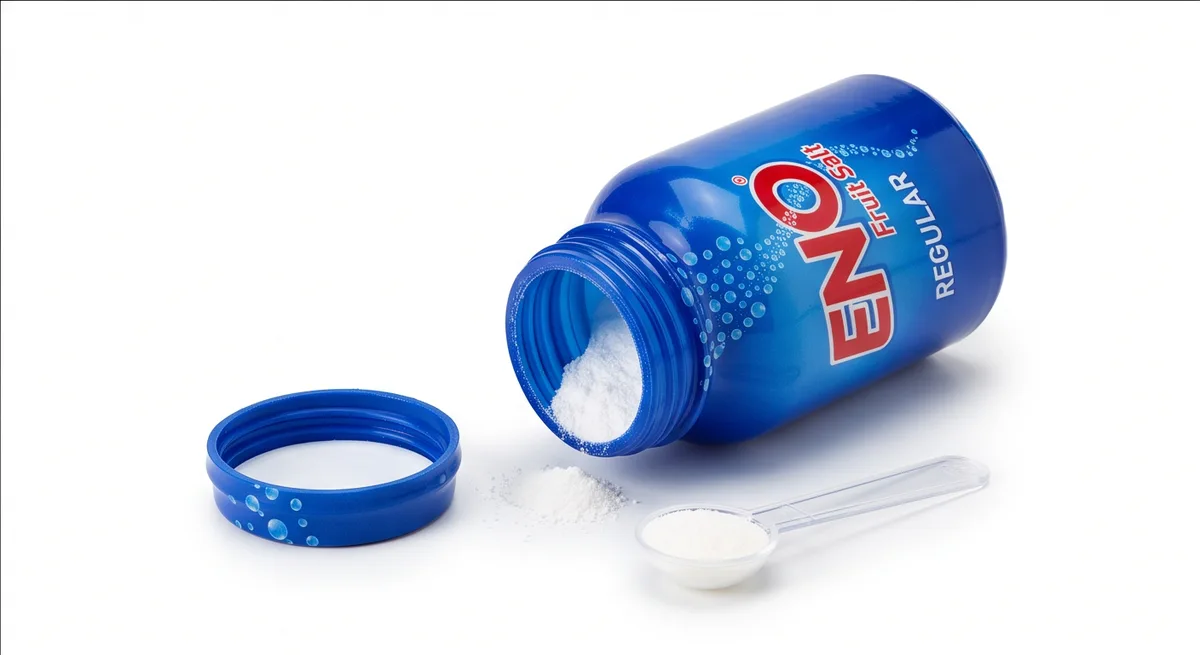
Eno's Fruit Salt is a white, free-flowing powder sold in a squat bottle, to be stirred into a glass of water, where it fizzes up at once and is drunk while it sparkles. The Regular kind is unflavoured. Its active parts are sodium bicarbonate, citric acid and sodium carbonate, which react in the water to form sodium citrate, an antacid, and carbon dioxide, the fizz. It is taken for heartburn and indigestion.
James Crossley Eno was a Newcastle druggist who had served as dispenser at the town's infirmary. Physicians there prescribed effervescent mixtures of a carbonate and a fruit acid, known as fruit salts, and in 1852, according to Wikipedia, Eno began selling his own from a pharmacy in the Groat Market. He gave it away to sailors in the port, who carried the name abroad. In 1868 he founded Eno's Fruit Salt Works, and in 1876 he moved production to a larger factory at New Cross in London.
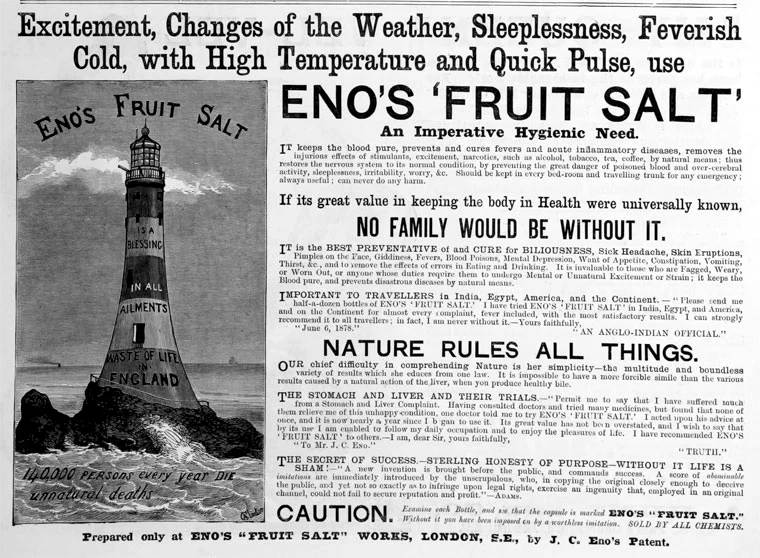
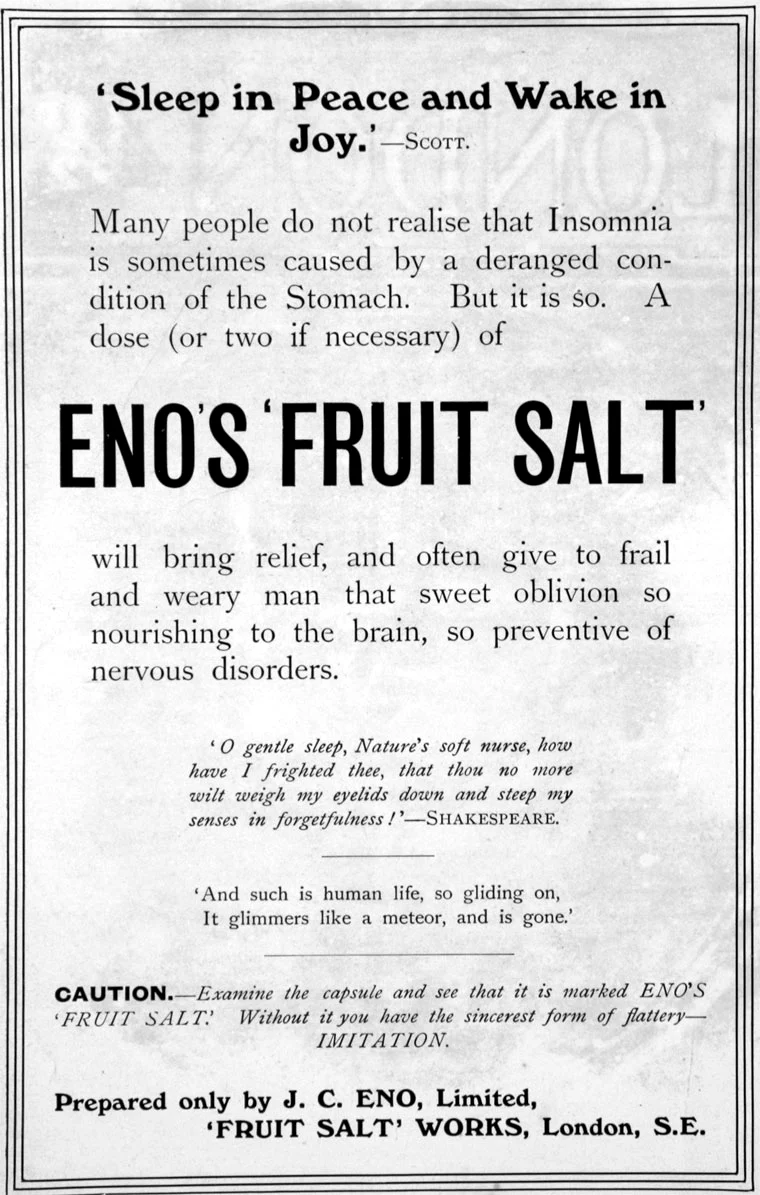
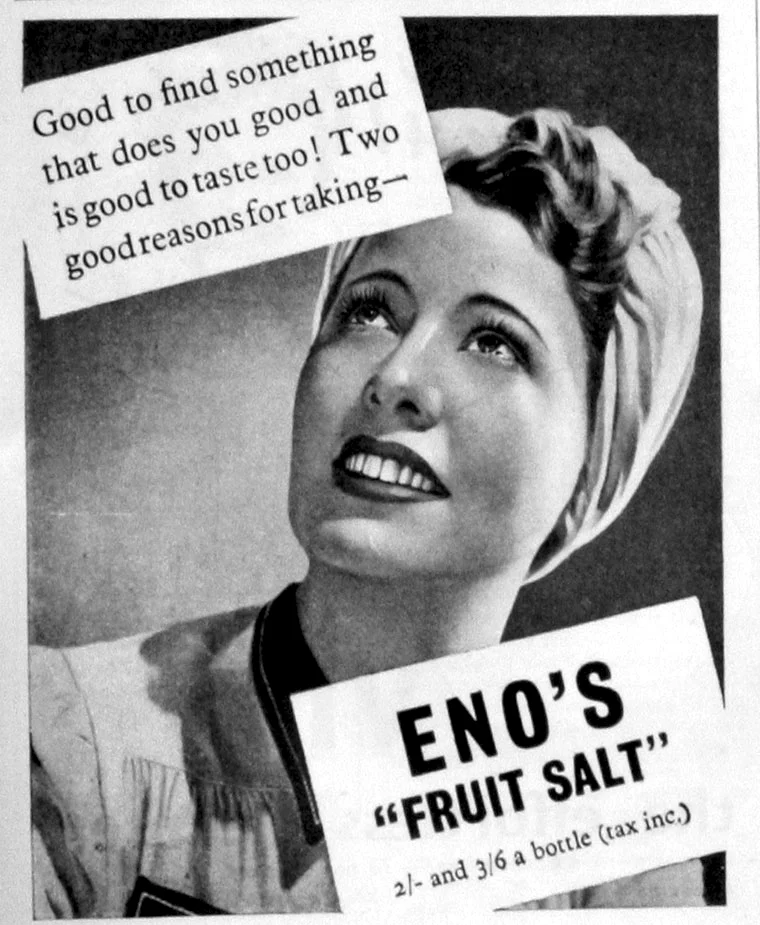
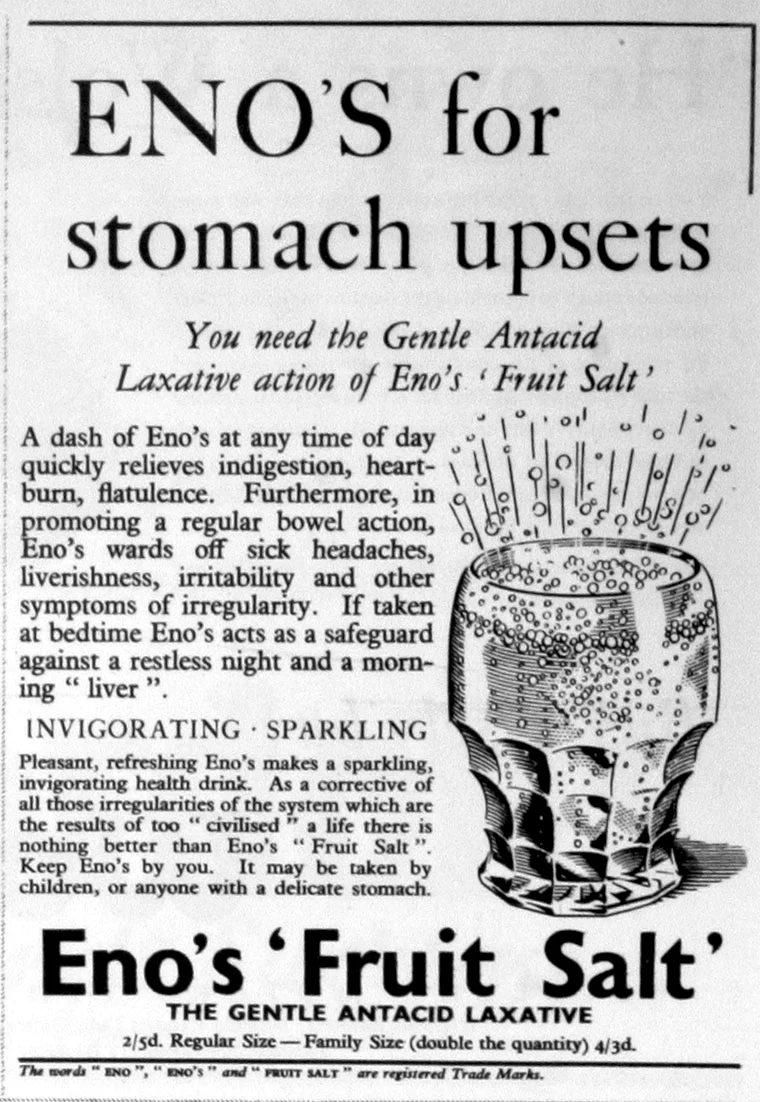
Victorian advertising made extravagant claims for it. An 1891 advertisement in the Illustrated London News drew a lighthouse with the words "a blessing in all ailments" and recommended the salt for fevers, biliousness and blood poisons; in 1908 it was offered for sleeplessness. Many competitors appeared in Britain and America. Beechams bought the company in 1938, and by 1953 its advertisements had settled on the stomach: "Eno's for stomach upsets".
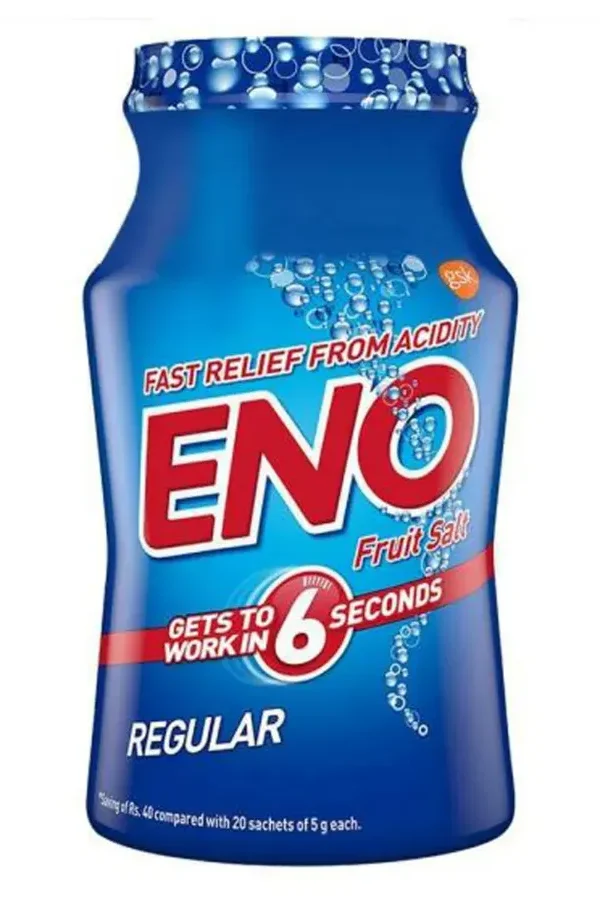
Most patent fruit salts disappeared in the twentieth century, but Eno's survived by becoming simply an antacid, and it is now sold above all in India. The modern bottle is bright blue, promises relief in six seconds and carries the GSK mark, but it is still labelled Fruit Salt and still made from the carbonate and fruit acid that Eno sold in Newcastle. A 100 g bottle costs £4.49 from a London grocer.
Timeline
- 1852 First made · Claimed Eno Fruit Salt enters production in Newcastle upon Tyne, Tyne and Wear.
- 1852 James Crossley Eno begins selling his own fruit salt from his pharmacy in Newcastle upon Tyne's Groat Market.
- 1876 Production Production moves to a larger factory at New Cross, London.
- 1897 Production J. C. Eno Limited is registered to carry on making Eno's Fruit Salt.
- 1938 Production Beechams takes over J. C. Eno; the business later passes to GlaxoSmithKline.
Milestones as we found them, not as we've checked them.
From the archive
More like this
-
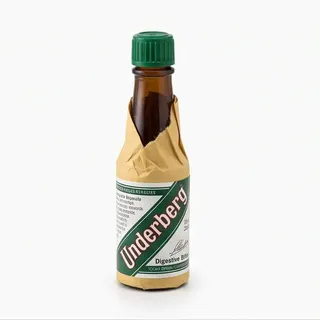 Tonics · since 1846 Underberg A stomach bitter from the lower Rhine, made to one family recipe since 1846 and drunk in twenty-millilitre doses.
-
 Tonics · since 1838 Eau de Mélisse des Carmes Boyer The Paris Carmelites' melissa water, made by their successors under the Boyer name since 1838.
-
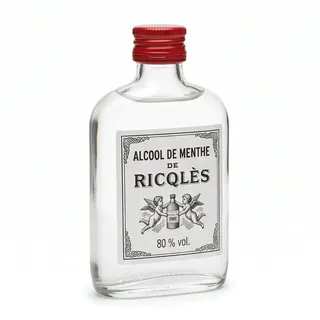 Tonics · since 1838 Ricqlès Alcool de Menthe A peppermint spirit taken in drops on a sugar lump, sold in its little flat flask since the reign of Louis-Philippe.
-
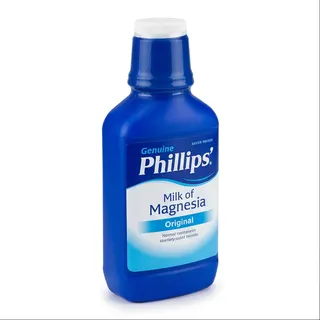 Tonics · since 1873 Phillips' Milk of Magnesia The white suspension Charles Phillips patented in Stamford in 1873, still shaken before use.