Home & Furniture · Furniture · Tables & Desks
Fritz Hansen
Fritz Hansen Super-Elliptical Table
Since 1968 · 58 years to 2026 · First made in Denmark
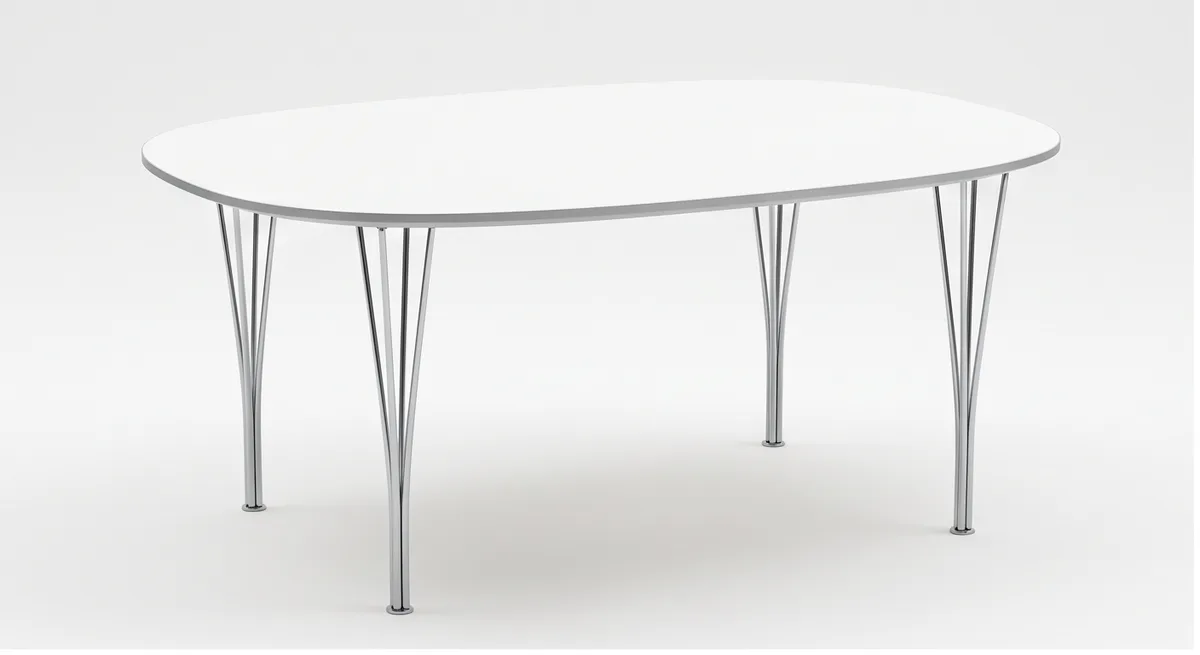
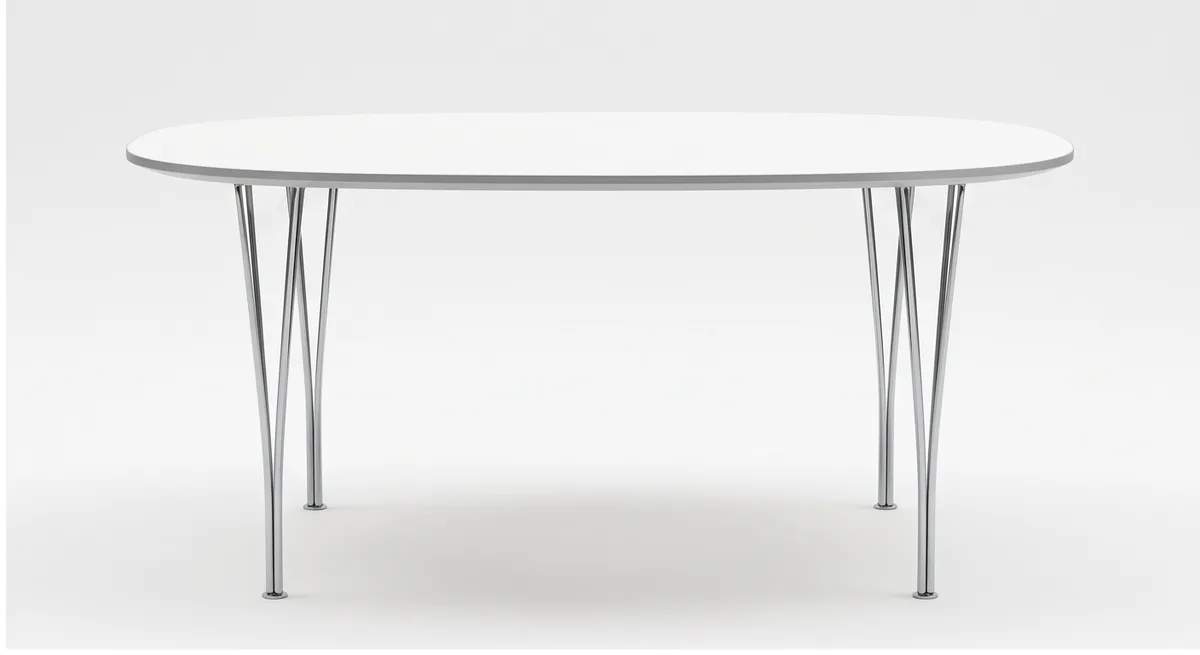
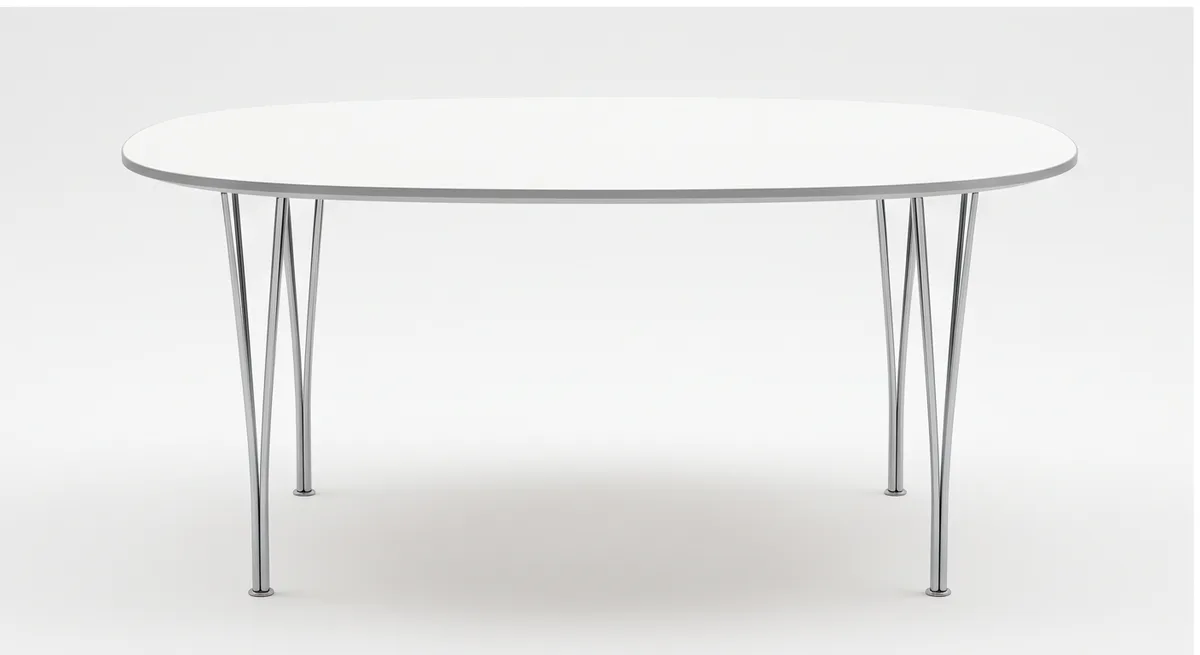
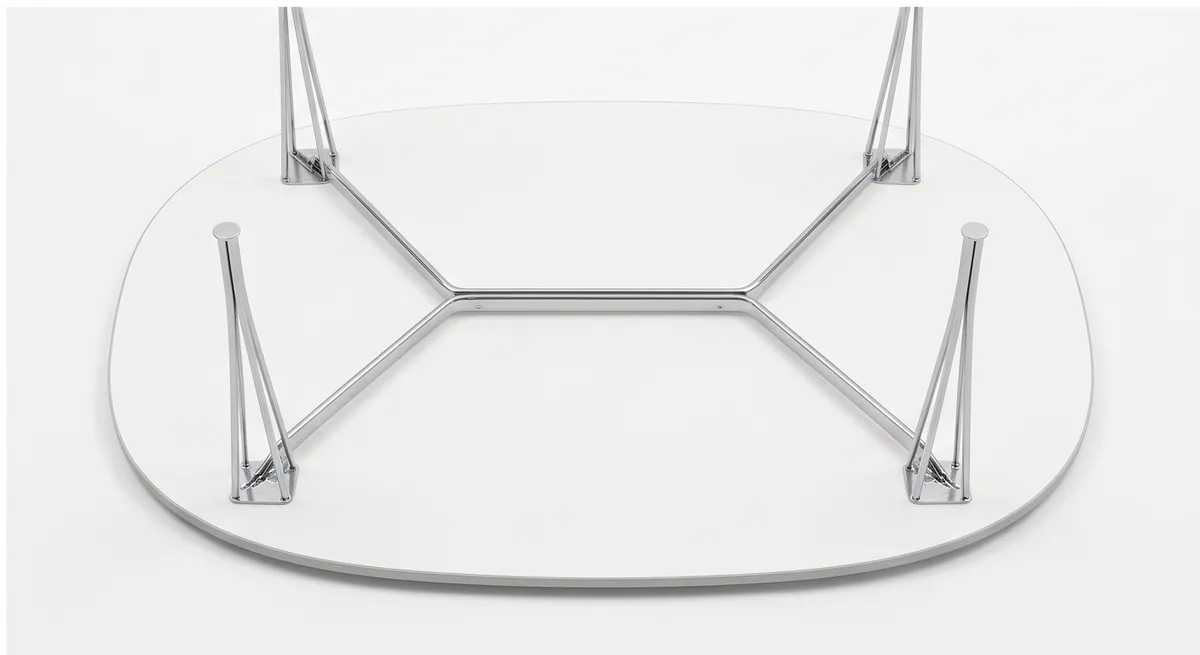
The Super-Elliptical Table is a dining table whose top is neither an oval nor a rectangle but a precise curve between the two. Its long sides are nearly straight and its ends nearly flat, yet there are no corners: the edge bends continuously, so that it seats people as fairly as a round table while fitting a room almost as neatly as a rectangular one. The top, usually white, rests on slender legs of chromed steel.
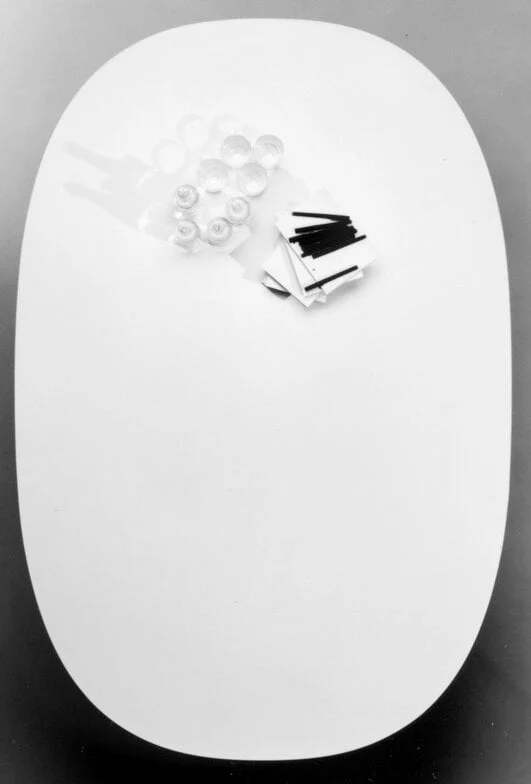
The curve has a famous origin. In 1959 Stockholm's planners held a competition for a roundabout in the city's central square, Sergels Torg, and the Danish poet, mathematician and inventor Piet Hein won it with what he called a superellipse. As he explained it, straight lines fit things together and round lines let people move around them; the superellipse offered something definite in between. He went on to use it for beds, dishes and furniture.
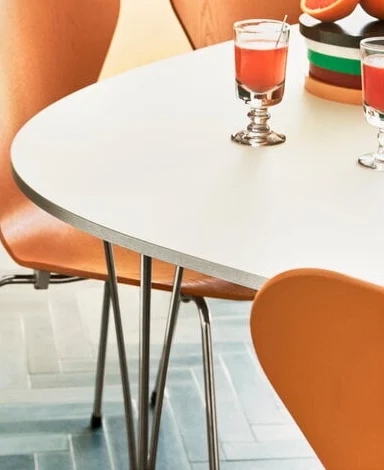
The table grew from a collaboration with the Swedish designer Bruno Mathsson, who developed a Super-Ellipse table series with Hein in the mid-1960s. Fritz Hansen of Denmark, the maker of Arne Jacobsen's Series 7 chairs, added the table to its collection in 1968, where it has remained. One retailer credits the top to Hein and the legs to Mathsson and Jacobsen, which would make it the work of three designers. Hein's form found a surprising use the same year, when a superelliptical table was proposed to break the deadlock over the shape of the table at the Vietnam peace talks in Paris.
Fritz Hansen now offers the table in several sizes within its Table Series, beside the Supercircular, with tops in modern laminates and other finishes. The four-seat B611, 135 by 90 centimetres, costs from £2,099. Materials have changed over half a century, but the curve, and the idea that a table need have no head, have not.
Timeline
- 1959 Designed Stockholm's planners open a competition for a roundabout at Sergels Torg; Piet Hein wins with a superellipse.
- 1966 Designed Bruno Mathsson and Piet Hein develop a Super-Ellipse table series in Sweden.
- 1968 First made · Verified Fritz Hansen Super-Elliptical Table enters production in Denmark.
Milestones as we found them, not as we've checked them.
More like this
-
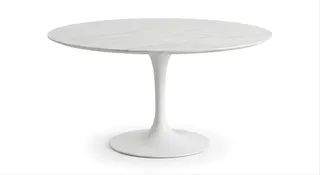 Tables & Desks · since 1958 Saarinen Pedestal Table One stem in place of four legs: Saarinen's answer to 'the slum of legs', made by Knoll since 1958. Read the entry →
 -
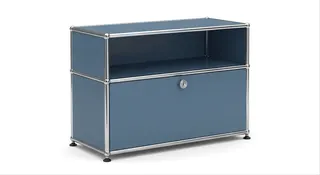 Shelving & Storage · since 1969 USM Haller A frame of chromed tubes and steel balls, designed for a Swiss factory's own offices and made to order since 1969. Read the entry →
 -
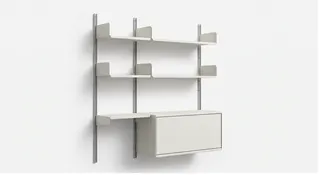 Shelving & Storage · since 1960 Vitsoe 606 Universal Shelving System Dieter Rams's shelving of 1960, a kit of parts still made by the company founded to make it. Read the entry →
 -
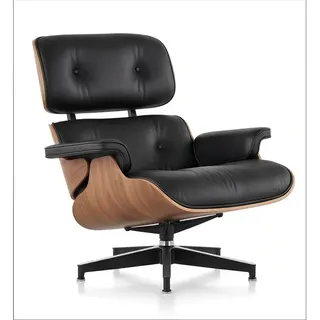 Chairs & Seating · since 1956 Eames Lounge Chair Charles and Ray Eames's club chair of moulded plywood and leather, made by Herman Miller since 1956. Read the entry →