Home & Furniture · Furniture · Shelving & Storage
Vitsœ
Vitsoe 606 Universal Shelving System
Since 1960 · 66 years to 2026 · First made in Hesse, Germany
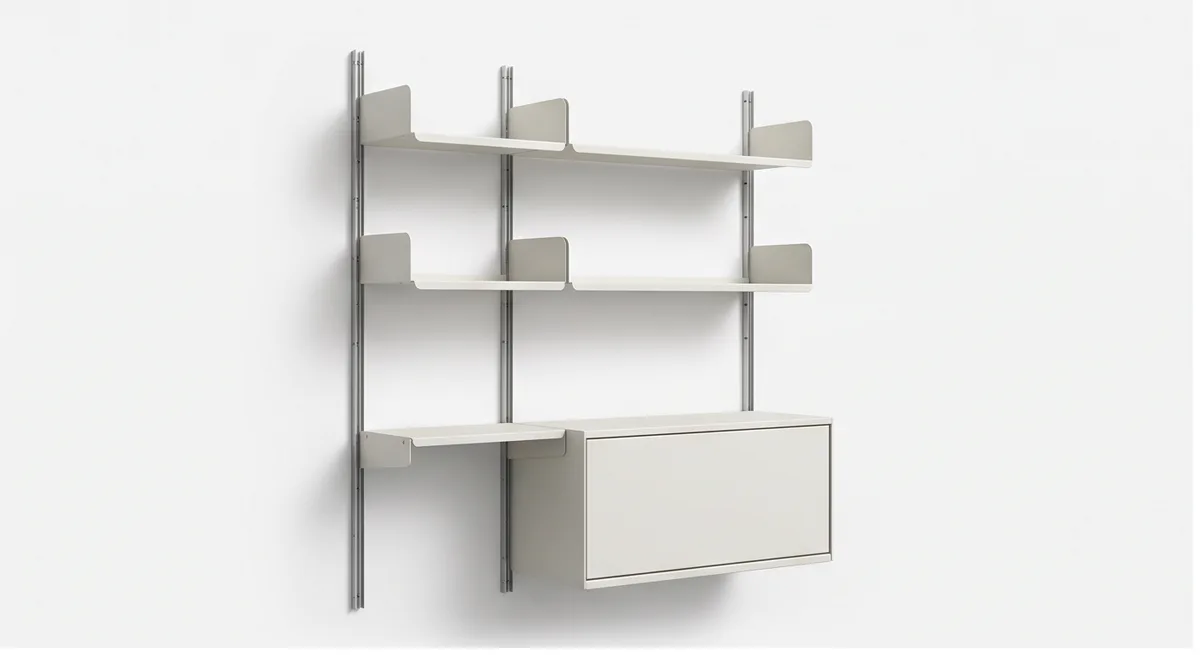
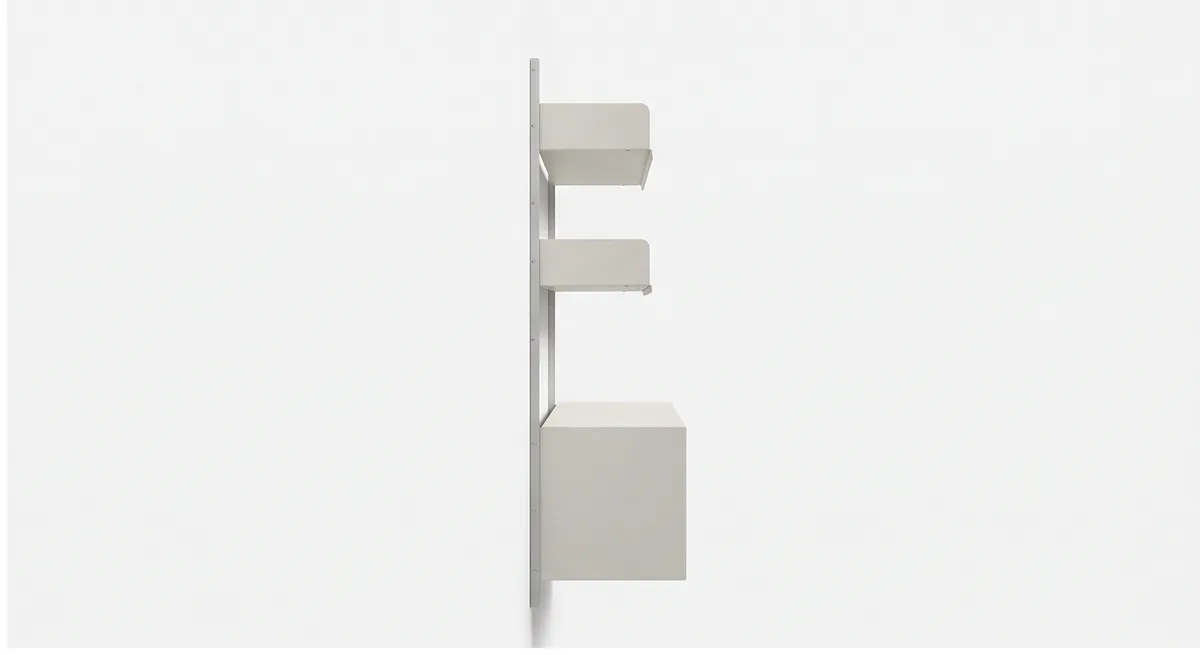
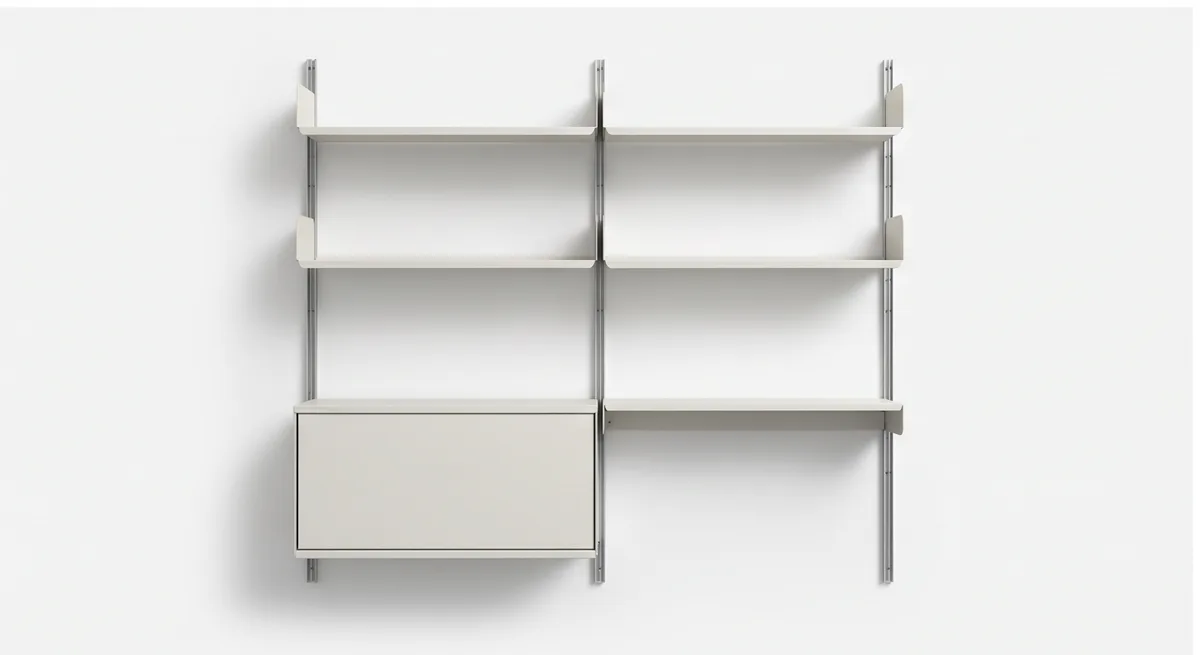
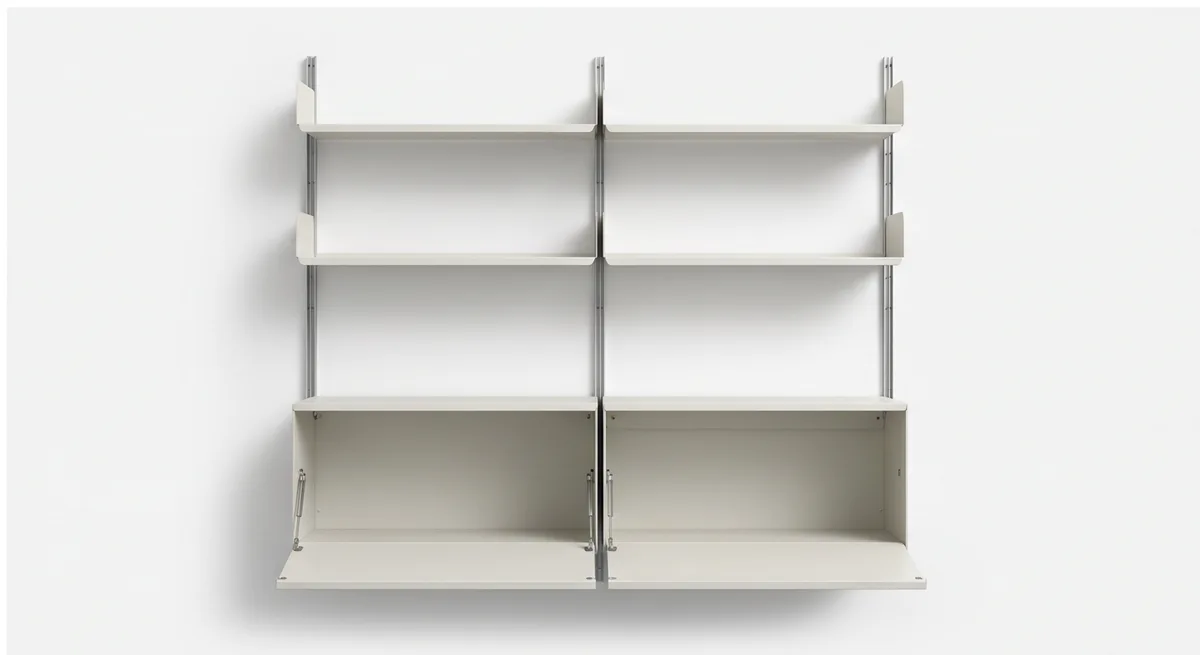
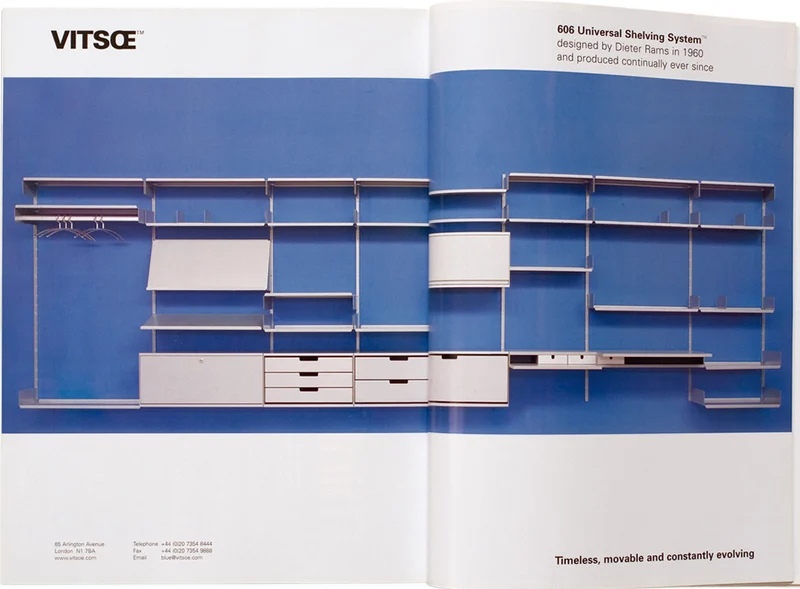
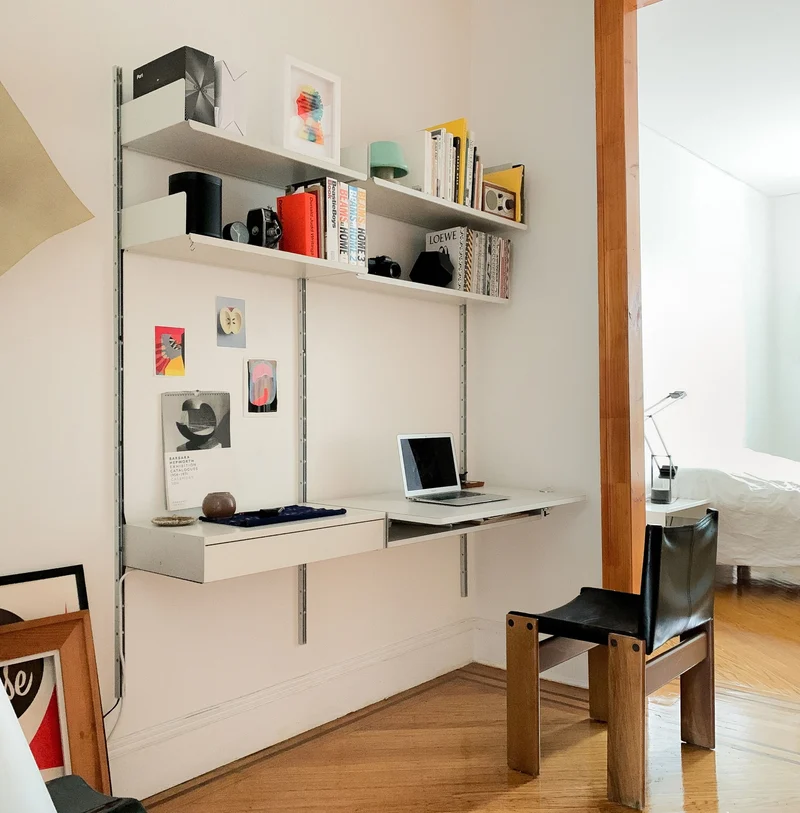
The 606 is less a piece of furniture than a set of parts. Slim aluminium tracks are fixed to a wall, or to posts that stand clear of it, and from them shelves, cabinets and tables hang on pins, moved without tools. The shelves are thin sheets of metal in off-white, black or silver, some with beech, and they can be hung upright, upside-down or turned on end. Bays come in two widths, and a wall is filled by repeating them.
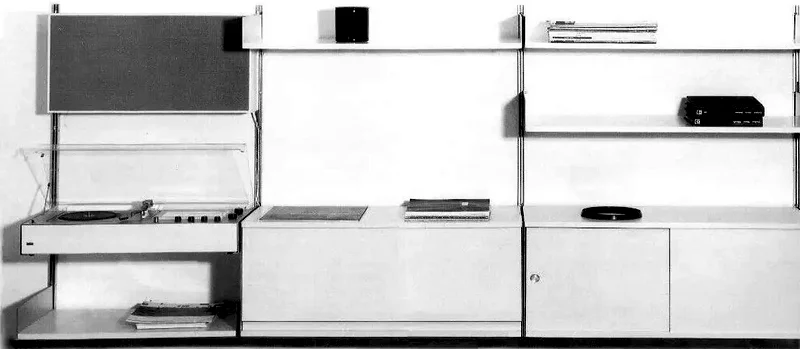
It was designed by Dieter Rams, then in his late twenties and an interior architect at Braun, for a company founded in Frankfurt in 1959 for the purpose of making his furniture. A sketch he made for Braun's interiors in 1955 already shows a track-based, wall-mounted storage system on its back wall. The shelving was launched in 1960 as RZ 60, and renamed 606 in 1969, when the company's products took their names from the year they appeared.
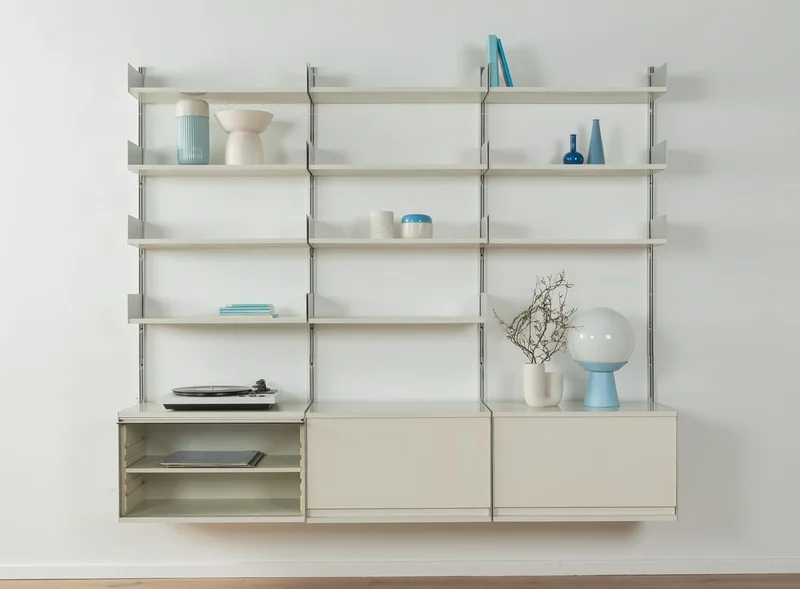
The company that makes it has moved country. Mark Adams came across the system in a London shop in 1985, set up a British arm the following year, and in 1995, after the German business had struggled for several years, took the whole of production to London. It has since moved again, to Camden and then, in 2017, to a purpose-built building in Royal Leamington Spa, from which the company says it delivers to more than ninety countries. A licensed aluminium version made in Italy from 1984 has ended.
The principle has not changed. Vitsœ asks customers to buy little and add to it, keeps its colours fixed so that a shelf bought decades later will match, and sells only directly, planning each system with the buyer. The company points out that second-hand components sell for about the price of new ones. The system has been in the Museum of Modern Art's collection since 2004, and Rams, now in his nineties, still works with the company.
Timeline
- 1960 First made · Claimed Vitsoe 606 Universal Shelving System enters production in Hesse, Germany.
- 1969 Ownership Vitsoe+Zapf becomes Wiese Vitsœ, and RZ 60 is renamed 606 after its year of introduction.
- 1995 Production Wiese Vitsœ closes in Germany; production of the system moves to Vitsœ Ltd in Islington, London.
- 2004 Recognised The system enters the permanent collection of the Museum of Modern Art, New York.
- 2017 Production Production moves to a purpose-built building in Royal Leamington Spa.
Milestones as we found them, not as we've checked them.
From the archive
More like this
-
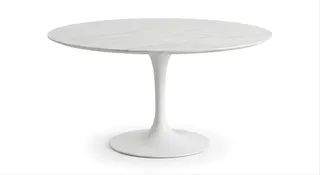 Tables & Desks · since 1958 Saarinen Pedestal Table One stem in place of four legs: Saarinen's answer to 'the slum of legs', made by Knoll since 1958. Read the entry →
 -
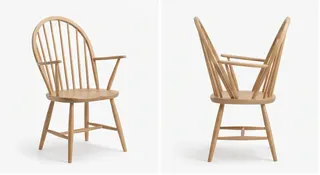 Chairs & Seating · since 1950 Ercol Windsor Chair Steam-bent ash chair in continuous production since 1950. Read the entry →
 -
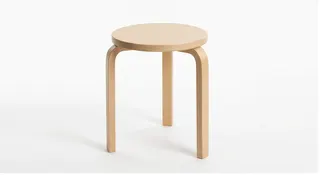 Chairs & Seating · since 1933 Artek Stool 60 Three-legged birch stool, unchanged since 1933. Read the entry →
 -
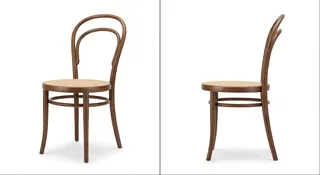 Chairs & Seating · since 1859 Thonet Model No. 14 Chair The world's first mass-produced chair, still made since 1859. Read the entry →