Jieldé
Jieldé Loft D6440
Since 1952 · 74 years to 2026 · First made in Villeurbanne, France
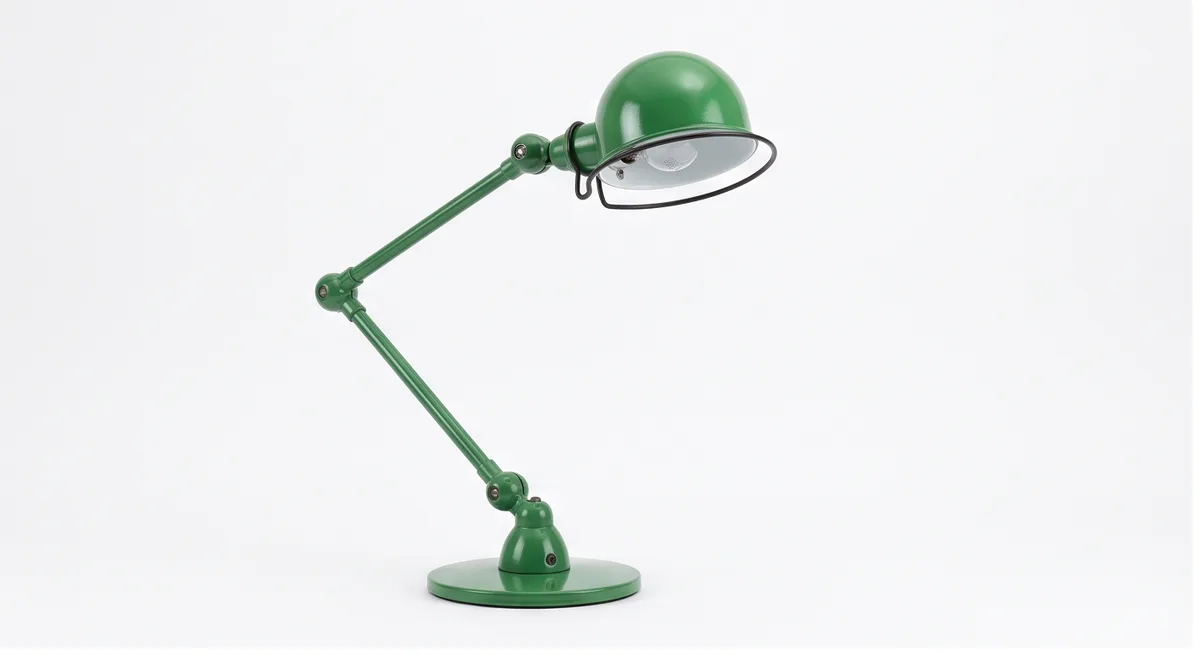
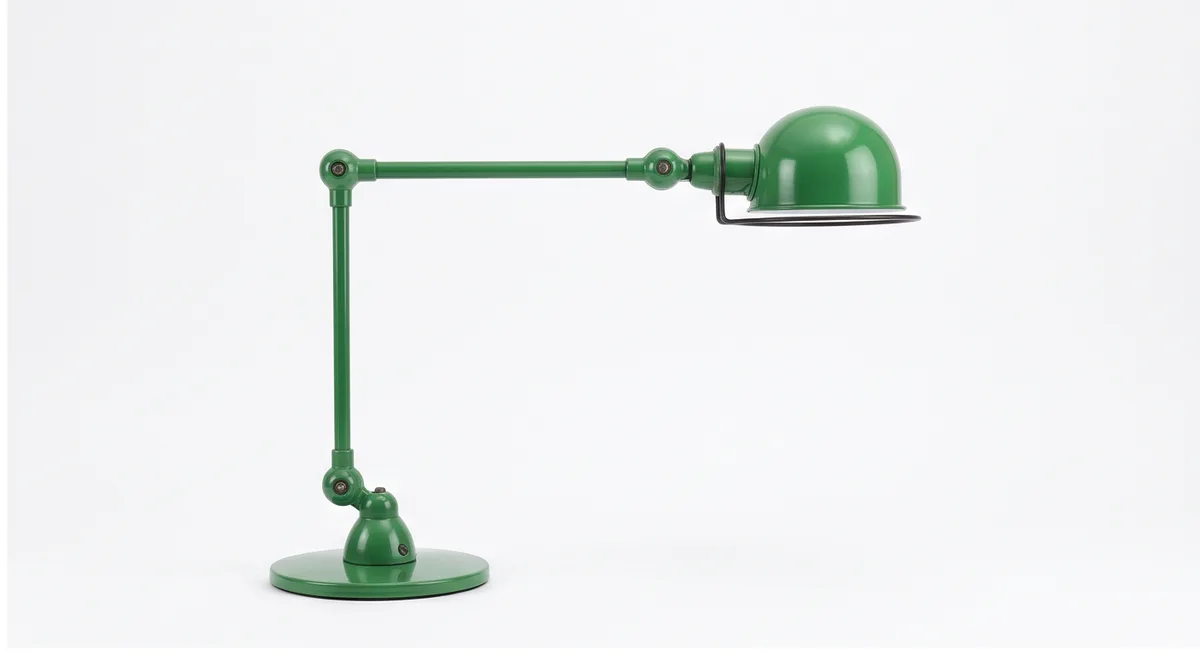
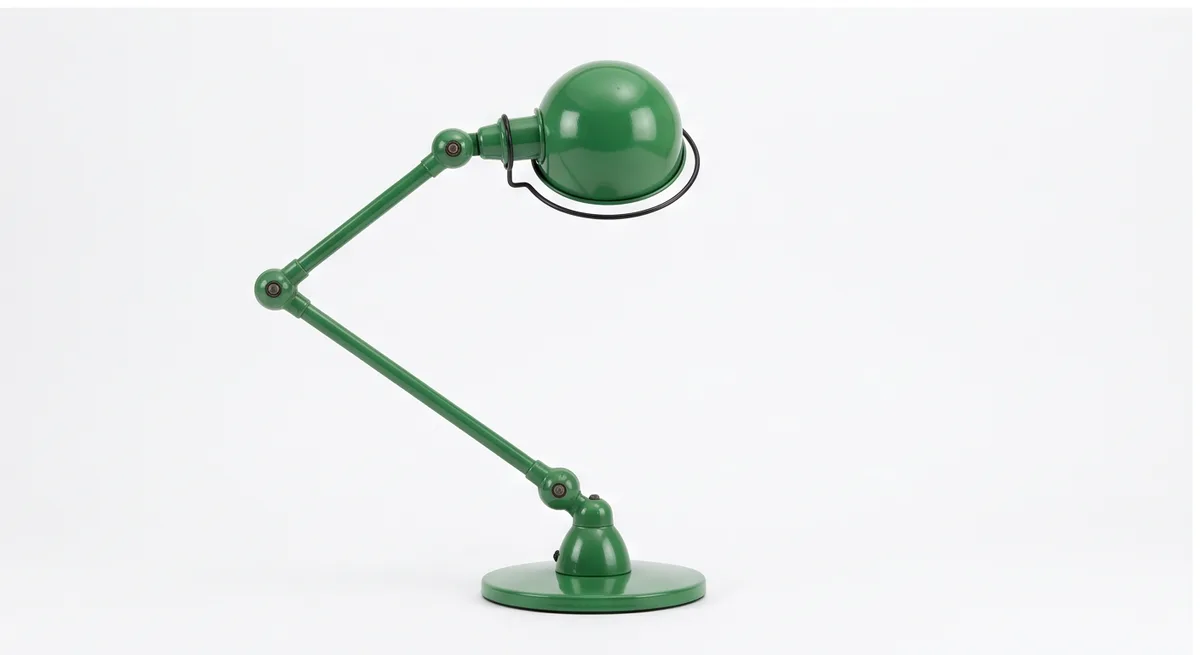
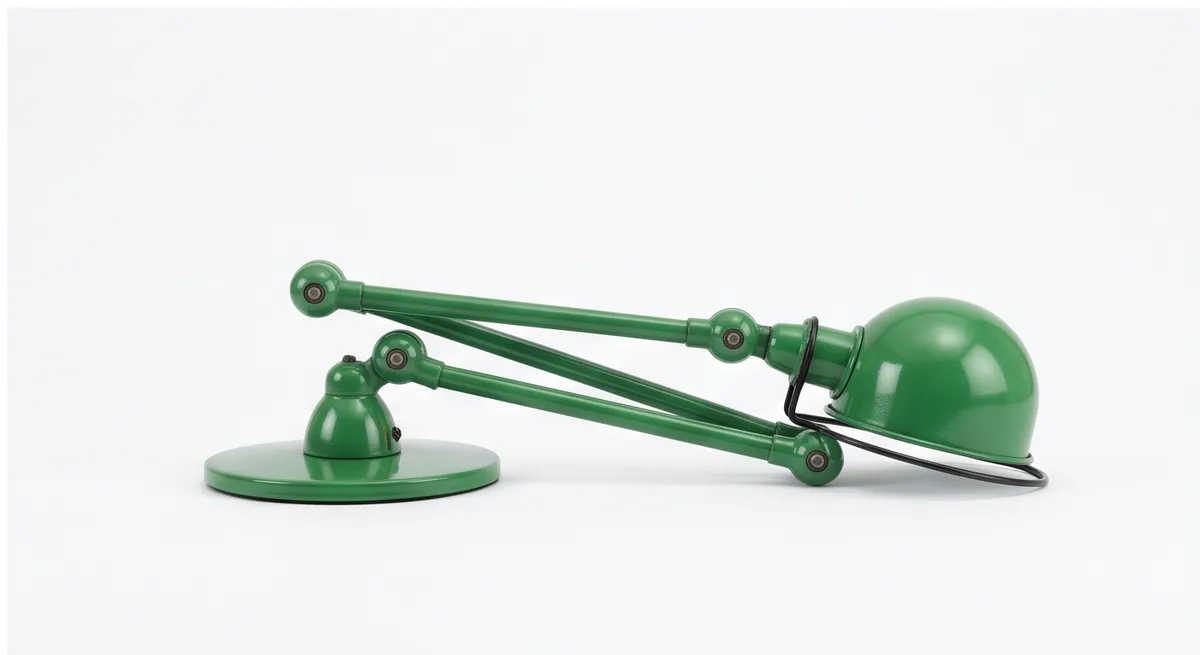
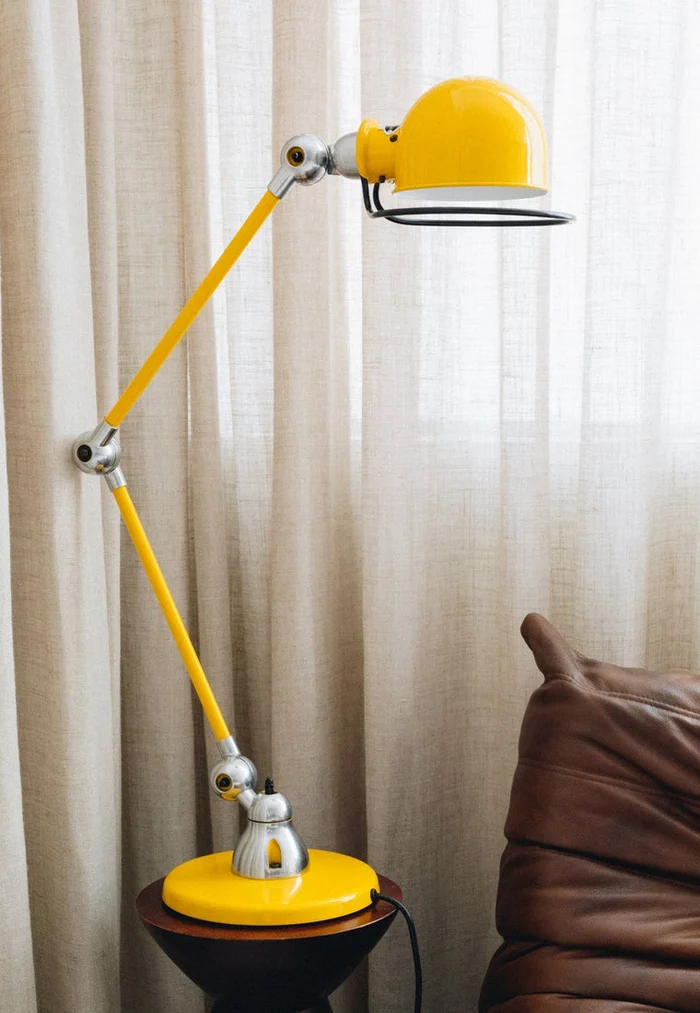
The Jieldé is an articulated lamp in painted steel. A domed reflector fifteen centimetres across, ringed by a wire guard, sits at the end of two straight arms, each forty centimetres long, joined by ball-shaped knuckles and rising from a heavy round base. Every joint turns, and none has a wire running through it: the current passes through concentric contacts inside, so the lamp can be swung round and round without ever twisting a cable.
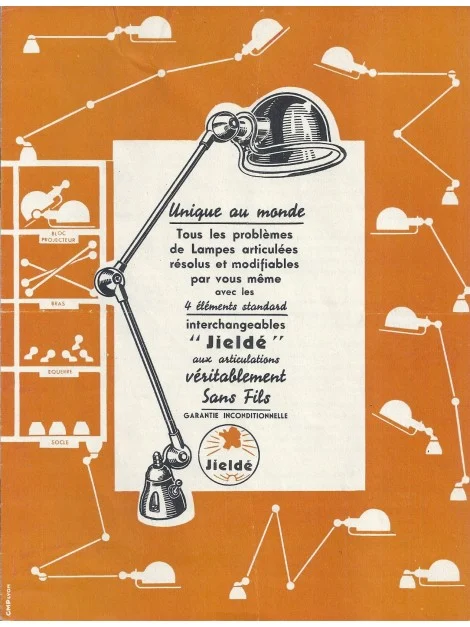
Its inventor, Jean-Louis Domecq, was not a designer. He was a fitter with a mechanical workshop near Lyon, where the workers' lamps of the day were fragile and suffered from damp and the vibration of the machine tools. In 1952 he patented his own, its joints conducting through an alloy of copper, zinc and tin that he had found with his armourer. He named the business from his initials, J-L-D, and sold the lamp to other workshops.
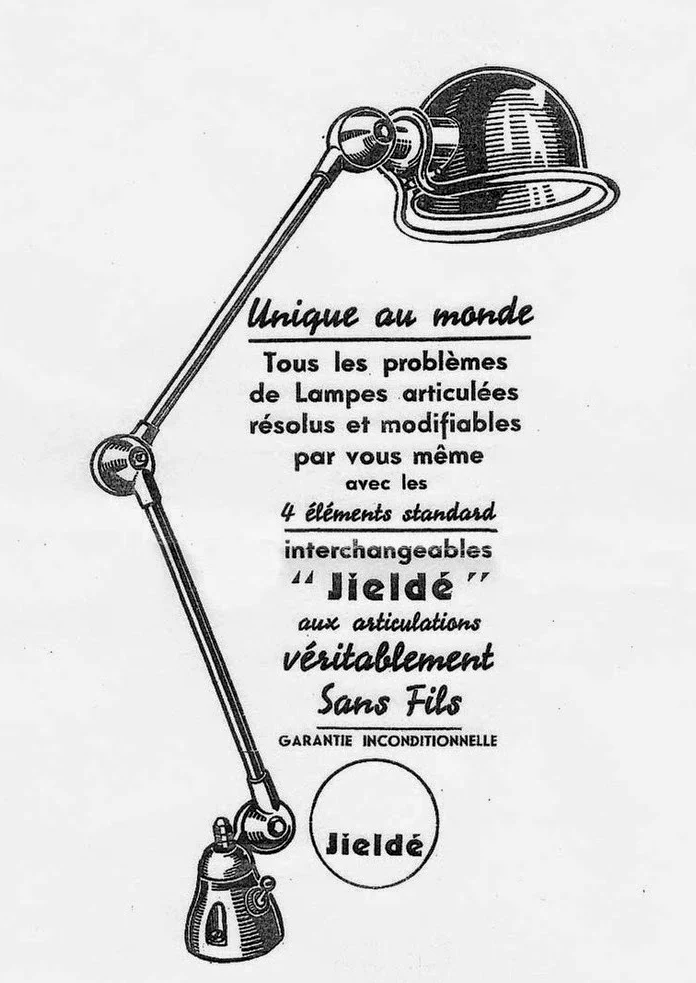
The early advertisements, under the slogan 'Unique au monde', sold it as a kit of four standard parts that a user could rearrange: reflector, arm, bracket and base. The firm's first catalogue, issued in 1958, put the two-armed lamp on its cover. It came in machine grey or Vespa green and spent its first twenty years over lathes and drawing boards. Then, in 1974, Habitat asked for it in white and black, and Domecq, his daughter later recalled, thought the idea of putting it in a house absurd.
The idea won. After his death in 1983 his daughter ran the firm for nearly twenty years, and the lamp, renamed the Loft, became a fixture of the industrial style it had helped to invent. It is still assembled by hand outside Lyon, each lamp numbered, and the two-armed table lamp, offered in some fifty-five finishes, is still the form Domecq patented for the workshop floor.
Timeline
- 1952 First made · Disputed Jieldé Loft D6440 enters production in Villeurbanne, France.
- 1952 Designed Jean-Louis Domecq files his patent for a wire-free articulated lamp arm, made in his Villeurbanne workshop.
- 1958 Production The first Jieldé catalogue, 'Fabrications Jieldé', is issued by the Établissements J-L Domecq.
- 1974 Designed Habitat asks to sell the lamp in white and black, taking it from the workshop into the home.
- 2002 Ownership Marie-Françoise Domecq, who ran the firm after her father's death in 1983, sells it to Philippe Bélier.
Milestones as we found them, not as we've checked them.
From the archive
More like this
-
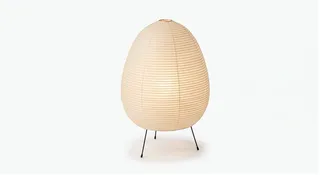 Lighting · since 1951 Noguchi Akari Light Sculpture Handcrafted paper lantern, continuously produced in Gifu since 1951.
-
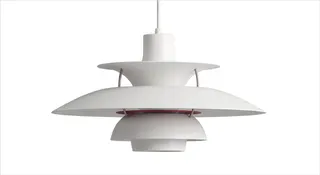 Lighting · since 1958 Louis Poulsen PH 5 Poul Henningsen's glare-free pendant of 1958, still the lamp over the Danish dining table.
-
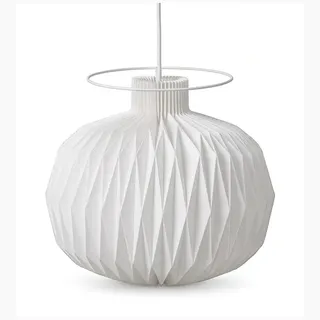 Lighting · since 1944 Le Klint 101 One rectangle of paper, folded by hand in Odense into a lantern since 1944.
-
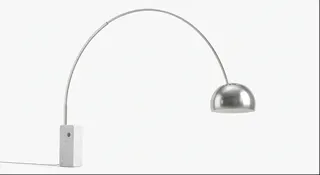 Lighting · since 1962 Flos Arco A street lamp brought indoors: steel arc, aluminium reflector, Carrara marble, since 1962.