Home & Furniture · Home Accessories · Lighting
Louis Poulsen
Louis Poulsen PH 5
Since 1958 · 68 years to 2026 · First made in Denmark
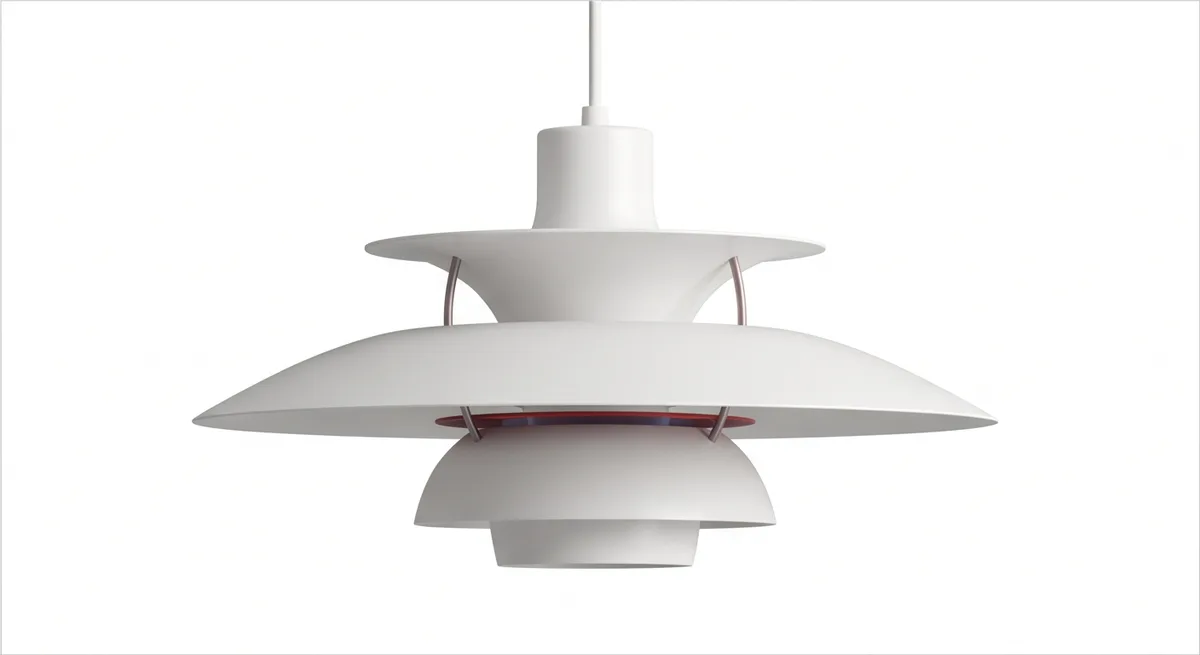
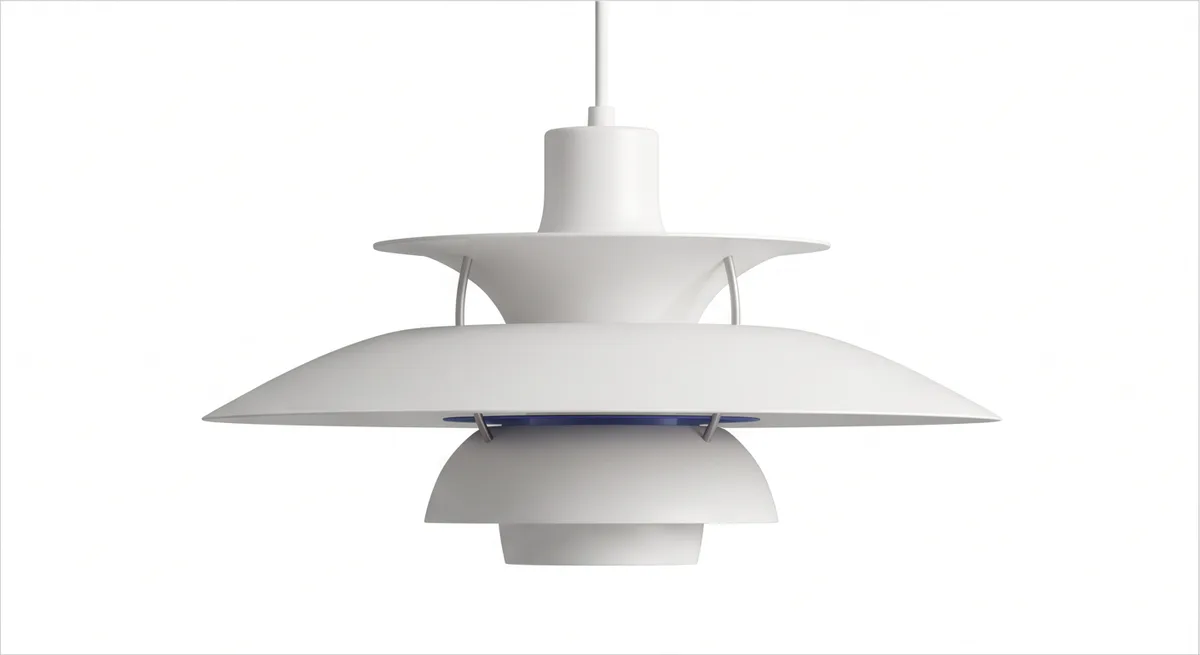
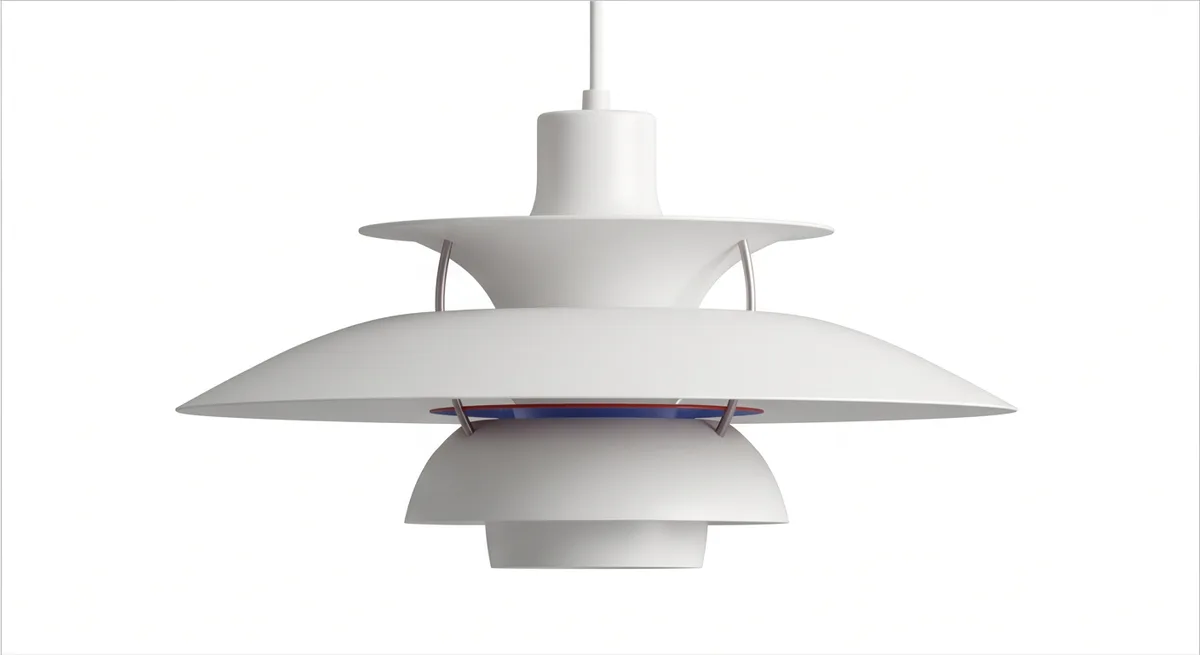
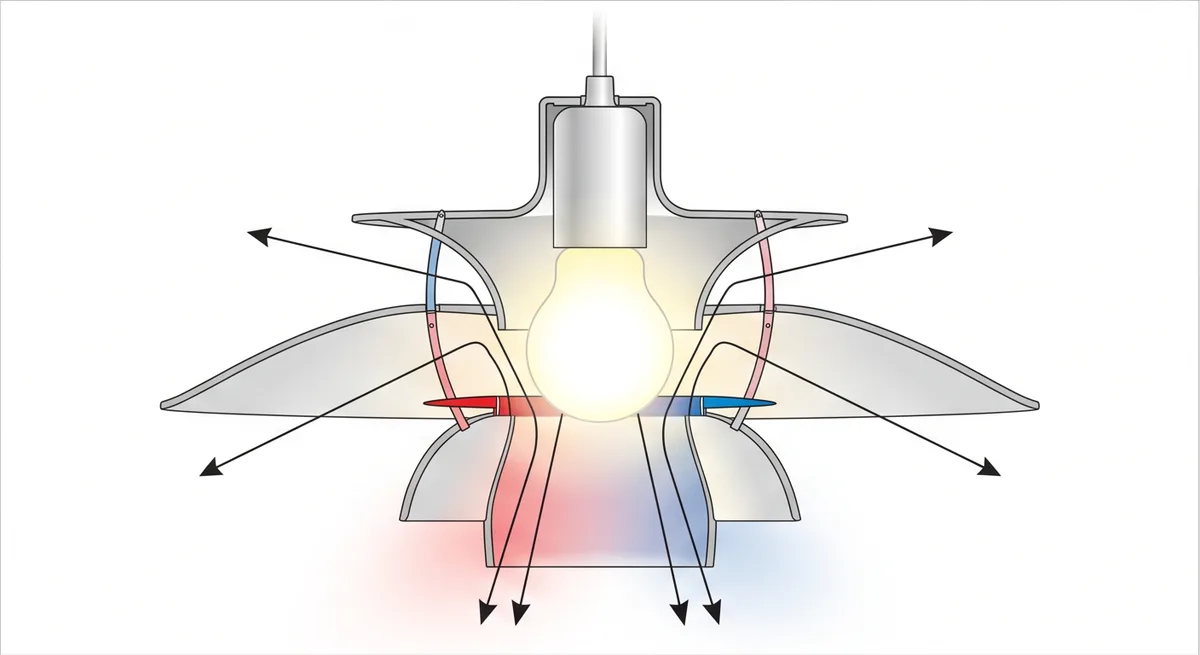
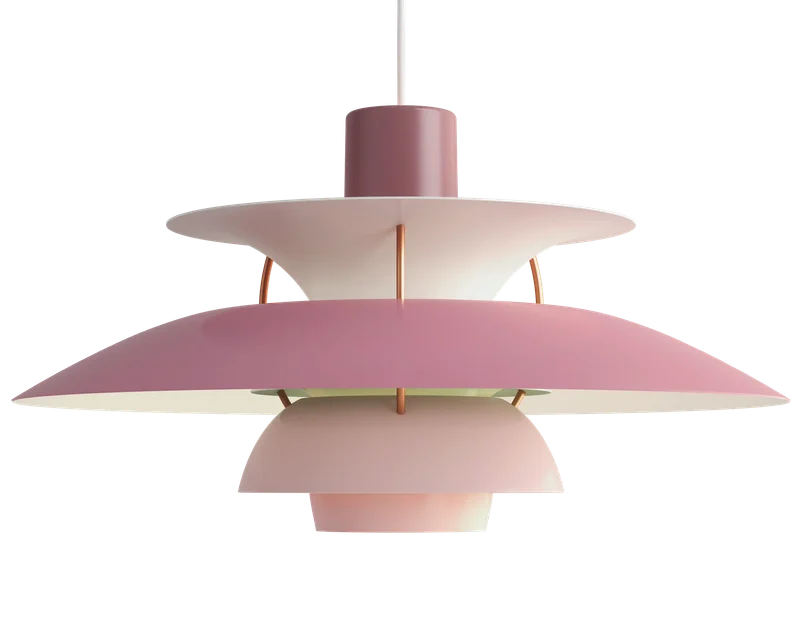
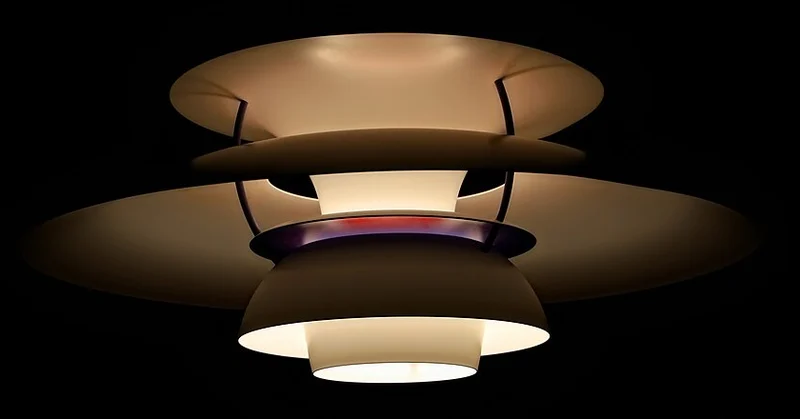
The PH 5 is a pendant lamp built from shades stacked one inside another. At the top a small cap holds the socket, ringed by a flared upper shade; below hangs a broad, shallow middle shade half a metre across; beneath that, a small bowl and a smaller ring. Thin rods hold them in their exact positions. From no ordinary angle can the bulb be seen. What the eye receives is light that has struck a painted surface and come off it softened, both downwards on to the table and outwards into the room.
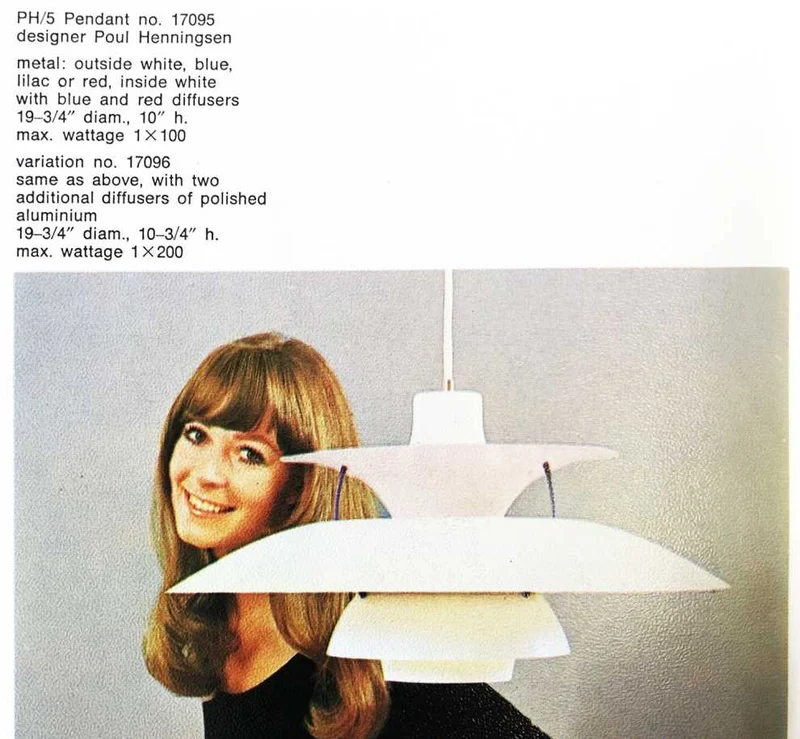
Its designer, Poul Henningsen, was an architect, writer and critic who made glare his lifelong subject. His multi-shade Paris Lamp took a gold medal in 1925, and from 1926 he worked with the Copenhagen firm Louis Poulsen on a three-shade system, its curves drawn from the logarithmic spiral, that underlies every lamp to bear his initials. The PH 5 came in 1958. Bulbs were then changing constantly in shape and size, and Henningsen designed it to take any of them without glare.
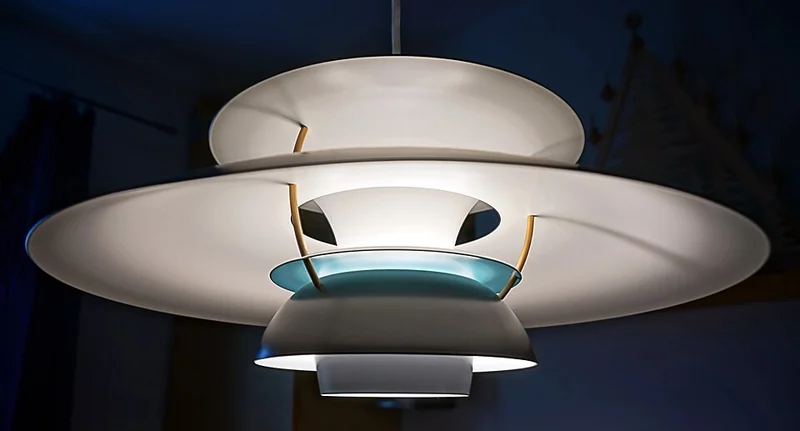

It succeeded so well that, in Louis Poulsen's words, it became simply the PH lamp in Denmark, hung in public buildings and private homes, and above all over dining tables. The original had red and blue elements inside its reflectors to correct the colour of incandescent light. The maker says these were taken out of later versions, as modern bulbs come closer to daylight.
Otherwise the lamp is as it was. Louis Poulsen still makes it, partly assembled by hand in Denmark, at the original 50 centimetres and in a smaller version, in white and in graded colours, in copper and in brass, with a standard screw socket for modern bulbs. Henningsen died in 1967; the lamp he drew to cope with the changing light bulb of the 1950s is still sold by the firm he worked with for the rest of his life, at £900 for the full-size version.
Timeline
- 1926 Designed Henningsen's three-shade system, the basis of every PH lamp, is introduced with Louis Poulsen.
- 1958 First made · Verified Louis Poulsen PH 5 enters production in Denmark.
- 2026 Recognised Louis Poulsen marks a hundred years of the three-shade system with a PH Centenary collection.
Milestones as we found them, not as we've checked them.
From the archive

More like this
-
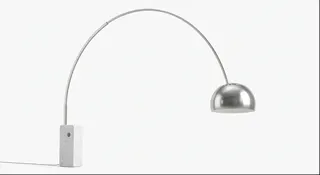 Lighting · since 1962 Flos Arco A street lamp brought indoors: steel arc, aluminium reflector, Carrara marble, since 1962. Read the entry →
 -
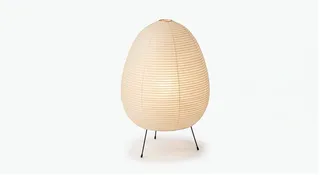 Lighting · since 1951 Noguchi Akari Light Sculpture Handcrafted paper lantern, continuously produced in Gifu since 1951. Read the entry →
 -
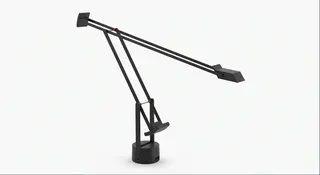 Lighting · since 1972 Artemide Tizio Richard Sapper's counterweighted desk lamp, balanced with jam jars of water and in production since 1972. Read the entry →
 -
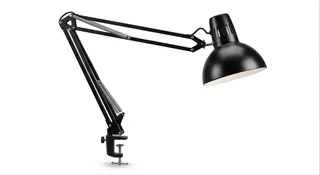 Lighting · since 1937 Luxo L-1 The Norwegian spring-balanced task lamp of 1937, still made by the firm that first sold it. Read the entry →