Health & Grooming · Remedies · Tonics
Klosterfrau
Klosterfrau Melissengeist
Since 1827 · 199 years to 2026 · First made in Cologne, Germany
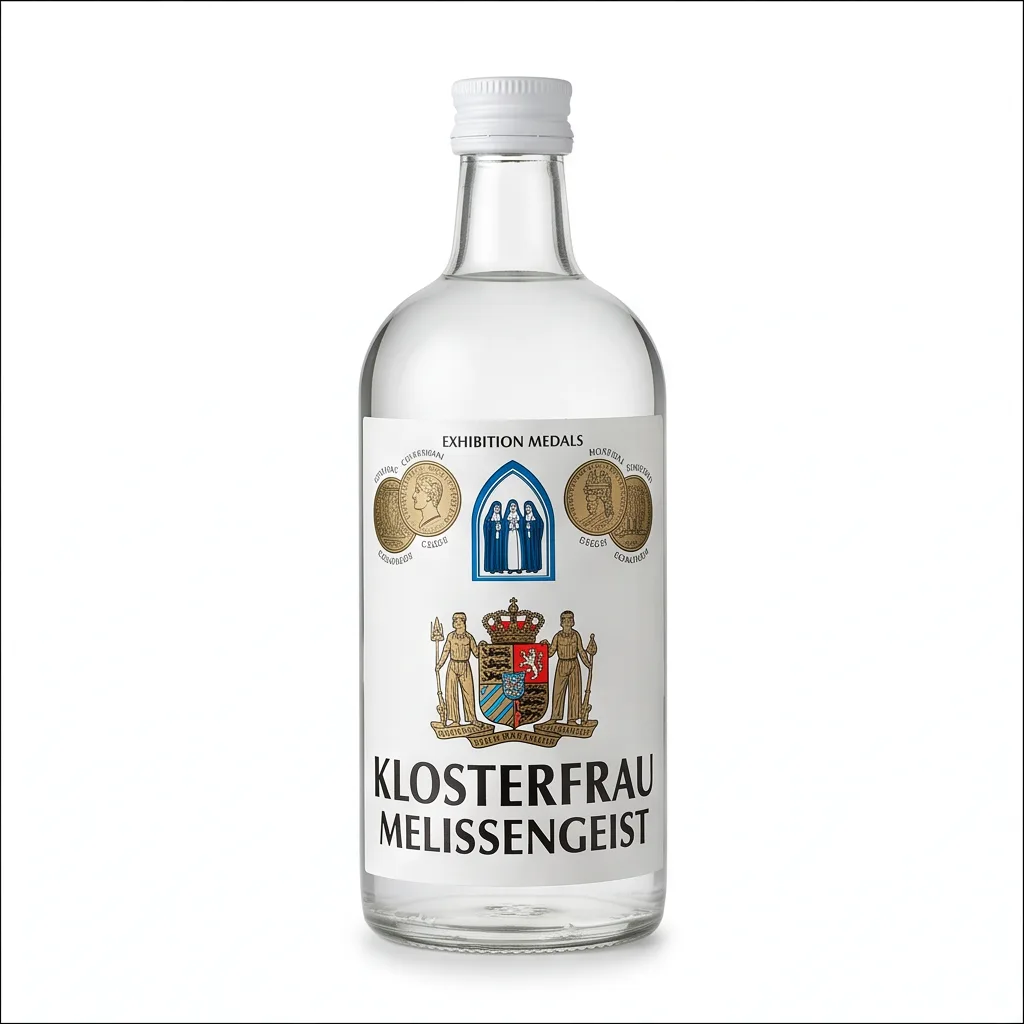
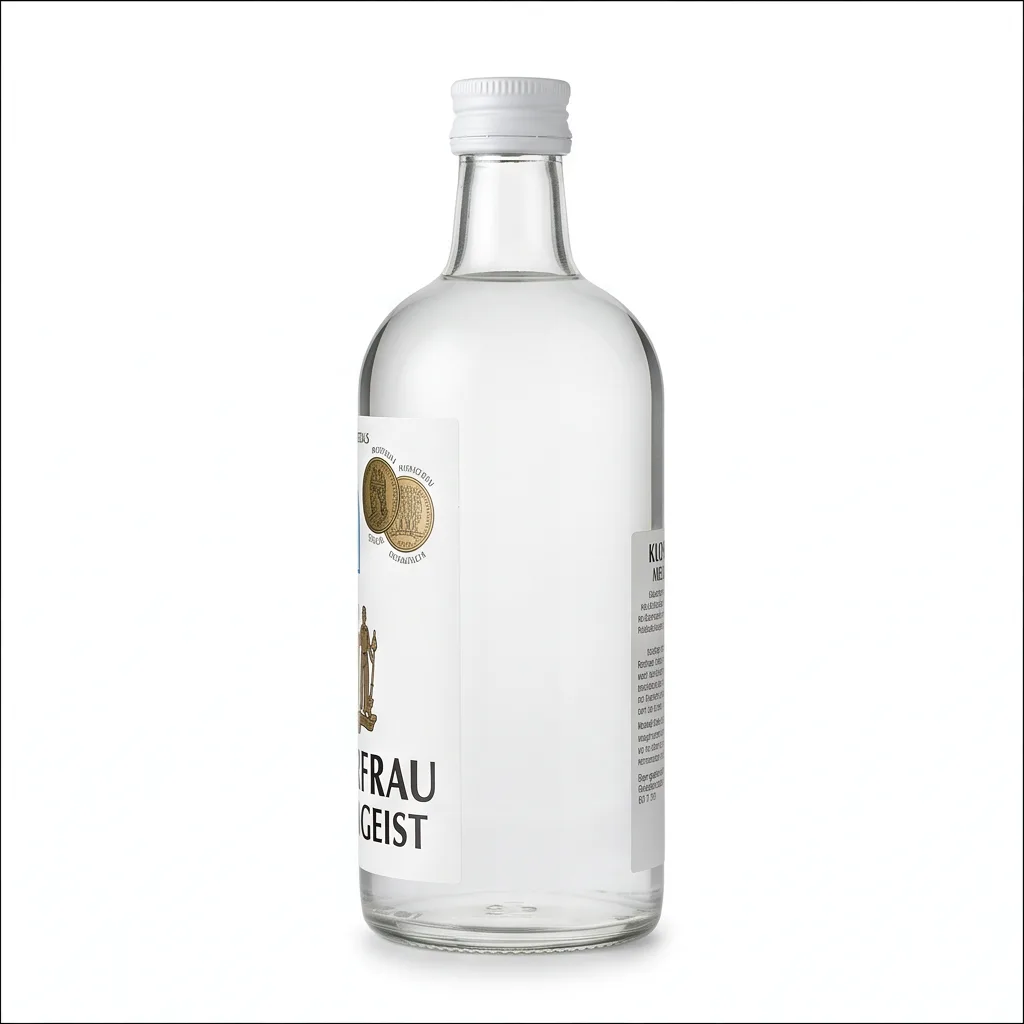
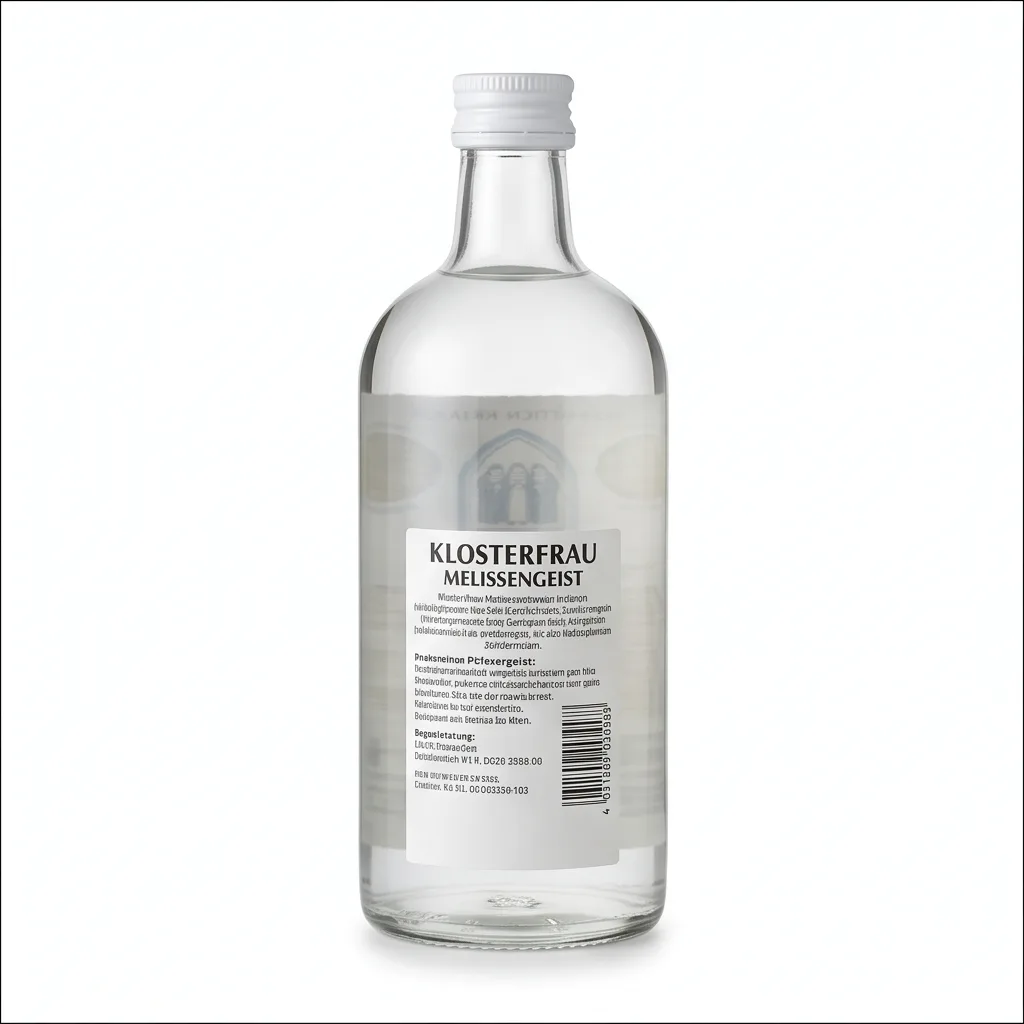
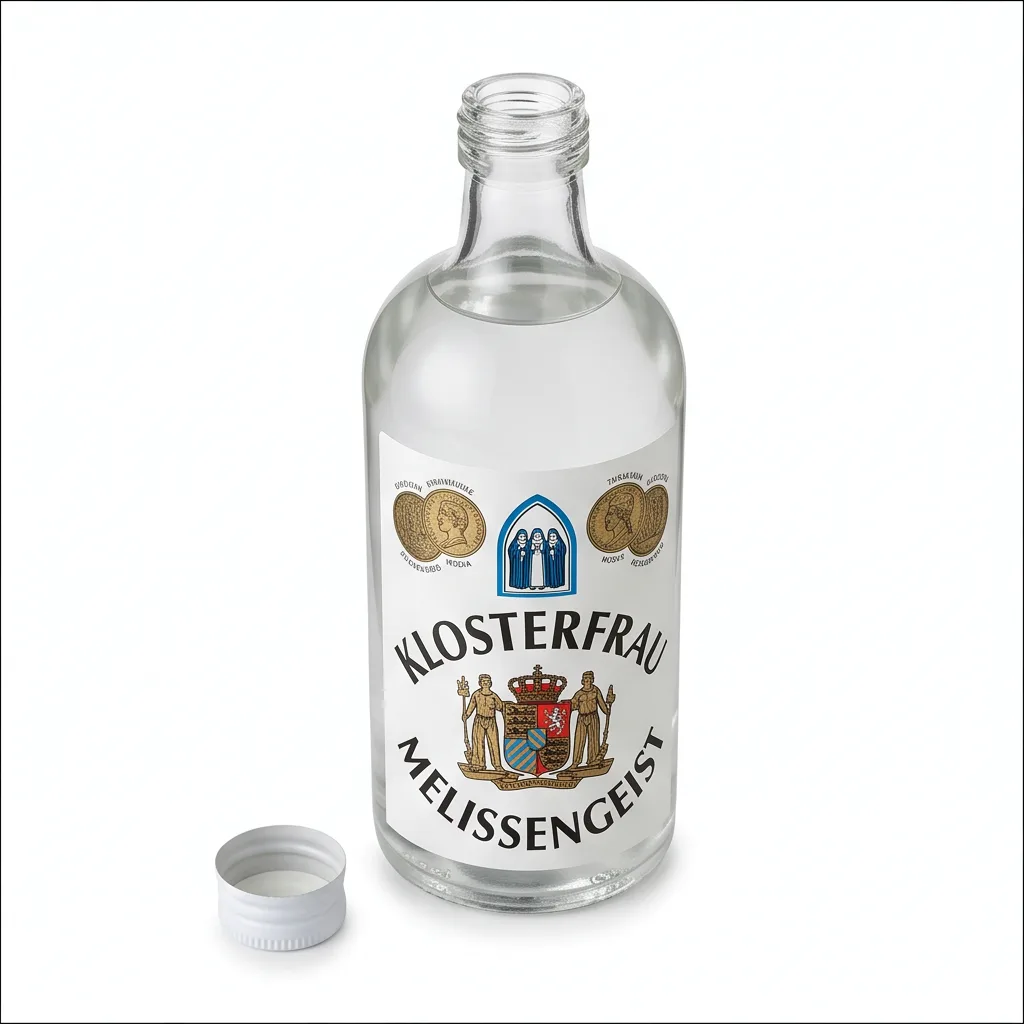
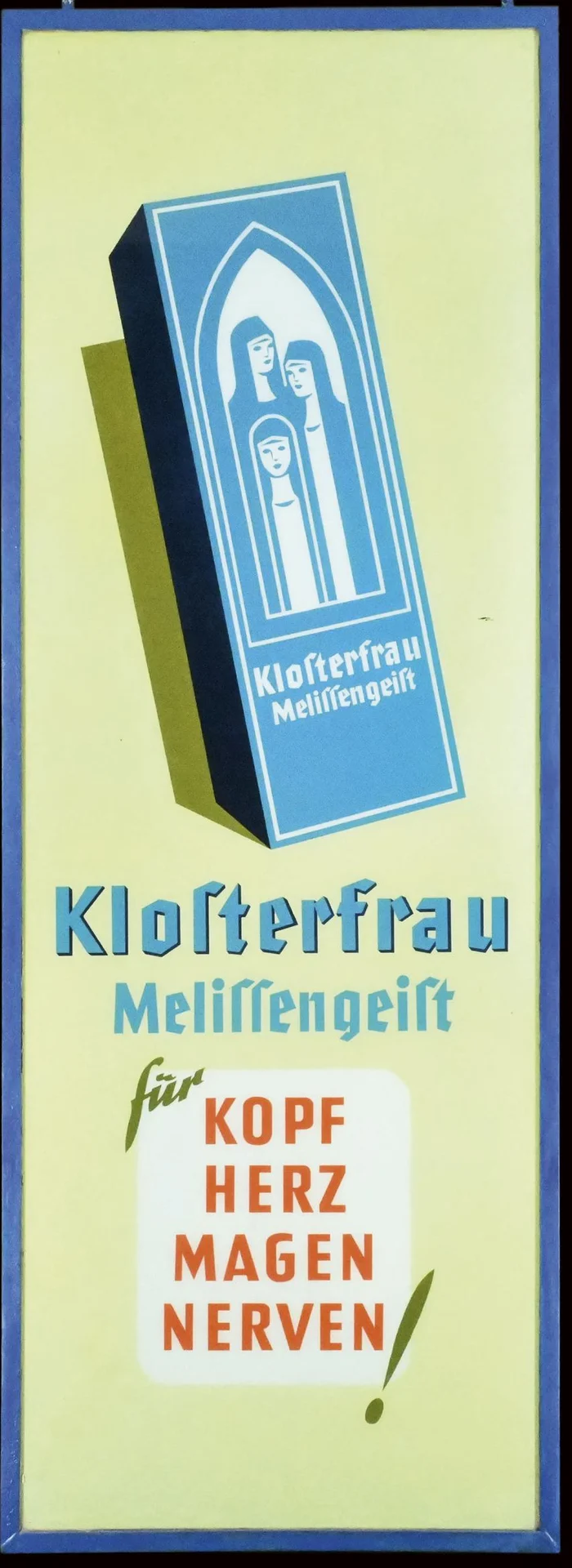
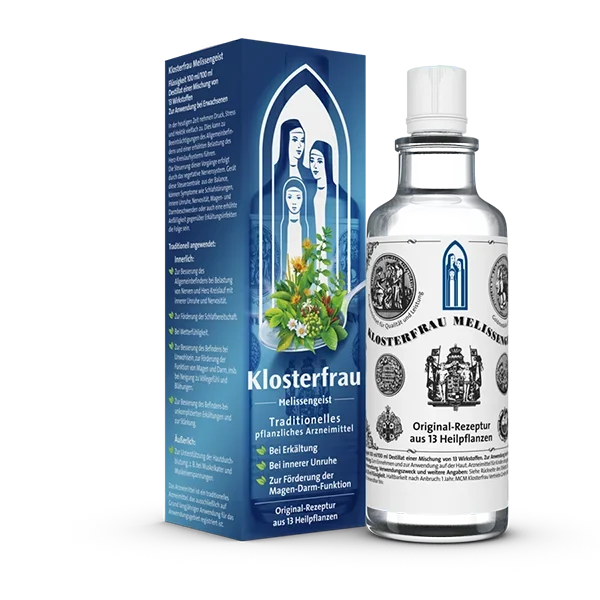
Klosterfrau Melissengeist is a clear, strongly aromatic spirit distilled from lemon balm and twelve other plants, among them angelica, elecampane, gentian, ginger, cloves and cinnamon, in alcohol of 79 per cent. It is sold in a clear glass bottle with a white cap and a white label crowded with the Prussian royal arms and the medals of nineteenth-century exhibitions, packed in a blue carton showing three nuns beneath a Gothic arch. A spoonful is taken in water or on sugar, or the spirit is rubbed on aching muscles.
Its maker, Maria Clementine Martin, entered a convent in Coesfeld at seventeen and lost it to secularisation in 1803. After years of nursing, and a royal pension that she attributed to her care of the wounded at Waterloo, she settled beside Cologne cathedral in 1825. She registered her business the next year and by 1827 was advertising a Carmelite spirit, claiming, without proof that historians have found, to hold the true recipe of the order.
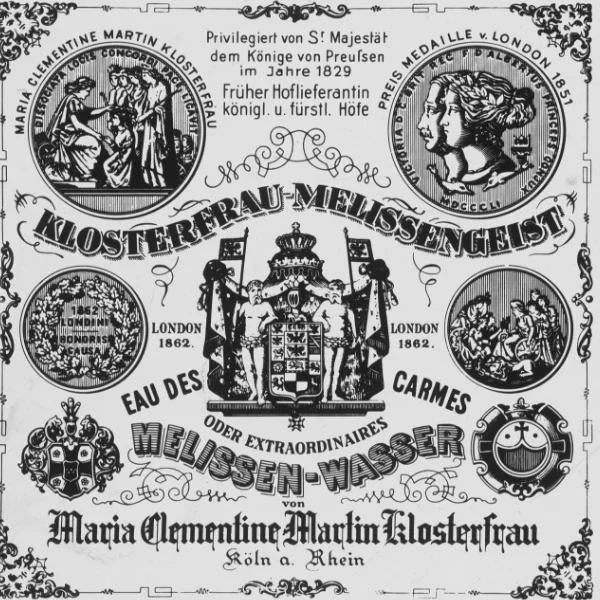
Her gift was for persuasion. In 1829 the king of Prussia allowed her to print his eagle on her labels, an advantage the eau de Cologne house of Farina had sought in vain, and she used the whole royal coat of arms. Officially the spirit could be sold only as a cosmetic, but it was bought as a remedy for the stomach, the nerves and the head, and after her death in 1843 her assistant Peter Schaeben carried it to exhibitions and markets across the world.
The firm went bankrupt in 1933 and was rescued by Wilhelm Doerenkamp, whose advertising gave it the slogan 'Nie war er so wertvoll wie heute', never so valuable as today. Bombing destroyed the Cologne works, and production has long since moved to Berlin, but the label still carries the arms granted in 1829, and the spirit is still sold in German pharmacies and chemists.
Timeline
- 1827 First made · Verified Klosterfrau Melissengeist enters production in Cologne, Germany.
- 1829 Recognised King Frederick William III allows her to put the Prussian eagle on her labels, where the arms still appear.
- 1851 Recognised The Melissengeist wins its first award, at the Great Exhibition in London.
- 1933 Ownership Wilhelm Doerenkamp, a partner since 1929, takes over the firm from the Schaeben family after its bankruptcy.
Milestones as we found them, not as we've checked them.
From the archive
More like this
-
 Tonics · since 1838 Eau de Mélisse des Carmes Boyer The Paris Carmelites' melissa water, made by their successors under the Boyer name since 1838. Read the entry →
 -
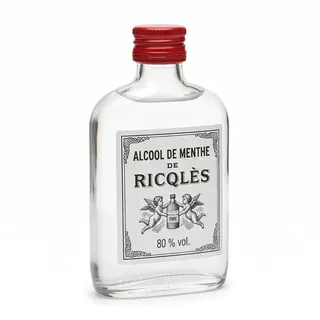 Tonics · since 1838 Ricqlès Alcool de Menthe A peppermint spirit taken in drops on a sugar lump, sold in its little flat flask since the reign of Louis-Philippe. Read the entry →
 -
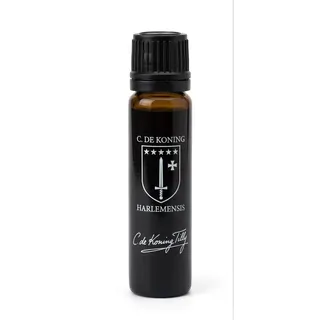 Tonics · since 1696 Oprechte Haarlemmerolie A Haarlem schoolmaster's drops of sulphur and terebinth, sold by his successors since 1696. Read the entry →
 -
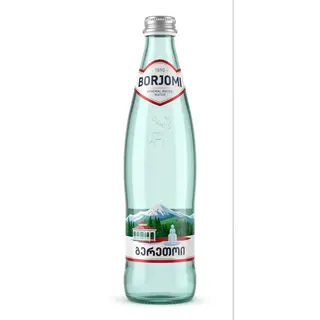 Tonics · since 1890 Borjomi A warm, salty water from a Georgian gorge, bottled under one name since 1890. Read the entry →