Kitchen & Dining · Dining & Drinks · Coffee & Tea
La Pavoni
La Pavoni Europiccola
Since 1961 · 65 years to 2026 · First made in Milan, Italy
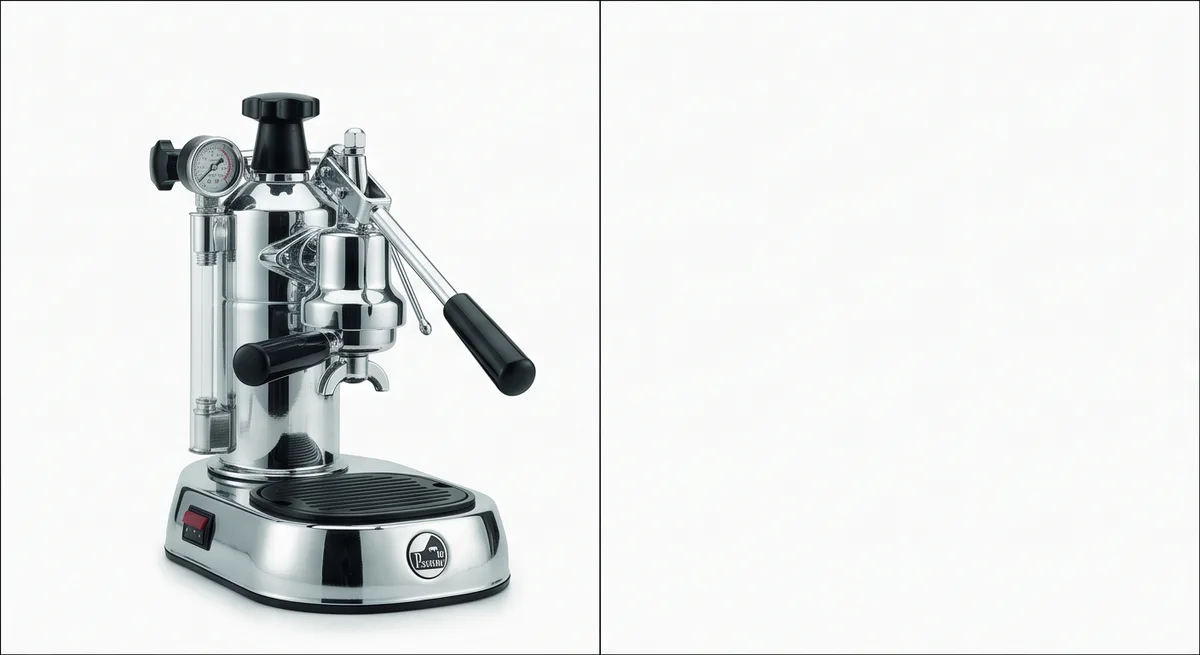
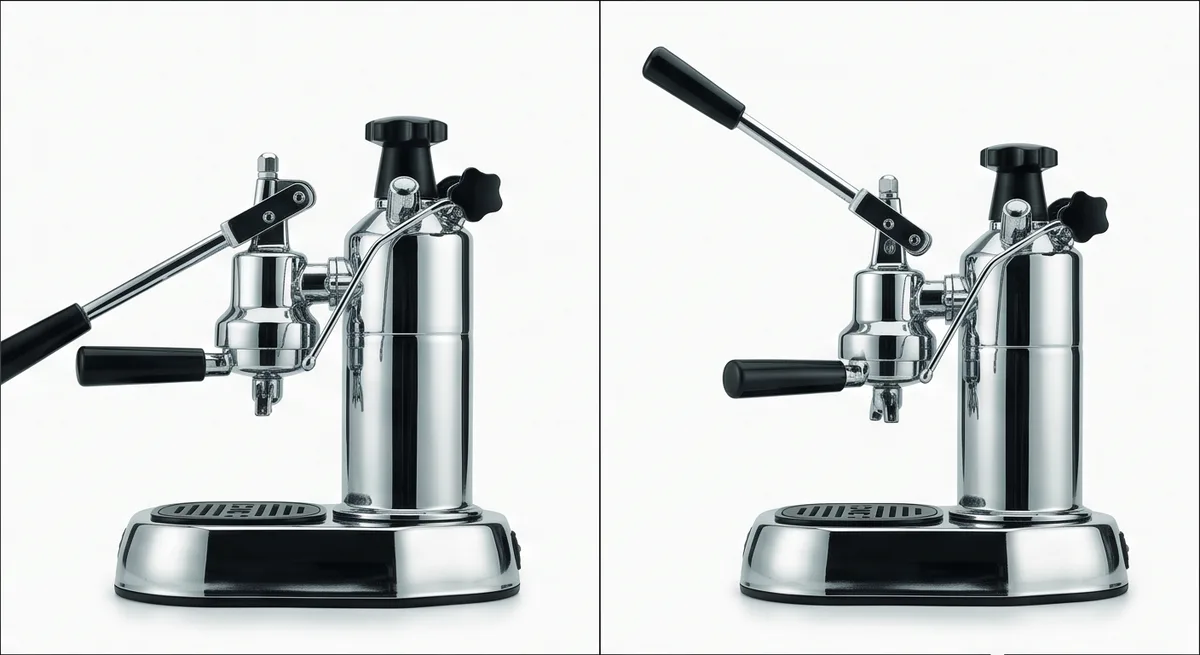
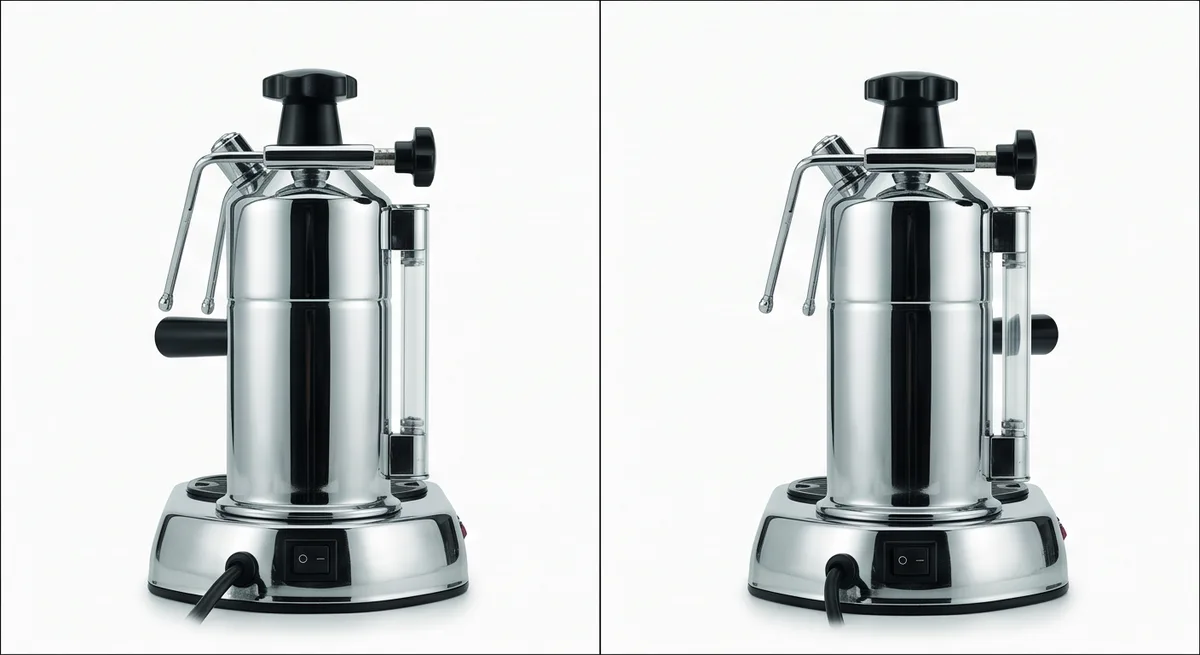
The La Pavoni Europiccola represents an unbroken design lineage stretching back to the earliest industrial espresso machines. When La Pavoni introduced it in 1961, the company had already been manufacturing lever-operated espresso equipment for fifty-six years, tracing its origins to Desiderio Pavoni's 1903 acquisition of Luigi Bezzera's steam-powered patents. The Europiccola was conceived as a scaled domestic version of commercial machines, compact enough for home use yet mechanically identical in principle to its industrial counterparts.
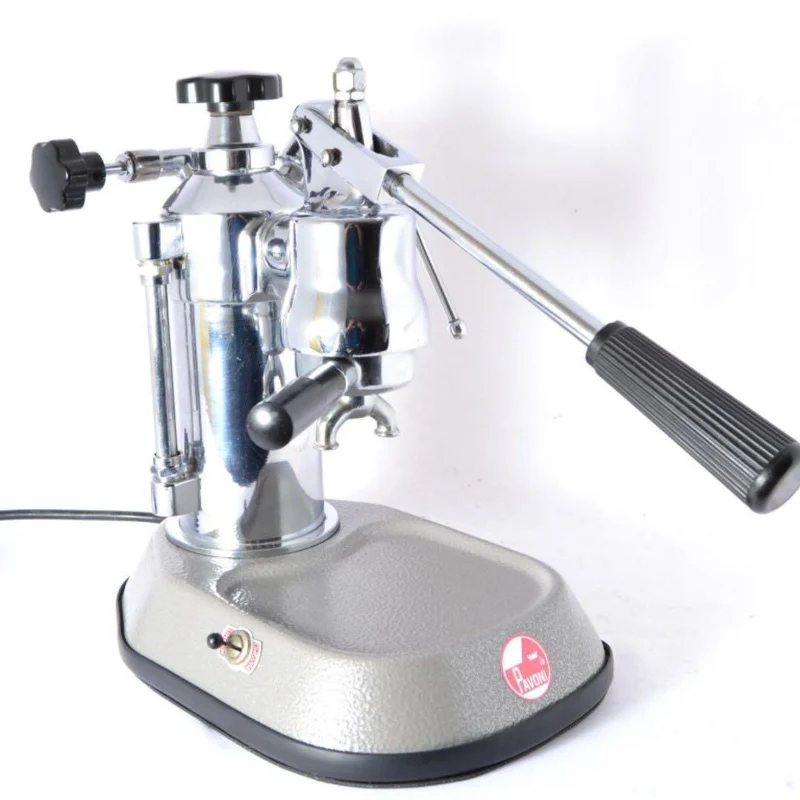
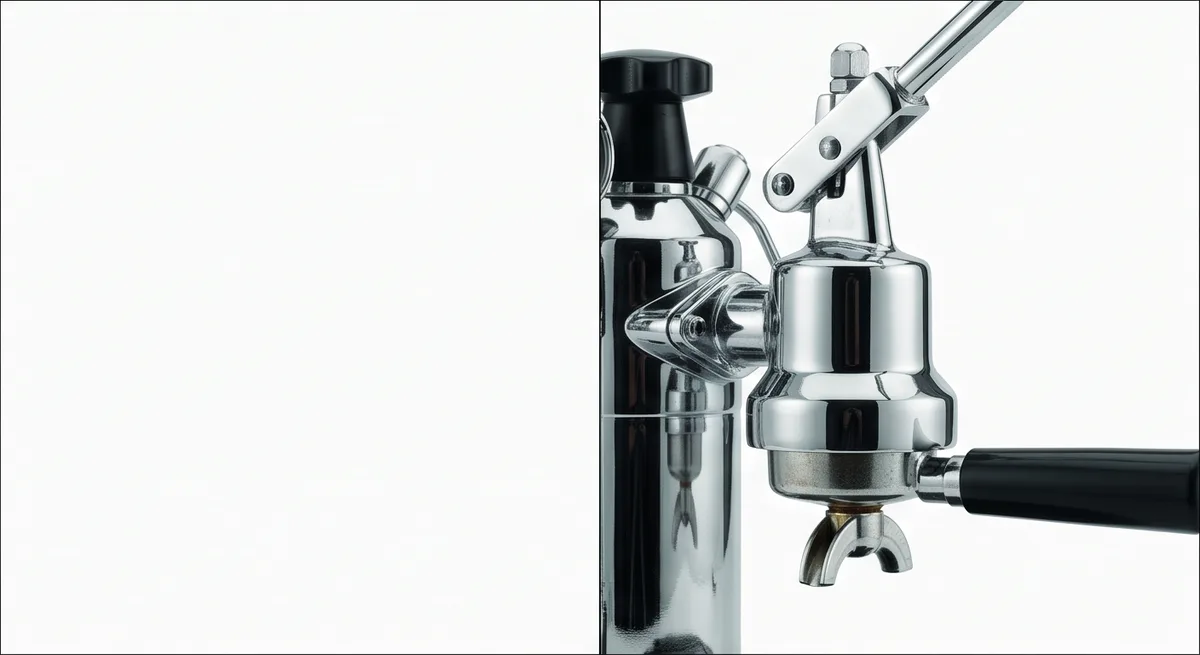
The machine's construction reflects the materials and methods of post-war Italian manufacture. The boiler is brass or chromed brass, the frame combines chromed steel with bakelite handles, and the group head—the heart of the machine—is brass with a piston mechanism that the operator controls directly via a lever. At its introduction, the Europiccola held 0.8 litres of water, sufficient to brew approximately eight consecutive espresso cups. This simplicity of design—no electromechanical pump, no thermostat, no computerised controls—has proved both commercially durable and culturally resonant. In 2005, during La Pavoni's centenary, the Museum of Modern Art included the 1974 Professional model in its "Architecture and Design: Inaugural Installation," positioning the lever machine alongside the Chemex coffeemaker as foundational objects in twentieth-century domestic design.
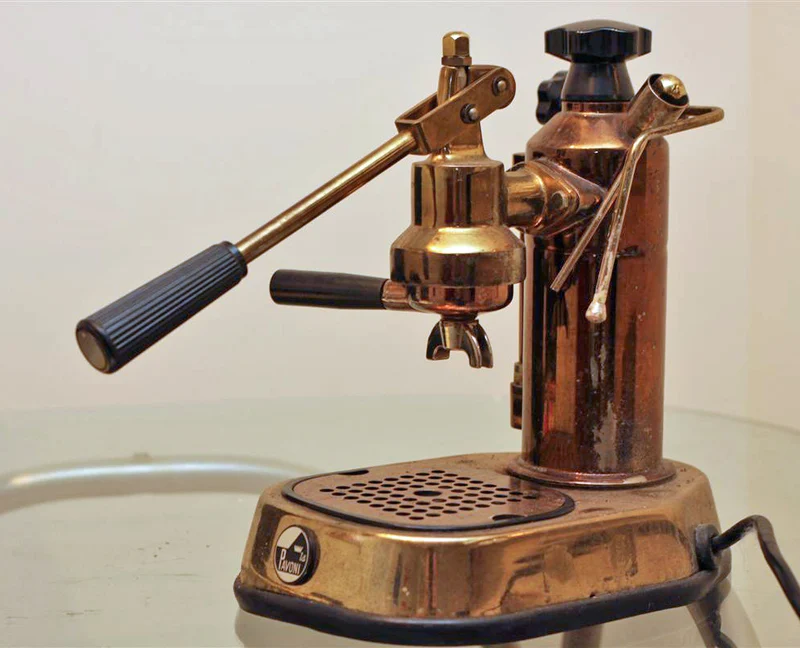

The Europiccola's survival across six decades reflects neither stasis nor nostalgia alone, but adaptive continuity. Technical modifications—the addition of sight glasses, pressure gauges, thermofuses, and Teflon components—have improved safety and usability without abandoning the direct-lever principle. The 2001 Millennium redesign enlarged critical dimensions, yet the basic operation remained unchanged. La Pavoni describes the machine as "the lever machine par excellence that knows no fashions." This claim rests not on immutability but on the persistence of a mechanical proposition: that the user's hand, via a lever arm, can generate the pressure necessary to extract espresso without powered machinery. That proposition, first patented in 1901, has required no fundamental revision.
Timeline
- 1903 Designed Desiderio Pavoni acquires Luigi Bezzera's steam-powered espresso patents.
- 1961 First made · Claimed La Pavoni Europiccola enters production in Milan, Italy.
- 1962 Production La Pavoni adds a water-level sight glass to the Europiccola model.
- 2001 Designed La Pavoni introduces the Millennium redesign with enlarged group head and piston cylinder.
- 2019 Ownership The Smeg Group acquires La Pavoni.
Milestone dates are taken from the production notes behind this entry and have not been checked separately.
More like this
-
 Coffee & Tea · since 1958 Bodum Chambord French Press The original French press, refined without interruption since 1958. Read the entry →
 -
 Coffee & Tea · since 1941 Chemex Coffeemaker Laboratory-inspired glass coffeemaker, patented 1941, still hand-assembled. Read the entry →
 -
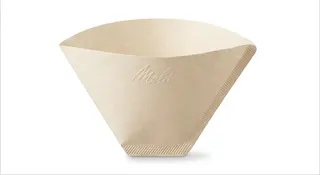 Coffee & Tea · since 1936 Melitta Cone Filter Cone-shaped paper filter, refined in 1936, continuously produced. Read the entry →
 -
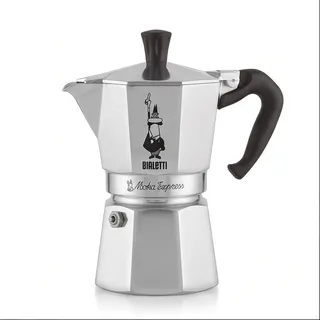 Coffee & Tea · since 1933 Bialetti Moka Express The stovetop coffee maker that defined Italian domestic life Read the entry →