Mason Cash
Mason Cash Cane Mixing Bowl
Since 1901 · 125 years to 2026 · First made in Church Gresley, Derbyshire
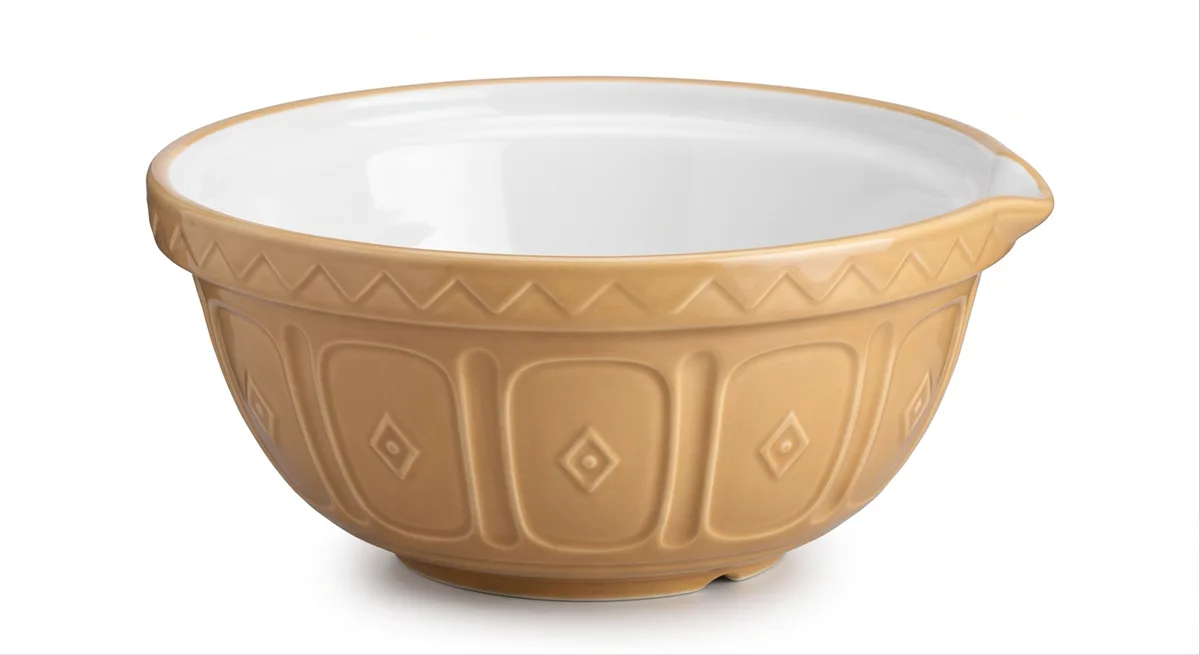
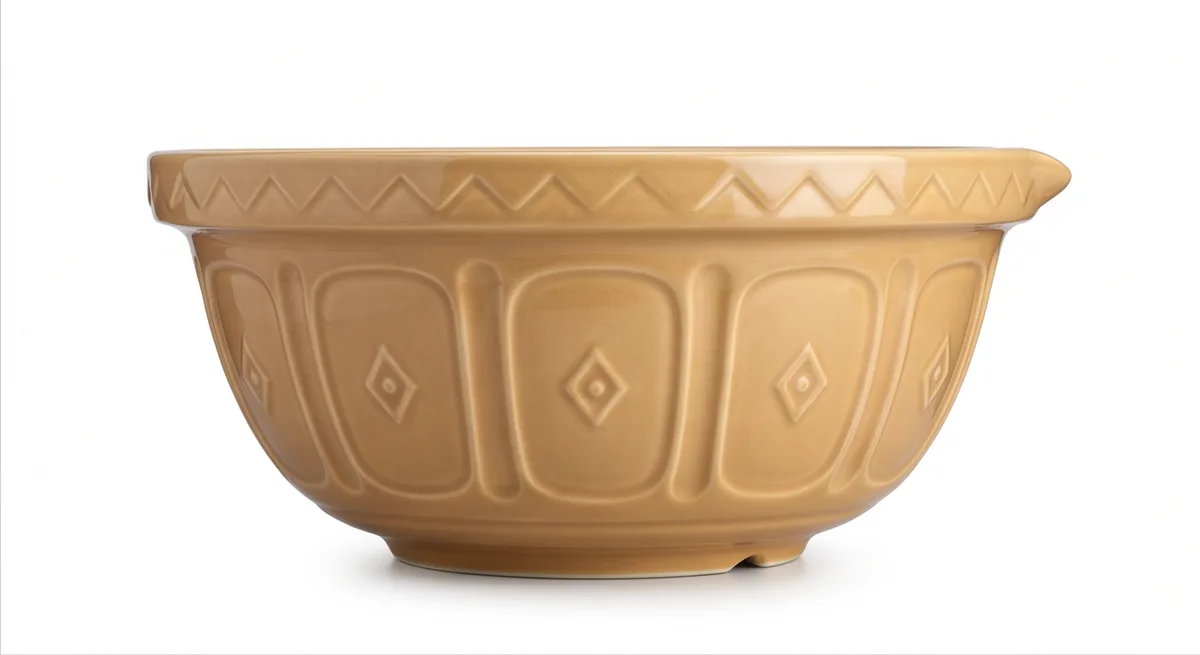
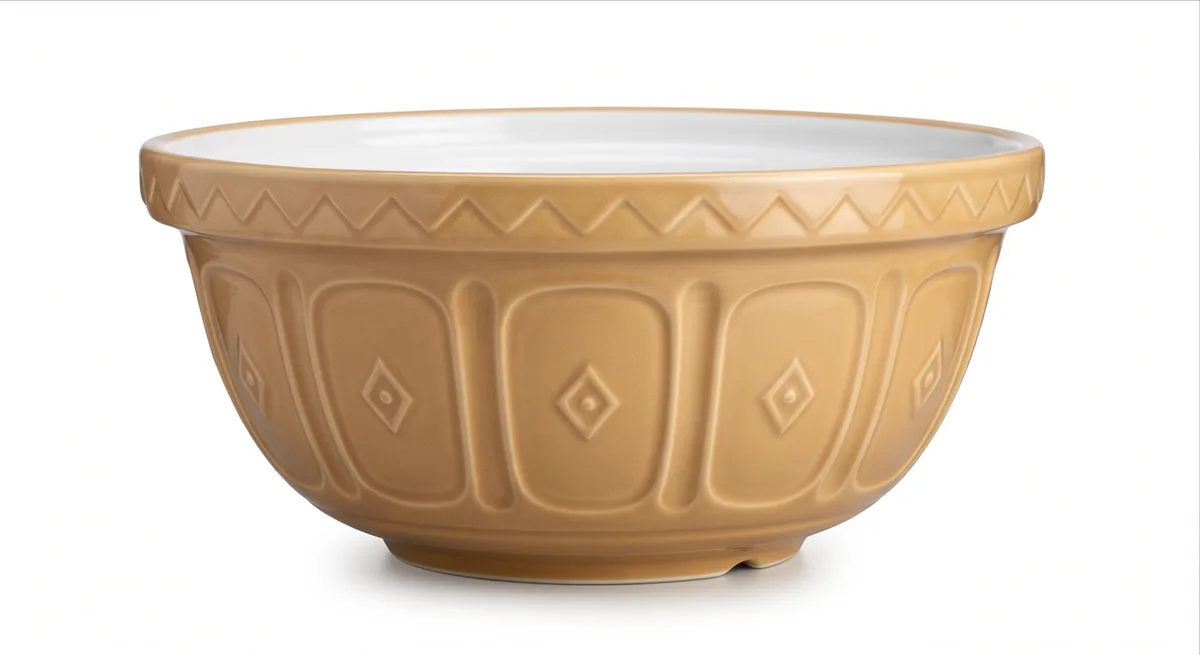
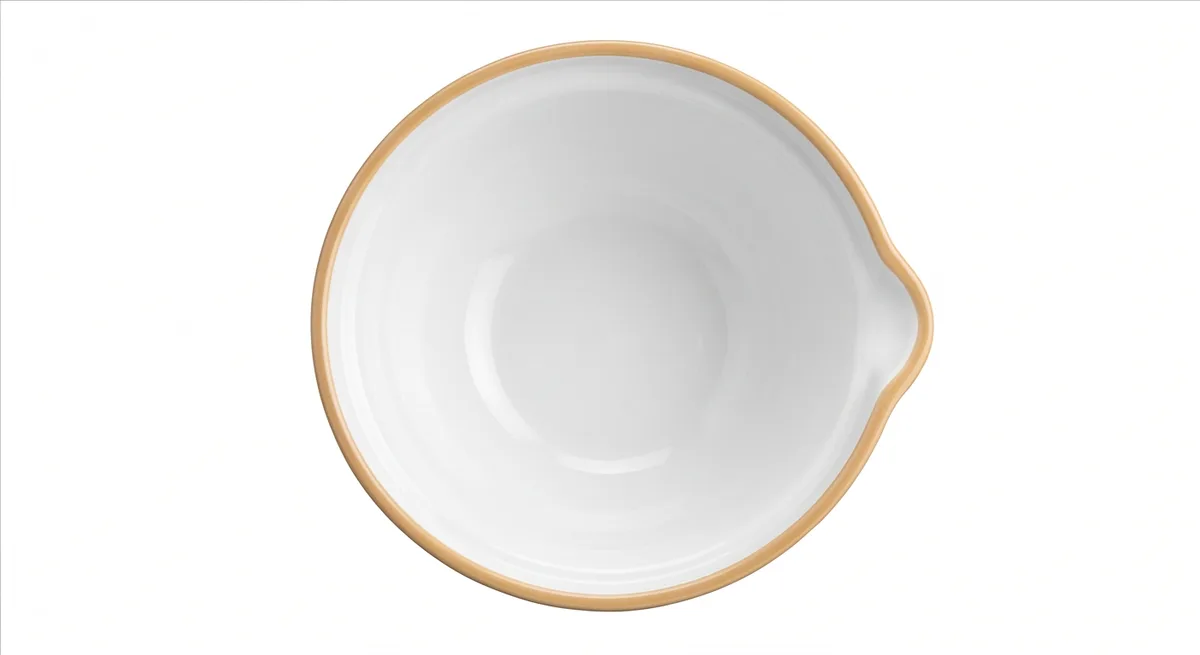
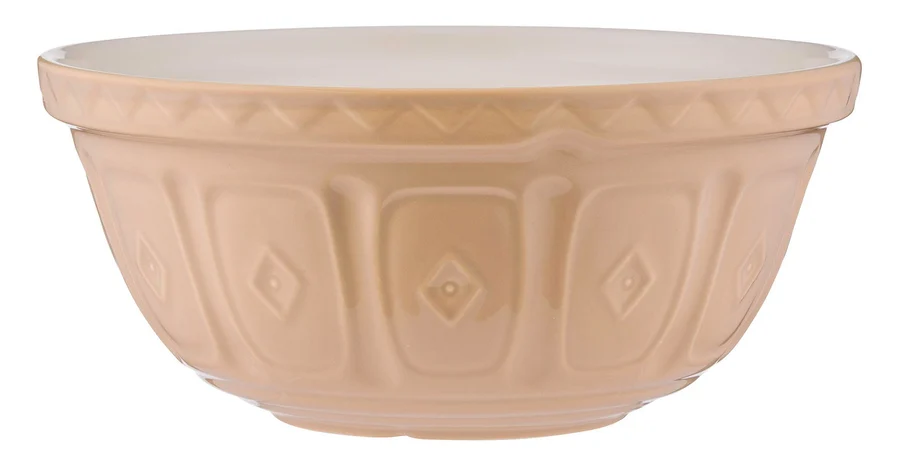
The Mason Cash cane bowl is a mixing bowl of glazed earthenware, buff outside and white within. Below a thick rolled rim, moulded with a running zigzag, the outer wall is divided into rounded panels, each centred on a small raised diamond, and the bowl stands on a narrow foot. The size 12, the one most kitchens know, is twenty-nine centimetres across and holds four litres.
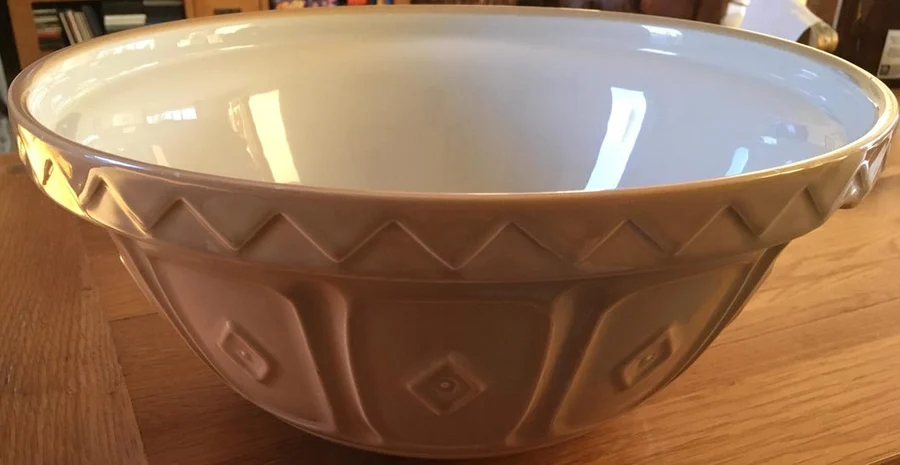
The pattern is useful as well as decorative. The ridges and the rim give the hand something to grip when the bowl is tipped or held against the hip, and the wide, shallow shape leaves room to knead dough inside it. The bowl is light enough to be held in one arm while mixing, and heavy enough to stay put on the counter while a stiff dough is beaten or a pudding mixture is folded in it.
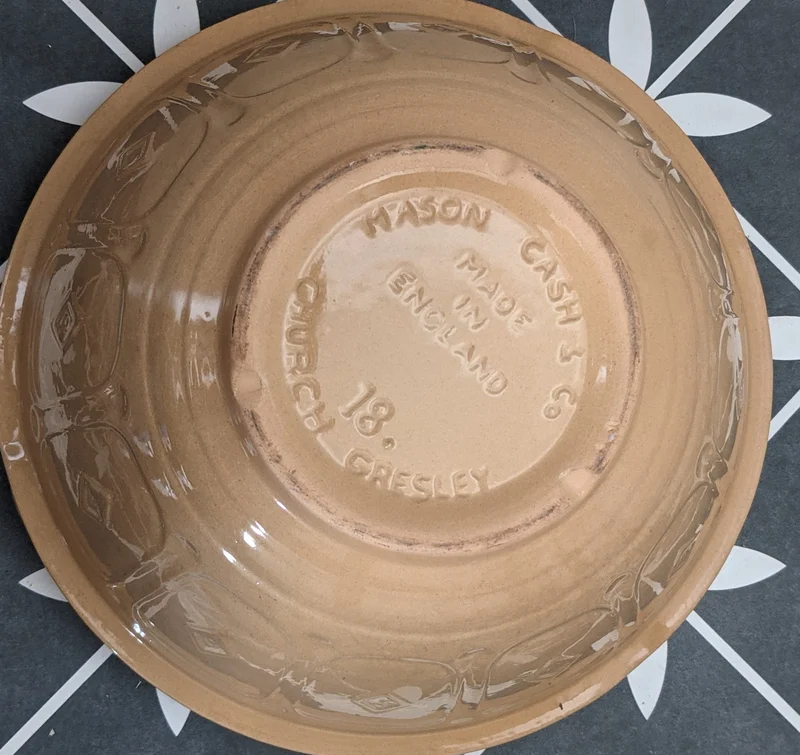
It comes from Church Gresley, on the clay and coal of south Derbyshire, where a pottery was working by about 1800. Thomas Cash bought it in 1901 and gave it his name alongside that of an earlier master potter, William Mason, and the firm dates its first patterned bowl to the same year. The sizes are still sold by number, and Wikipedia says the number once told the potters how many bowls of that size fitted in the kiln.
The bowl has outlived the Cash family, several later owners and the Derbyshire works itself. In 2006 production in Swadlincote stopped and the machinery was moved to Portugal, where the bowls are still made; the brand has belonged to the Rayware Group since 2007. Examples from the old works, impressed with 'Church Gresley' and a size number, are hard to tell from new ones except by that mark, and the maker's own claim that the design has barely changed is borne out by the bowls themselves.
Timeline
- 1901 First made · Claimed Mason Cash Cane Mixing Bowl enters production in Church Gresley, Derbyshire.
- 1901 Designed Thomas Cash buys the pottery near Swadlincote, renames it Mason Cash and Co, and, the firm says, makes the first of its patterned mixing bowls.
- 1941 Ownership Thomas Cash's son incorporates the business as Mason, Cash & Co. Ltd; it goes on making utilitarian wares through the war.
- 2006 Production Production in Swadlincote stops and the machinery is moved to Portugal, where the bowls are still made.
- 2007 Ownership The Rayware Group acquires the Mason Cash brand.
Milestones as we found them, not as we've checked them.
From the archive
More like this
-
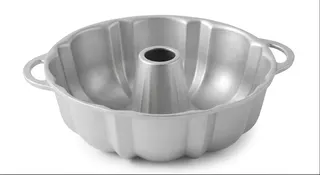 Bakeware · since 1950 Nordic Ware Bundt Pan A Hadassah society's Gugelhupf, cast in aluminium in Minneapolis since 1950.
-
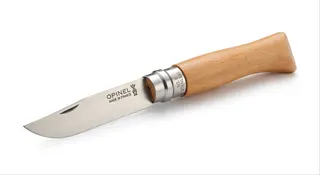 Knives & Chopping · since 1897 Opinel No. 6 French pocket knife in continuous production since 1897.
-
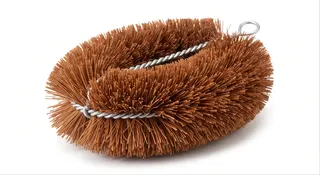 Kitchen Utensils · since 1907 Kamenoko Tawashi A hand-sized oval of palm fibre twisted in wire, invented in a Tokyo back street in 1907 and named after a baby turtle.
-
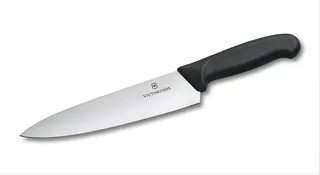 Knives & Chopping · since 1884 Victorinox Fibrox Chef's Knife Swiss cutlery workshop's stamped steel knife, continuously made since 1884.