Scott's (Haleon)
Scott's Emulsion
Since 1876 · 150 years to 2026 · First made in New York
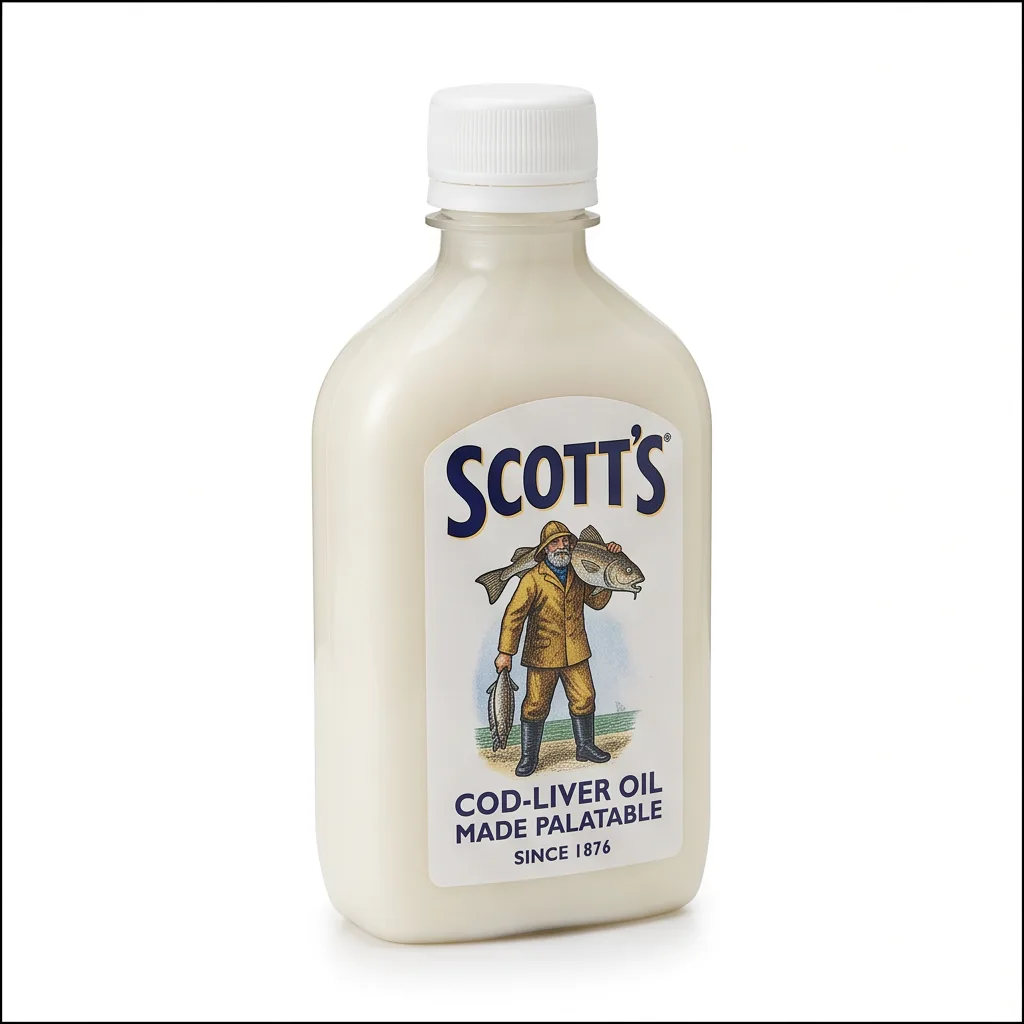

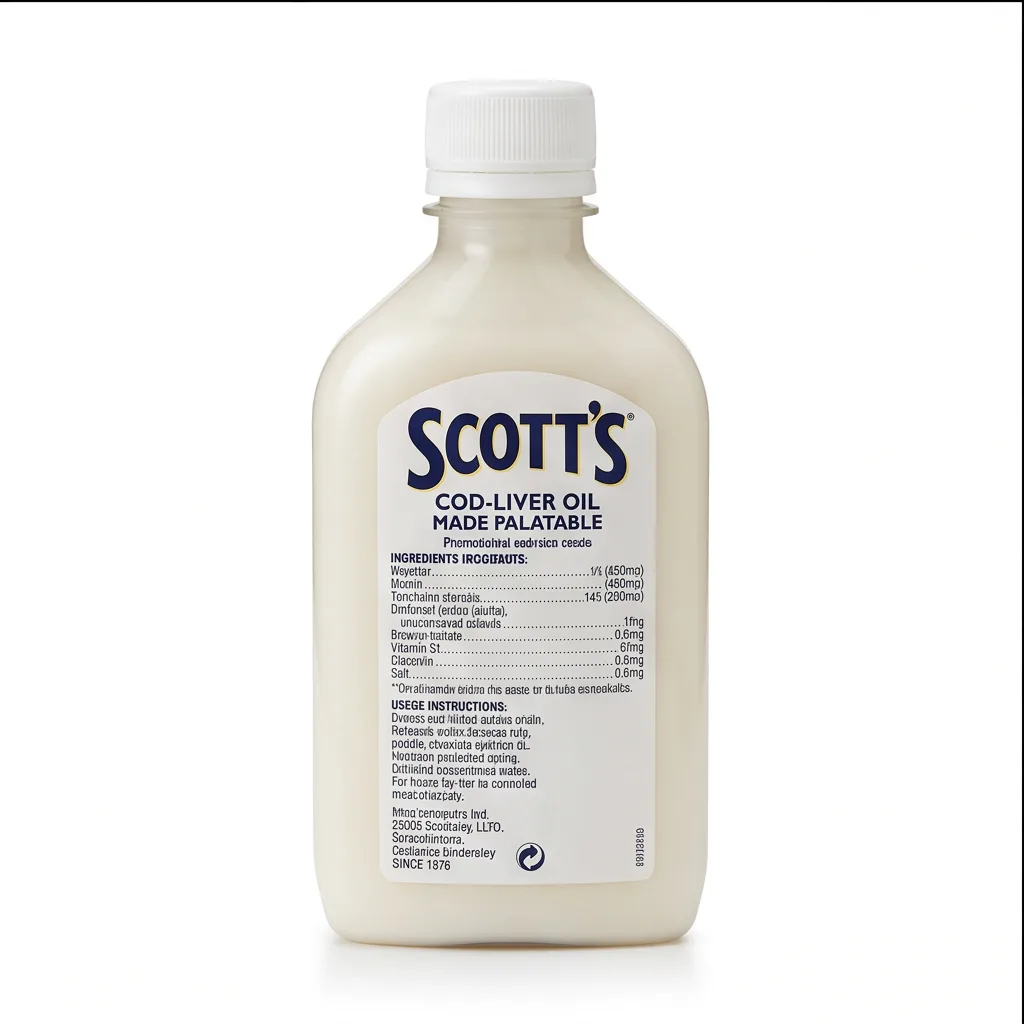
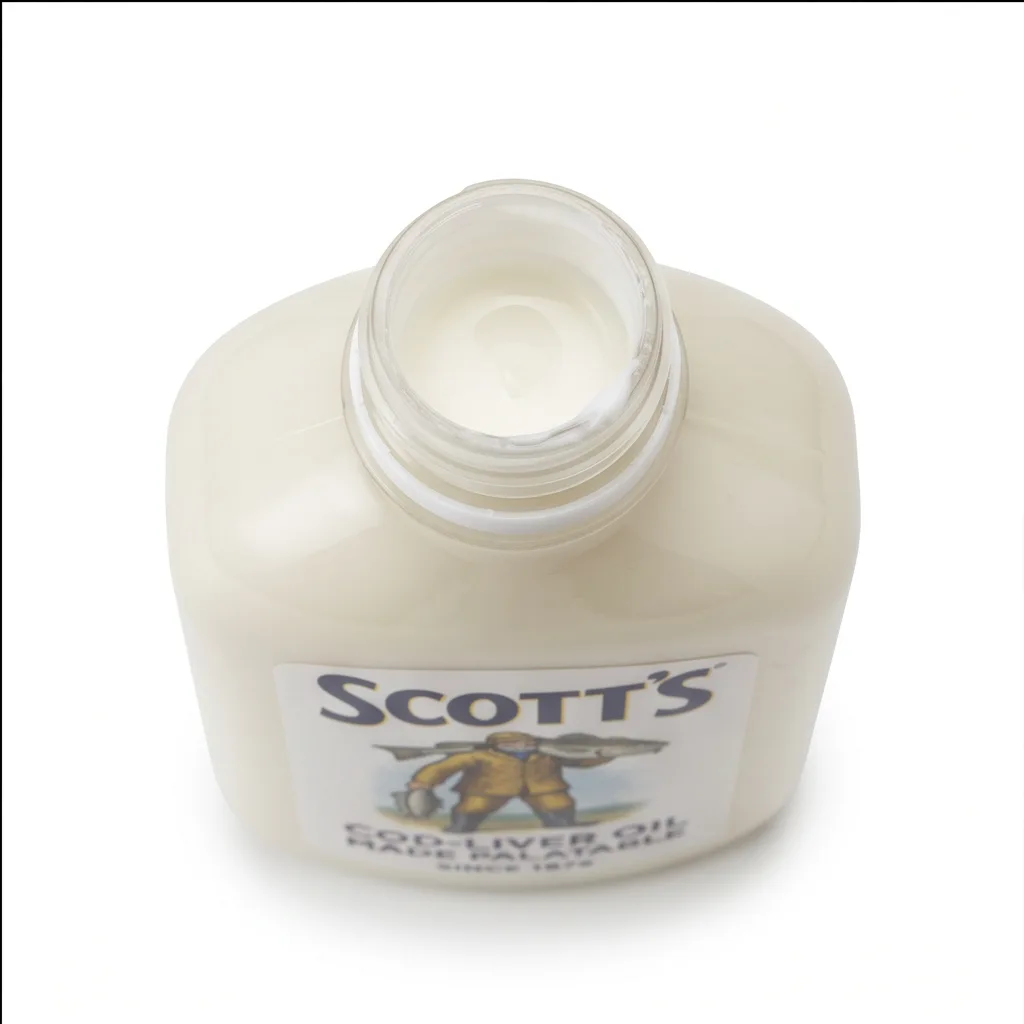
Scott's Emulsion is cod-liver oil made into a thick, creamy white emulsion and sold in a bottle to be taken by the spoonful. The Original is unflavoured and creamy. On every carton is the trademark: a fisherman in oilskins with a huge cod slung over his shoulder. The emulsion today lists vitamins A and D, calcium hypophosphite and sodium hypophosphite.
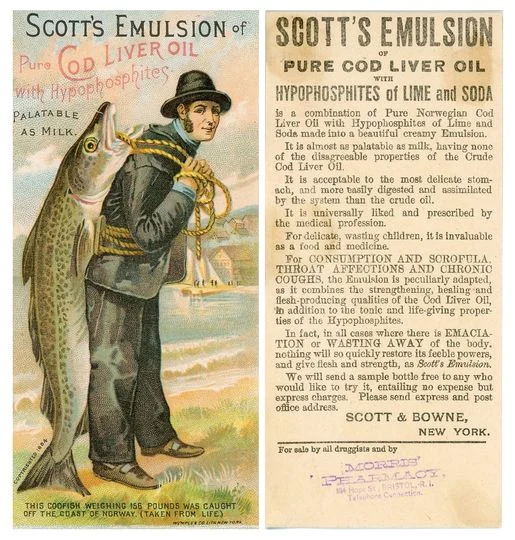

It was made to solve a problem of taste. Cod-liver oil was widely prescribed in the nineteenth century, and widely hated. According to the South Street Seaport Museum, Alfred B. Scott and Samuel W. Bowne began experimenting in 1873 with a more palatable form, founded Scott & Bowne in New York in 1876 and sold the result as Scott's Emulsion. They broke the oil into fine droplets suspended in a creamy base and added hypophosphites of lime and soda, then thought tonic. Their trade cards promised it was "palatable as milk".
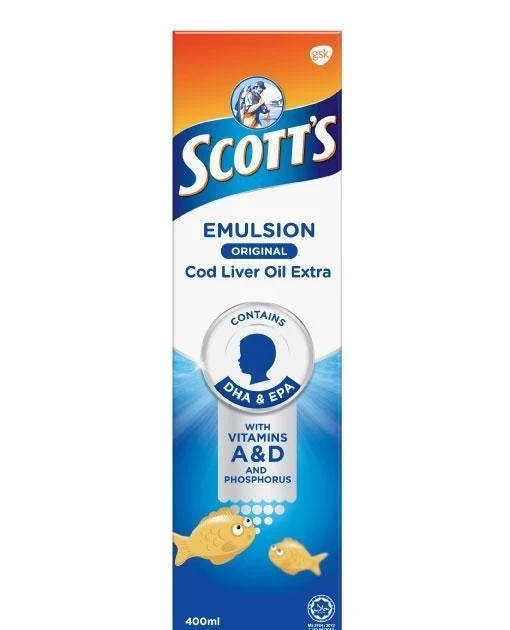
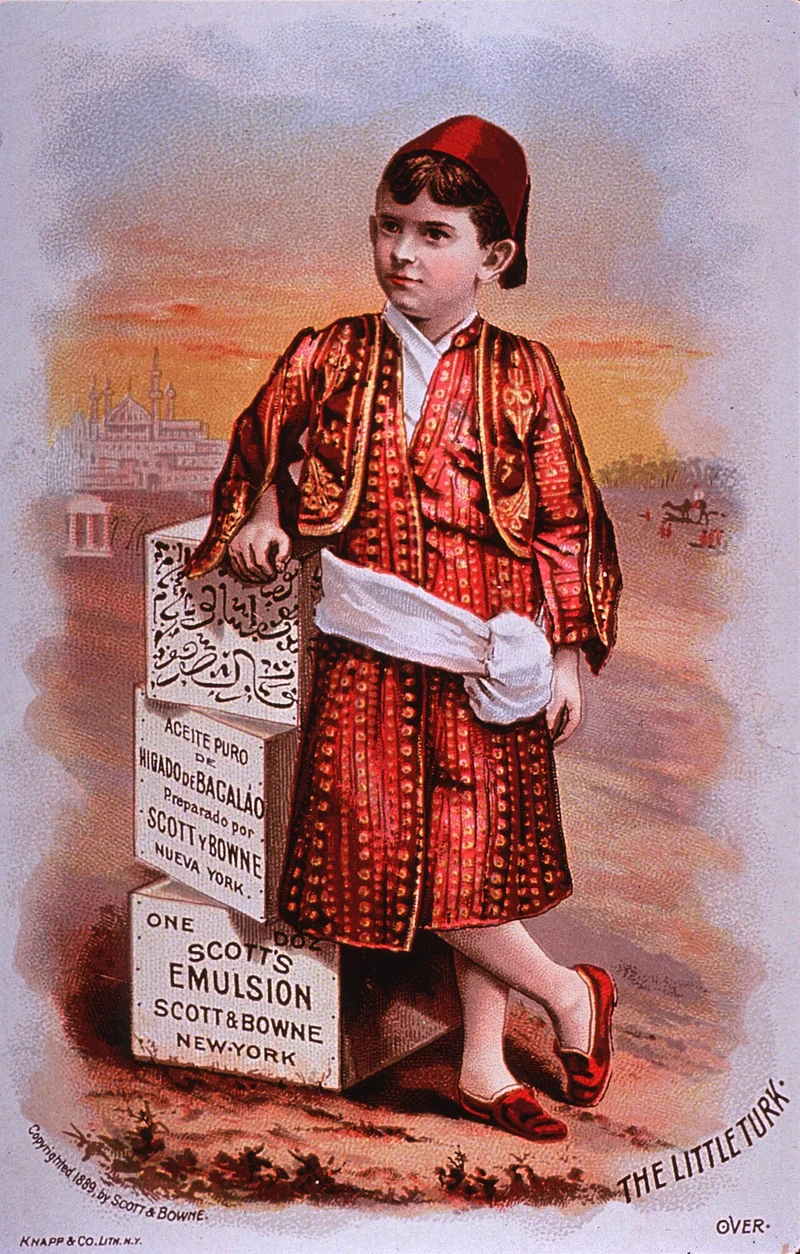
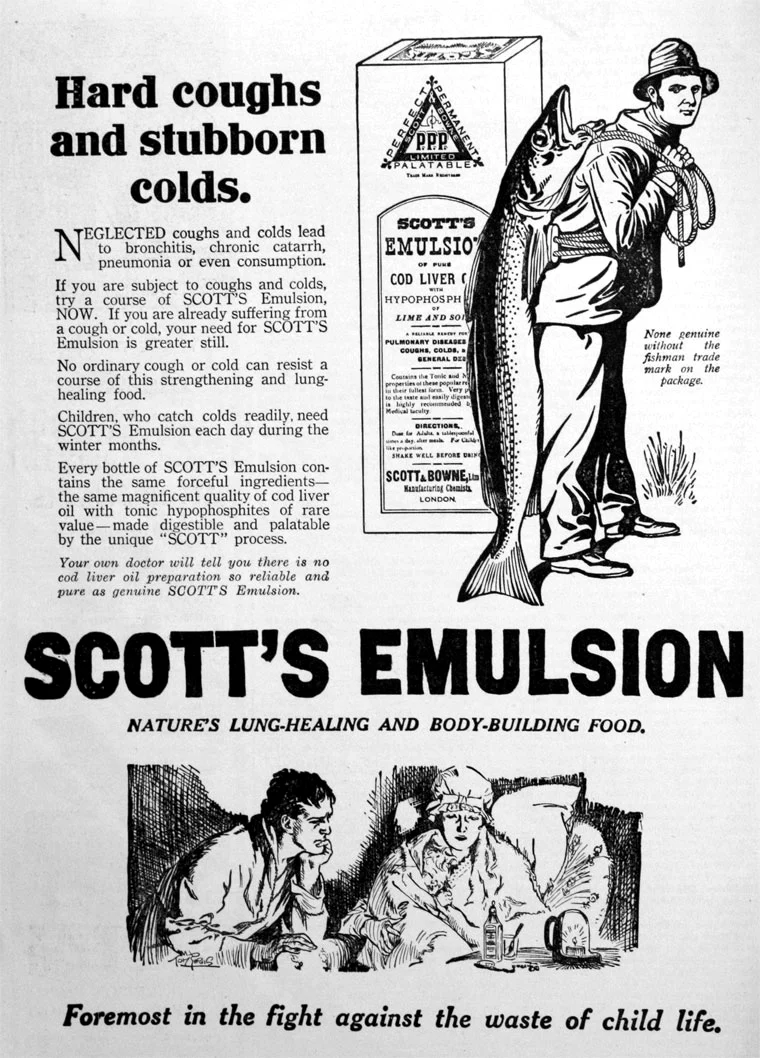
The fisherman came from Norway, where Scott is said to have seen a man with a record catch; the image appeared on the emulsion around 1884 and became the trademark in 1890. Scott & Bowne advertised hard, with chromolithographed cards of children, sailors and costumed figures, and by 1889 cases were labelled for Spanish- and Arabic-speaking markets. In Britain, Scott & Bowne Ltd sold it from London as "Nature's lung-healing and body-building food" for coughs and colds.
Medicine has moved on from tonics and the claims have softened, but the product has not changed in kind. The carton sold in Malaysia still shows the fisherman, and its ingredients still name the hypophosphites of lime and soda that the 1880s cards advertised. It is now sold chiefly in Asia, where the directions begin at two teaspoonfuls a day for children of one to three, and a 400 ml bottle costs the equivalent of a few pounds at a Malaysian chemist.
Timeline
- 1873 Designed Alfred B. Scott and Samuel W. Bowne begin experimenting with a more palatable preparation of cod-liver oil.
- 1876 First made · Claimed Scott's Emulsion enters production in New York.
- 1876 Scott & Bowne is established in New York and begins marketing Scott's Emulsion.
- 1890 Designed The fisherman carrying a cod, used on the emulsion since about 1884, becomes the firm's trademark.
- 1922 Production Scott & Bowne Ltd of London advertises the emulsion in Good Housekeeping as cod-liver oil with tonic hypophosphites.
Milestones as we found them, not as we've checked them.
From the archive

More like this
-
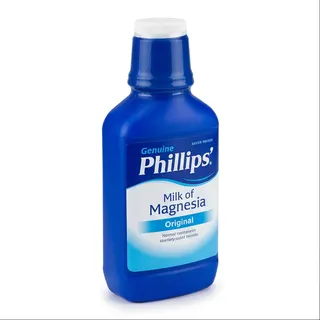 Tonics · since 1873 Phillips' Milk of Magnesia The white suspension Charles Phillips patented in Stamford in 1873, still shaken before use.
-
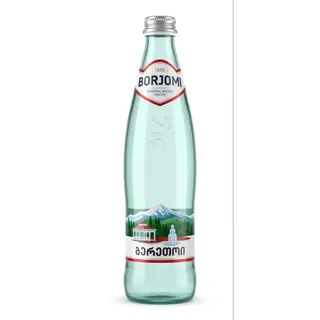 Tonics · since 1890 Borjomi A warm, salty water from a Georgian gorge, bottled under one name since 1890.
-
 Tonics · since 1896 Po Chai Pills Tiny red herbal pills from Foshan, carried to Hong Kong in 1949 and still in the founder's box.
-
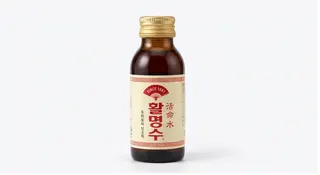 Tonics · since 1897 Hwalmyungsu A court officer's stomach remedy, sold in the same small brown bottle since 1897.