Health & Grooming · Remedies · Tonics
IDS Borjomi Georgia
Borjomi
Since 1890 · 136 years to 2026 · First made in Borjomi, Georgia
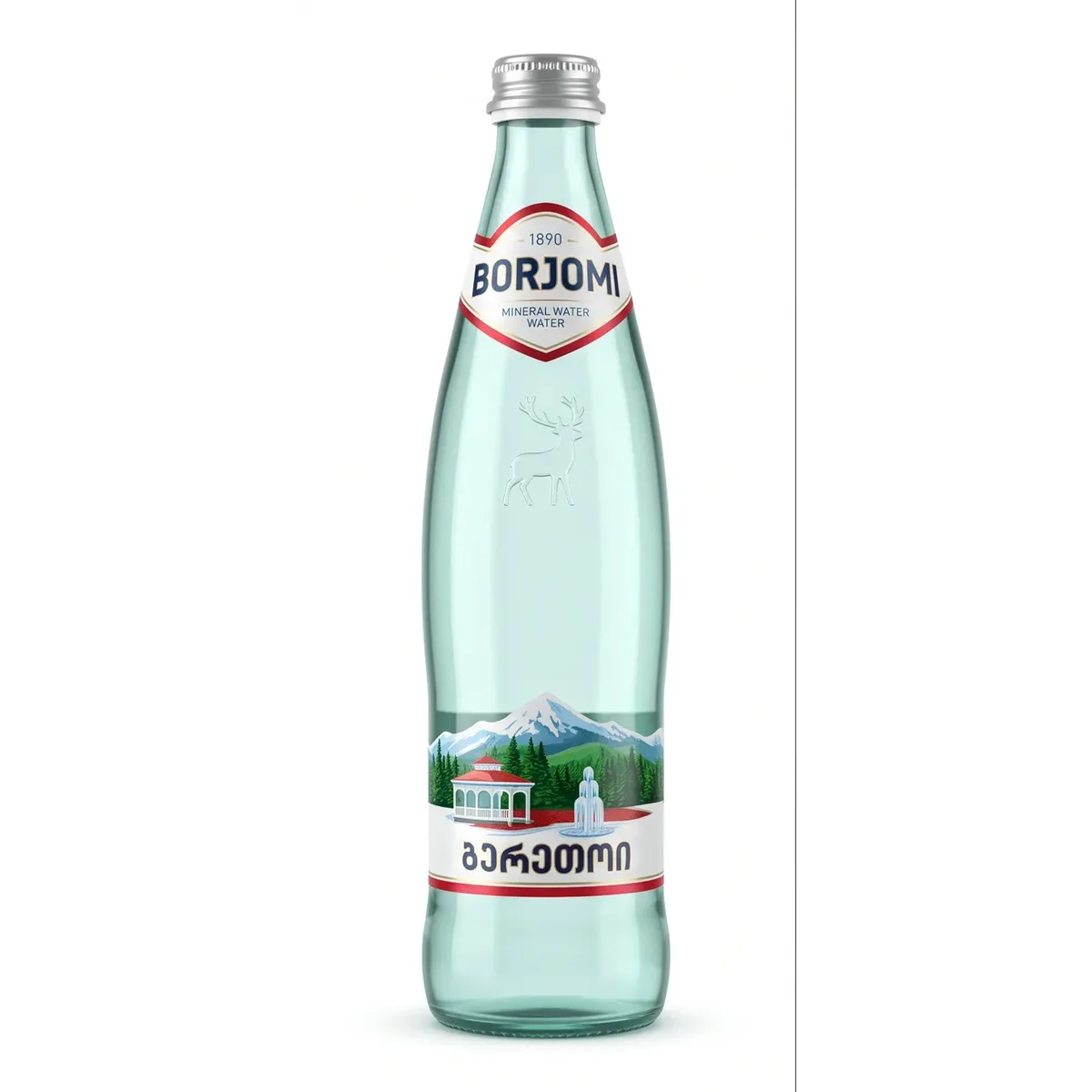
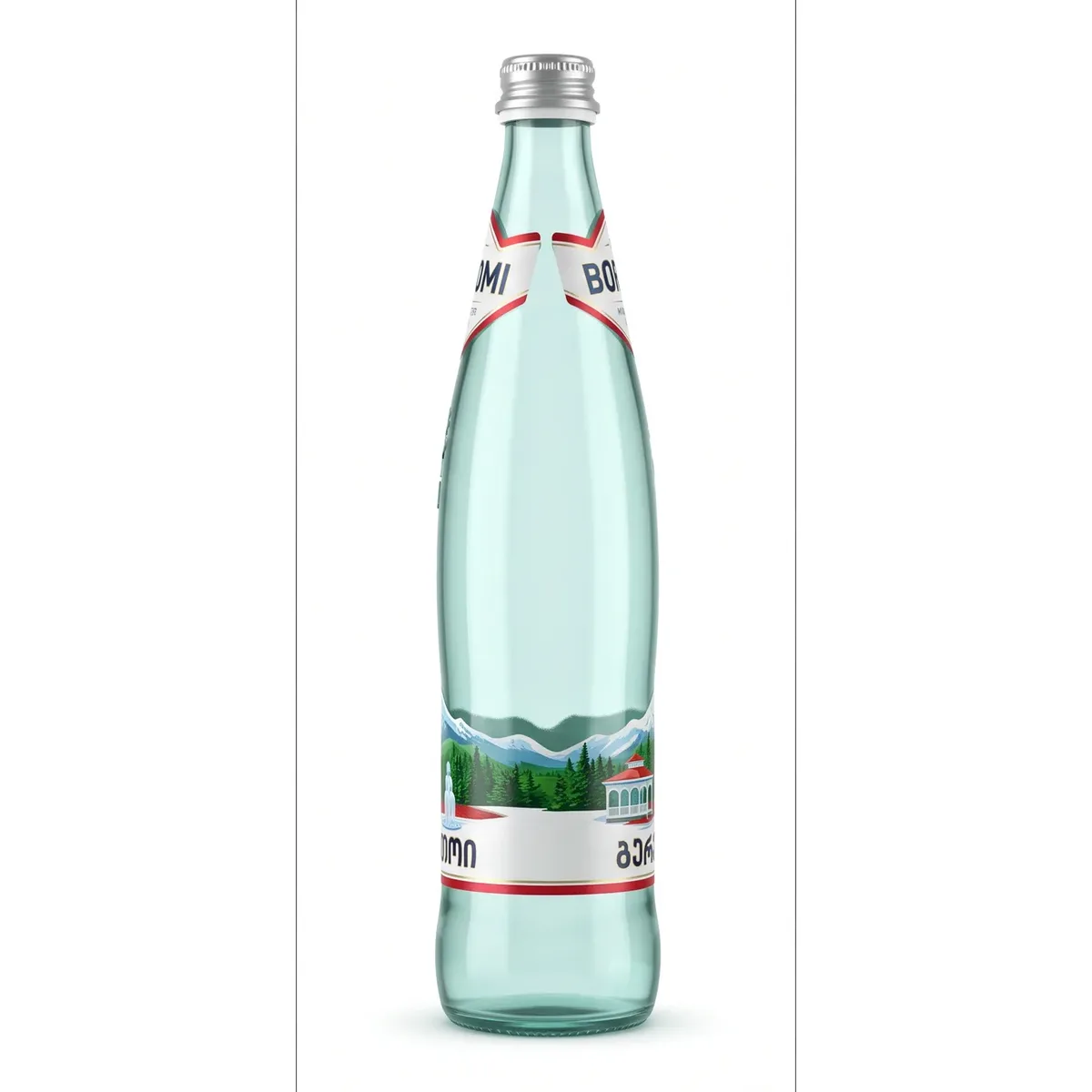
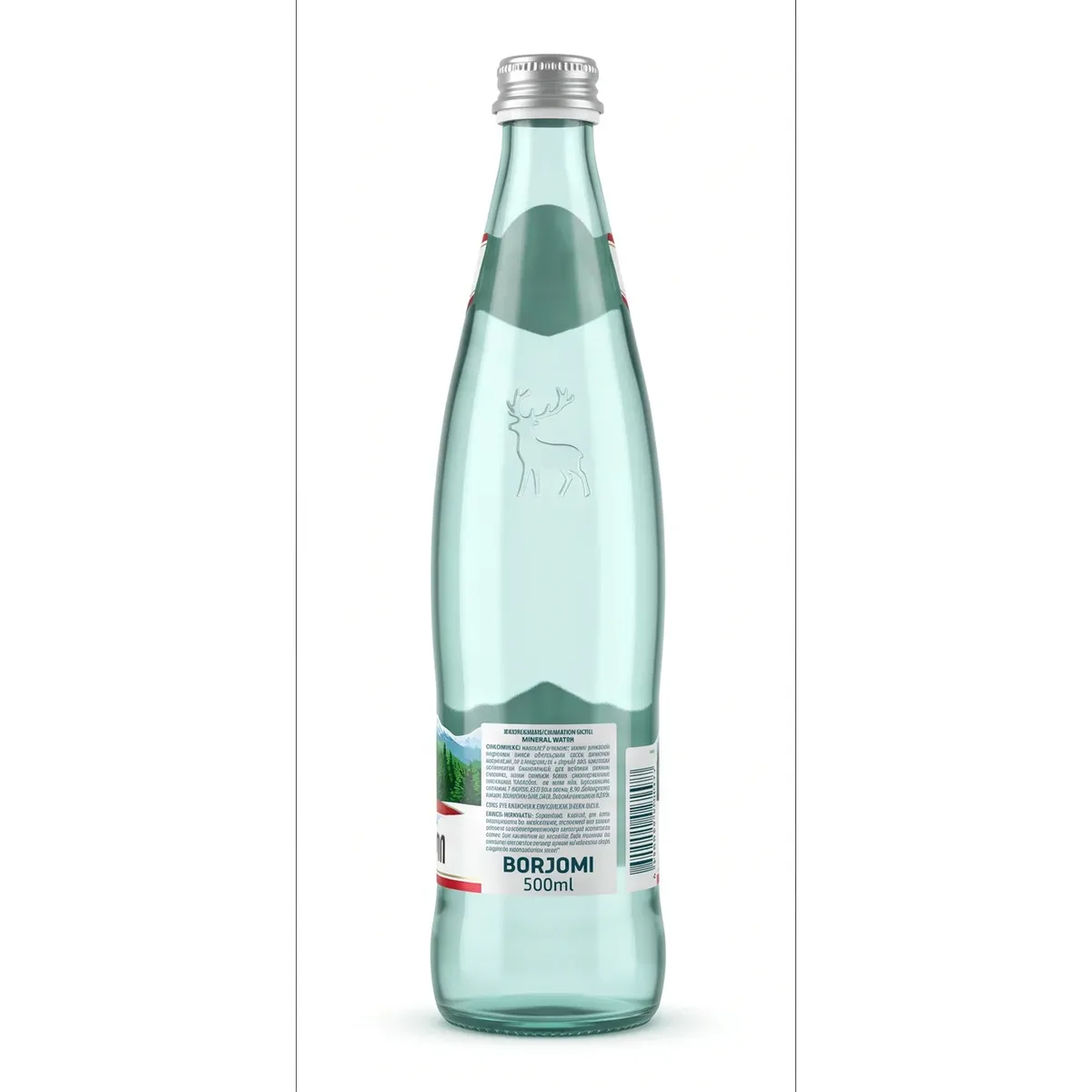
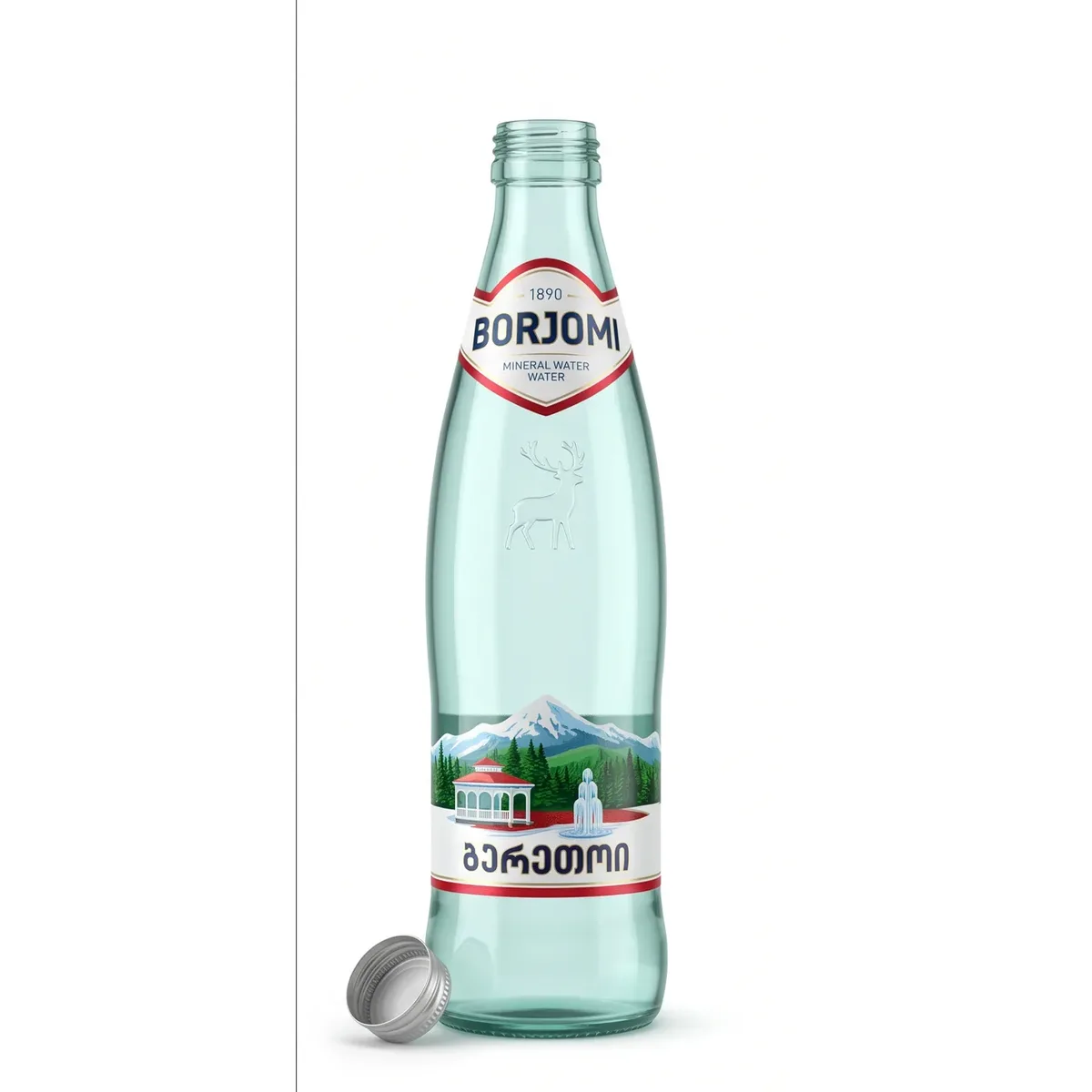
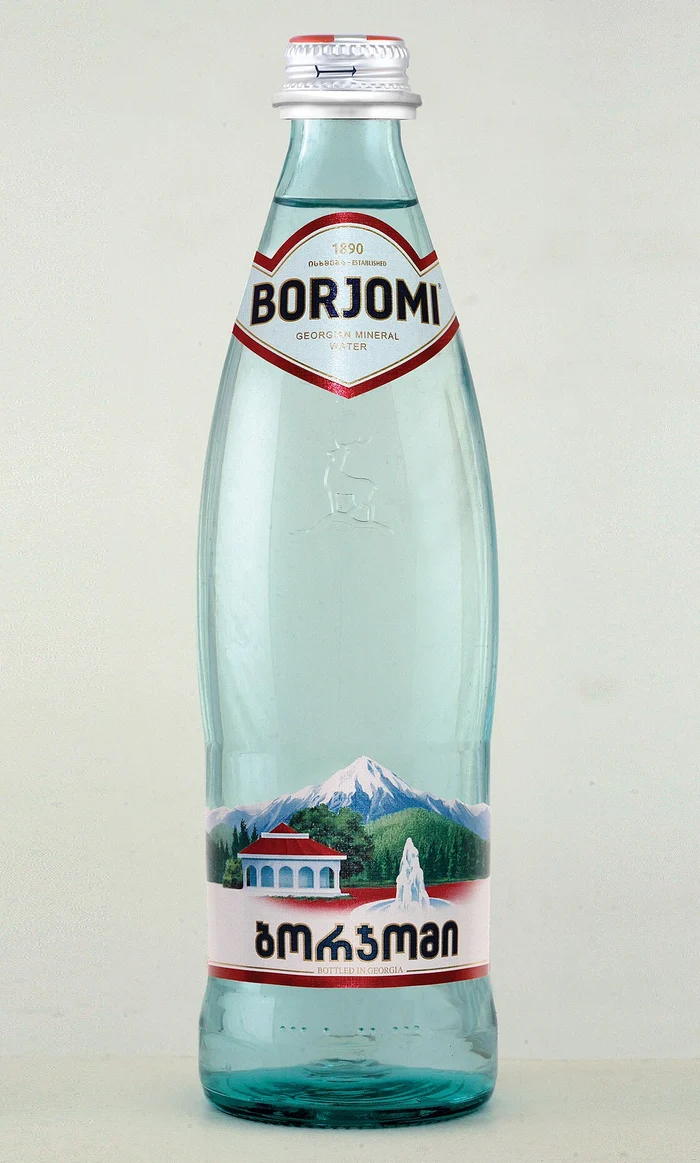
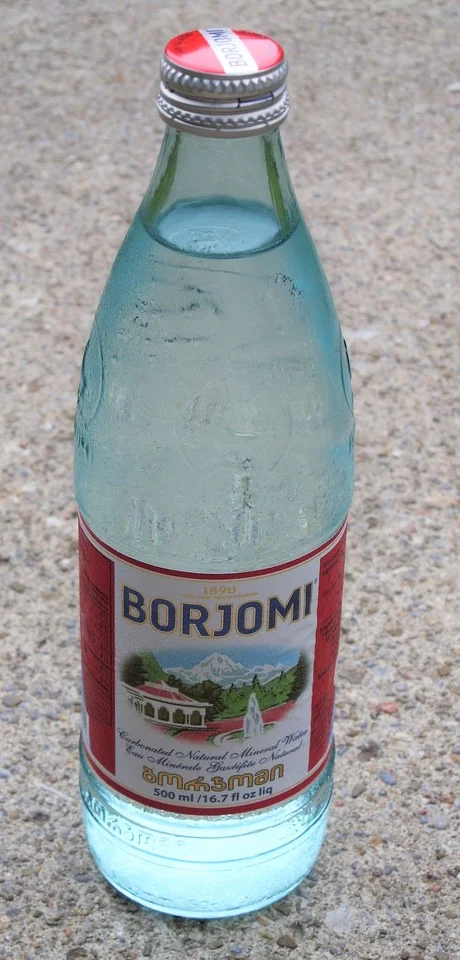
Borjomi is a naturally carbonated mineral water, warm and salty when it reaches the surface, rich in sodium bicarbonate and drawn from wells in the Borjomi gorge of central Georgia. It is sold in a tall pale-green glass bottle with a stag embossed on its shoulder, a neck label reading BORJOMI and a band showing the mountains above the town. It is drunk as a table water and used in treating disorders of digestion and metabolism.
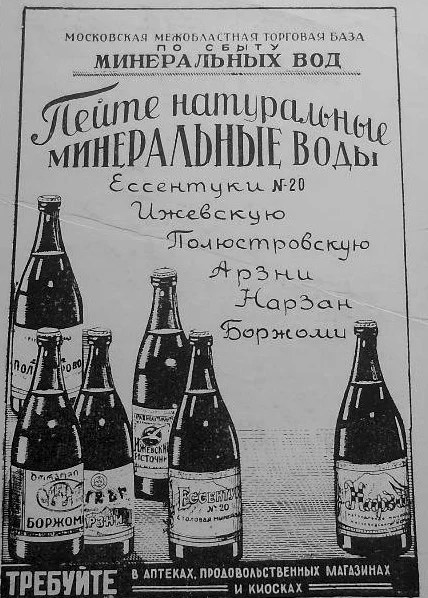
The springs were known in antiquity, then lost, and found again in 1829 by Russian soldiers stationed in the gorge. Their colonel, who suffered from his stomach, drank the water and had a bath house built. By the 1840s the viceroy of the Caucasus was bringing his daughter for treatment, and the first bottles went to Tbilisi in 1854. The maker counts its own history from 1890, when commercial bottling began on the estates of the imperial family.

Borjomi became the Russian Empire's Vichy, visited by Chekhov and Tchaikovsky, and its water left the gorge by rail after 1894. After 1921 the Soviet state took it over and made it one of the best-known names in the Union, drunk in the Kremlin and exported as far as the United States. Between 1927 and 1982 Soviet geologists drilled fifty-seven exploration wells in the gorge, some of them deeper than fourteen hundred metres.
The collapse of the Soviet Union cut output sharply, and the name was widely counterfeited in the 1990s. Private owners took over in 1995 and raised output forty-fold, and a Russian import ban between 2006 and 2013 forced the company to find other markets. Today Borjomi is drawn from nine wells, piped to two bottling plants in the town, and sold in about forty countries, still in a green bottle with the stag on its shoulder and 1890 on its neck.
Timeline
- 1890 First made · Disputed Borjomi enters production in Borjomi, Georgia.
- 1890 Commercial bottling under the Borjomi name, the year the maker counts from; 5,350 bottles are produced.
- 1921 Ownership After Soviet rule comes to Georgia the enterprise is nationalised.
- 1995 Ownership Georgian Glass and Mineral Water takes over bottling after a sharp fall in output.
Milestones as we found them, not as we've checked them.
From the archive

More like this
-
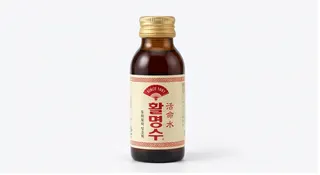 Tonics · since 1897 Hwalmyungsu A court officer's stomach remedy, sold in the same small brown bottle since 1897. Read the entry →
 -
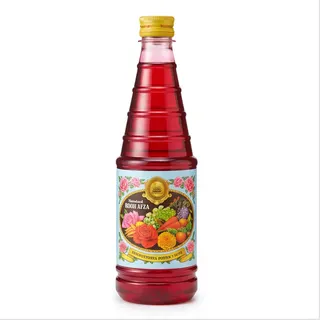 Tonics · since 1907 Rooh Afza An Old Delhi physician's cure for the summer wind, poured at iftar across three countries since 1907. Read the entry →
 -
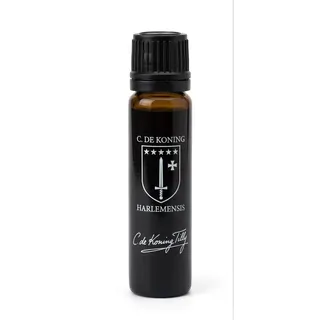 Tonics · since 1696 Oprechte Haarlemmerolie A Haarlem schoolmaster's drops of sulphur and terebinth, sold by his successors since 1696. Read the entry →
 -
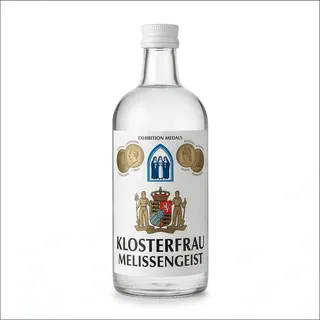 Tonics · since 1827 Klosterfrau Melissengeist A nun's herbal spirit from beside Cologne cathedral, sold under her name since 1827. Read the entry →