Stationery & Office · Writing · Pens
Tombow
Tombow MONO Eraser
Since 1969 · 57 years to 2026 · First made in Kanto, Japan
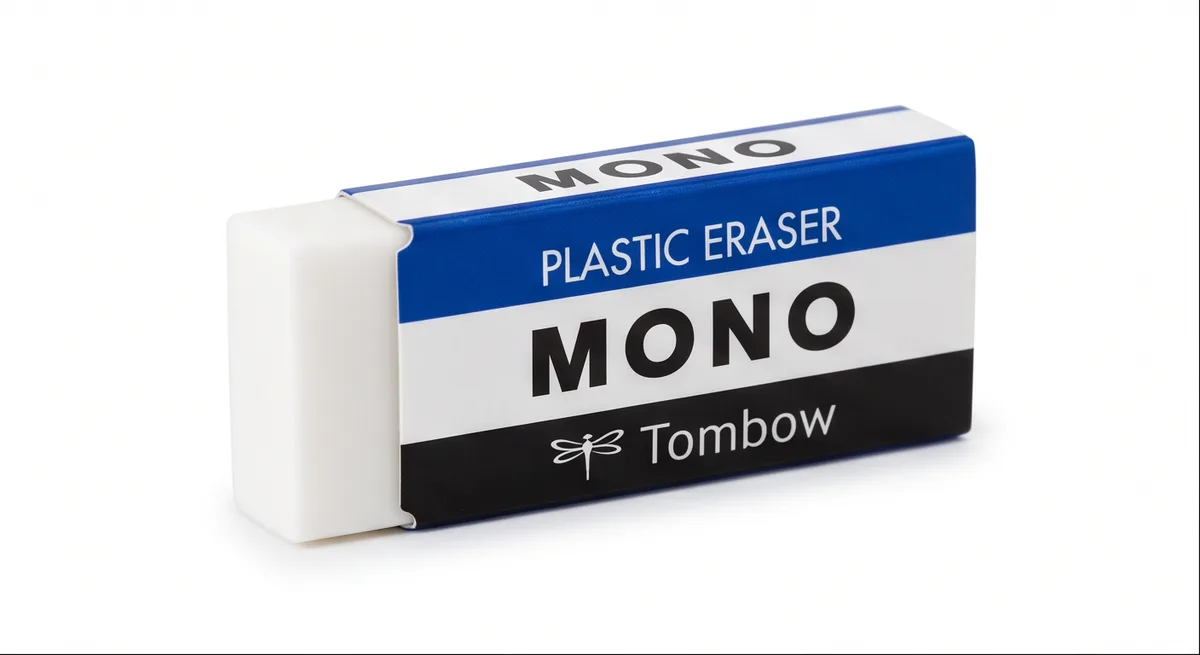
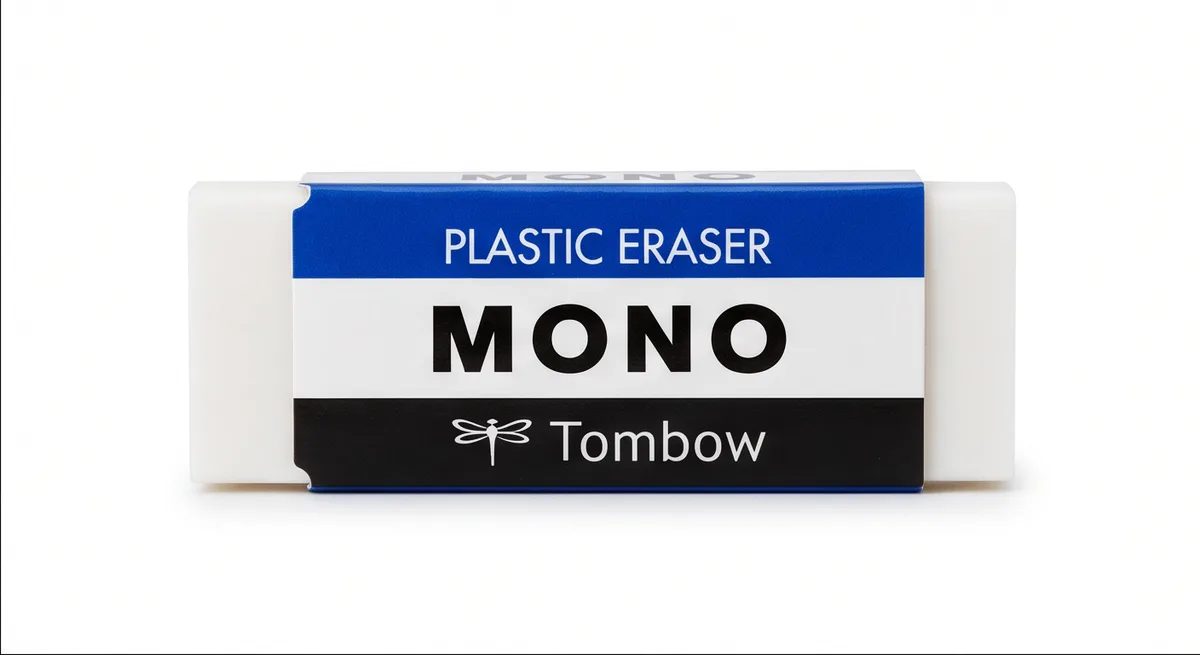
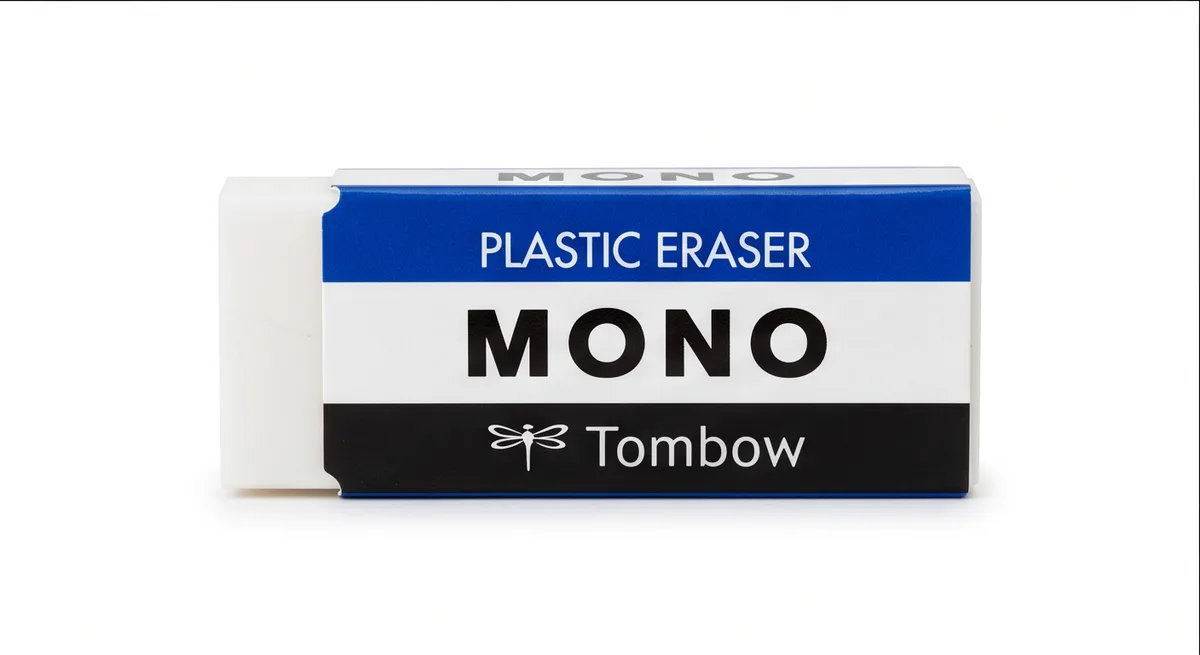
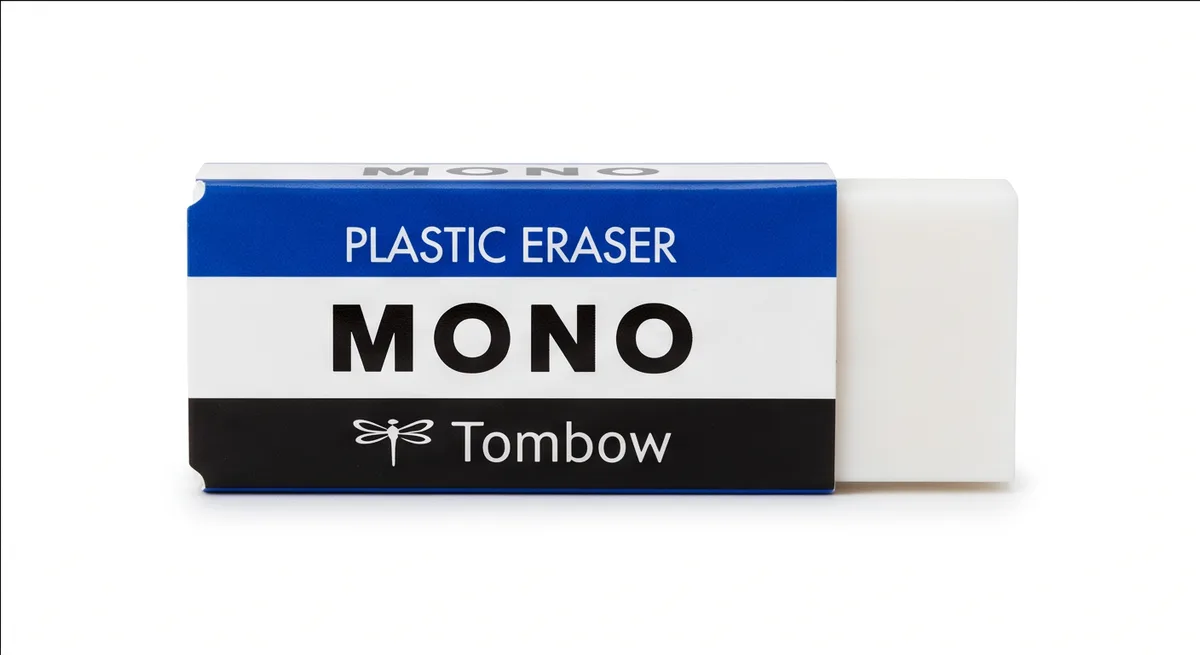
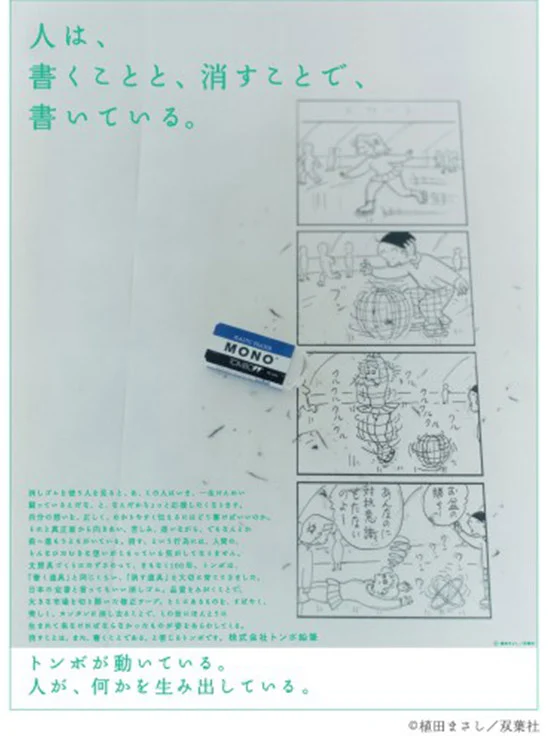
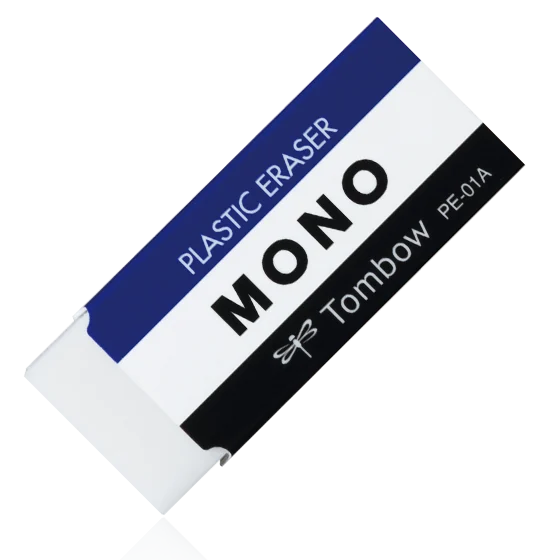
The MONO Eraser is a small white block of plastic eraser, a few centimetres long, held in a close-fitting paper sleeve printed in three bands of colour: blue, white and black. The word MONO runs across the white band in heavy capitals, PLASTIC ERASER across the blue, and the maker's name across the black. The eraser is pushed out of the sleeve as it wears down; the sleeve keeps the rest clean and stops it snapping.
It began as a free gift. Tombow, a Tokyo pencil maker founded in 1913, launched its MONO pencils in 1963, the name taken from the Greek for 'only' or 'unique'. In 1967 it added the MONO 100, a premium pencil for the company's 55th anniversary, and put a plastic eraser in every box of twelve to show how cleanly the lead could be rubbed out. Plastic erasers were then a novelty in Japan, where most were made of rubber. Customers asked to buy the eraser by itself, and in 1969 Tombow obliged.
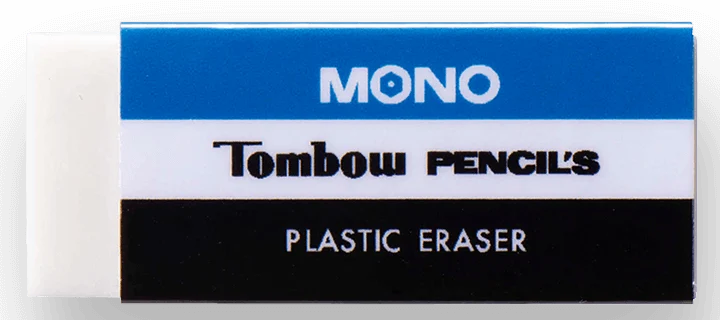
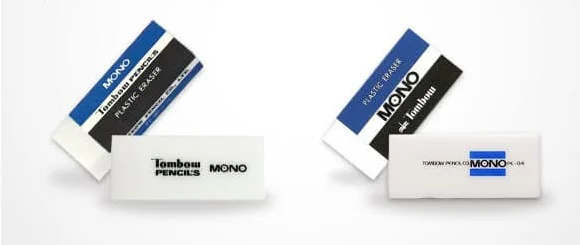
Tombow says the three stripes were chosen so that something so small would stand out on a shop counter, taking the idea from a tricolour flag. They have stayed while the lettering has moved: MONO first sat in the blue band, and took its central place around 1980. In 2017 the stripes became the first trademark in Japan registered for its colours alone, recognisable, the company notes, even on the plain sleeves it makes for examination halls, where printed words are not allowed.
What has changed since is mostly invisible. The corners of the sleeve were notched in 2005 to stop them cutting into the eraser, and the plasticiser was changed in 2018. The block still erases pencil and mechanical-pencil lines, and the standard eraser is made in five sizes. It received a Good Design Long Life Design Award in 2011, and Tombow now calls it, without much exaggeration, Japan's national eraser.
Timeline
- 1967 Designed A plastic eraser is packed, one to a dozen, with Tombow's new MONO 100 pencil to show how cleanly its lead erases.
- 1969 First made · Claimed Tombow MONO Eraser enters production in Kanto, Japan.
- 2011 Recognised The MONO Eraser receives a Good Design Long Life Design Award.
- 2017 Recognised The blue, white and black stripes are registered in Japan as a trademark consisting only of colours.
Milestones as we found them, not as we've checked them.
From the archive
More like this
-
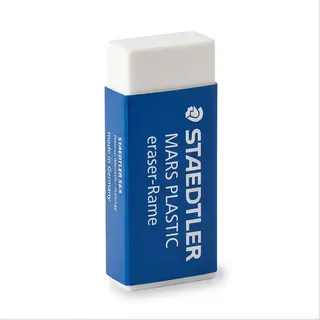 Pens · since 1967 Staedtler Mars Eraser Polymer eraser with minimal crumbling, continuously made since 1967. Read the entry →
 -
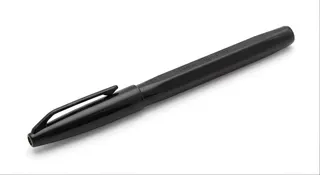 Pens · since 1963 Pentel Sign Pen The fibre-tipped pen that gave Japan the word 'sign pen', little changed since 1963. Read the entry →
 -
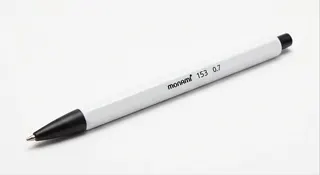 Pens · since 1963 Monami 153 South Korea's first ballpoint, a white hexagon priced in 1963 at the cost of a newspaper. Read the entry →
 -
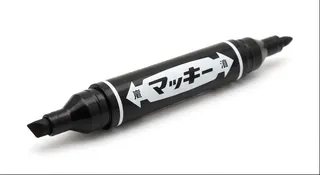 Pens · since 1976 Zebra Hi-Mckee Thick at one end, fine at the other: Zebra's two markers in one barrel, since 1976. Read the entry →