Sports & Leisure · Games & Toys · Games & Puzzles
Copag
Copag 139
Since 1923 · 103 years to 2026 · First made in São Paulo, Brazil
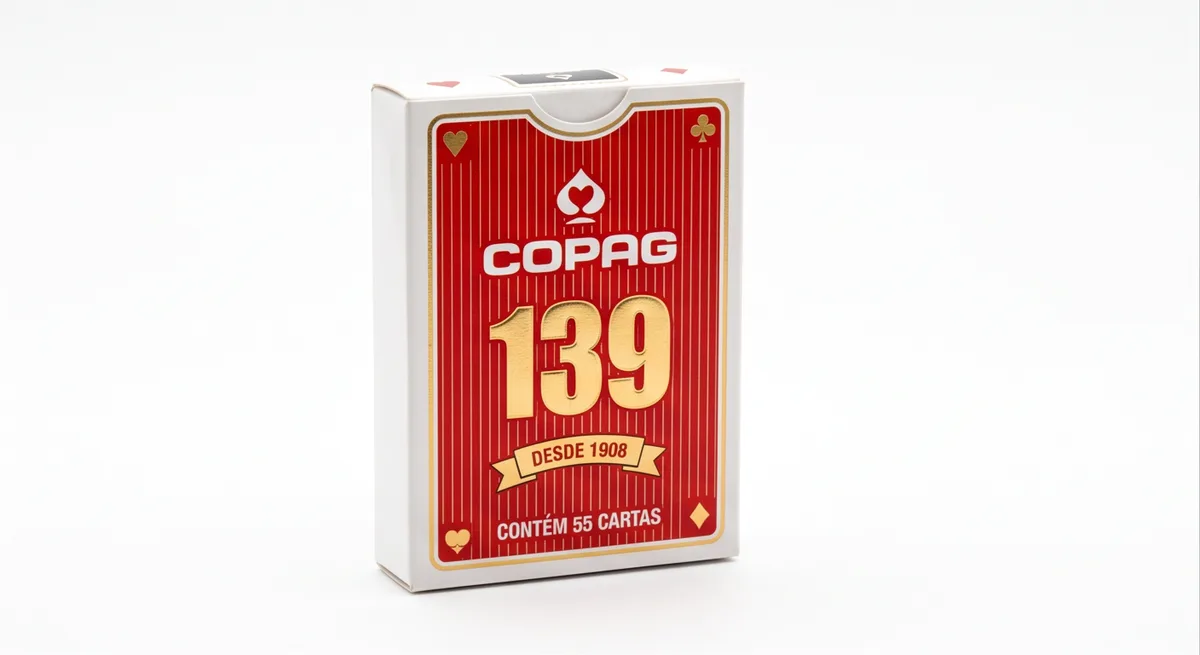
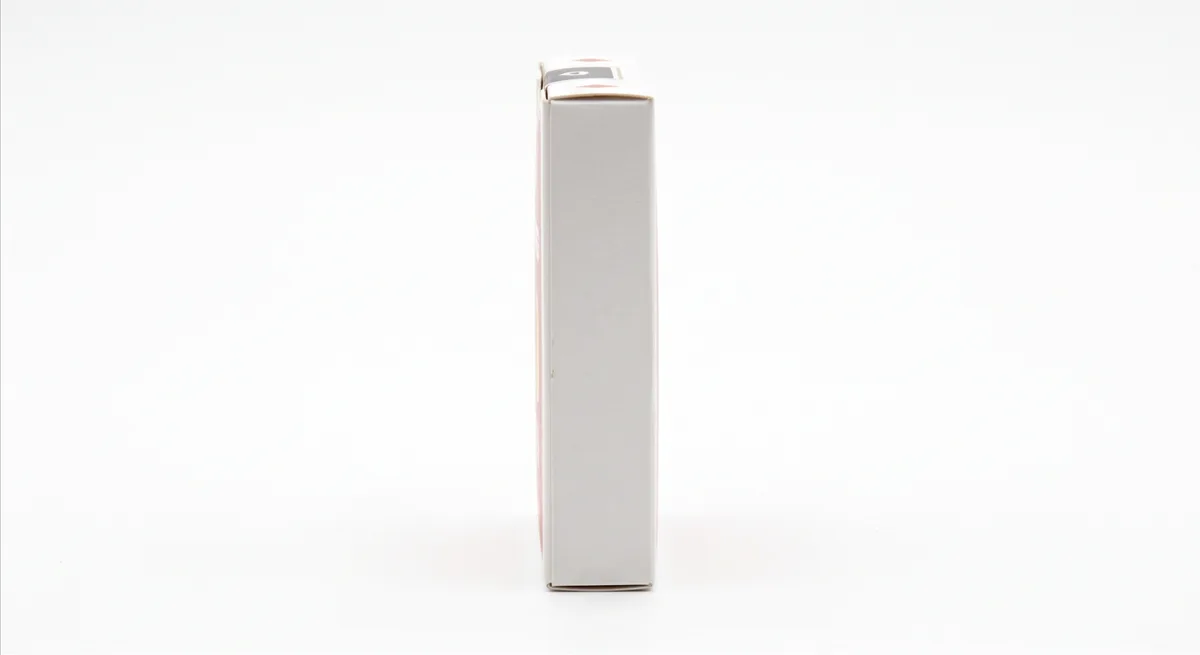
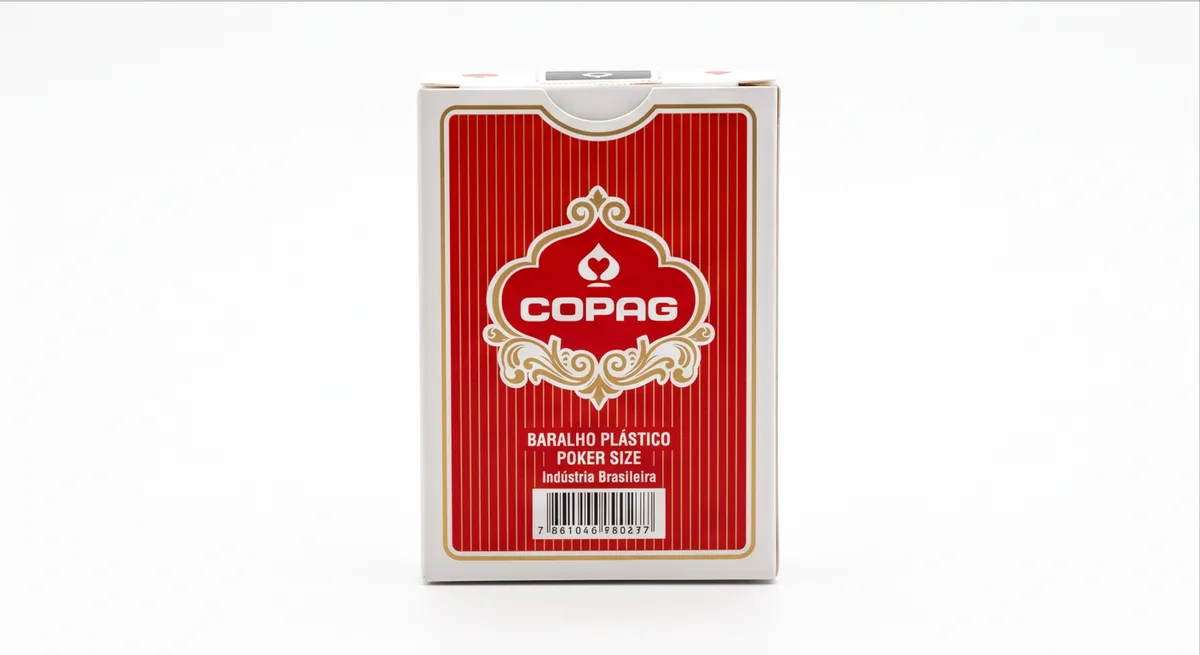
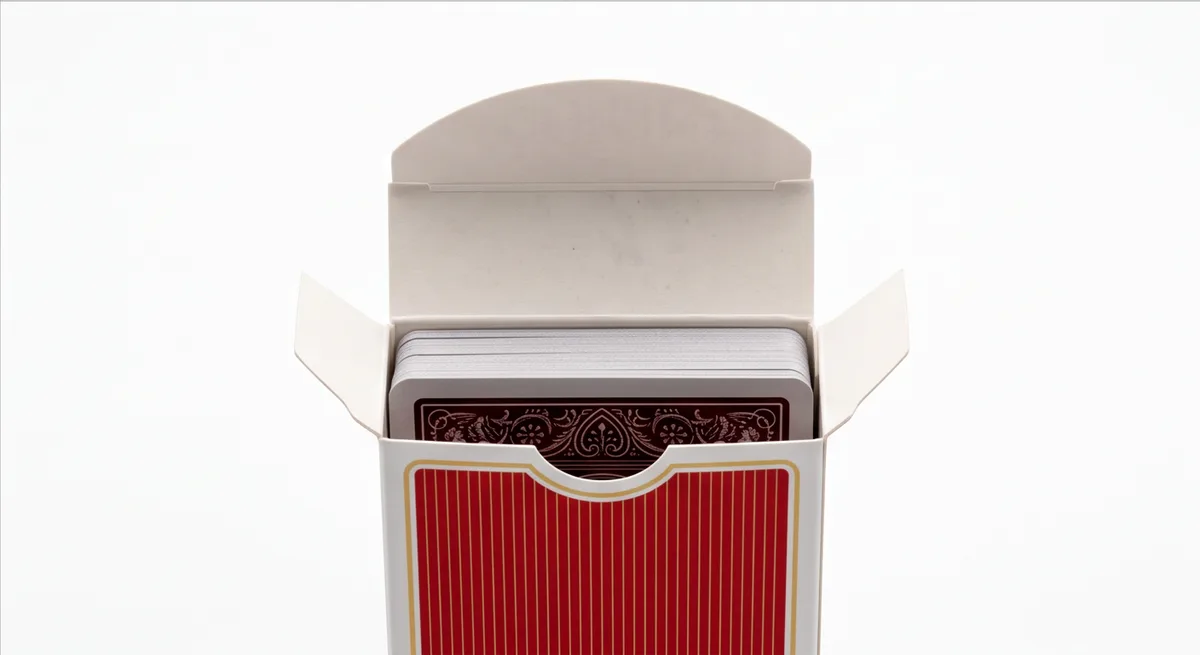
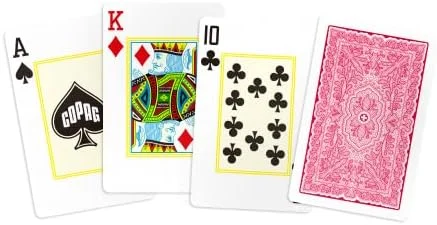
The Copag 139 is a pack of bridge-size playing cards, narrower than a poker deck, printed on coated card and sold in a slim tuck box in red or blue. Inside are the fifty-two French-suited cards and the jokers, fifty-five cards in all by the current box's count, and the ace of spades carries the Copag name in its centre. Portuguese Wikipedia describes the joker as a goblet framed in arabesques with a knight bearing a shield. It is offered with conventional indices or with large ones, on coated card of 290 grammes.
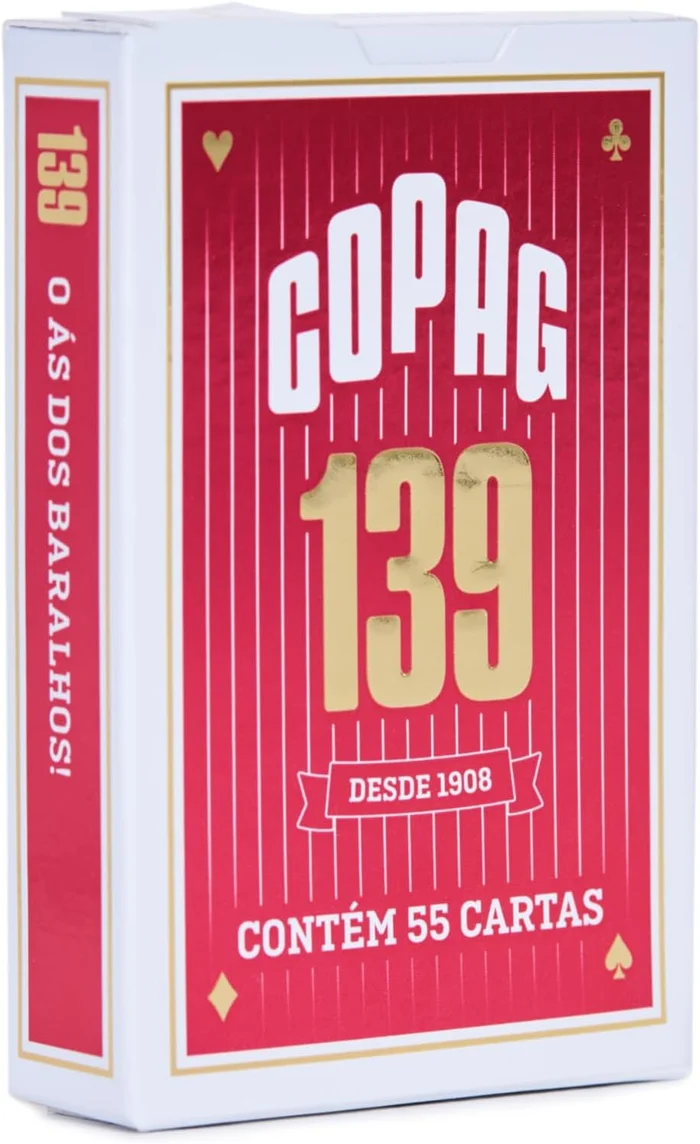
Its maker, the Companhia Paulista de Papéis e Artes Gráficas, began in São Paulo in 1908 as a stationer and importer, and started printing cards a decade later. Copag dates the 139 to 1923, and a centenary profile of the company in European Casinos gives the same year, along with an award won at a convention of card makers in London in 1954. No dated advertisement or catalogue has been found to confirm it, so the year rests on the maker.
Copag calls the 139 the favourite of Brazilians and a deck that brings generations together around a table, and the games its own guide to the deck explains are the national ones: truco, played to twelve points with three cards a hand, buraco and canastra, pife, cacheta and paciência, the Brazilian name for patience. In 2013 the company chose 13 September for its Dia do Baralho, a day for playing cards, because the date echoes the deck's number.
Much has changed around the deck. The factory moved from São Paulo to Manaus in the 1980s, Copag joined the Belgian card maker Cartamundi in 2005, and plastic poker decks and licensed games now share the catalogue. The boxes have been redesigned, and the current one carries a gold 139 under the motto "o ás dos baralhos", the ace of decks.
Timeline
- 1923 First made · Claimed Copag 139 enters production in São Paulo, Brazil.
- 1923 Copag introduces the 139 deck, by the company's account.
- 1954 Recognised The 139 wins its first award at a convention of playing-card makers in London, according to a 2008 company profile.
- 2013 Recognised Copag names 13 September Brazil's Dia do Baralho, after the deck's number.
Milestones as we found them, not as we've checked them.
More like this
-
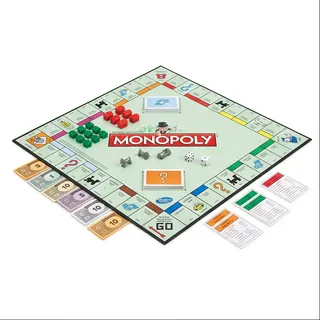 Games & Puzzles · since 1935 Monopoly The board game of capitalism, in continuous production since 1935. Read the entry →
 -
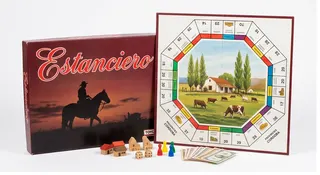 Games & Puzzles · since 1942 El Estanciero Argentina's own property game, sold since at least 1942 and still played for provinces, chacras and estancias. Read the entry →
 -
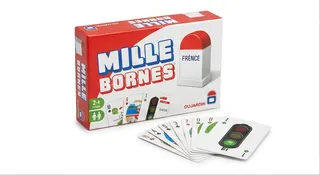 Games & Puzzles · since 1954 Mille Bornes A card race to a thousand kilometres, dealt in Arcachon since 1954. Read the entry →
 -
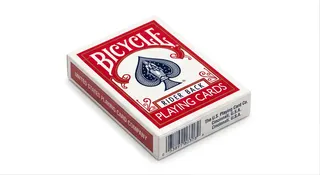 Games & Puzzles · since 1885 Bicycle Playing Cards The world's bestselling playing cards, continuously manufactured since 1885. Read the entry →