Sports & Leisure · Games & Toys · Games & Puzzles
Hasbro
Monopoly
Since 1935 · 91 years to 2026 · First made in Salem, Massachusetts
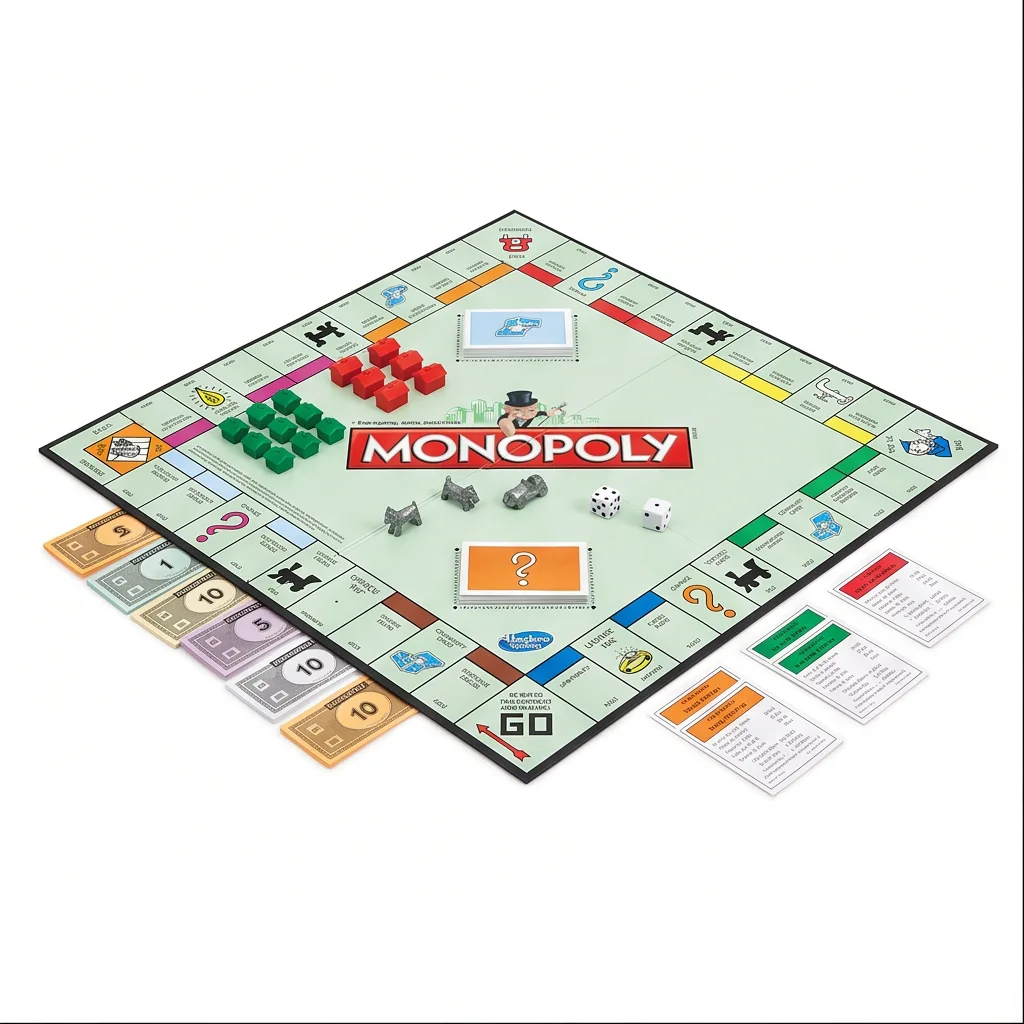
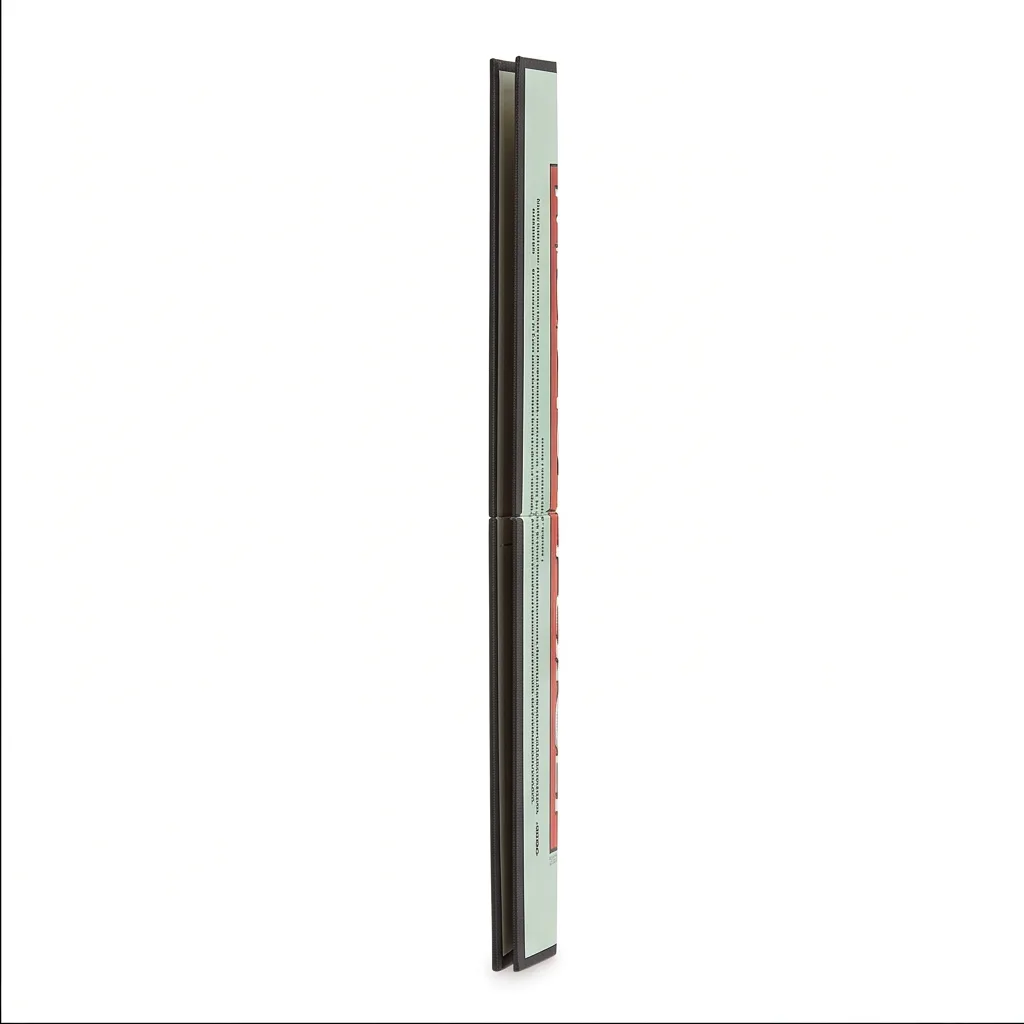
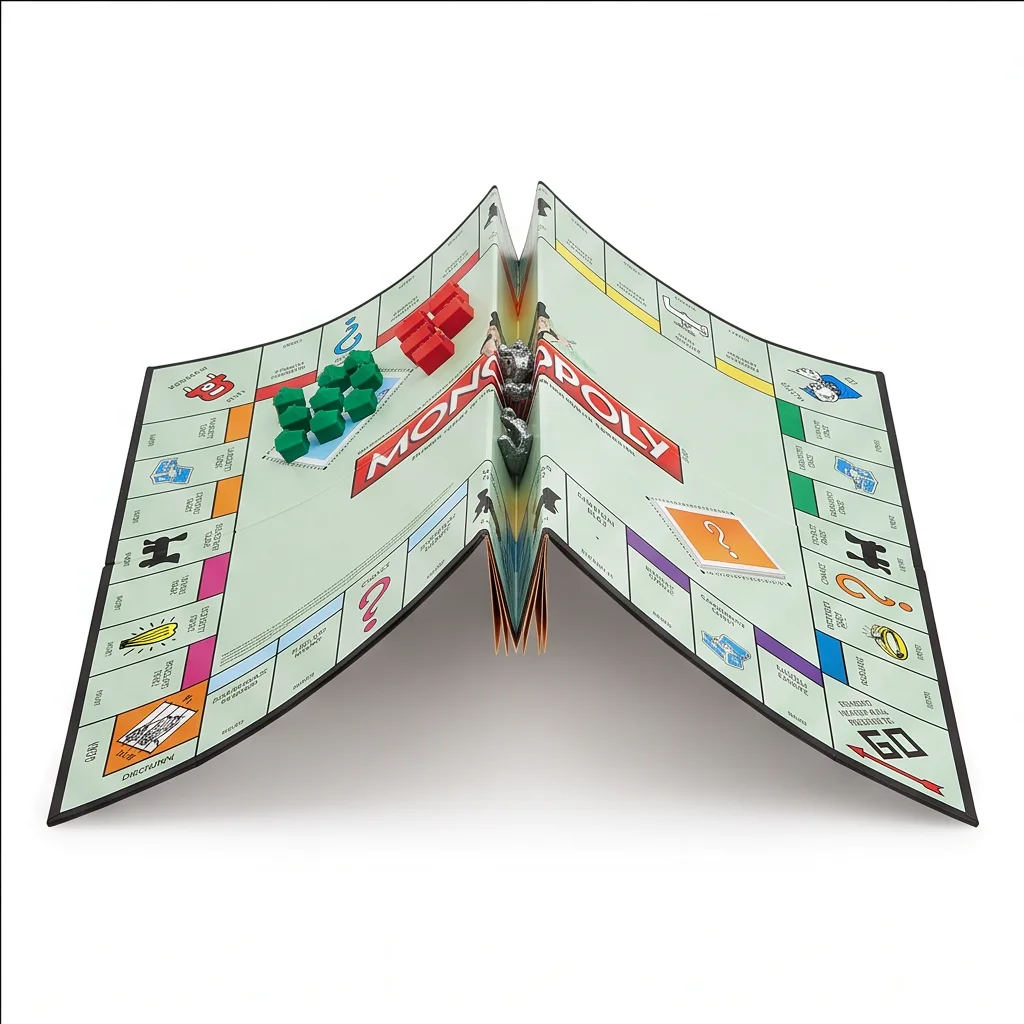
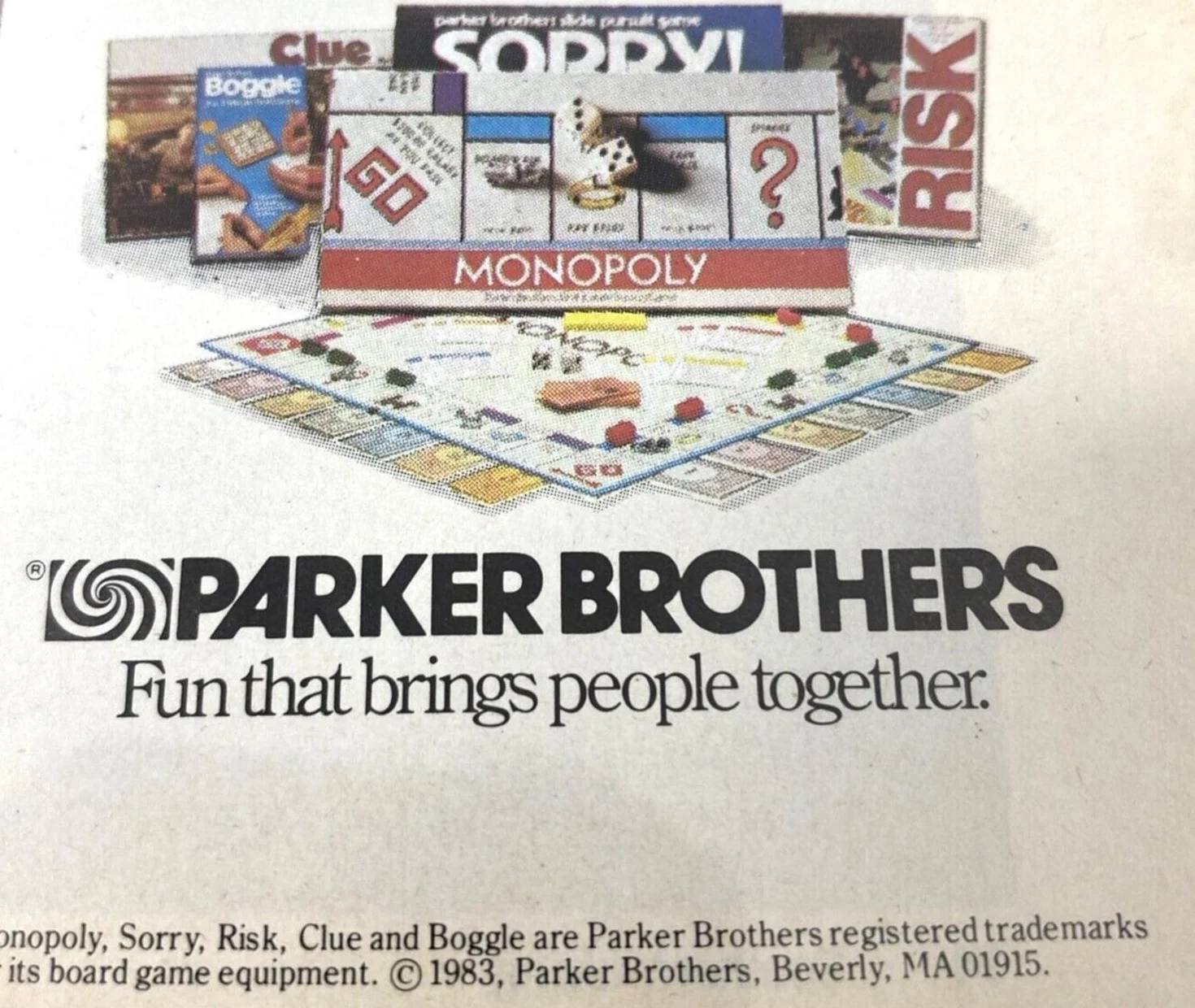
Monopoly is a property-trading board game in which players move around a square board, purchasing properties and collecting rent from opponents who land on their holdings. The game emerged from Charles Darrow's adaptation of Elizabeth Magie's 1904 educational game The Landlord's Game, which had been designed to illustrate Henry George's single-tax theory. Darrow's version, produced by hand during the Great Depression, introduced the now-familiar mechanics of building houses and hotels to raise rents and the goal of driving opponents into bankruptcy. Parker Brothers purchased the rights in 1935 and began commercial manufacture, transforming a homemade curiosity into a mass-market phenomenon.
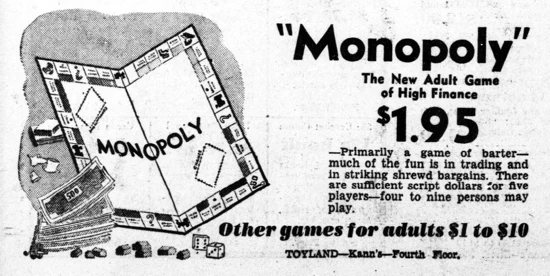
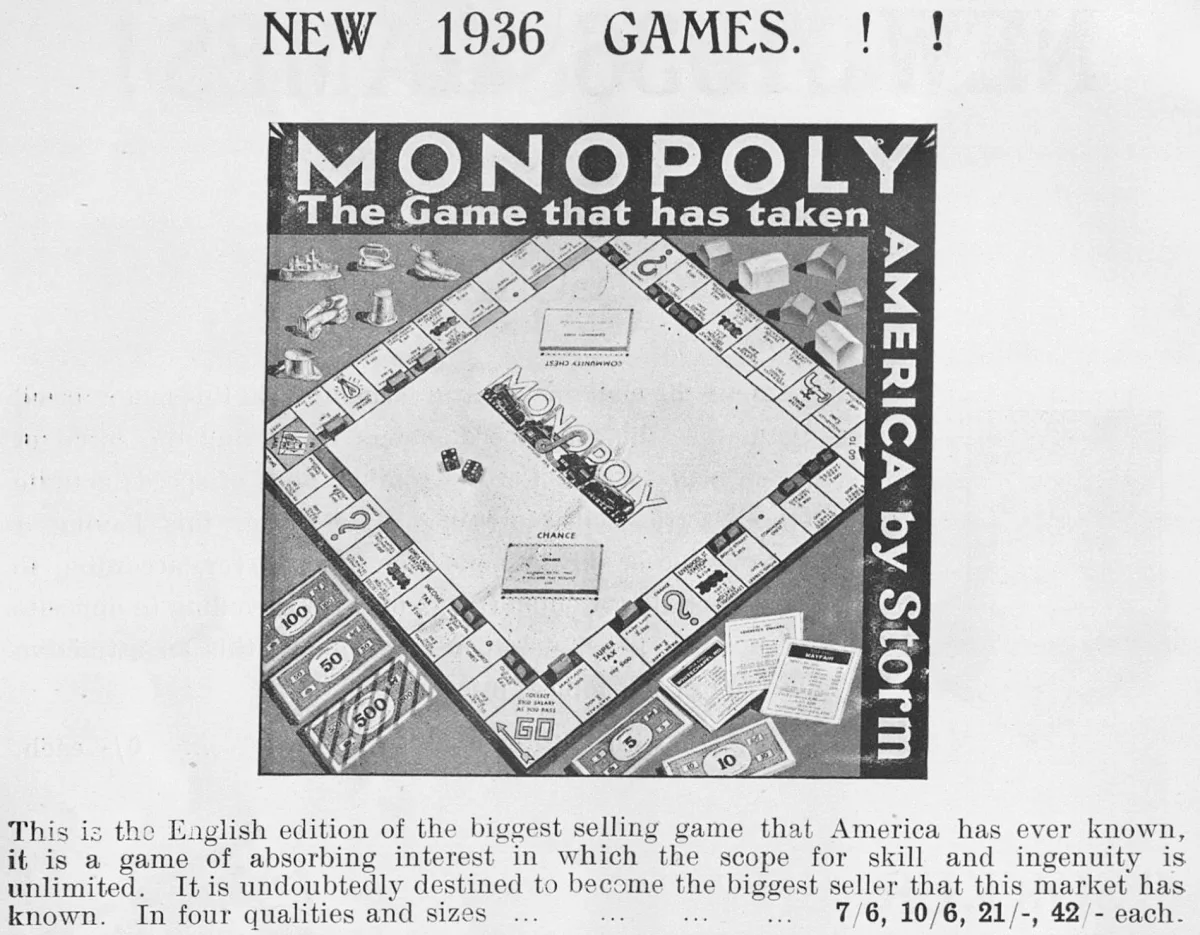
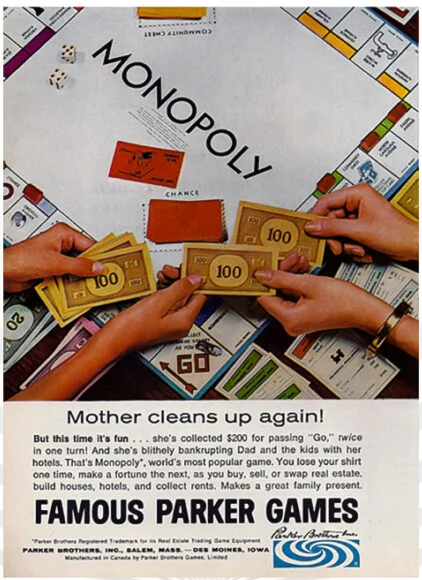
The game's design has remained fundamentally consistent across nine decades. The board displays forty spaces representing properties, railroads, utilities, and special squares such as Free Parking and Go to Jail. Players use tokens—originally metal, later plastic—and move according to dice rolls. The iconic visual elements established in Darrow's original design persist: the red arrow marking Go, black locomotives on railroad spaces, and question marks on Chance cards. Property deeds, Community Chest and Chance cards, and play money complete the standard set. Material and production methods have evolved with manufacturing technology and wartime constraints, but the core gameplay and board layout have endured without fundamental alteration.
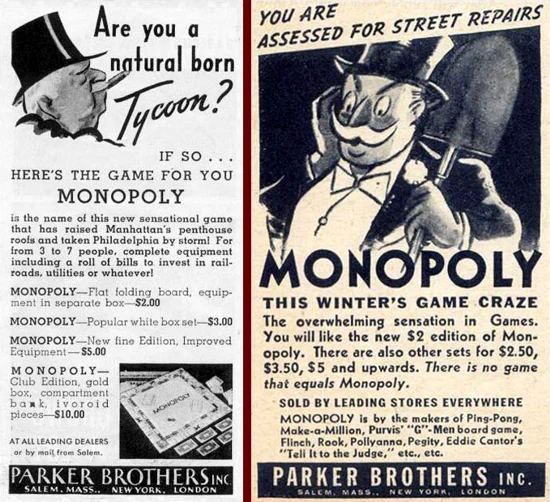
Monopoly's cultural penetration is extraordinary. By 2010, over 250 million sets had been sold worldwide, and the game had been played by more than half a billion people. It has been translated into 37 languages and adapted for 103 countries, with localized editions featuring regional properties and currencies. The game became a vehicle for competitive play, marathon sessions, and experimental variations—played on ceilings, underwater, and on oversized boards. During World War II, soldiers played the game in camps, and it became part of the product's marketing. The game's association with capitalism, wealth accumulation, and competitive strategy has made it a cultural touchstone, referenced in literature, film, and social commentary. Its longevity reflects both the elegance of its core mechanics and its capacity to absorb cultural meaning across generations and geographies.
Timeline
- 1904 Designed Elizabeth Magie designs The Landlord's Game as an educational board game.
- 1935 First made · Verified Monopoly enters production in Salem, Massachusetts.
- 1935 Designed Charles Darrow's patent for Monopoly is formally granted.
- 1968 Ownership General Mills acquires Parker Brothers.
- 1987 Ownership Tonka acquires Kenner Parker Toys.
- 1991 Ownership Hasbro acquires Tonka.
- 1994 Released USAopoly begins producing licensed editions of Monopoly.
Milestone dates are taken from the production notes behind this entry and have not been checked separately.
From the archive
More like this
-
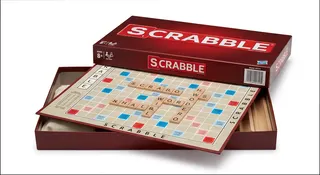 Games & Puzzles · since 1948 Scrabble Word game trademarked 1948, continuously manufactured for over 75 years. Read the entry →
 -
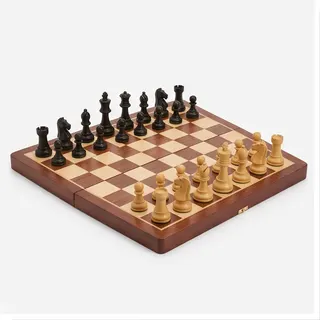 Games & Puzzles · since 1849 Jaques Chess Set The standard chess set design, unchanged since 1849. Read the entry →
 -
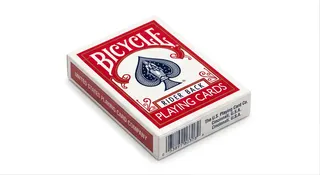 Games & Puzzles · since 1885 Bicycle Playing Cards The world's bestselling playing cards, continuously manufactured since 1885. Read the entry →
 -
 Shoes · since 1935 Sperry Top-Sider The first non-slip boat shoe, designed 1935. Read the entry →