Kartell
Kartell Componibili
Since 1969 · 57 years to 2026 · First made in Binasco, Italy
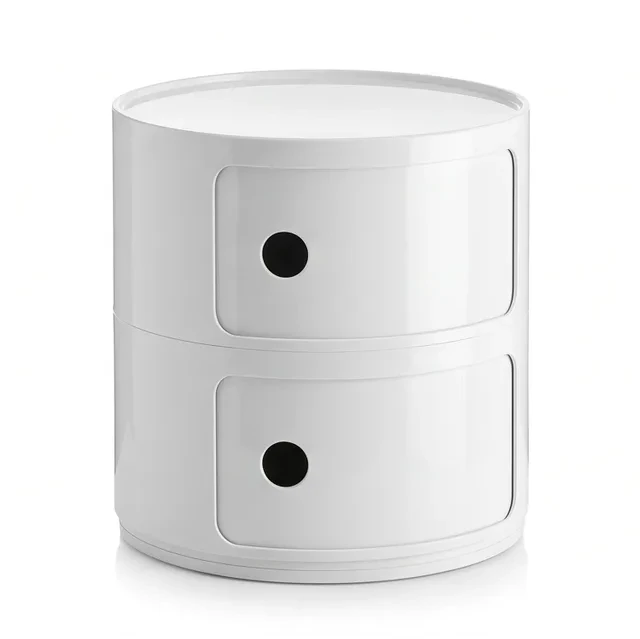
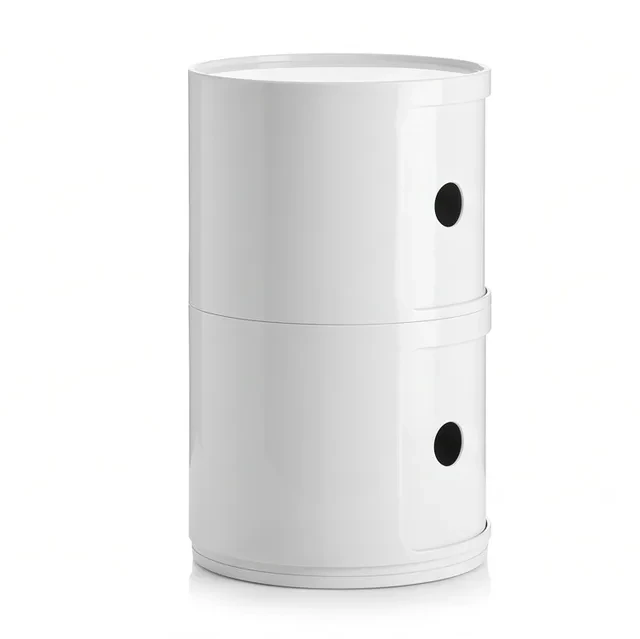
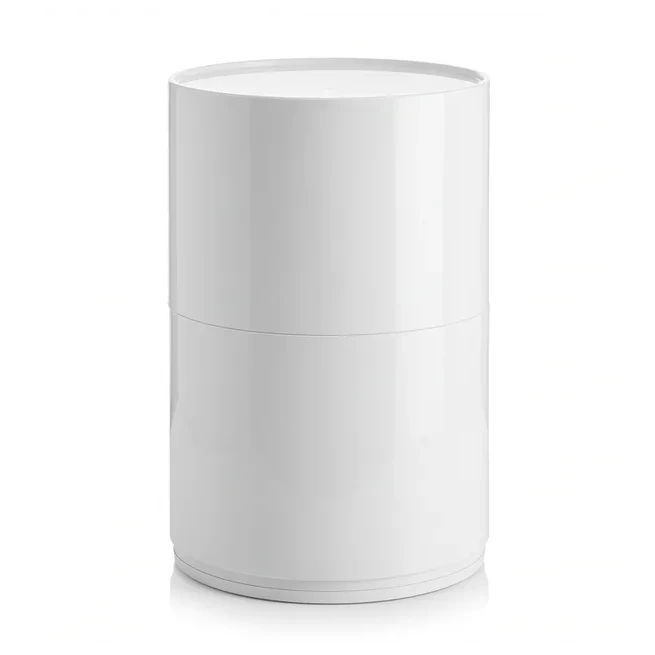
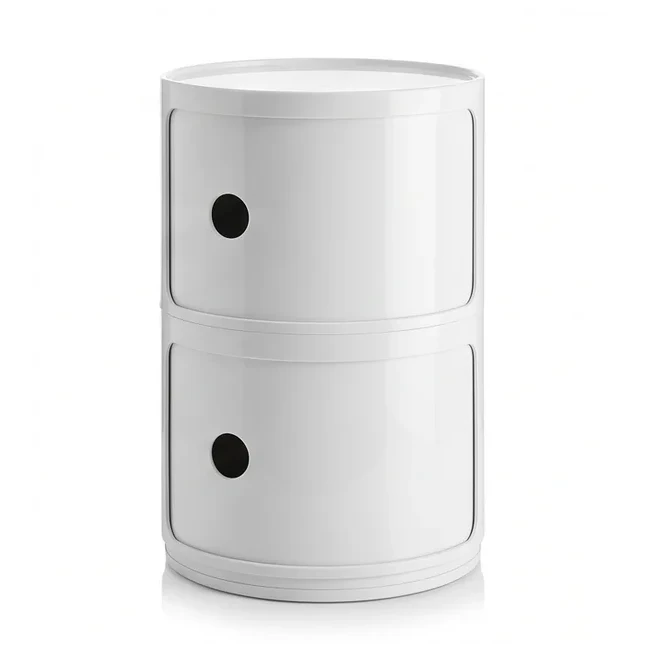
The Componibili is a storage cylinder of glossy moulded plastic, made to be stacked. Each round element is a short drum with a curved door that slides around its side, opened not by a handle but by a single round hole for a finger; the elements lock one on another without screws, and a stack is finished with a shallow lid that doubles as a tray. Castors can be fitted beneath, and an open element without a door serves as a shelf.
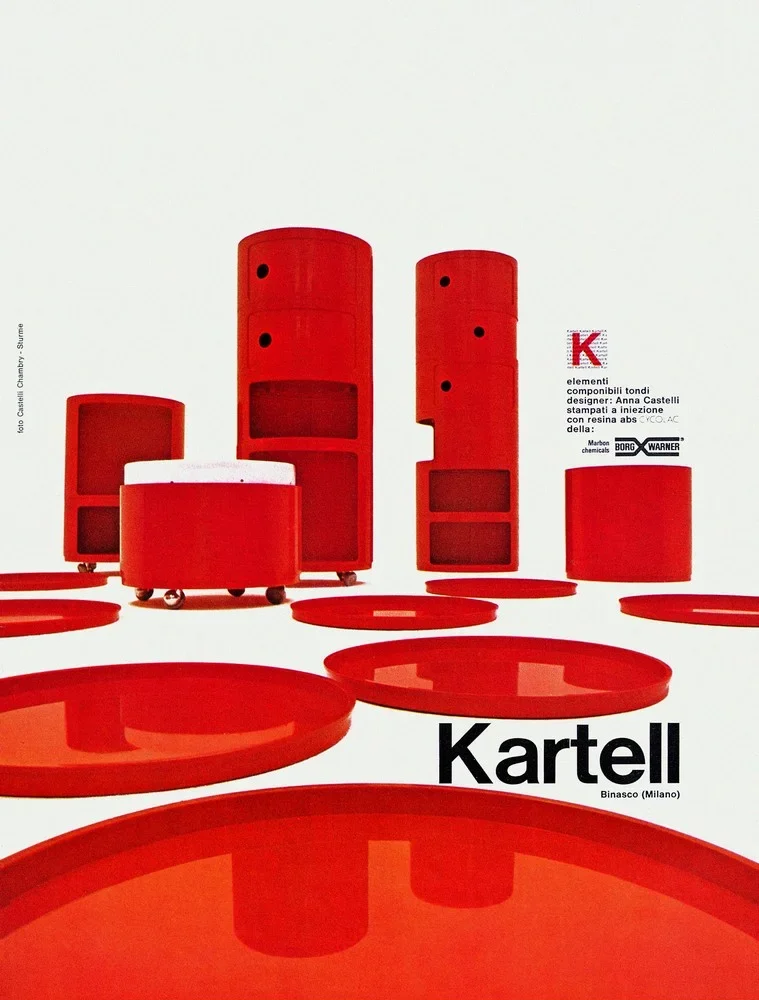
It was designed by Anna Castelli Ferrieri, an architect who had founded Kartell with her husband Giulio Castelli in 1949 and became its leading designer. Her first storage elements, shown in Milan in 1967, were square. The round version followed in 1969, and it is the round one that became the emblem of the company: it appeared in the Museum of Modern Art's survey of Italian design in 1972, and it is in the collections of MoMA and the Centre Pompidou today.
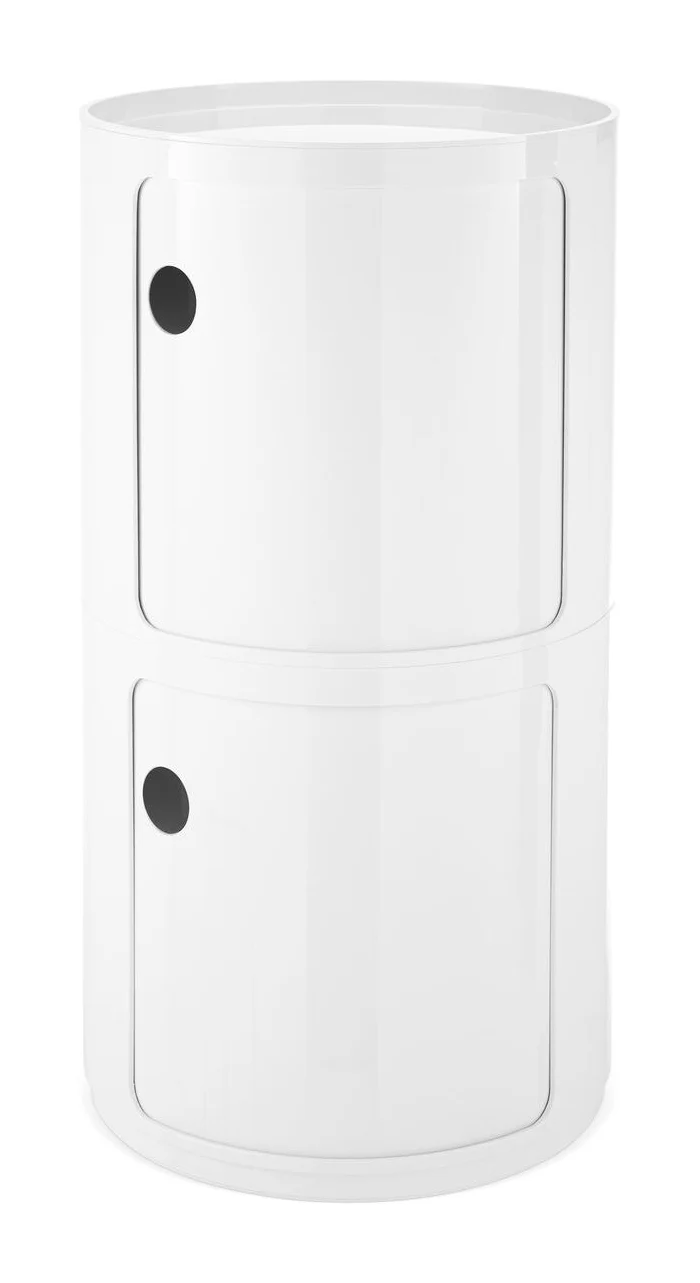
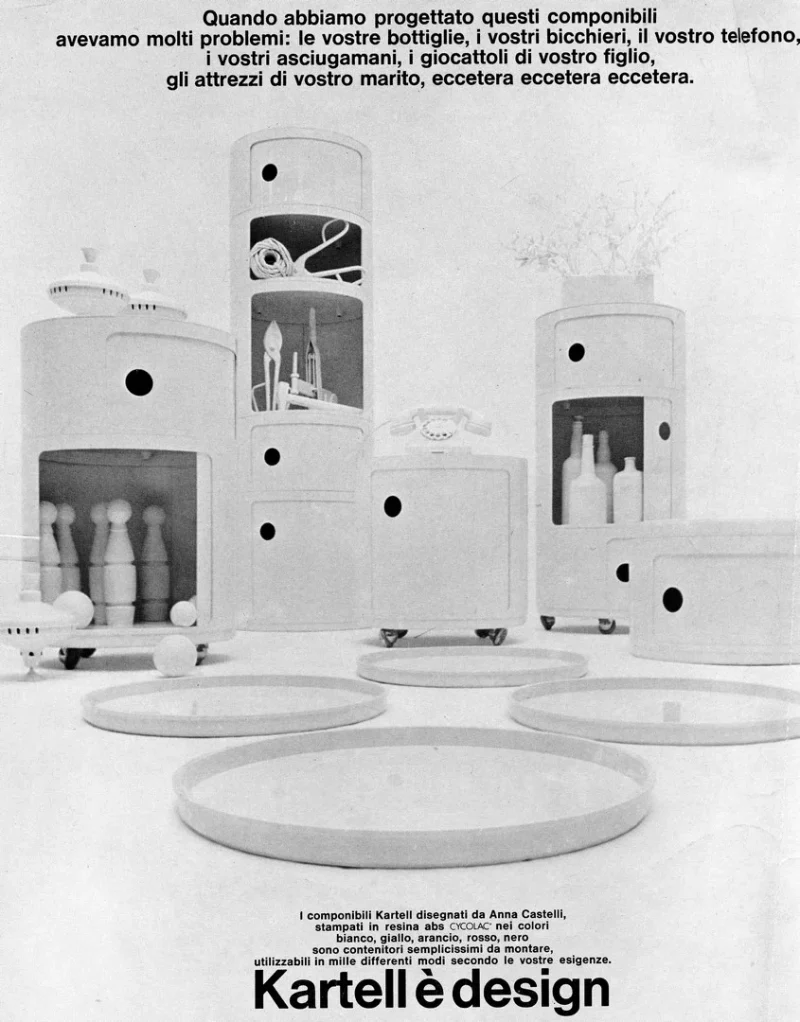
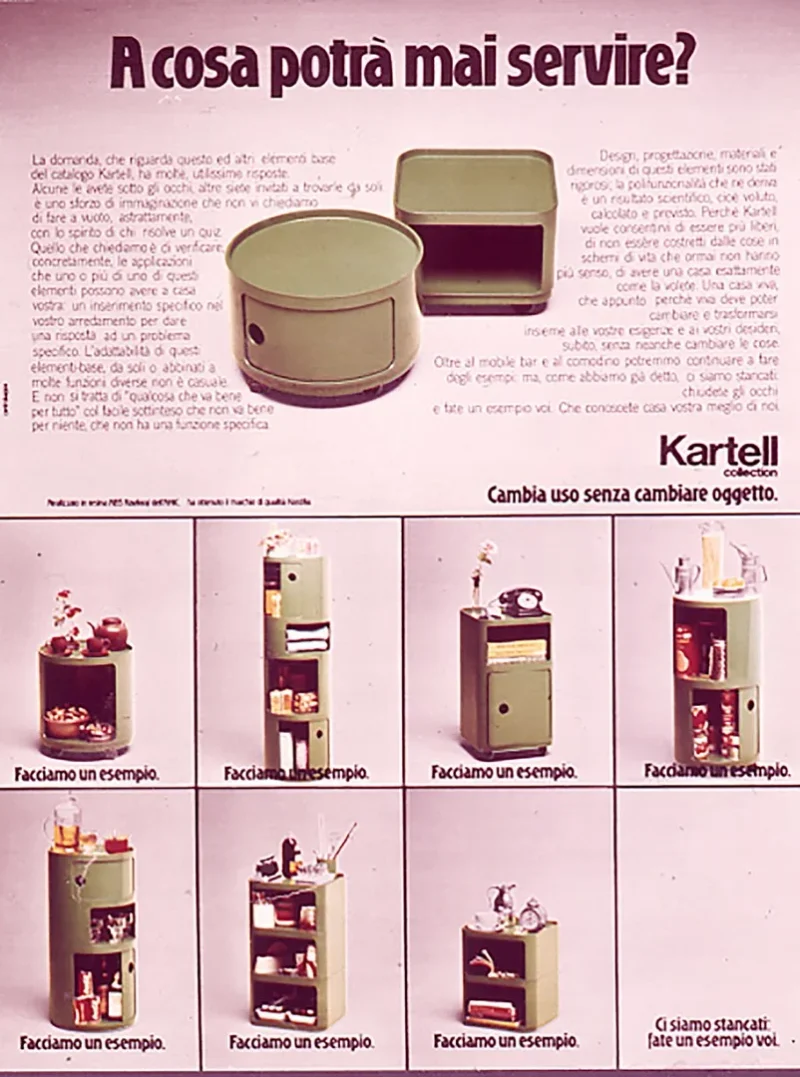
The Componibili belongs to the years when plastic in the home still meant modernity. Kartell's advertisements of the period, from its works at Binasco near Milan, made a point of the material, ABS resin moulded by injection, and of the freedom it gave: a bedside table, a drinks cabinet, a tower of shelves, all from the same few parts. One asked simply what it could ever be for, and answered with eight arrangements of its own.
Kartell has made it ever since. A smaller version 32 cm across is now sold in fixed stacks that cannot be taken apart, and there have been metal finishes, a bioplastic and versions by guest designers for its fiftieth year. The round element in its original size, 42 cm across and still separable, is sold as the Componibili Classic Big, and it is the same drum with the same sliding door and finger hole that Castelli Ferrieri drew.
Timeline
- 1969 First made · Claimed Kartell Componibili enters production in Binasco, Italy.
- 1972 Recognised The Componibili are shown in Italy: The New Domestic Landscape at the Museum of Modern Art in New York.
- 2019 Kartell adds a version moulded from a biopolymer made from agricultural raw materials, alongside the ABS units.
Milestones as we found them, not as we've checked them.
From the archive
More like this
-
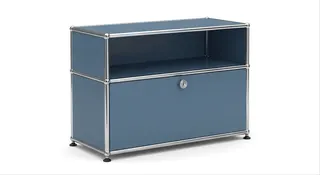 Shelving & Storage · since 1969 USM Haller A frame of chromed tubes and steel balls, designed for a Swiss factory's own offices and made to order since 1969.
-
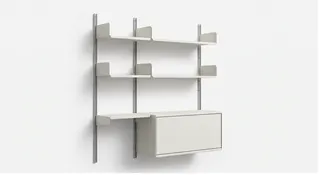 Shelving & Storage · since 1960 Vitsoe 606 Universal Shelving System Dieter Rams's shelving of 1960, a kit of parts still made by the company founded to make it.
-
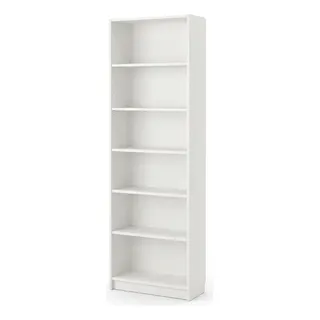 Shelving & Storage · since 1979 IKEA Billy Bookcase The 202-centimetre bookcase that IKEA has sold since 1979, now one every few seconds.
-
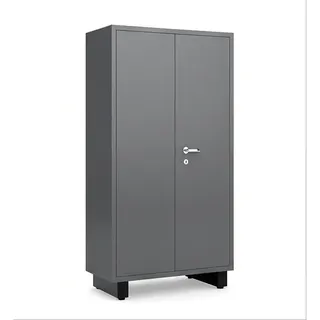 Shelving & Storage · since 1923 Godrej Storwel The steel almirah Godrej began making in Bombay in 1923, still the cupboard where a household keeps what matters.