Kitchen & Dining · Dining & Drinks · Tableware & Glassware
Imperial Porcelain Factory (Lomonosov)
Lomonosov Cobalt Net Teacup
Since 1944 · 82 years to 2026 · First made in Nevsky District, Russia
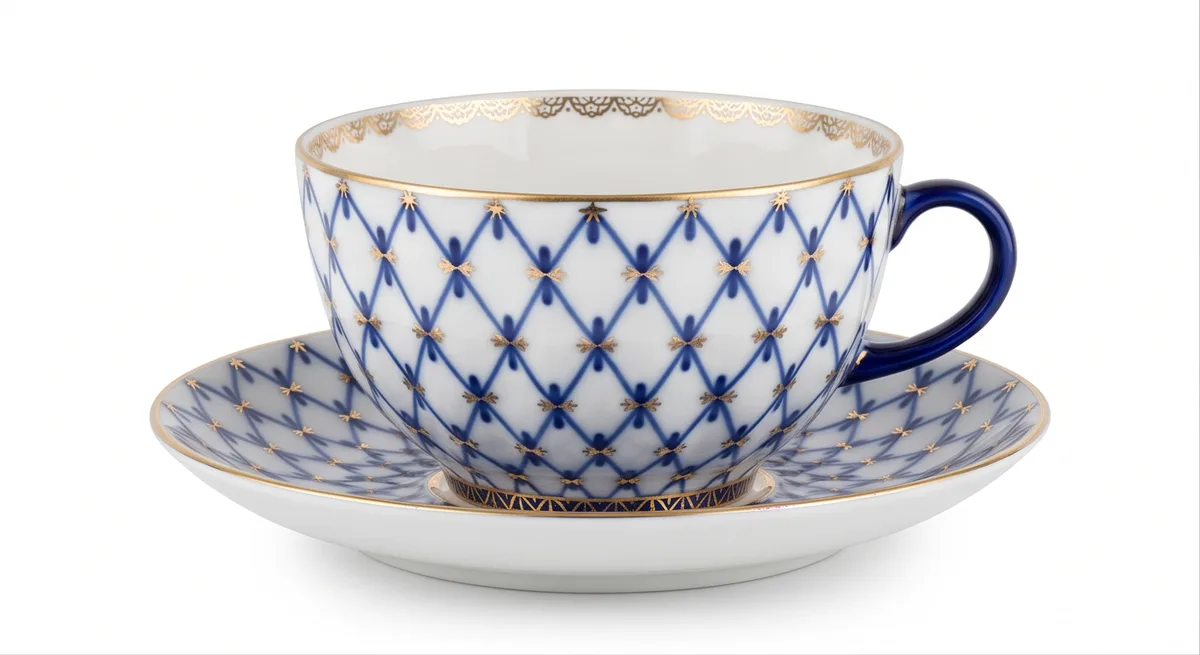
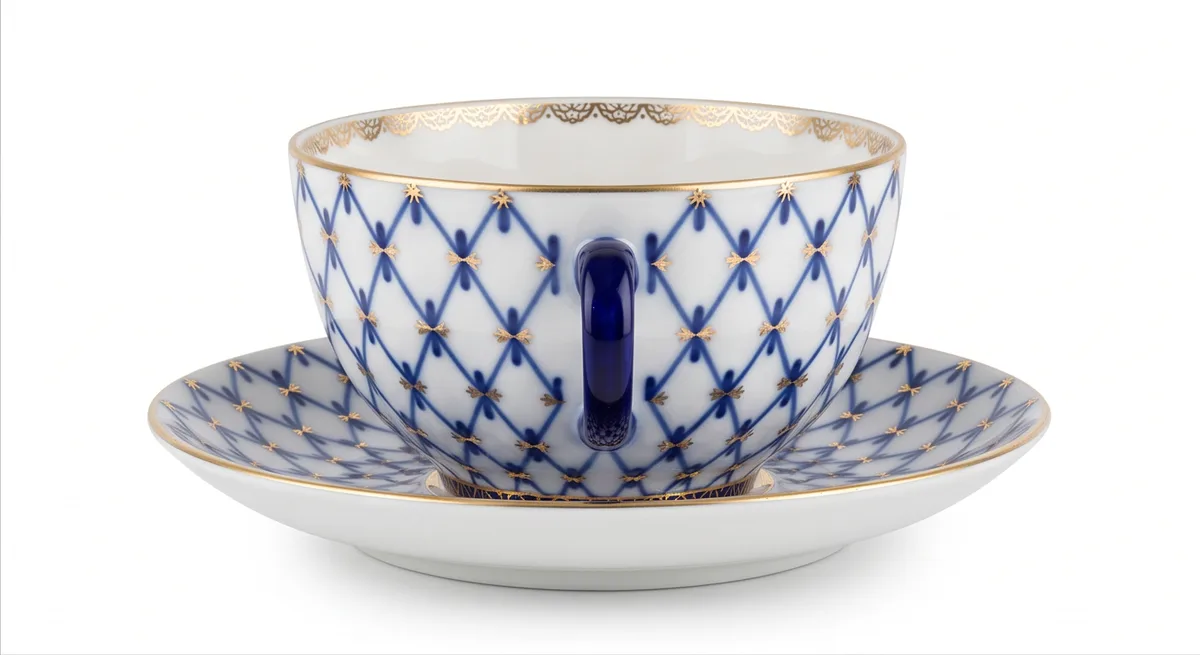
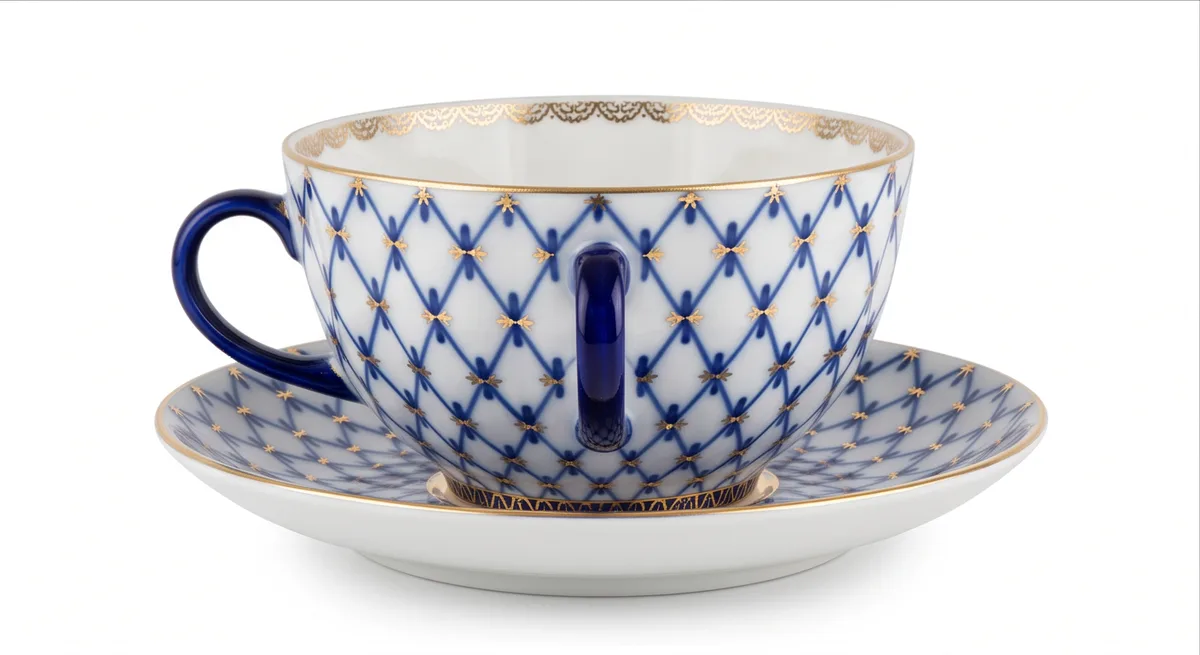
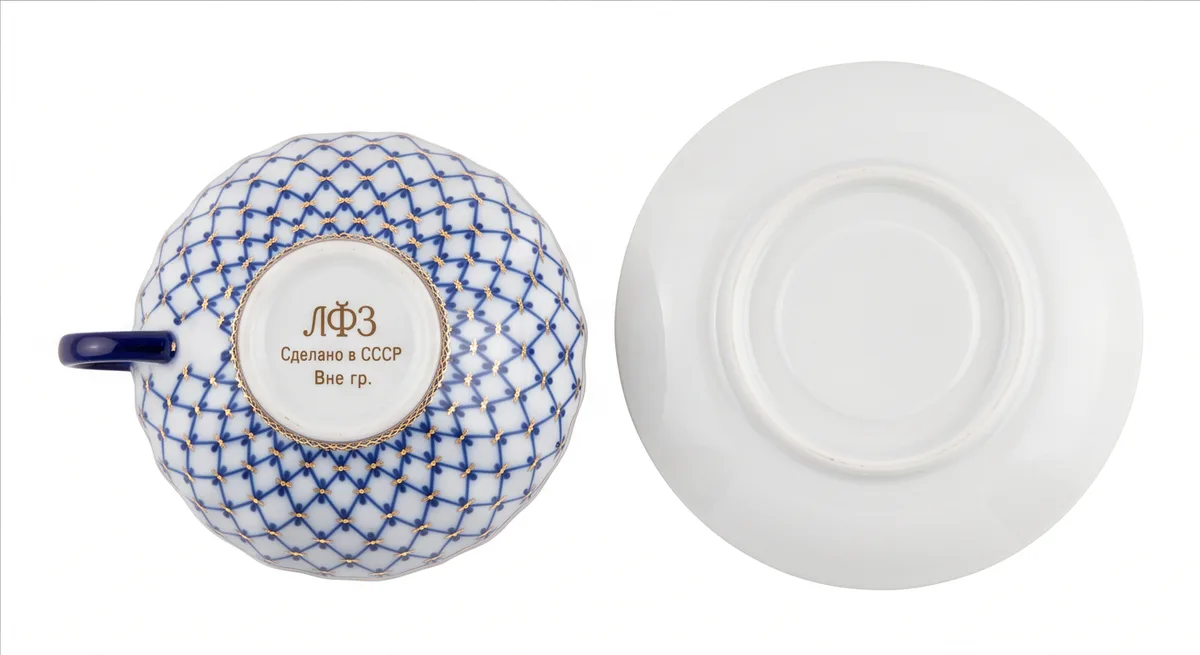
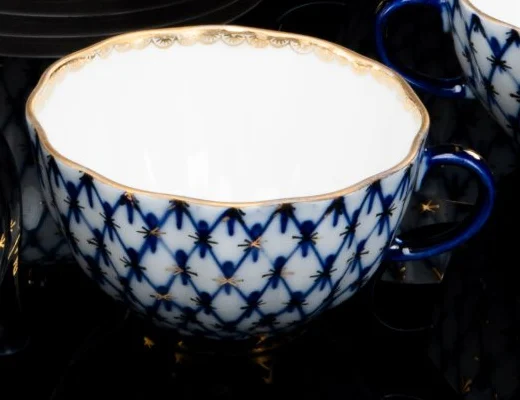
The Cobalt Net teacup is a wide, shallow cup of hard-paste porcelain on a low foot, its body gently lobed like the petals of the flower that gives the shape its name, Tulip. Over the white ground runs a lattice of fine cobalt-blue lines crossing on the diagonal, each crossing marked by a small blue drop, with tiny gilded stars set between them. The rim is edged in gold, a narrow gilded border runs inside the lip, and the loop handle is solid cobalt. It stands on a matching saucer.
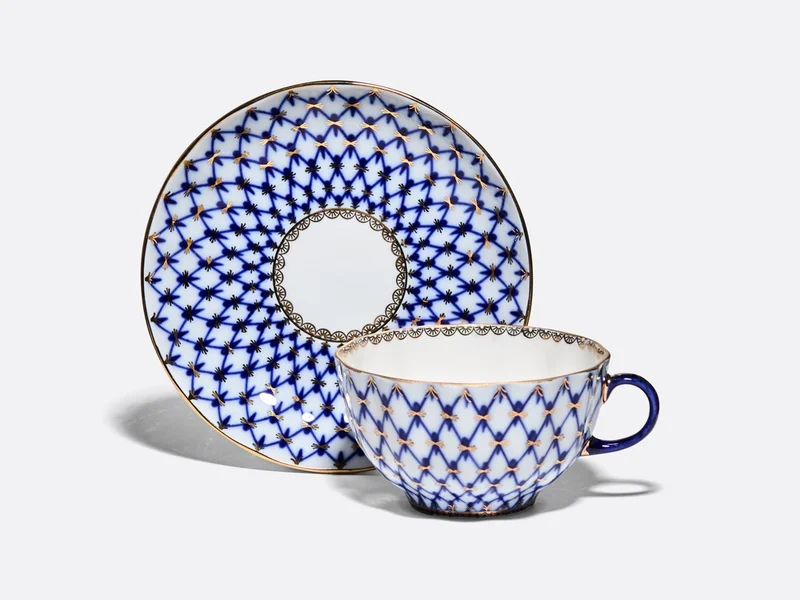
The shape was drawn by Serafima Yakovleva at the Lomonosov factory in Leningrad, and the decoration by Anna Yatskevich, who had stayed at the factory through the siege. In 1944, as the city came back to life and the factory approached its two hundredth year, she worked out the net by hand with a brush. Her model was the first Russian porcelain service, made for the Empress Elizabeth in the middle of the eighteenth century.
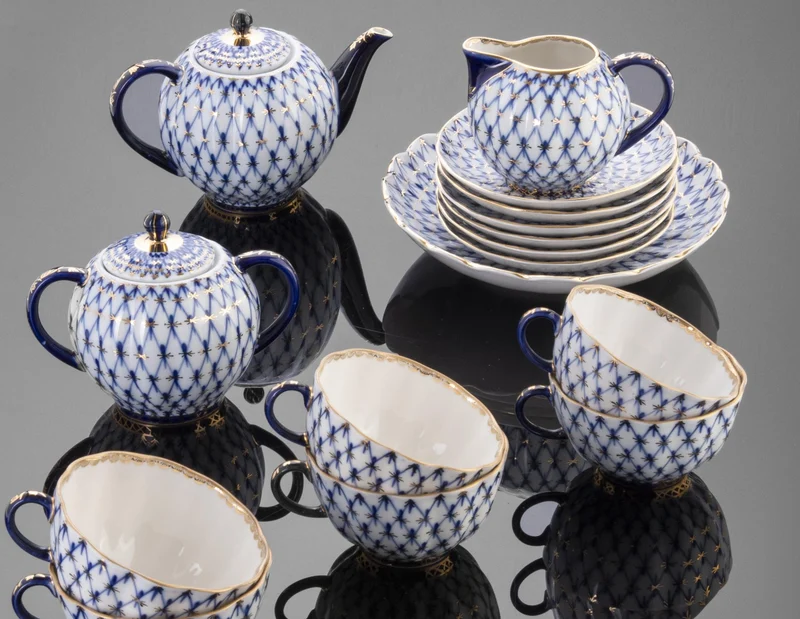
Writers have read wartime Leningrad in the pattern: the paper crosses taped over windows against blast, or searchlight beams crossing the night sky. Yatskevich died in 1952. Six years later the Tulip tea service with her net won a gold medal at the Brussels World's Fair, and the pattern became the factory's emblem, spreading over the decades to more than a hundred other shapes.
The factory itself has changed name more than its cup. Lomonosov porcelain was privatised in 1993, briefly returned to state hands in 1999, sold in 2002, and in 2005 took back its old title, the Imperial Porcelain Factory. Through all of it the teacup on the Tulip shape stayed in production. Some later pieces carried the net as a printed transfer; the factory now describes its teacup as painted by hand under and over the glaze, and sells it from the same works on the Neva.
Timeline
- 1944 First made · Disputed Lomonosov Cobalt Net Teacup enters production in Nevsky District, Russia.
- 1944 Designed Anna Yatskevich paints the first Cobalt Net decoration for Serafima Yakovleva's Tulip tea cup and saucer at the Lomonosov factory in Leningrad.
- 1958 Recognised The Tulip tea service with the Cobalt Net wins a gold medal at the Brussels World's Fair.
- 1993 Ownership The Lomonosov Porcelain Factory is privatised; exports to the United States and Japan widen.
- 2005 Ownership Shareholders return the factory to its pre-revolutionary name, the Imperial Porcelain Factory.
Milestones as we found them, not as we've checked them.
From the archive
More like this
-
 Tableware & Glassware · since 1947 Copo Americano One hundred and ninety millilitres, faceted, and in every bar in Brazil since 1947. Read the entry →
 -
 Tableware & Glassware · since 1954 Duralex Picardie The tempered French café tumbler, made outside Orléans since 1954. Read the entry →
 -
 Tableware & Glassware · since 1931 Arzberg Form 1382 Teapot Hermann Gretsch's plain white teapot of 1931, still cast to the same round form. Read the entry →
 -
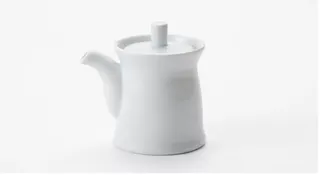 Tableware & Glassware · since 1958 Hakusan G-Type Soy Sauce Bottle Masahiro Mori's porcelain soy bottle of 1958, made at Hasami without change ever since. Read the entry →