Waterford
Waterford Lismore Goblet
Since 1952 · 74 years to 2026 · First made in County Waterford, Ireland
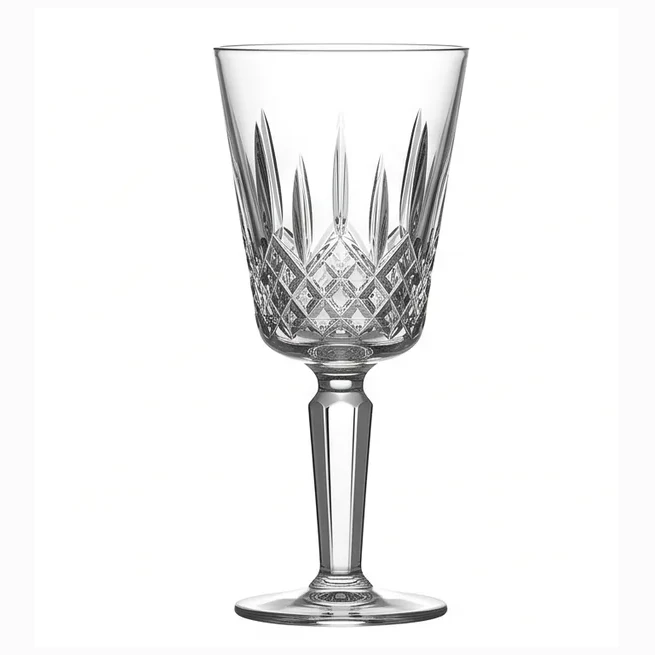
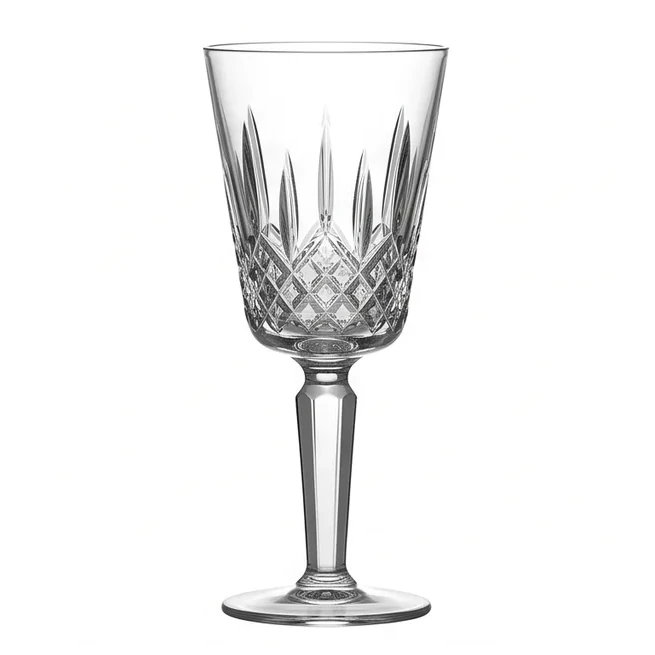
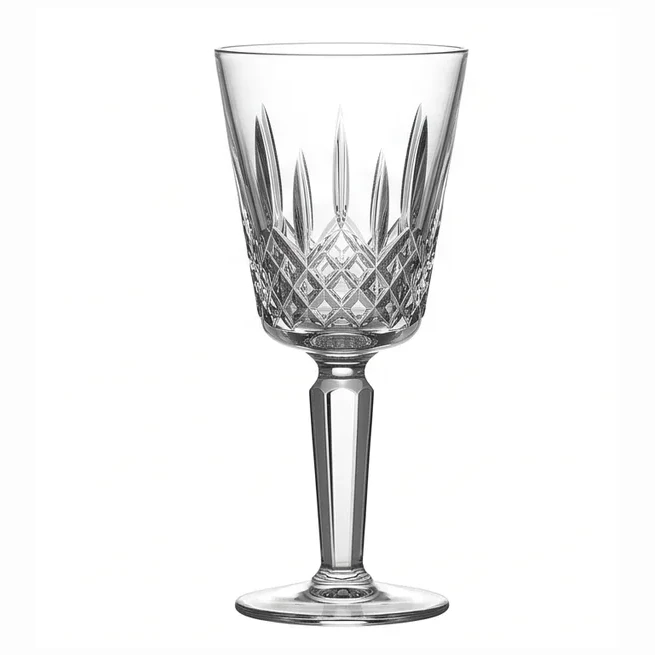
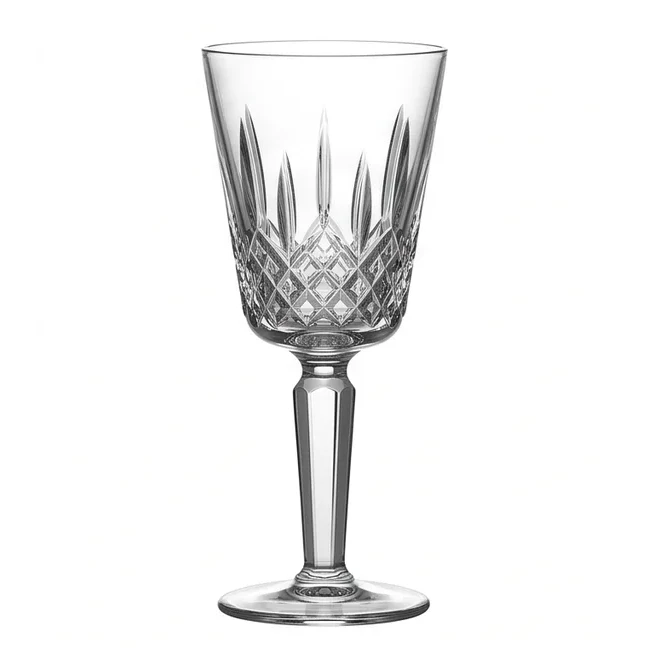
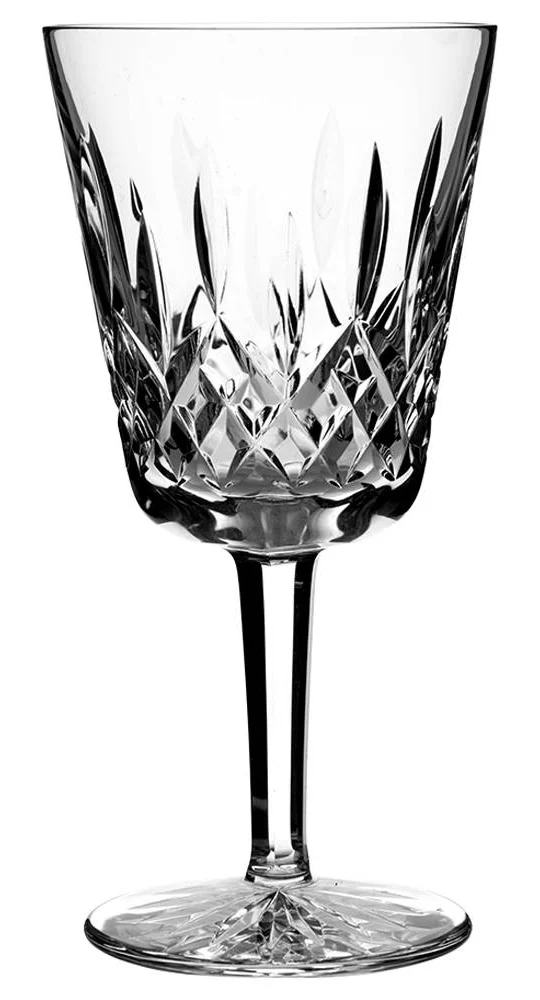
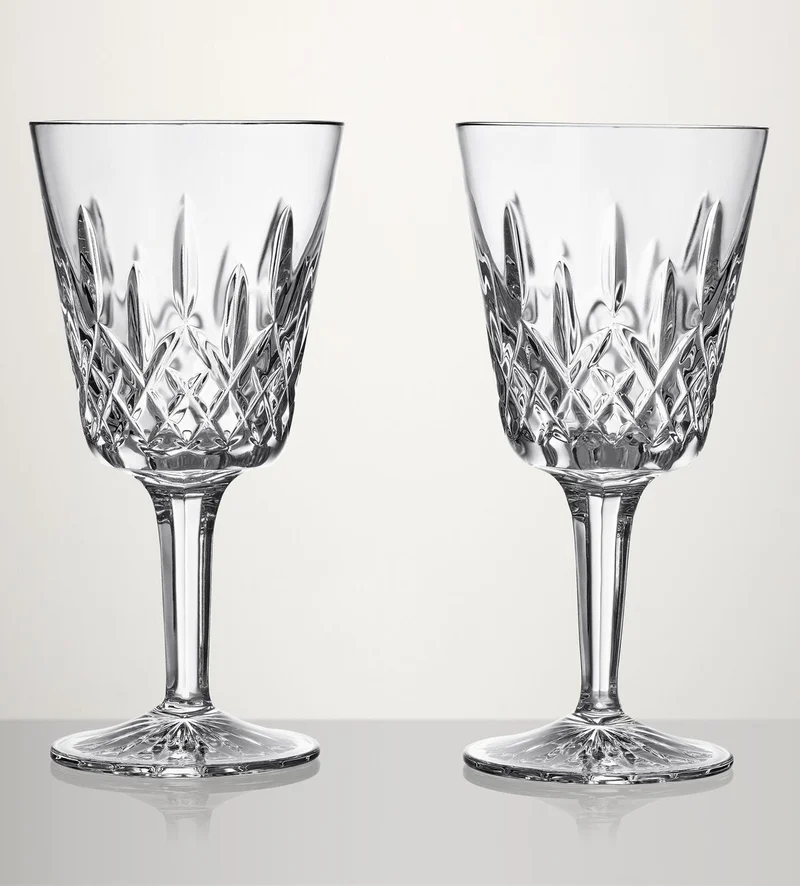
The Lismore goblet is a stemmed glass of cut lead crystal about 18 cm high. Its bowl is a plain, slightly flaring cone; round its lower half runs a band of crossed diamond cuts, and from that band long narrow wedges rise towards the rim, leaving the top of the glass clear. The stem is faceted, and the foot is cut underneath with a radiating star, so that the glass throws light from below as well as from the bowl.
Glass had not been made in Waterford for nearly a century when Karel Bacik, a Czech glassmaker, founded a works on the edge of the city in 1947 and sent for his former intern Miroslav Havel. Havel had to build the craft from nothing. He recruited cutters and blowers from the glassmaking districts of Europe, trained Irish apprentices, and spent hours in the National Museum of Ireland drawing the old Penrose glass of the eighteenth and nineteenth centuries. In 1952, Waterford says, he turned those studies into Lismore, a pattern it describes as inspired by the Gothic architecture of Lismore Castle.
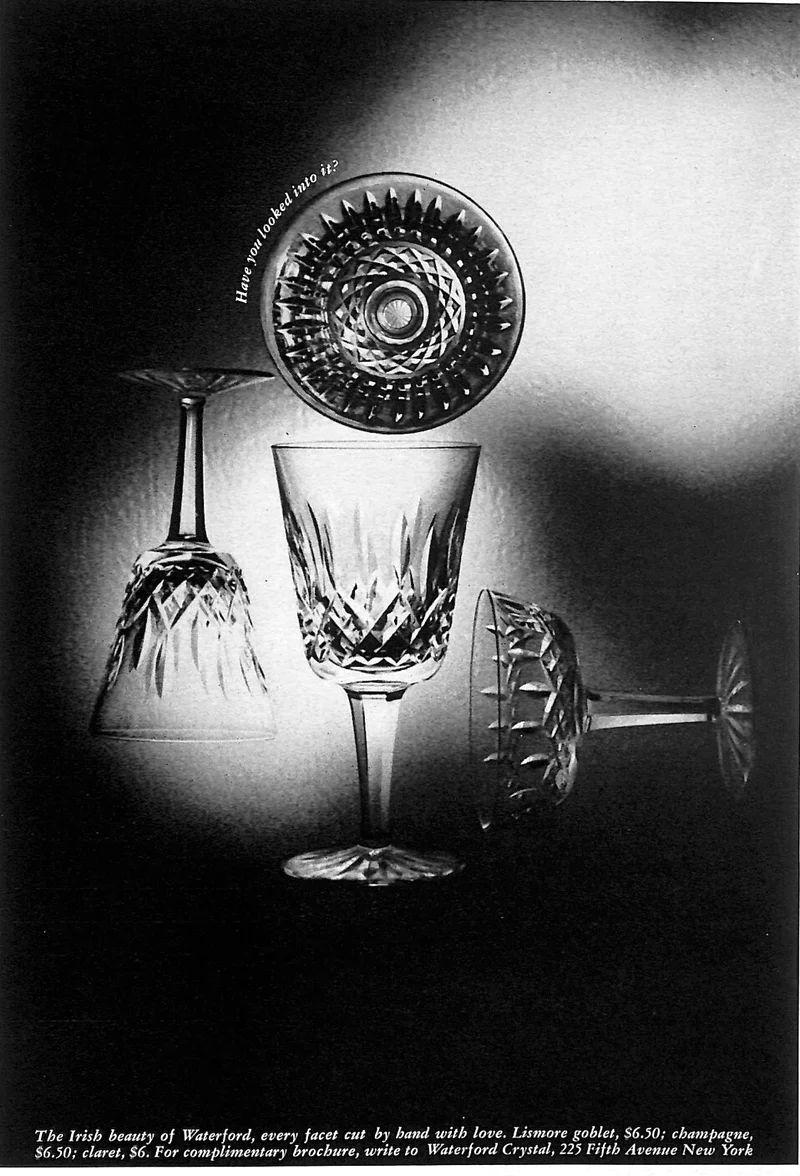
The pattern became the company's mainstay. An American advertisement offered the goblet for $6.50, its copy promising that every facet was cut by hand. Waterford calls Lismore the best-selling crystal pattern in the world, a claim no independent source here measures.
The company did not have an easy half-century. A second factory closed in 2005, more and more glass was made abroad, and in 2009 the group went into receivership and its main works at Kilbarry shut. The brand was sold, a smaller works opened in the city, and the Finnish group Fiskars has owned it since 2015. Through all of it the goblet stayed in the range, and Waterford sells it today in pairs, in the same shape as the glass in the advertisement.
Timeline
- 1952 First made · Verified Waterford Lismore Goblet enters production in County Waterford, Ireland.
- 1952 Designed Havel creates the Lismore pattern, drawing on the cut glass of the old Penrose works.
- 2009 Ownership Waterford Wedgwood goes into receivership; the Kilbarry factory closes and KPS Capital Partners buys the brand.
- 2015 Ownership Fiskars acquires Waterford, which continues to sell the Lismore goblet.
Milestones as we found them, not as we've checked them.
From the archive
More like this
-
 Tableware & Glassware · since 1954 Duralex Picardie The tempered French café tumbler, made outside Orléans since 1954.
-
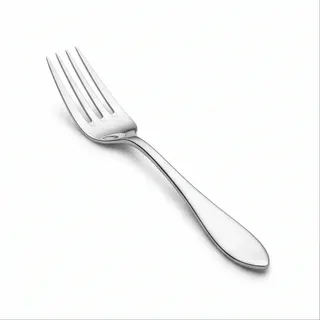 Tableware & Glassware · since 1954 David Mellor Pride Table Fork A student's cutlery of 1953, drawn from eighteenth-century English forms, made in Sheffield silver plate ever since.
-
 Tableware & Glassware · since 1947 Copo Americano One hundred and ninety millilitres, faceted, and in every bar in Brazil since 1947.
-
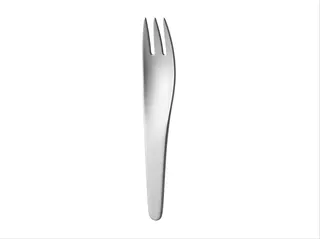 Tableware & Glassware · since 1957 Arne Jacobsen AJ Dinner Fork Arne Jacobsen's three-tined strip of steel, shown in Milan in 1957 and laid on Kubrick's space station.