Iittala
Iittala Aalto Vase
Since 1937 · 89 years to 2026 · First made in Karhula, Finland
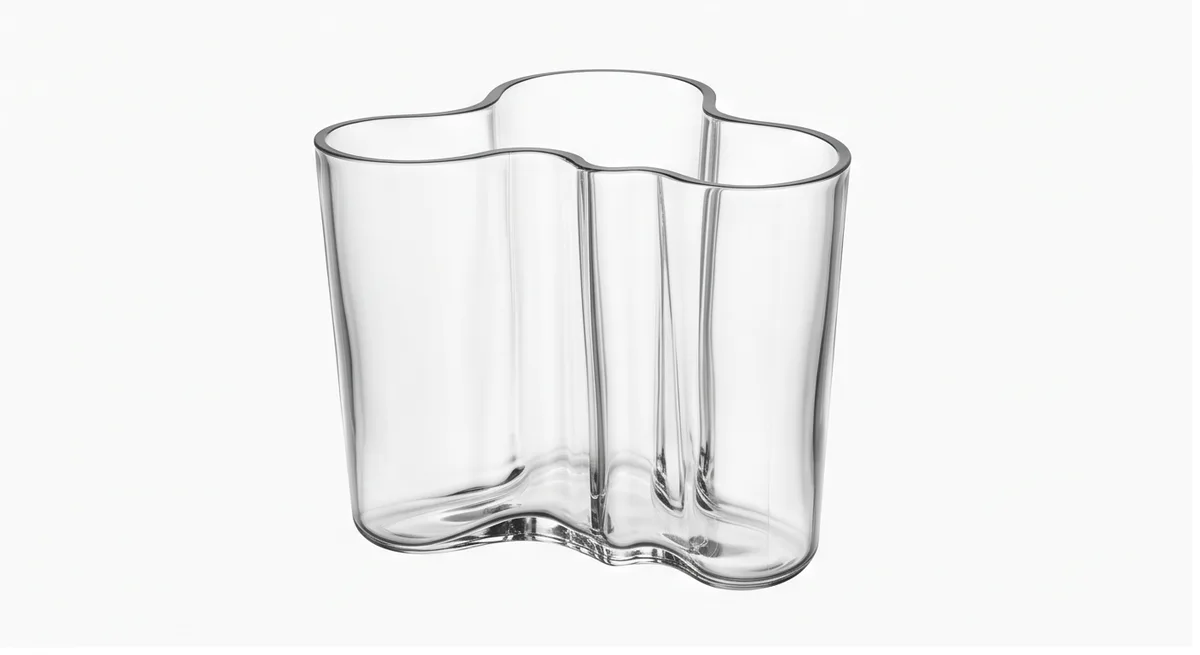
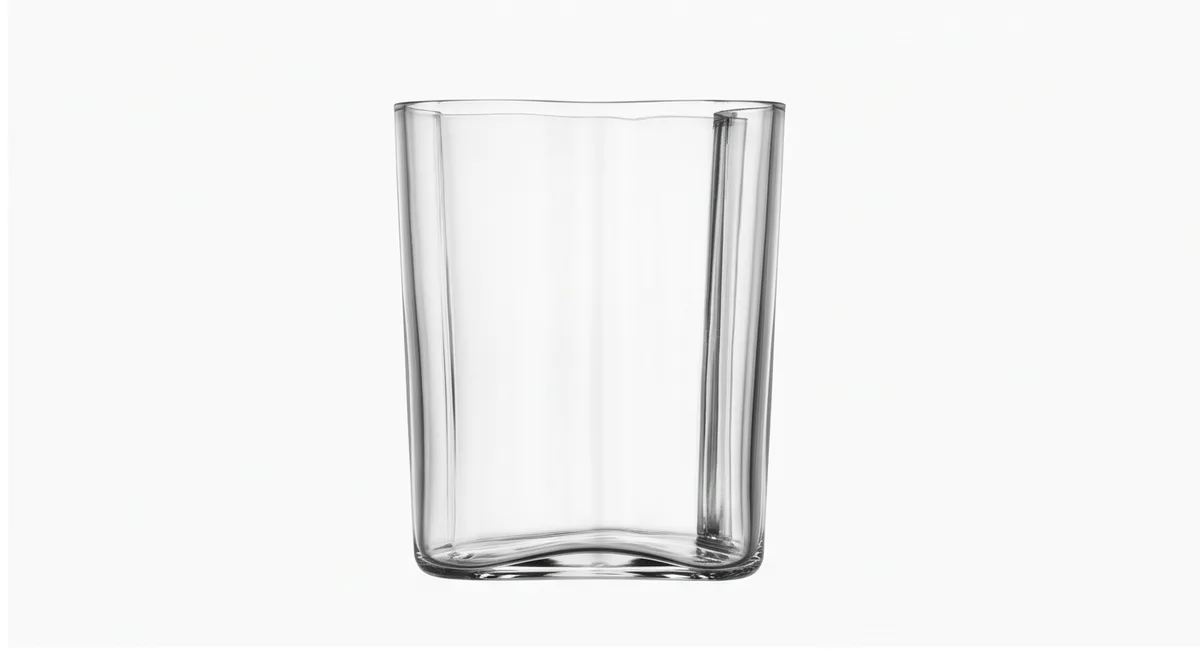
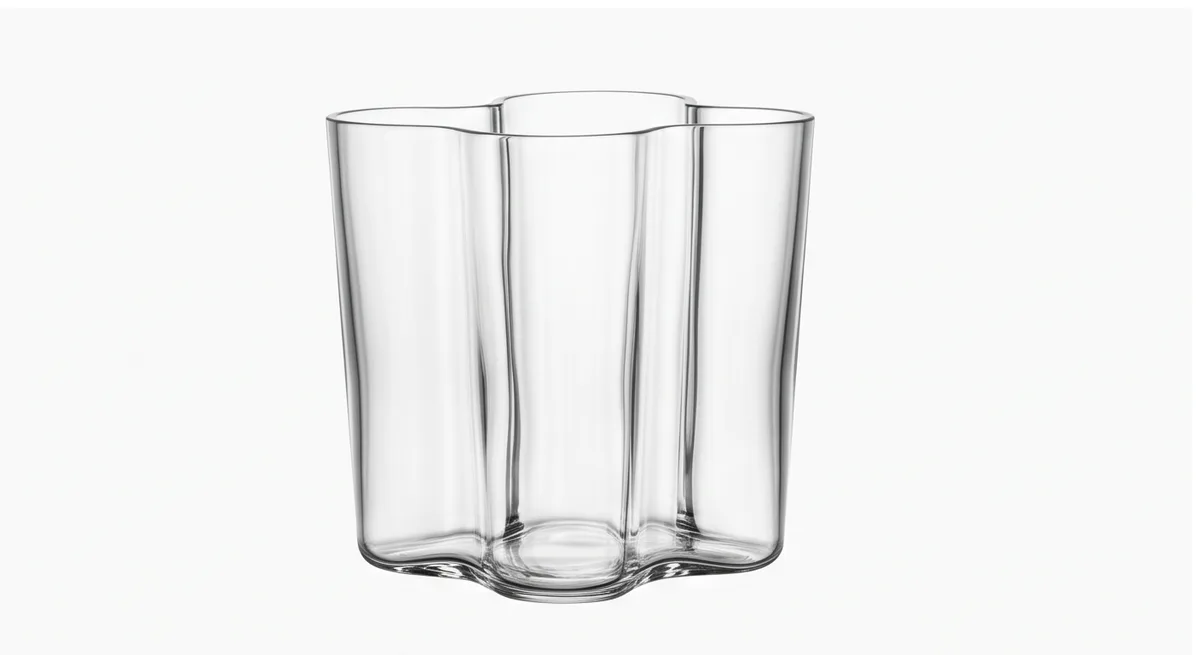
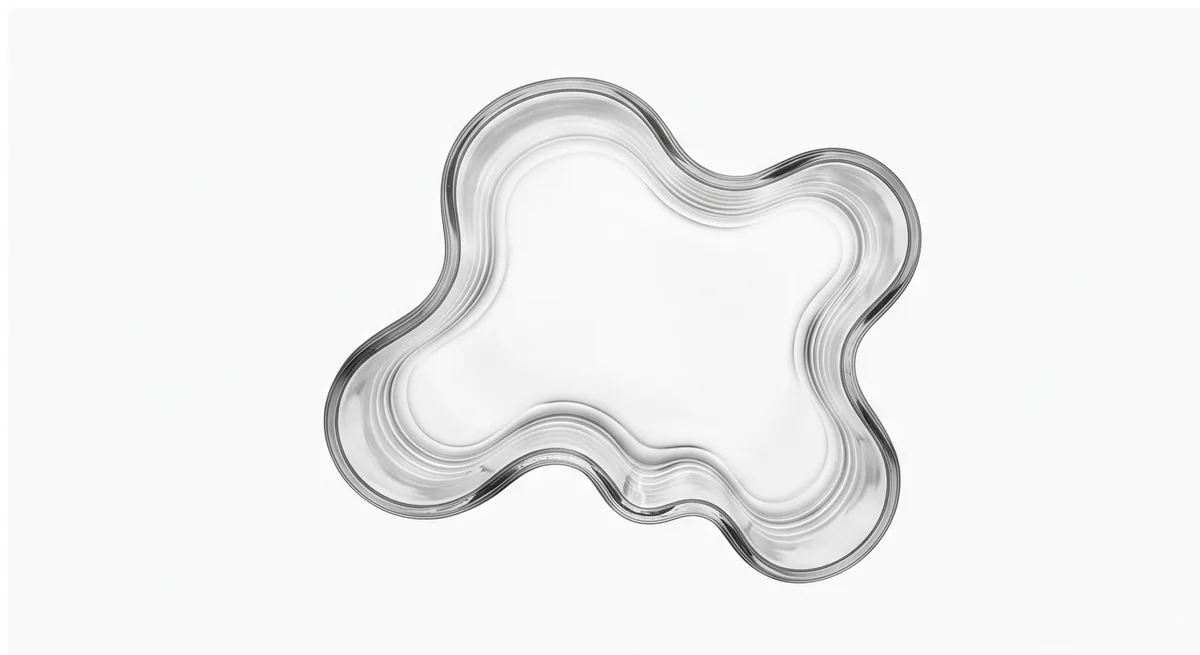
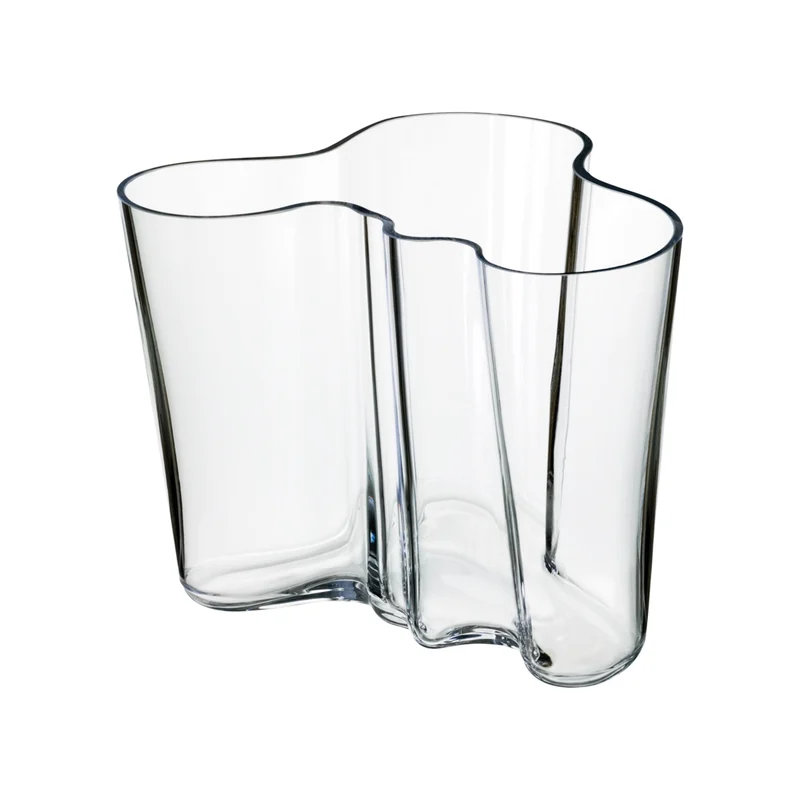
The Aalto vase is a piece of blown glass about sixteen centimetres high whose walls follow a free, rippling line, so that seen from above its mouth is an irregular shape of deep bays and rounded headlands. The walls rise straight from a flat base, slightly flared, and each side of the vase shows a different profile. Set with flowers, the bays hold the stems apart in loose groups rather than in a single bunch.
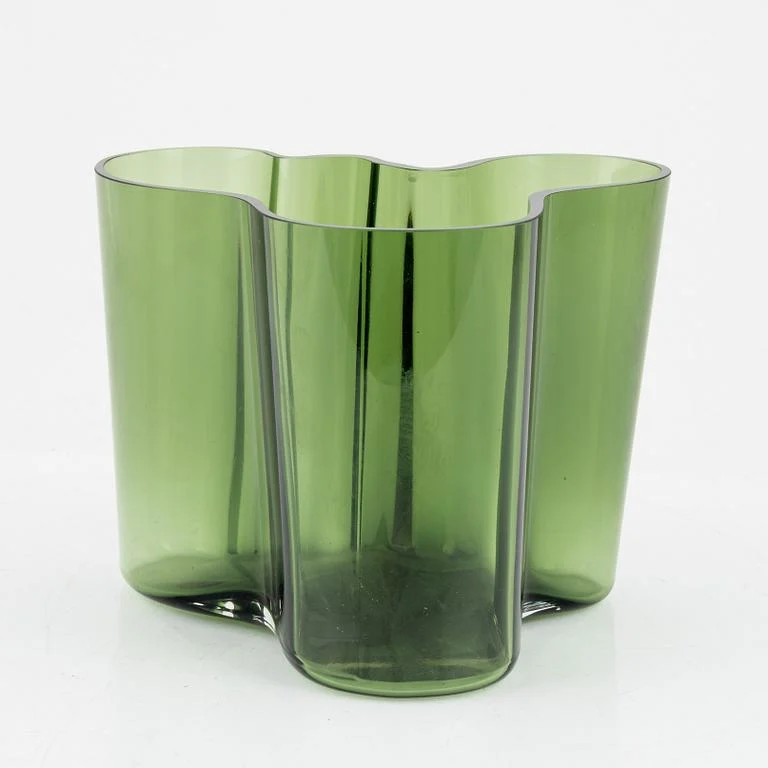
It was one of a set of designs with which Alvar Aalto won a glass competition held in 1936 by the Karhula and Iittala glassworks, entered under the joking title of an Eskimo woman's leather breeches. Aalto had hoped to blow the glass into moulds of bent steel sheet that could be changed at will; in practice the curves were eased and the vases were blown into wooden moulds that charred a little with each piece. The series was shown at the Paris World's Fair in 1937, and in the same year the vases were set on every table of the Savoy, a restaurant in Helsinki furnished by Alvar and Aino Aalto, which gave the best-known shape its name.
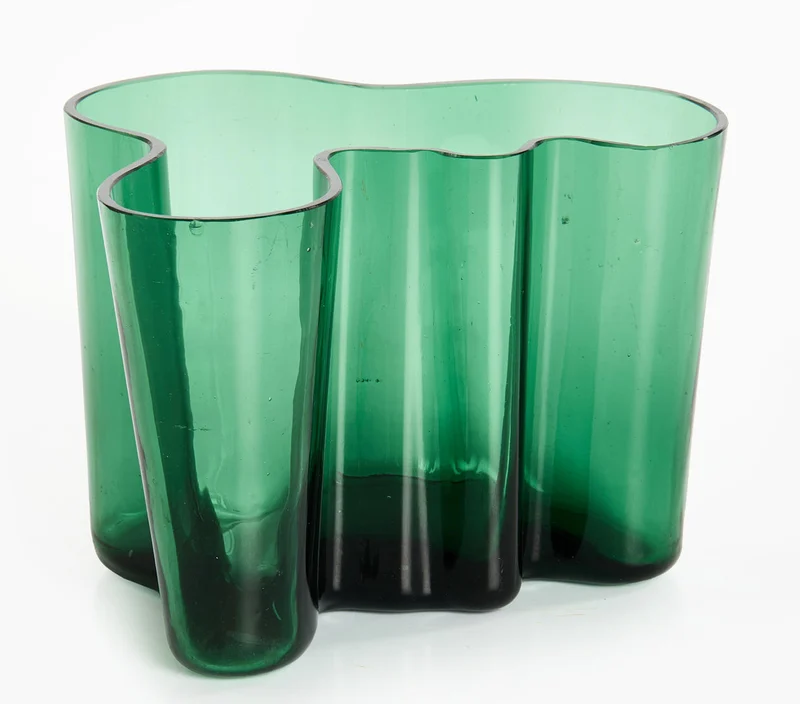
The outline has been read as a Finnish lake shore, a puddle, a wave, which is what aalto means in Finnish. The design belonged to the glassworks, not to Aalto, and he is said never to have earned from it. It has been made in many colours and, since the 1960s, in sizes from small to very large, and is often named among the best-known glass objects in the world.
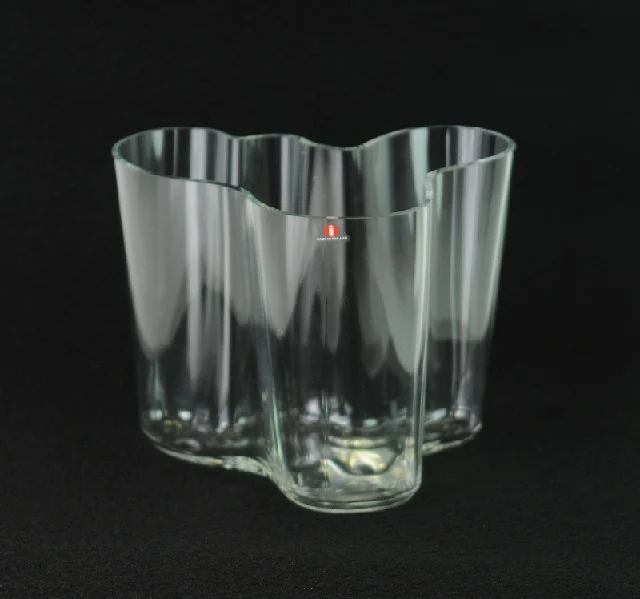
The wooden moulds gave way to cast iron in 1954, but the vase is still blown by hand at the Iittala works, and needs a team of skilled glassblowers for each piece. The model pinned here, the 160 mm in clear glass, is Iittala's 3030, the same form as the vases of 1937.
Timeline
- 1937 First made · Verified Iittala Aalto Vase enters production in Karhula, Finland.
- 1954 Cast-iron moulds replace the wooden moulds into which the vase had been blown since 1937.
- 1986 Recognised Iittala marks fifty years of the design with 8,000 signed and numbered jubilee vases of the 16 cm model.
- 2026 Recognised Iittala celebrates ninety years of the form with the numbered Aalto 90 city vases.
Milestones as we found them, not as we've checked them.
From the archive

More like this
-
 Tableware & Glassware · since 1931 Arzberg Form 1382 Teapot Hermann Gretsch's plain white teapot of 1931, still cast to the same round form.
-
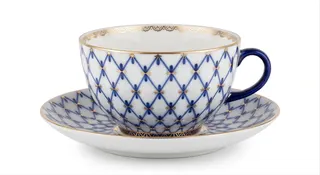 Tableware & Glassware · since 1944 Lomonosov Cobalt Net Teacup A net of cobalt and gold painted in Leningrad in 1944, still on the cup it was drawn for.
-
 Tableware & Glassware · since 1947 Copo Americano One hundred and ninety millilitres, faceted, and in every bar in Brazil since 1947.
-
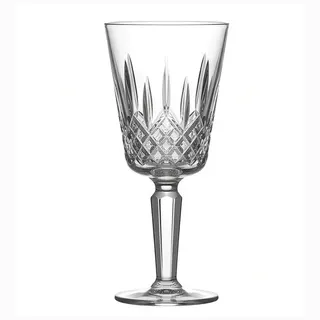 Tableware & Glassware · since 1952 Waterford Lismore Goblet Miroslav Havel's diamond-and-wedge goblet, cut for Waterford since 1952.