Home & Furniture · Home Accessories · Lighting
Luxo
Luxo L-1
Since 1937 · 89 years to 2026 · First made in Oslo, Norway
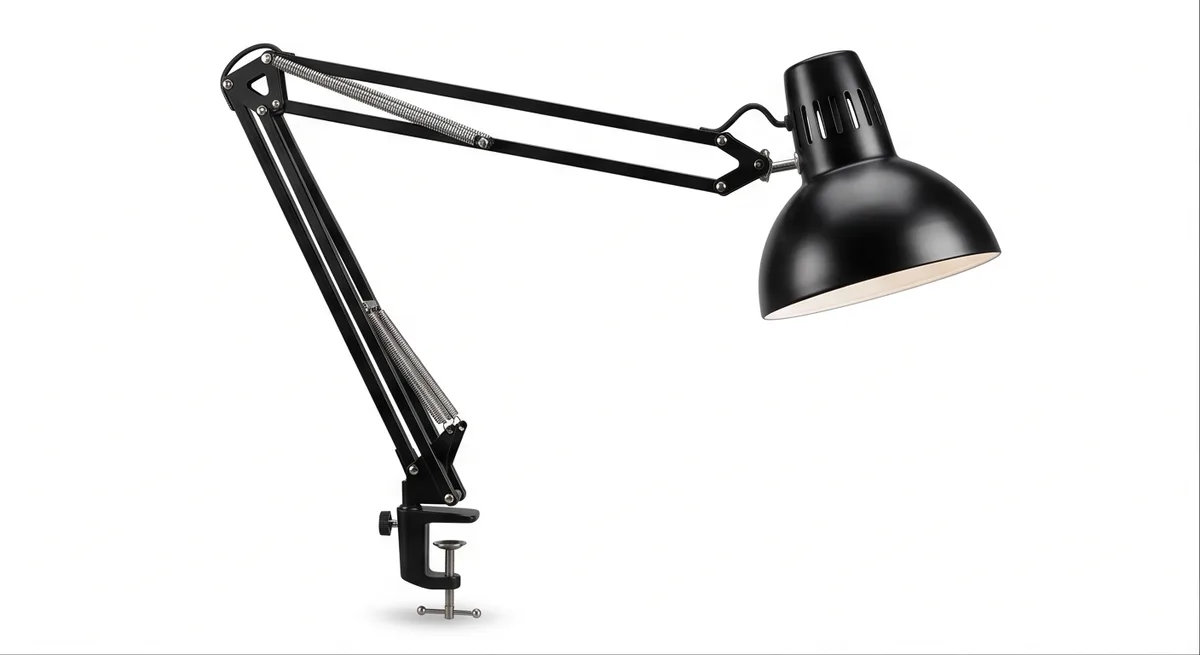
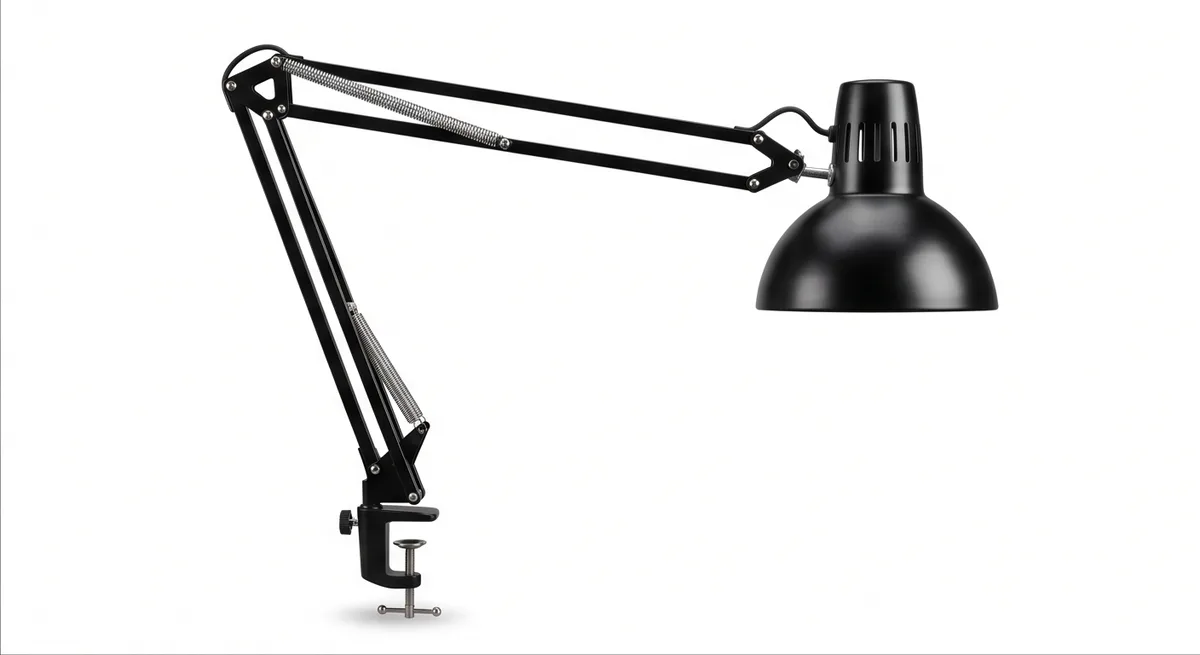
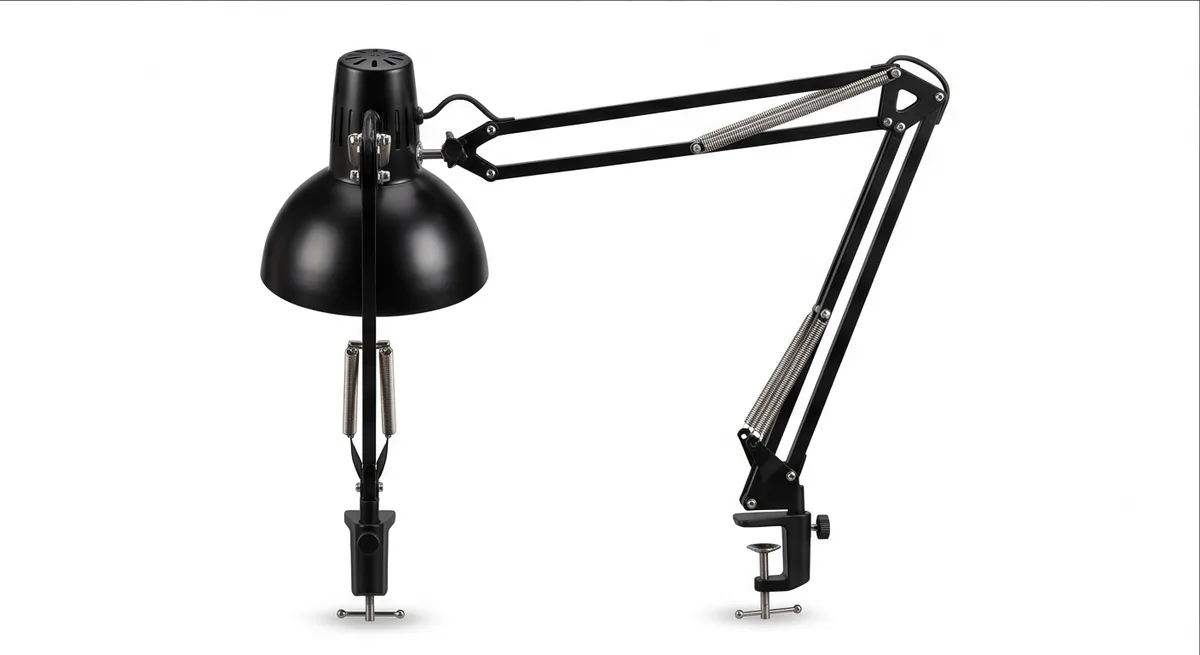
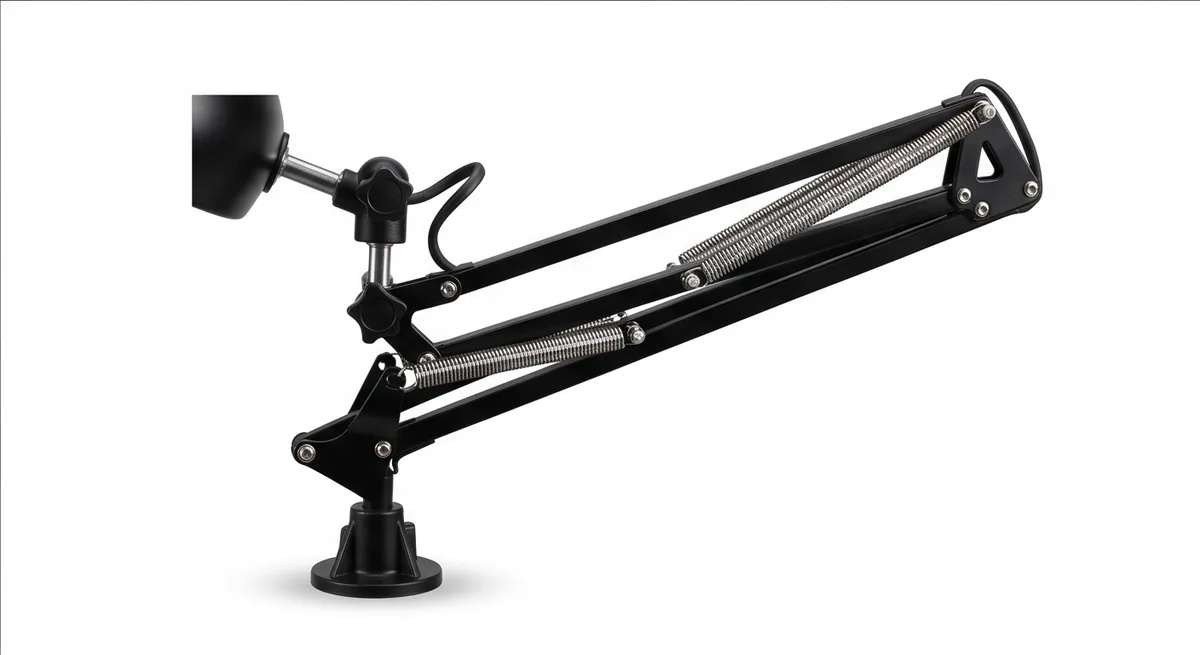
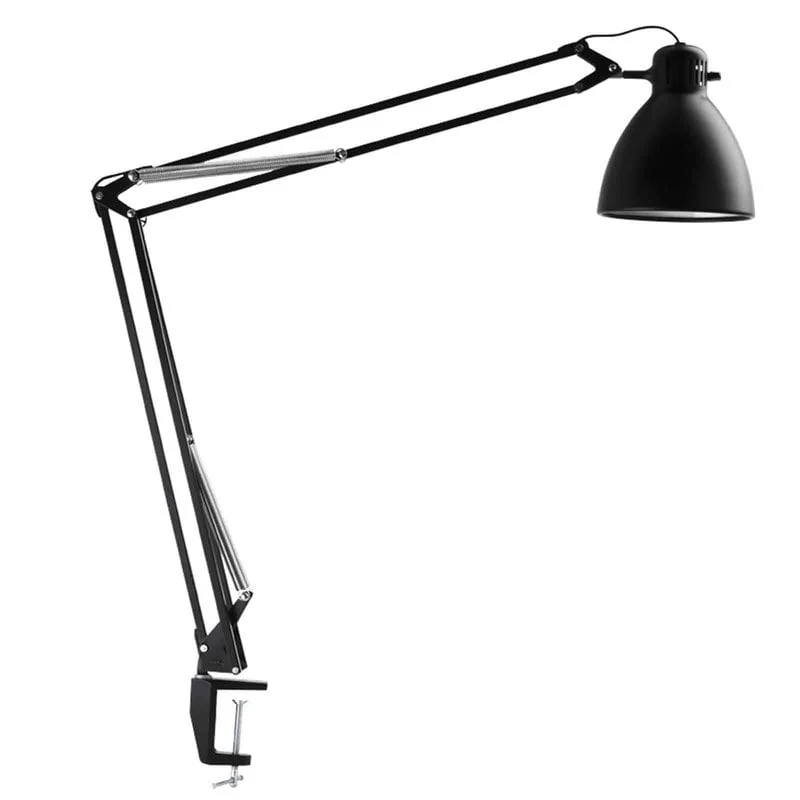
The Luxo L-1 is a desk lamp that holds whatever position it is put in. A clamp grips the edge of the table; from it rises a jointed steel arm in two sections, each made of parallel rods, with long coil springs stretched along them in plain view. The springs counter the weight of the arm, so the lamp can be pulled down low over a drawing or pushed up and away without slipping. At the end hangs a deep, dome-shaped metal shade.
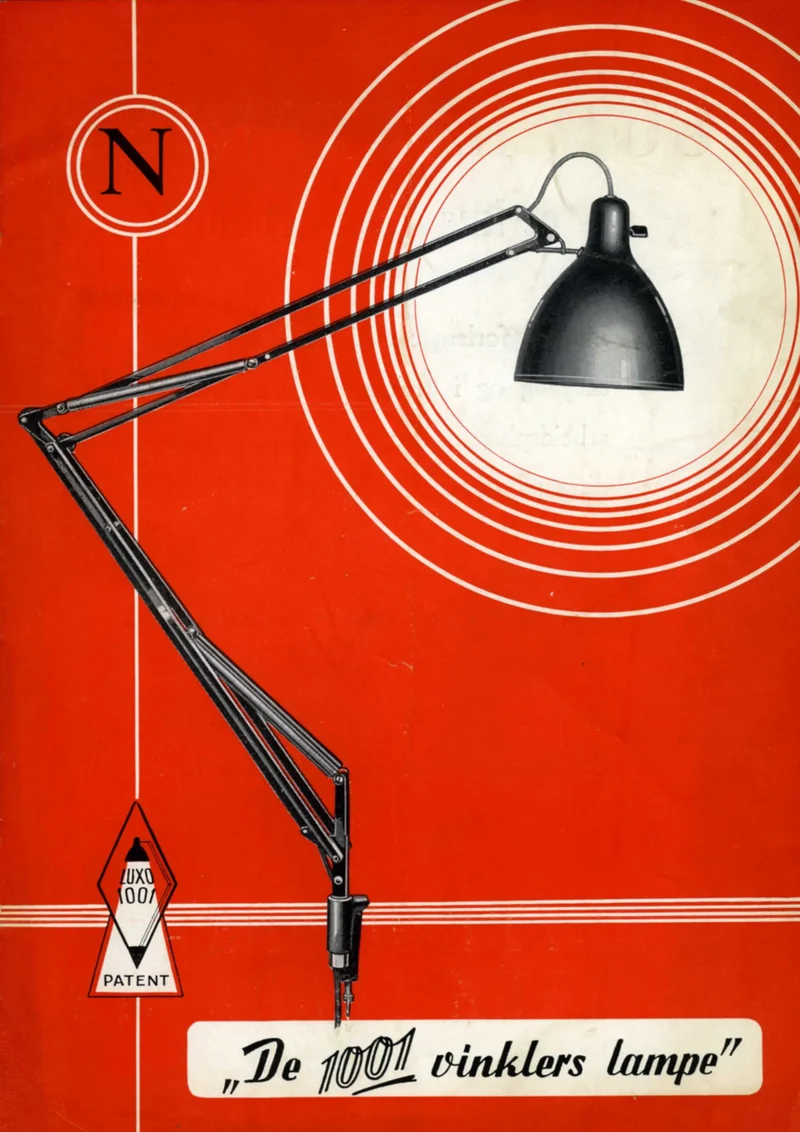
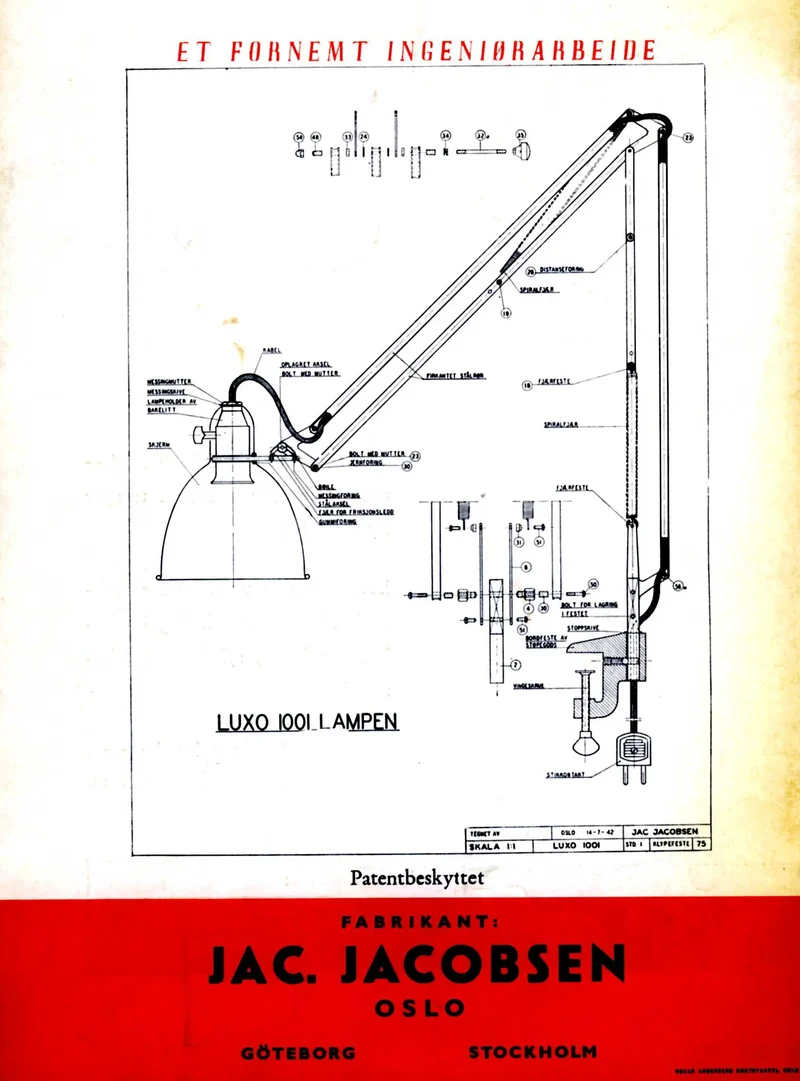
Its designer, Jac Jacobsen, came to lamps from industry: he had worked in textiles since 1921 and in 1934 set up a firm selling textile machinery. In 1937 he developed the L-1, adapting the principle of the Anglepoise, which the English engineer George Carwardine had designed a few years earlier and which was being made in Britain under licence. Nasjonalmuseet in Oslo holds one of the lamps Luxo made in 1938: green lacquered steel, 65 centimetres tall, on a clamp, laid out like the lamp sold today.
The L-1 was made as a working task lamp, and, as its present maker puts it, later became a favourite with architects and designers. In 1986 the animator John Lasseter modelled his own Luxo lamp for Pixar's short film Luxo Jr., in which a small lamp chases a ball; the lamp became the studio's emblem, and Luxo later went to law over it. Jacobsen worked at the company until his death in 1996.
Luxo now belongs to the Norwegian lighting group Glamox, which sells the L-1 as 'the original ideas lamp' and says it is still produced in Norway. The bulb has given way to a dimmable LED module that switches itself off, but the arm, springs, clamp and shade still follow the lamp of 1937. It costs about £380 in Britain, nearly ninety years after Jacobsen first drew it.
Timeline
- 1937 First made · Verified Luxo L-1 enters production in Oslo, Norway.
- 1937 Designed Jacobsen develops the L-1 in Oslo, a spring-balanced task lamp based on the British Anglepoise.
- 1986 Recognised Pixar's short film Luxo Jr. animates a Luxo lamp, which becomes the studio's mascot.
- 2026 Recognised Glamox marks the approach of the L-1's 90th anniversary with an artist's edition by Magne Furuholmen.
Milestones as we found them, not as we've checked them.
From the archive
More like this
-
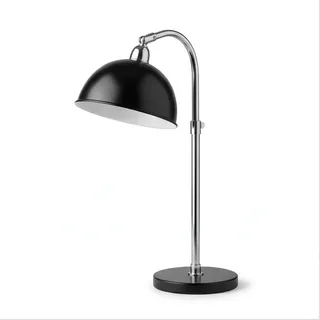 Lighting · since 1930 Gubi Bestlite Industrial desk lamp in continuous production since 1930 Read the entry →
 -
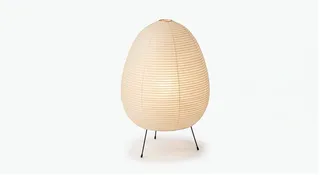 Lighting · since 1951 Noguchi Akari Light Sculpture Handcrafted paper lantern, continuously produced in Gifu since 1951. Read the entry →
 -
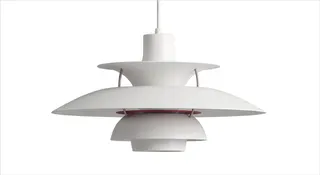 Lighting · since 1958 Louis Poulsen PH 5 Poul Henningsen's glare-free pendant of 1958, still the lamp over the Danish dining table. Read the entry →
 -
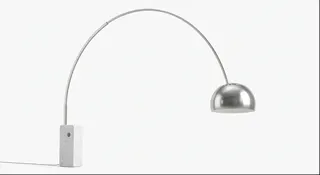 Lighting · since 1962 Flos Arco A street lamp brought indoors: steel arc, aluminium reflector, Carrara marble, since 1962. Read the entry →