Stationery & Office · Paper & Desk · Desk Accessories
Pritt (Henkel)
Pritt Stick
Since 1969 · 57 years to 2026 · First made in North Rhine-Westphalia, Germany
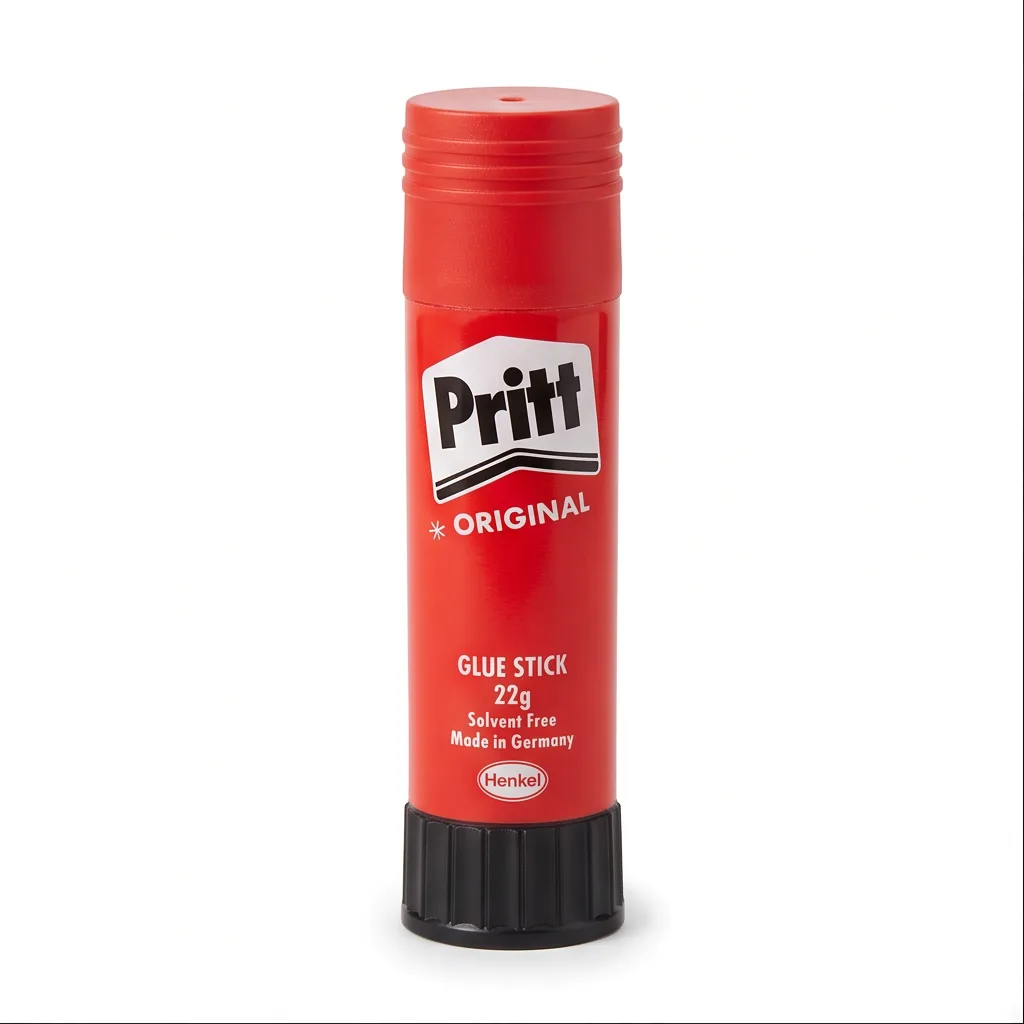
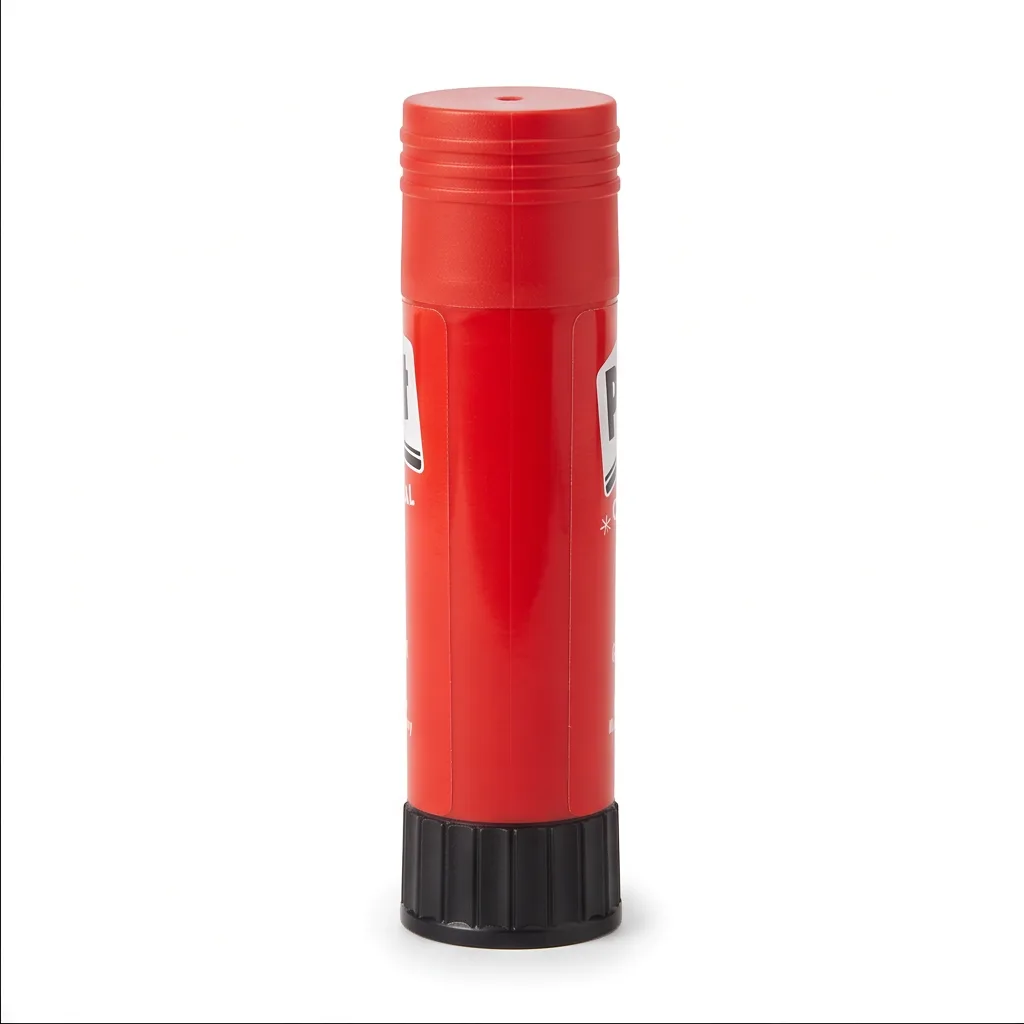
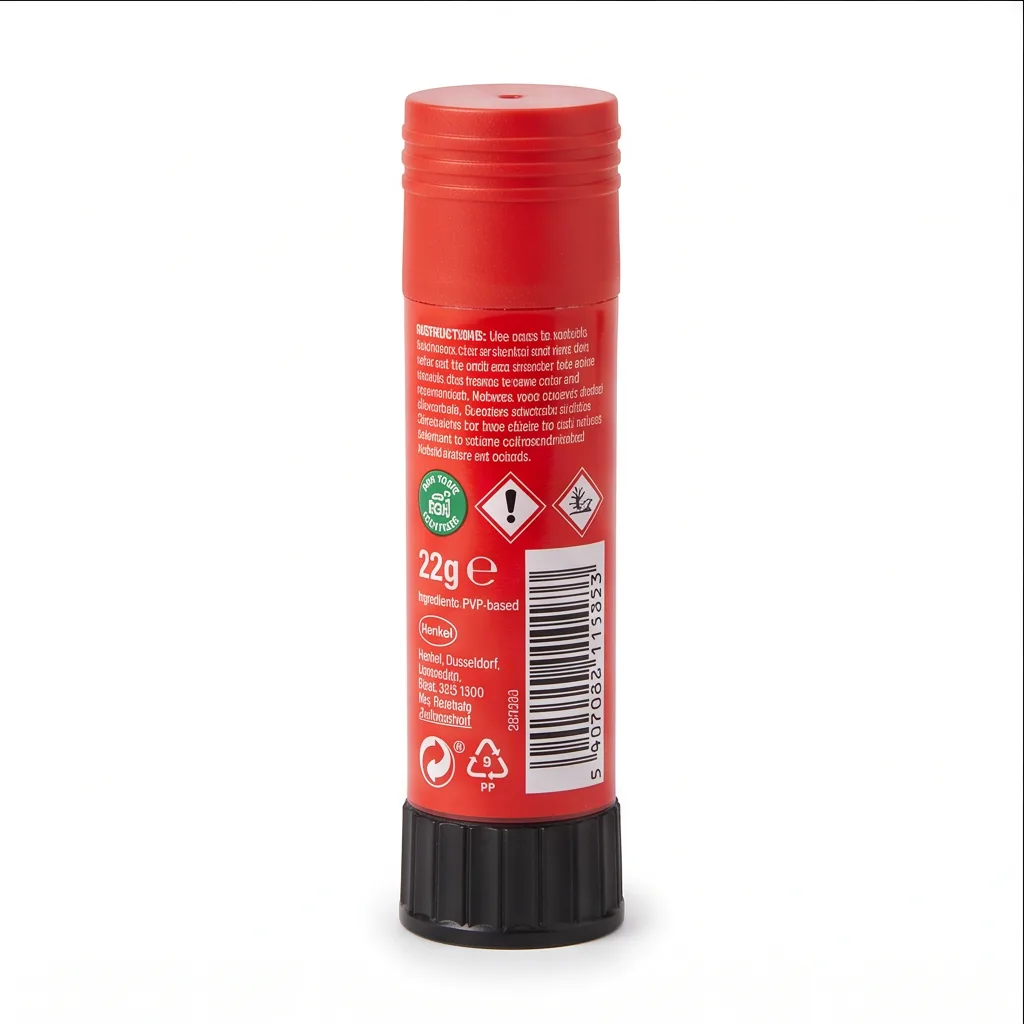
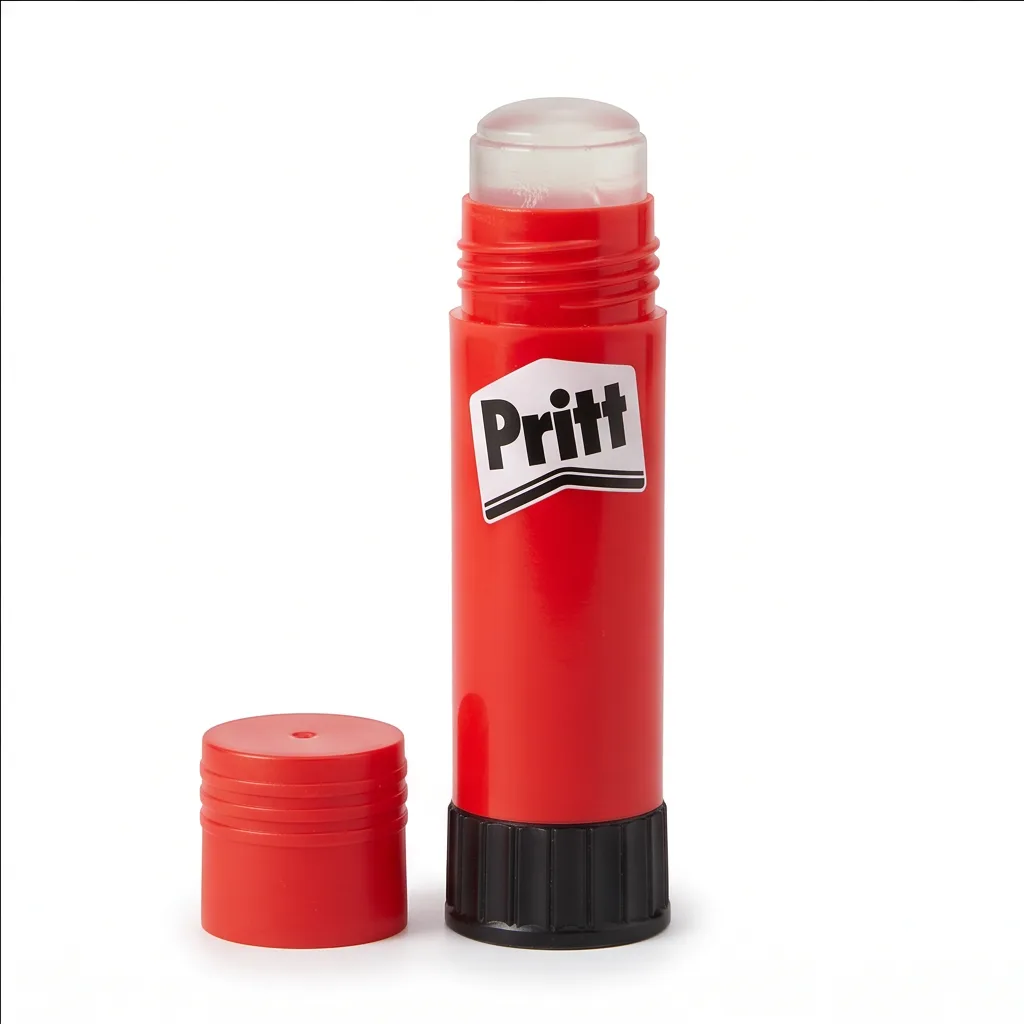
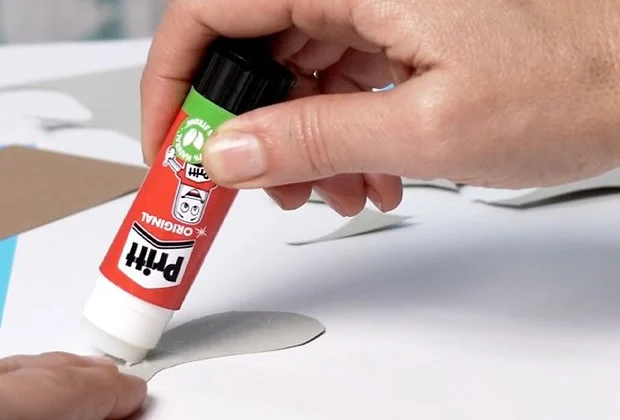
The Pritt Stick is a solid paper glue in a twist-up case. A short column of white adhesive, mostly water, sugar and starch, rises from a cylindrical red tube when the black base is turned; it is drawn across paper like a crayon, then withdrawn and capped. It glues paper, card and photographs, dries without drips and washes out of clothes, which is why it has become a fixture of classrooms and offices.
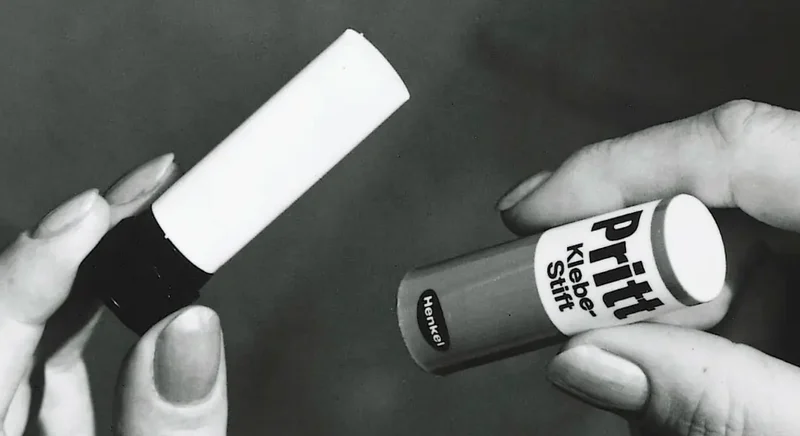
The idea came from cosmetics. Henkel, the Düsseldorf maker of detergents and adhesives, says that in 1967 its engineer Wolfgang Dierichs watched a woman apply lipstick on a journey and wondered why glue could not be handled the same way. Two years of trials followed, and in 1969 Henkel launched the Pritt Klebe-Stift, the first glue stick on the market.
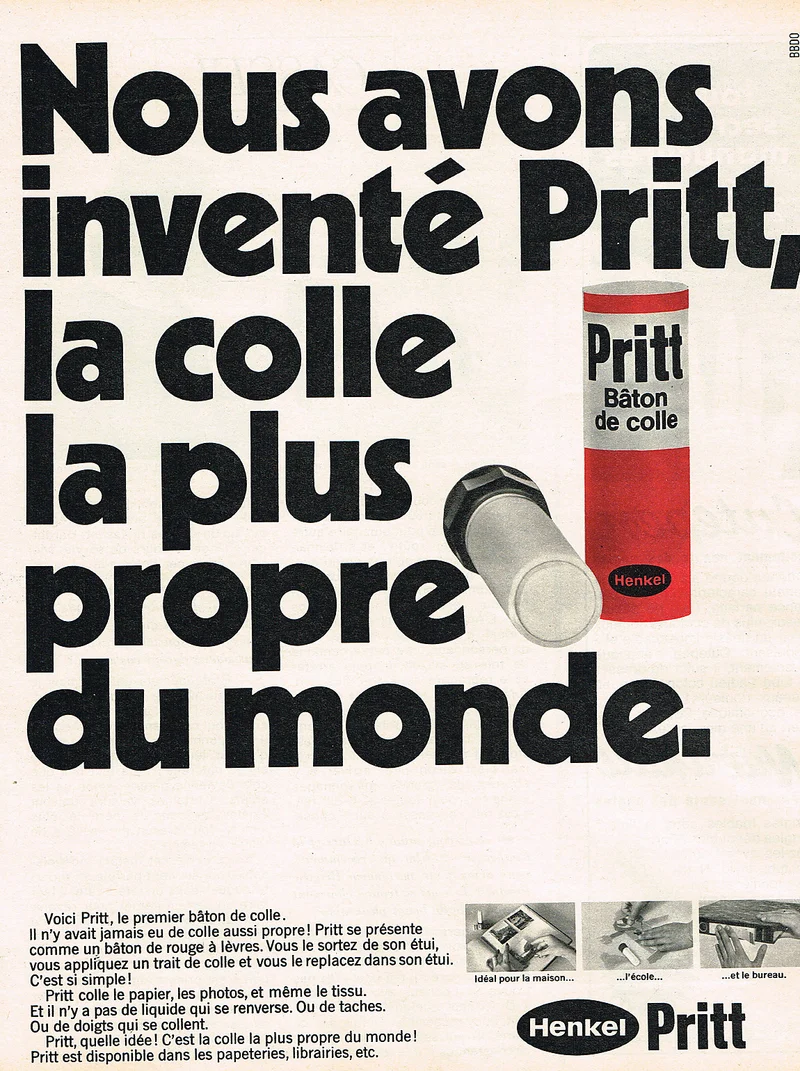
Its spread was rapid. By 1971 it was sold in 38 countries, and an advertisement in a French magazine of 1970 announced 'the cleanest glue in the world', a stick presented like a lipstick that ended spilt pots and sticky fingers. In Germany and Britain the name has passed into everyday speech for any glue stick, the fate of a product that defined its own category. Henkel says no paper adhesive anywhere has sold more, and that Pritt now leads the glue-stick market in many of the more than 120 countries where it is sold.
The red case and black twist base have changed little, though the earliest sticks slid into a full-length labelled sleeve rather than taking a short cap. What has changed is inside: Henkel replaced its solvent-based glue with a solvent-free one in 2000, then with a starch-based formula, and in 2021 with one that is almost entirely natural, held in a case of recycled plastic. More than 100 million Pritt Sticks are now made every year, and astronauts on the International Space Station have used them since 2001.
Timeline
- 1969 First made · Verified Pritt Stick enters production in North Rhine-Westphalia, Germany.
- 1969 After two years of trials Henkel launches the Pritt Klebe-Stift, the first glue stick.
- 2000 The first solvent-free generation of the stick replaces the petroleum-based glue.
- 2021 A new formula with 97 per cent natural ingredients, in a case of up to 65 per cent recycled plastic.
Milestones as we found them, not as we've checked them.
From the archive
More like this
-
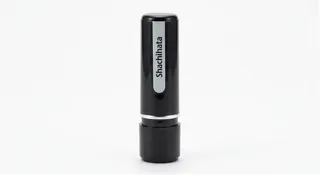 Desk Accessories · since 1968 Shachihata Xstamper Name Japan's self-inking name seal, launched in Nagoya in 1968 and so common that the maker's name became the word for it. Read the entry →
 -
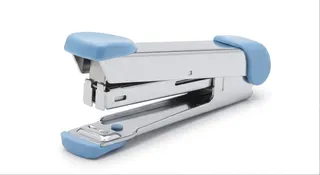 Desk Accessories · since 1973 Max HD-10 Stapler Max's chrome pocket stapler of 1973, still the basic model in its range. Read the entry →
 -
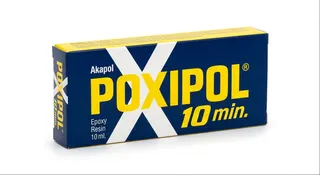 Desk Accessories · since 1960 Poxipol Argentina's two-part cure for broken things, mixed one to one since 1960. Read the entry →
 -
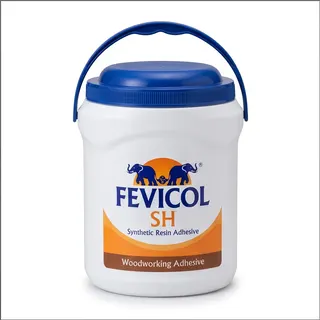 Desk Accessories · since 1959 Fevicol SH The white glue that replaced the carpenter's melting pot in India, and became the country's word for glue. Read the entry →