Stationery & Office · Paper & Desk · Desk Accessories
Shachihata
Shachihata Xstamper Name
Since 1968 · 58 years to 2026 · First made in Aichi Prefecture, Japan
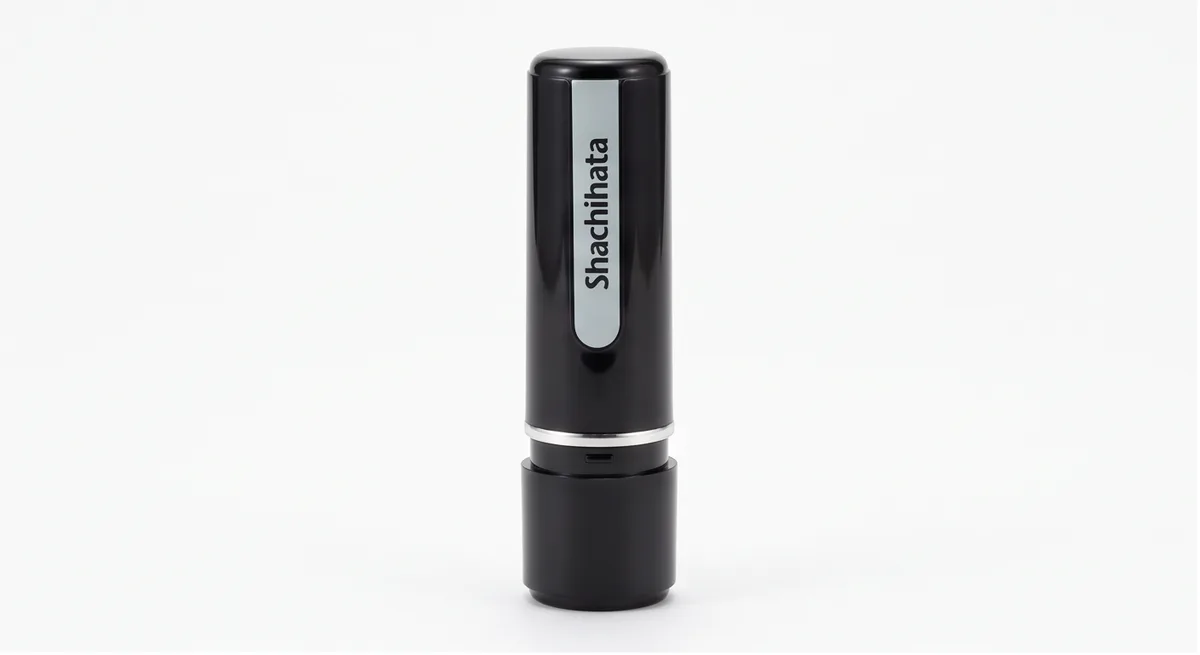
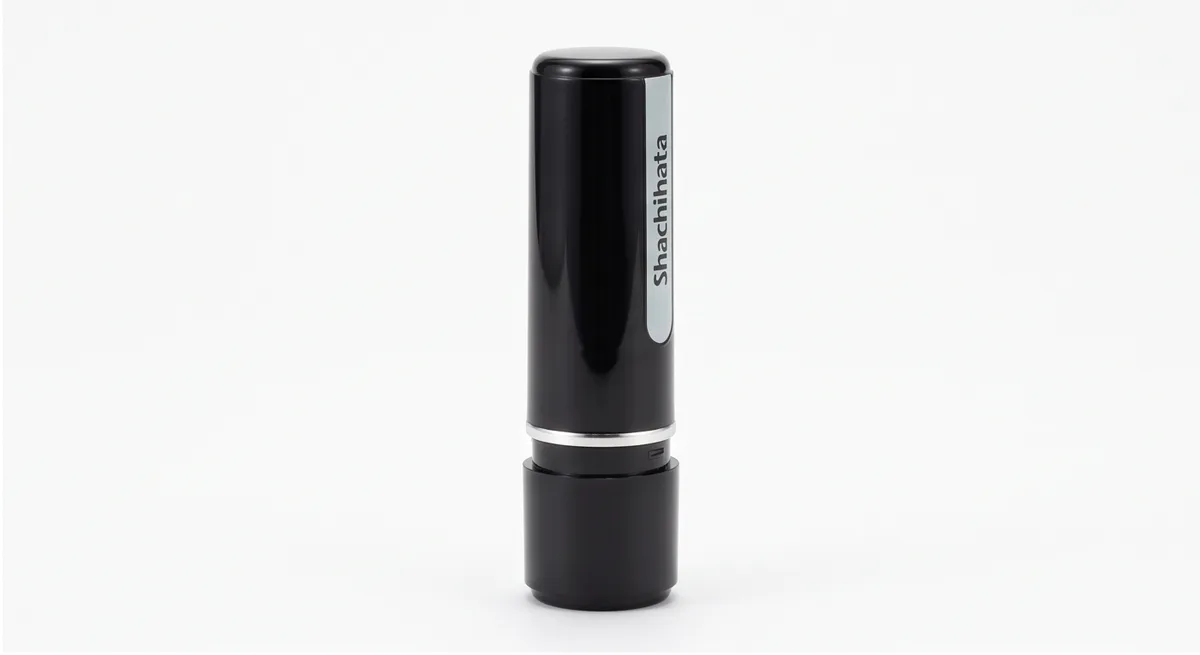
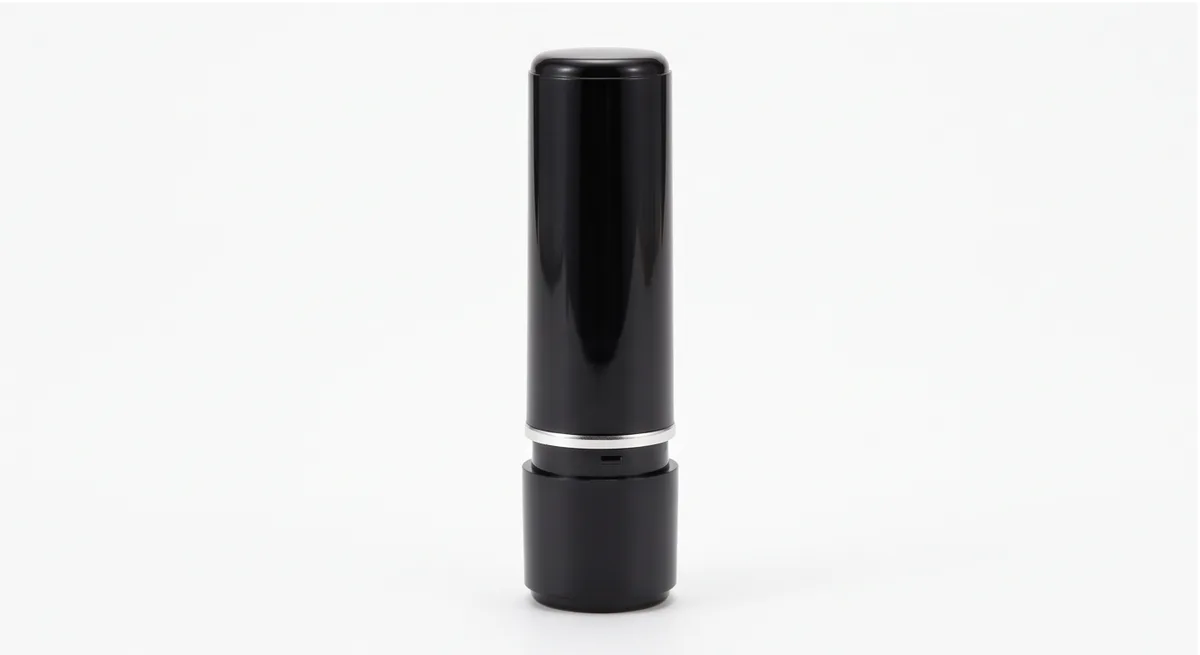
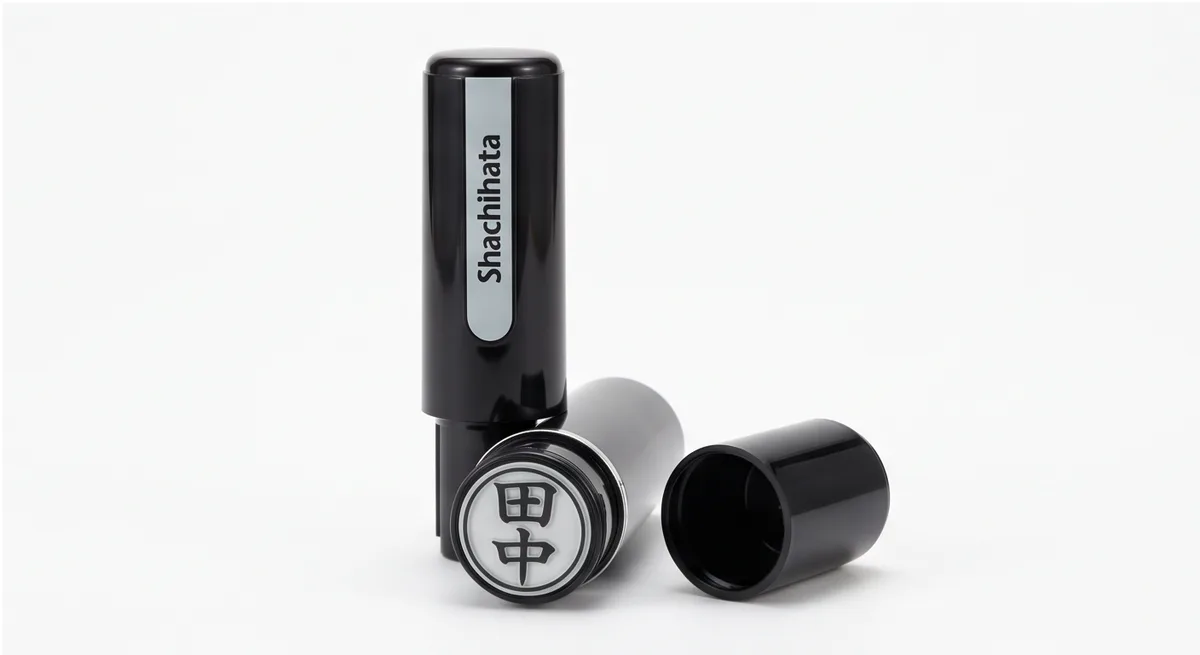
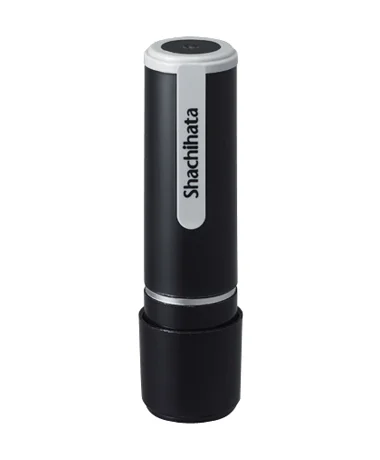
The Name 9 is a Japanese personal seal that inks itself. It is a small capped cylinder of black plastic, about the size of a lipstick, 68 millimetres long, with a white band printed Shachihata. Pull off the cap and the end is a round rubber face 9.5 millimetres across, carrying a surname in vermilion regular script. The face is porous and holds its own ink, so the seal is simply pressed to the paper, about ten thousand times, the maker says, before it needs refilling.
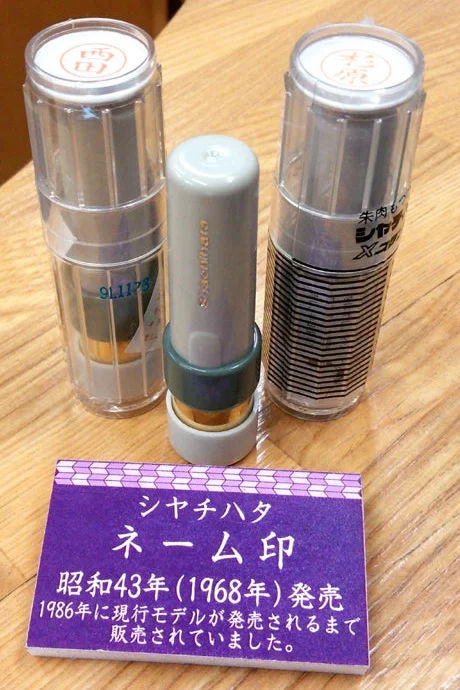
In Japan a seal does the work of a signature. The maker, Shachihata of Nagoya, began in 1925 with a stamp pad that never needed re-inking, and in 1965 launched the Xstamper, a stamp with the ink inside it. In 1968 it applied the idea to the personal seal and launched the Xstamper Name. It needed neither an ink pad nor the vermilion paste of a traditional seal, and it caught on so widely that, as FRIDAY Digital put it, the company's name became the everyday word for this kind of seal.
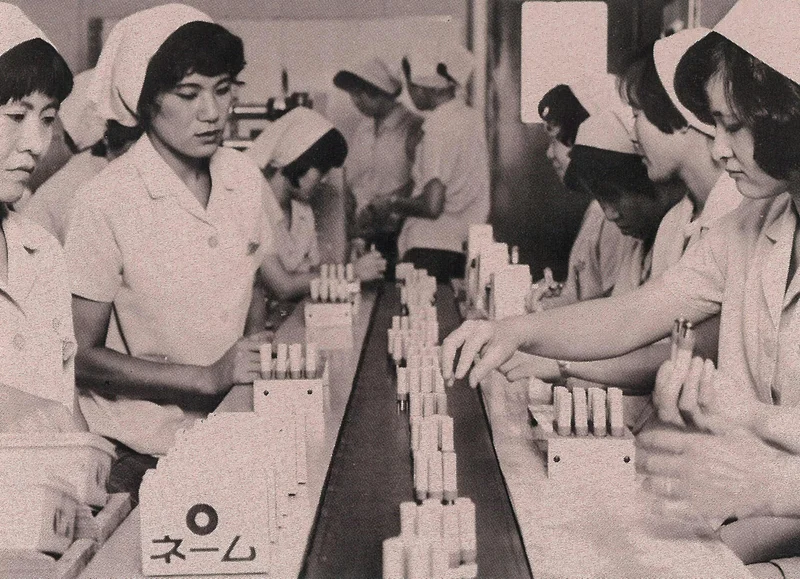
The face is made by kneading rubber with carbon and salt, moulding it and boiling out the salt, which leaves a fine sponge. That is also why, in principle, the Name may not be used on official documents: a rubber face can wear and change, the ink can fade, and every seal of a common surname is the same. It is the seal for signing for parcels, initialling a circular at the office and approving everyday paperwork.
The first model was sold until 1986, when the Name 9 took its place: the same capped, pocket-sized, self-inking seal, with a replaceable ink cartridge. Shachihata still makes it, offering it ready-made in some two thousand common surnames or engraved to order, and it sells for less than two thousand yen, more than half a century after the first.
Timeline
- 1965 Designed Shachihata launches the Xstamper, a stamp with the ink held in its face.
- 1968 First made · Verified Shachihata Xstamper Name enters production in Aichi Prefecture, Japan.
- 1986 Designed The current model, the Name 9, replaces the original Name.
Milestones as we found them, not as we've checked them.
From the archive
More like this
-
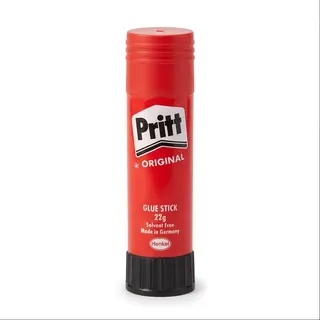 Desk Accessories · since 1969 Pritt Stick The first glue stick, borrowed from a lipstick in 1969 and still the one schools ask for. Read the entry →
 -
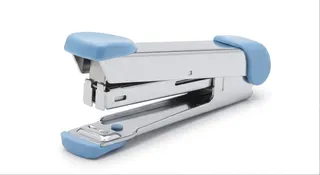 Desk Accessories · since 1973 Max HD-10 Stapler Max's chrome pocket stapler of 1973, still the basic model in its range. Read the entry →
 -
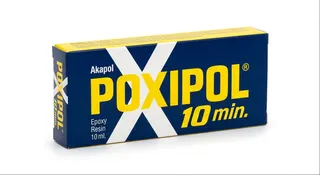 Desk Accessories · since 1960 Poxipol Argentina's two-part cure for broken things, mixed one to one since 1960. Read the entry →
 -
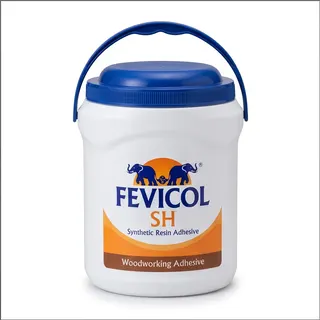 Desk Accessories · since 1959 Fevicol SH The white glue that replaced the carpenter's melting pot in India, and became the country's word for glue. Read the entry →