DIY & Tools · Tools · Hand Tools
Starrett
Starrett Combination Square
Since 1880 · 146 years to 2026 · First made in Athol, Massachusetts
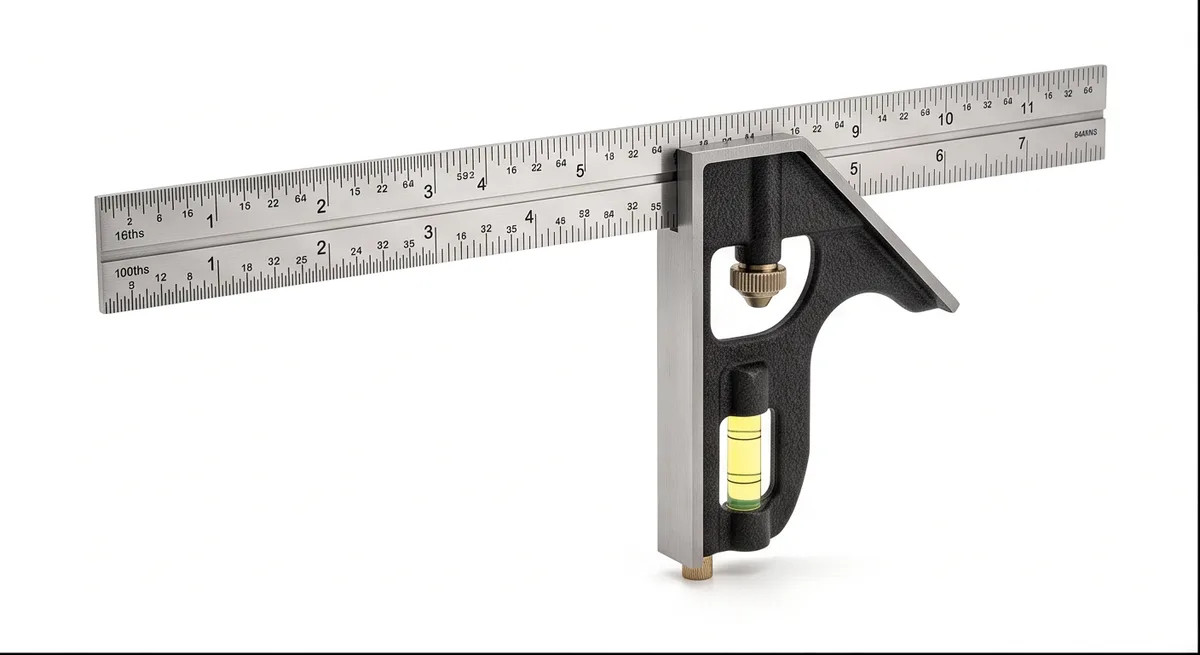
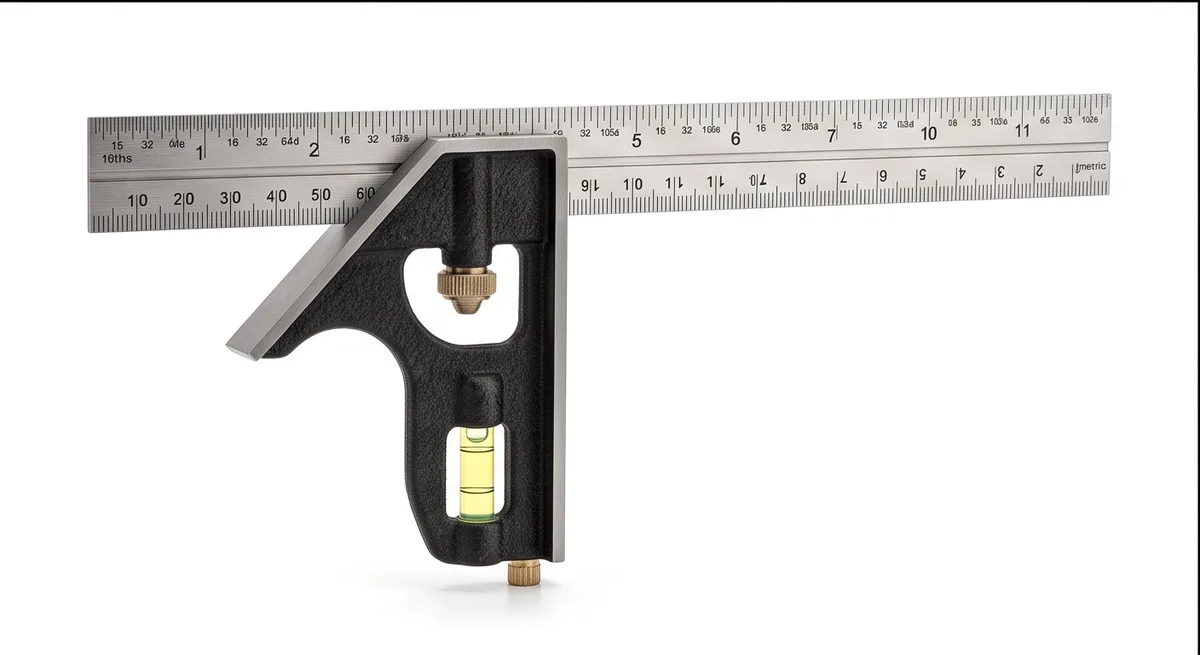
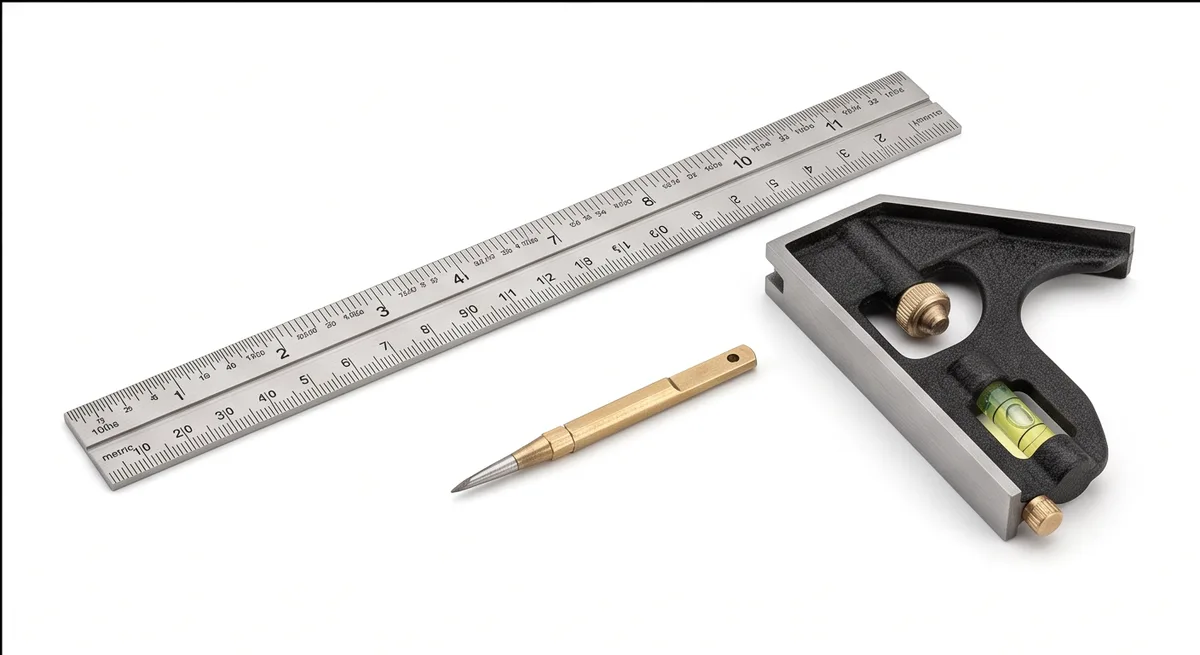
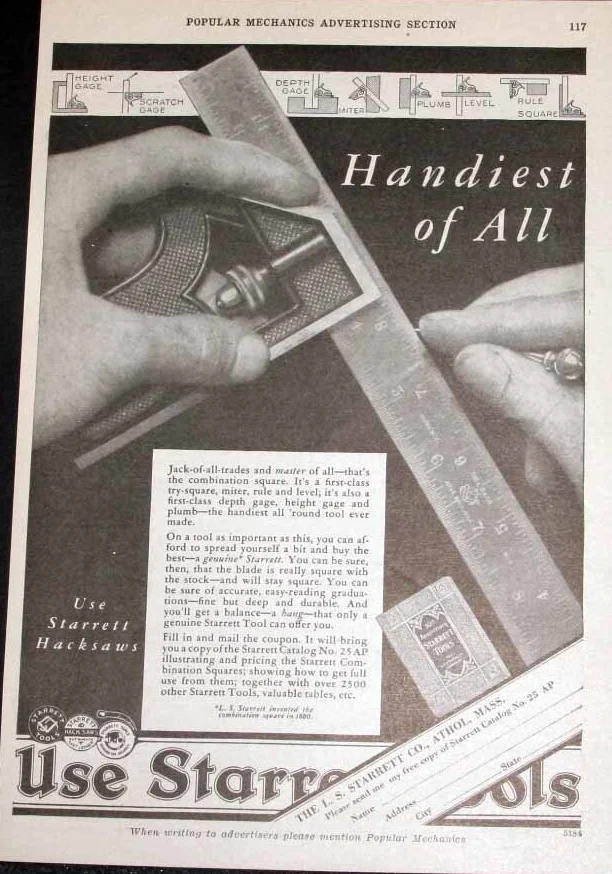
The Starrett combination square emerged from a single inventor's determination to solve a manufacturing problem that his contemporaries believed unsolvable. Laroy S. Starrett's insight was deceptively simple: a sliding blade mounted in an adjustable head could consolidate the functions of multiple fixed tools—try square, miter square, depth gauge, height gauge, level, and straightedge—into one instrument. The technical barrier was formidable. Grinding a perfectly straight steel blade without warping it through heat damage seemed impossible to the master toolmaker who examined Starrett's prototype. Yet Starrett persisted, developed the necessary grinding technique, and by the early 1880s had transformed his workshop innovation into a commercial product that the trade demanded faster than he could supply it.
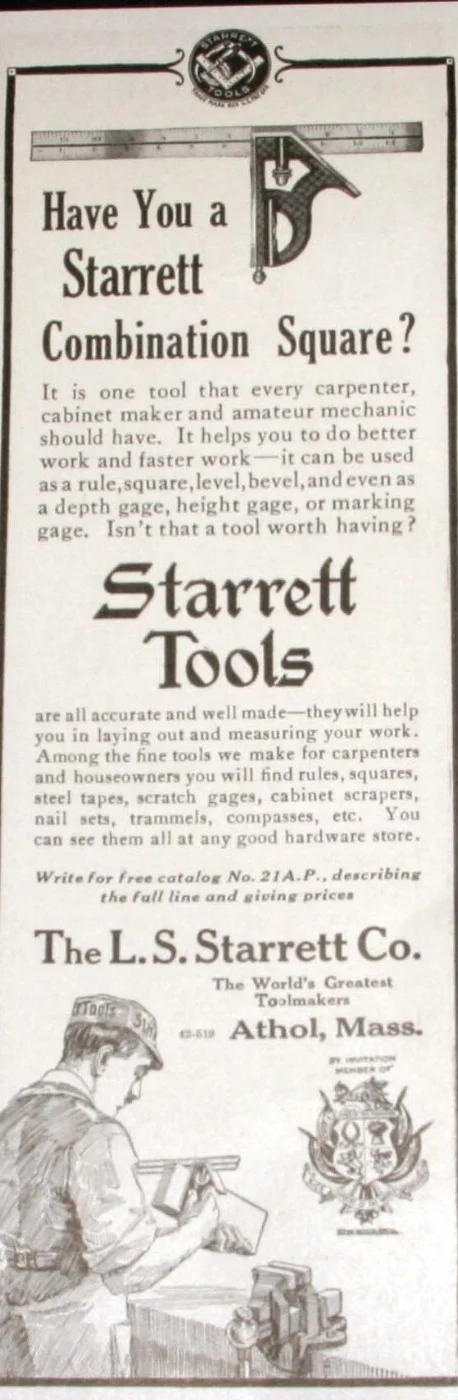
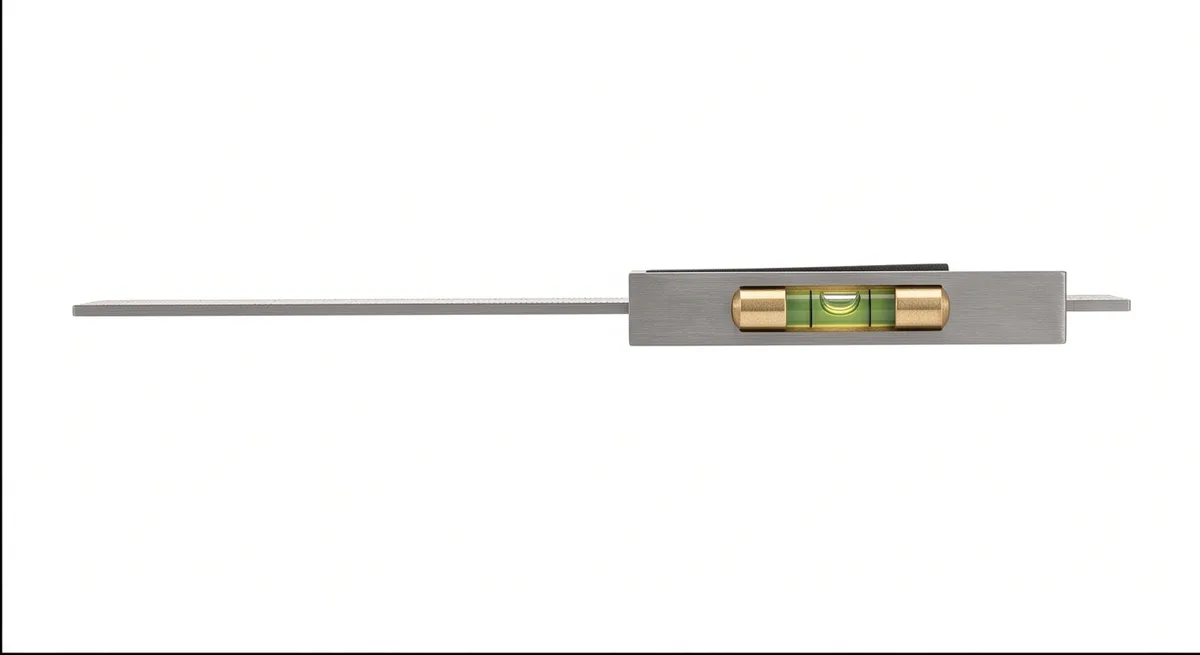
The tool's construction reflects this engineering heritage. All combination heads, regardless of size, are built with three planes: a vertical squaring surface, a shorter base containing the blade seat, and a 45-degree arm. This design allows for minor adjustment if the blade ever drifts out of square—a raised seat can be filed to restore accuracy. The blade itself is photo-engraved, hardened, and tempered steel, graduated for precise measurement. A 12-inch combination square achieves an advertised accuracy of 0.0015 inches over its length, with the protractor head accurate to 15 minutes of a degree. starrett.com The tool is available in four sizes, from the 4-inch head favored by fine woodworkers to larger versions for general workshop use.
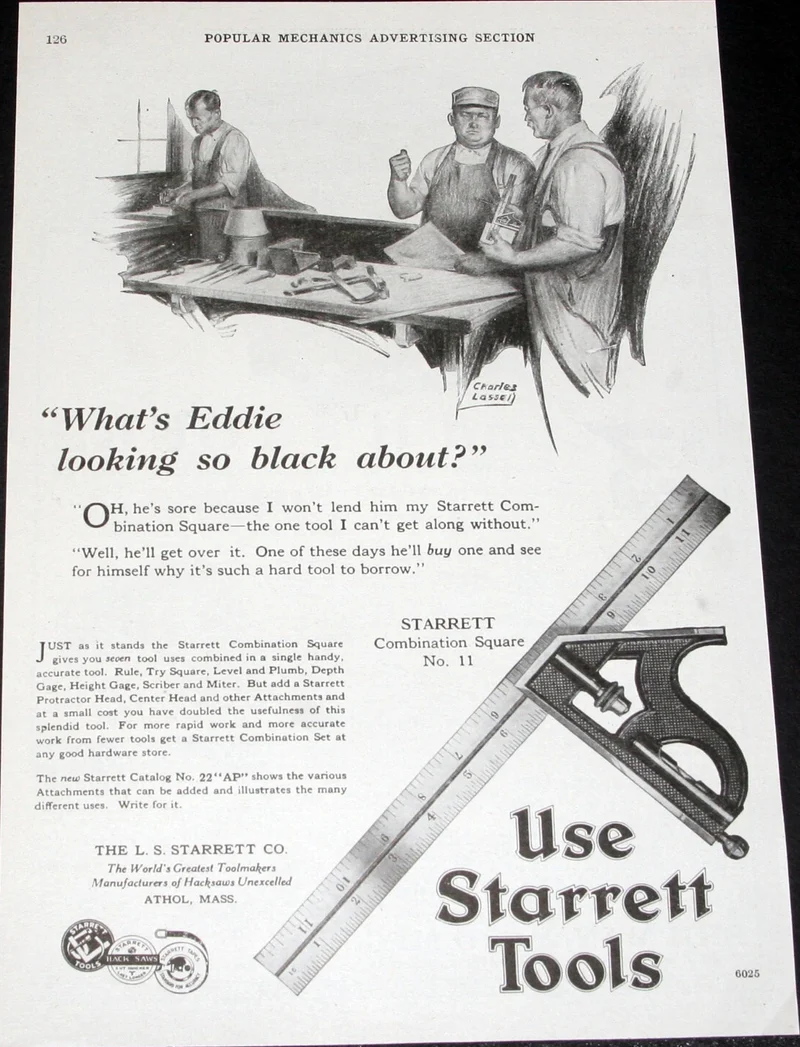
What distinguishes the Starrett combination square across 145 years of production is not stylistic reinvention but material refinement and uncompromising accuracy. The company's early decision to manufacture its own grinding machines—driven by the difficulty of sourcing adequately precise blades—established Starrett as a maker of measuring instruments rather than merely an assembler of components. This vertical integration, maintained continuously at the Athol facility, has allowed the company to control tolerances and guarantee performance. The tool has accumulated cultural weight through sheer ubiquity: it appears in the kits of machinists, the workshops of craftsmen, and the tool cribs of industrial plants worldwide. Its longevity rests not on nostalgia or heritage marketing but on the elementary fact that it performs its multiple functions with precision that cheaper alternatives cannot match, and that a well-maintained example from any decade of production remains functionally identical to a new one.
Timeline
- 1877 Designed Laroy S. Starrett begins developing the combination square.
- 1879 Designed Starrett receives a patent for the combination square.
- 1880 First made · Disputed Starrett Combination Square enters production in Athol, Massachusetts.
Milestone dates are taken from the production notes behind this entry and have not been checked separately.
From the archive
More like this
-
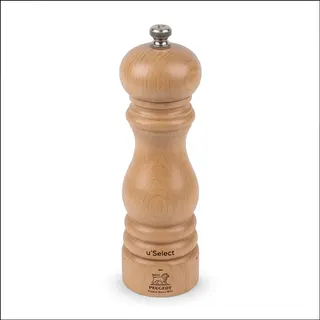 Hand Tools · since 1874 Peugeot Pepper Mill The first pepper mill, still made by hand in France since 1874. Read the entry →
 -
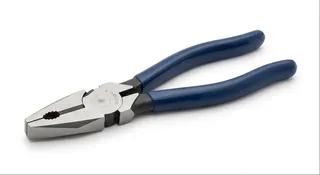 Hand Tools · since 1857 Klein Lineman's Pliers The pliers a telegraph lineman commissioned in 1857, still forged today. Read the entry →
 -
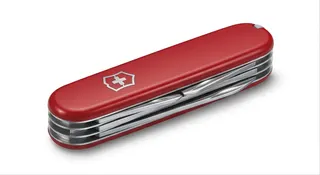 Knives & Multi-tools · since 1897 Victorinox Swiss Army Knife The Original Swiss Officer's and Sports Knife, patented 1897. Read the entry →
 -
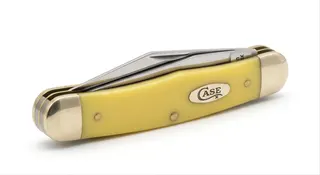 Knives & Multi-tools · since 1920 Case Trapper Knife Two-blade pocket knife designed for trappers, in continuous production since 1920. Read the entry →