Vermont's Original Bag Balm
Bag Balm
Since 1899 · 127 years to 2026 · First made in Lyndonville, Vermont
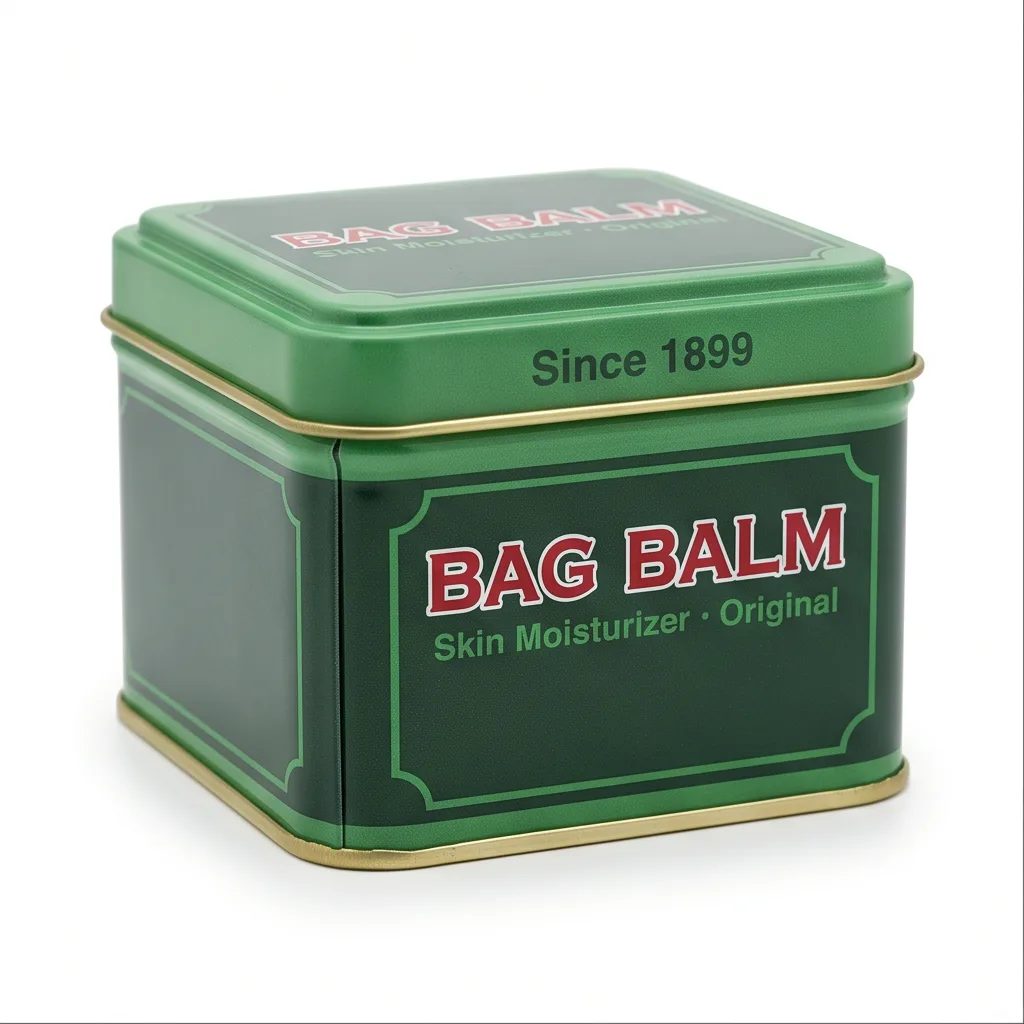
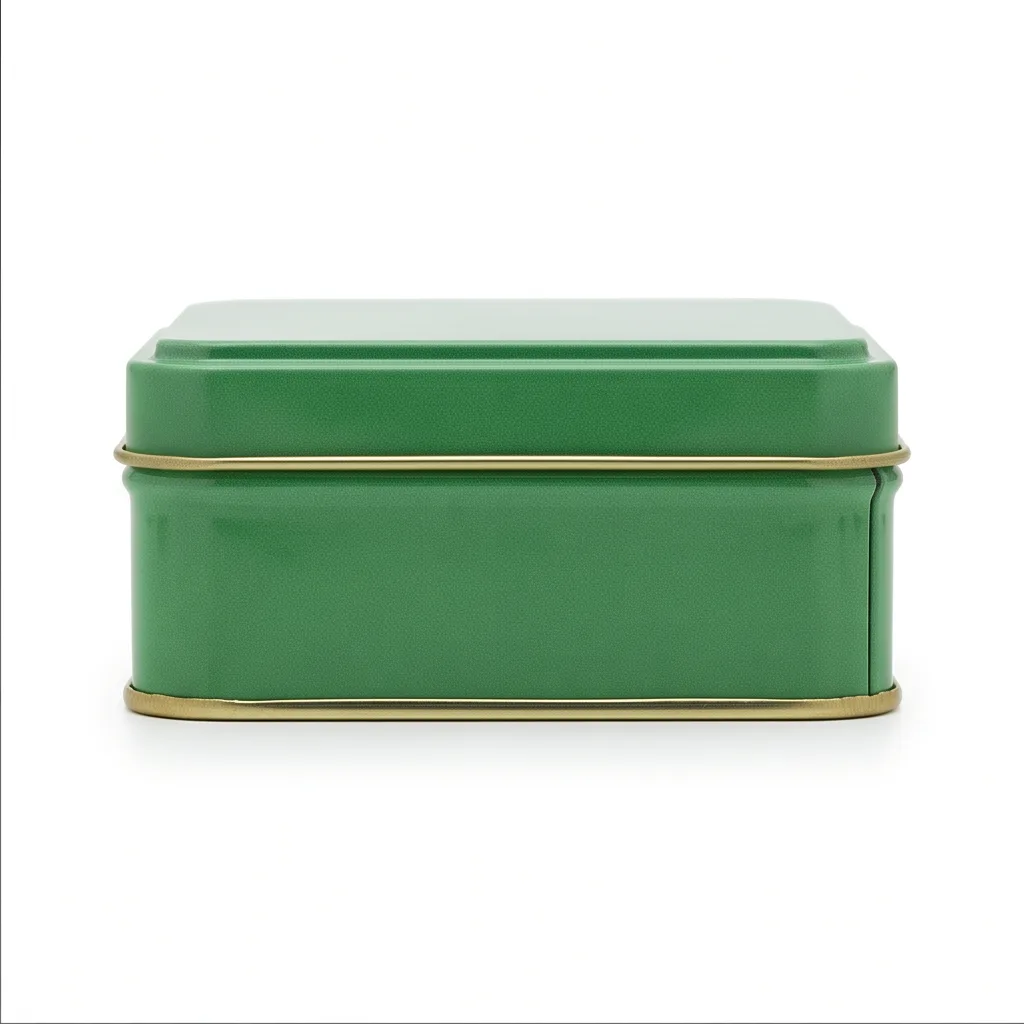
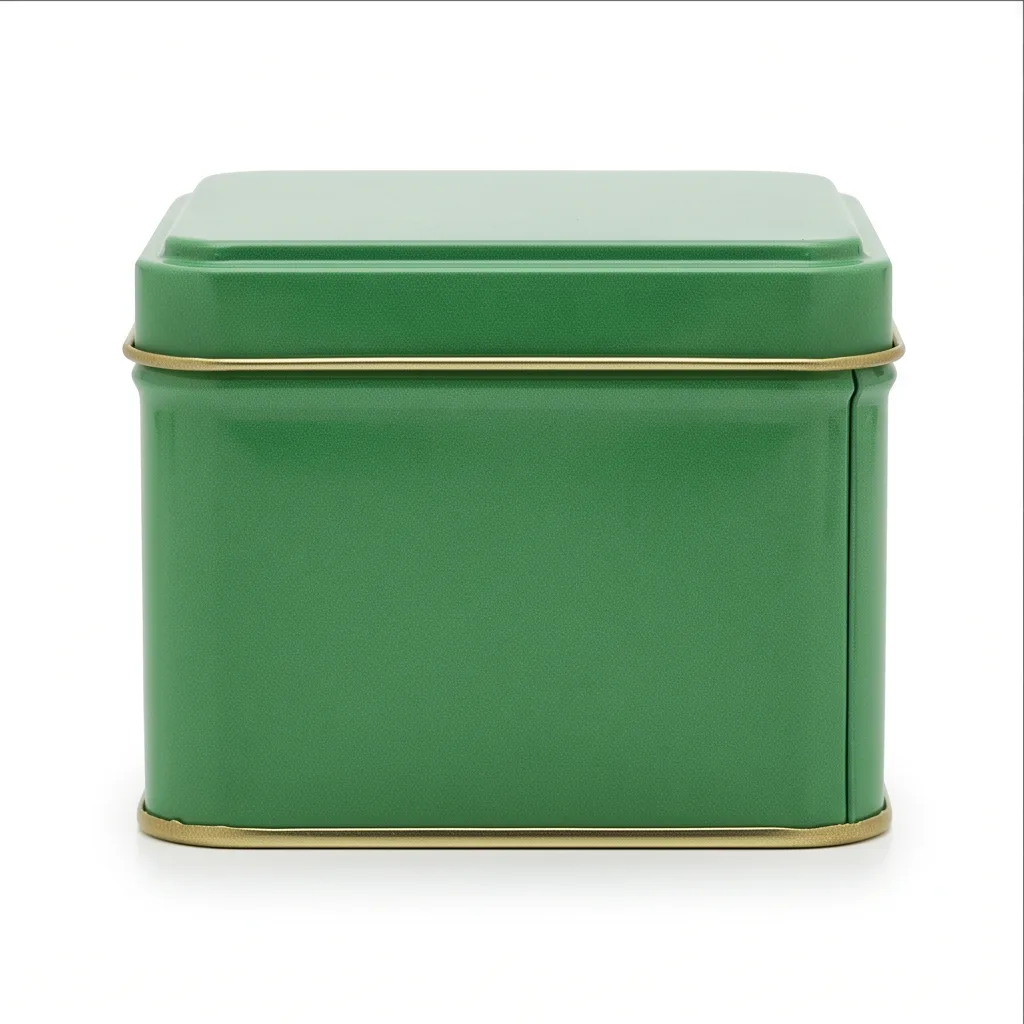
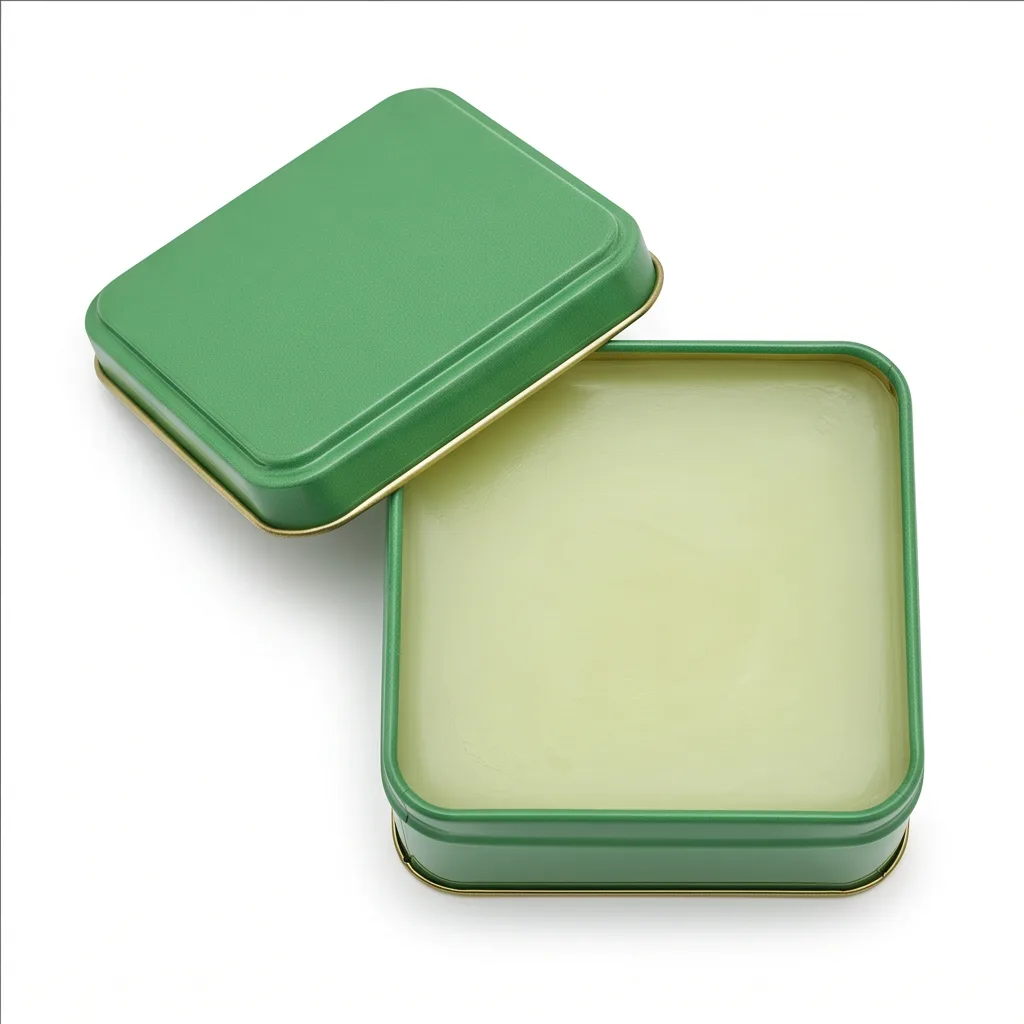
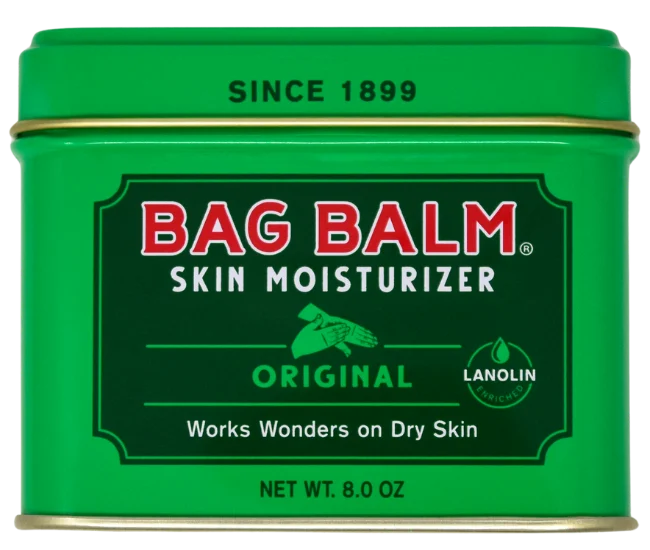
Bag Balm is a thick, yellowish salve of petroleum jelly and lanolin, with a small dose of antiseptic, sold in a square green tin. The tin is the thing people remember: a low box with a lift-off lid, for most of its history decorated with a cow's head and red clover, Vermont's state flower. It holds eight ounces now; earlier tins held ten. The salve has a faint medicinal smell and stays where it is put.
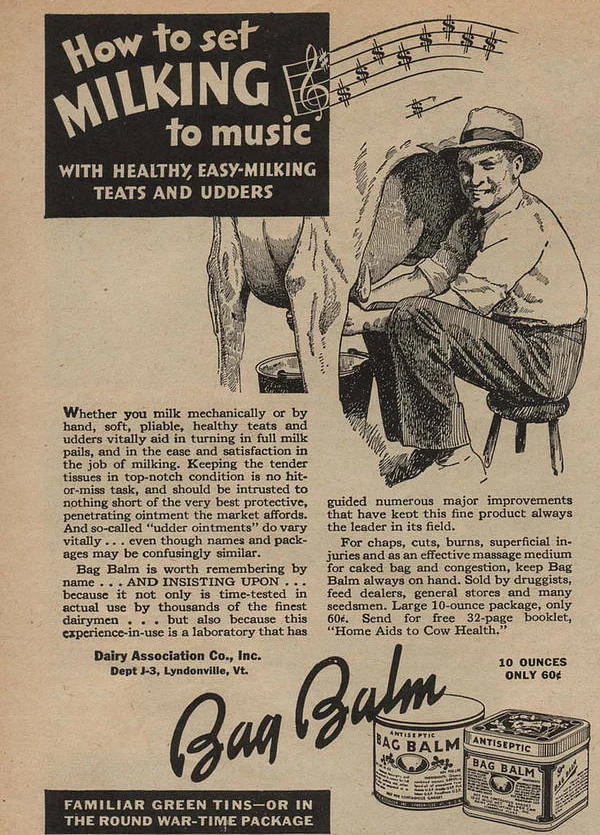
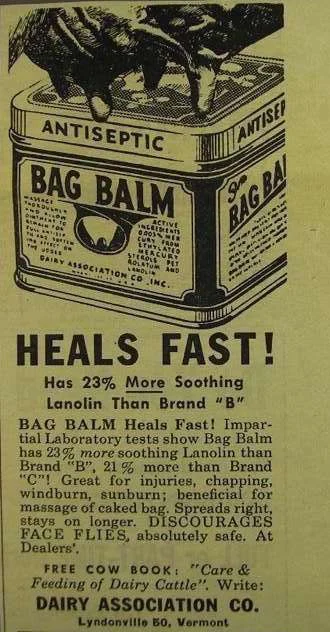
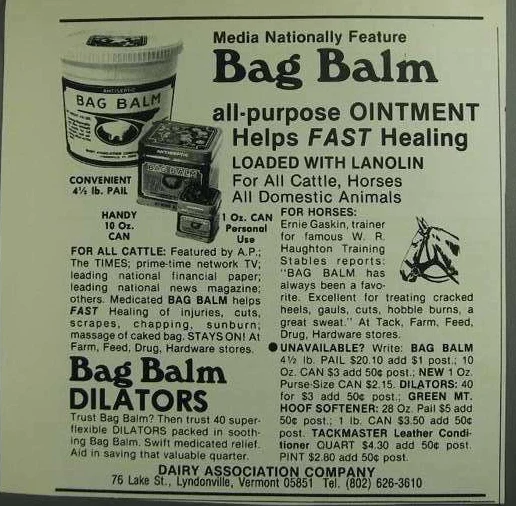
It was made for cows. A pharmacist in Wells River, Vermont, mixed it in 1899 to soothe udders cracked by milking in the cold, and John Norris of the Dairy Association Co. in Lyndonville bought the rights to sell it. Advertisements of the 1940s and 1960s address the dairyman, promising healthy teats and easy milking, and the company sold it through feed dealers, druggists and general stores along with cattle tonics and hoof softeners.
People began using it on themselves. The story the company tells is that farmers' wives noticed how soft their husbands' hands had become. Admiral Byrd's expedition took it to treat frostbitten cows; Allied soldiers used it against rust; after the attacks of 2001 it was rubbed into the paws of search dogs at the World Trade Center. Charles Kuralt's CBS report of 1983 counted some 400,000 units shipped a year, and in recent years it has found a new audience on social media.
The formula has been adjusted, the maker says, for the last time in 1988, and the mercury antiseptic it once contained has gone. The Norris family sold the business in 2014, after 115 years, to owners who promised to leave the recipe alone, and the livestock products have since been dropped. The salve is still mixed and poured into tins in Lyndonville, at a small factory where, in 2024, staff were still placing the lids by hand.
Timeline
- 1899 First made · Verified Bag Balm enters production in Lyndonville, Vermont.
- 1943 Production With tin short in wartime, Bag Balm is also sold in a round war-time package alongside the familiar green tin.
- 1988 Designed The last change to the formula, according to the maker; mercury, once an ingredient, is no longer listed.
- 2014 Ownership The Norris family sells the business to investors as Vermont's Original LLC, who promise not to change the formula.
Milestones as we found them, not as we've checked them.
From the archive
More like this
-
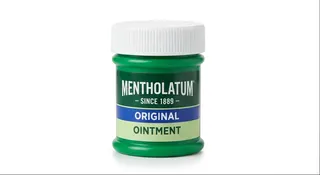 Balms & Ointments · since 1894 Mentholatum Ointment A Kansas kitchen experiment of 1894, rubbed on chests for colds ever since.
-
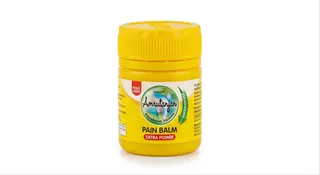 Balms & Ointments · since 1893 Amrutanjan Pain Balm A journalist's yellow balm for headaches, made since 1893 and still rubbed on Indian foreheads.
-
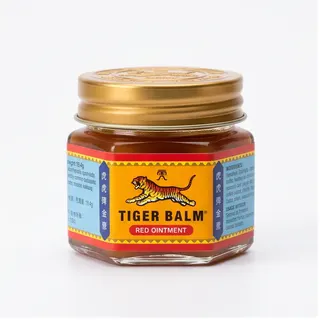 Balms & Ointments · since 1918 Tiger Balm A Rangoon herbalist's ointment, renamed for the elder of his two sons, and still sold in a small hexagonal jar.
-
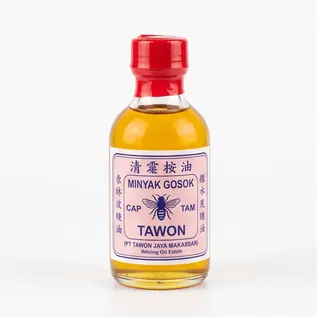 Balms & Ointments · since 1925 Minyak Tawon A Makassar rubbing oil under the bee, made by one family since the 1920s.