Health & Grooming · Remedies · Tonics
Hamdard
Rooh Afza
Since 1907 · 119 years to 2026 · First made in Delhi, India
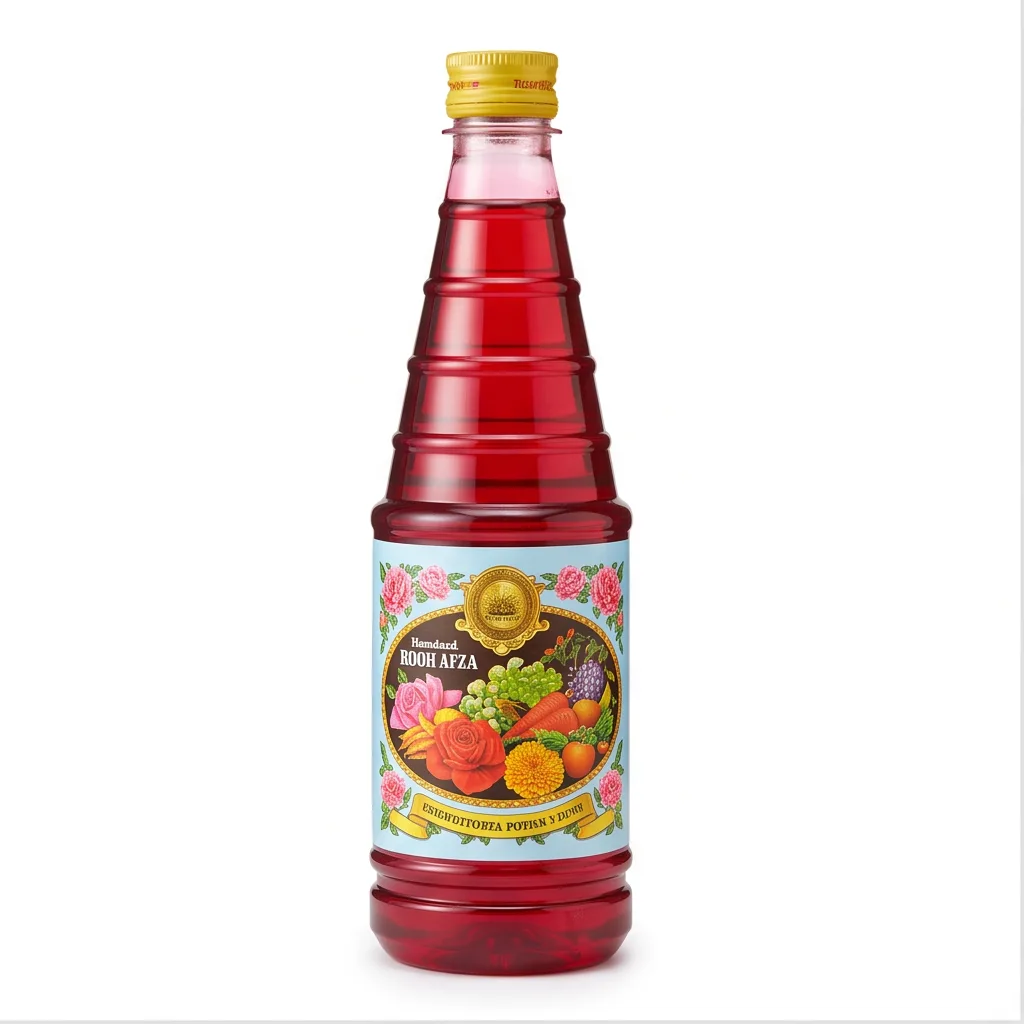
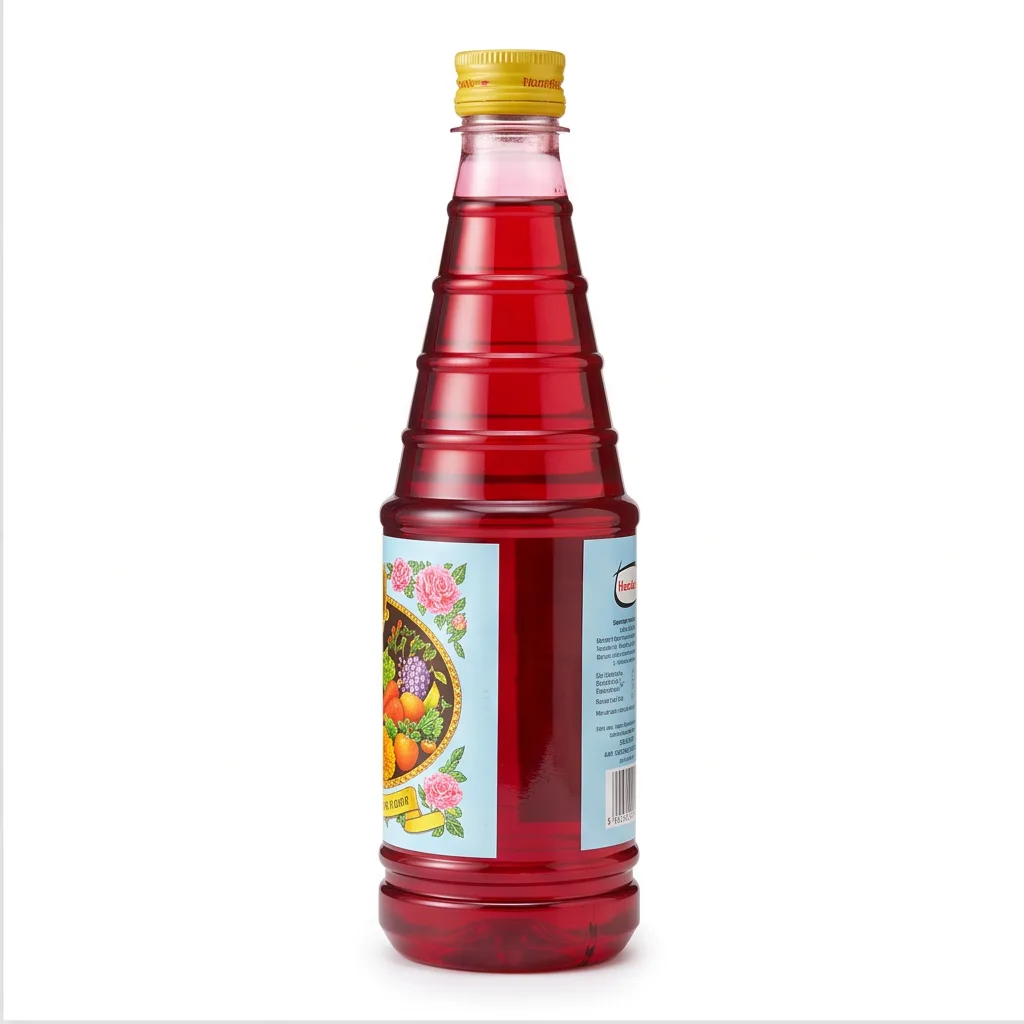
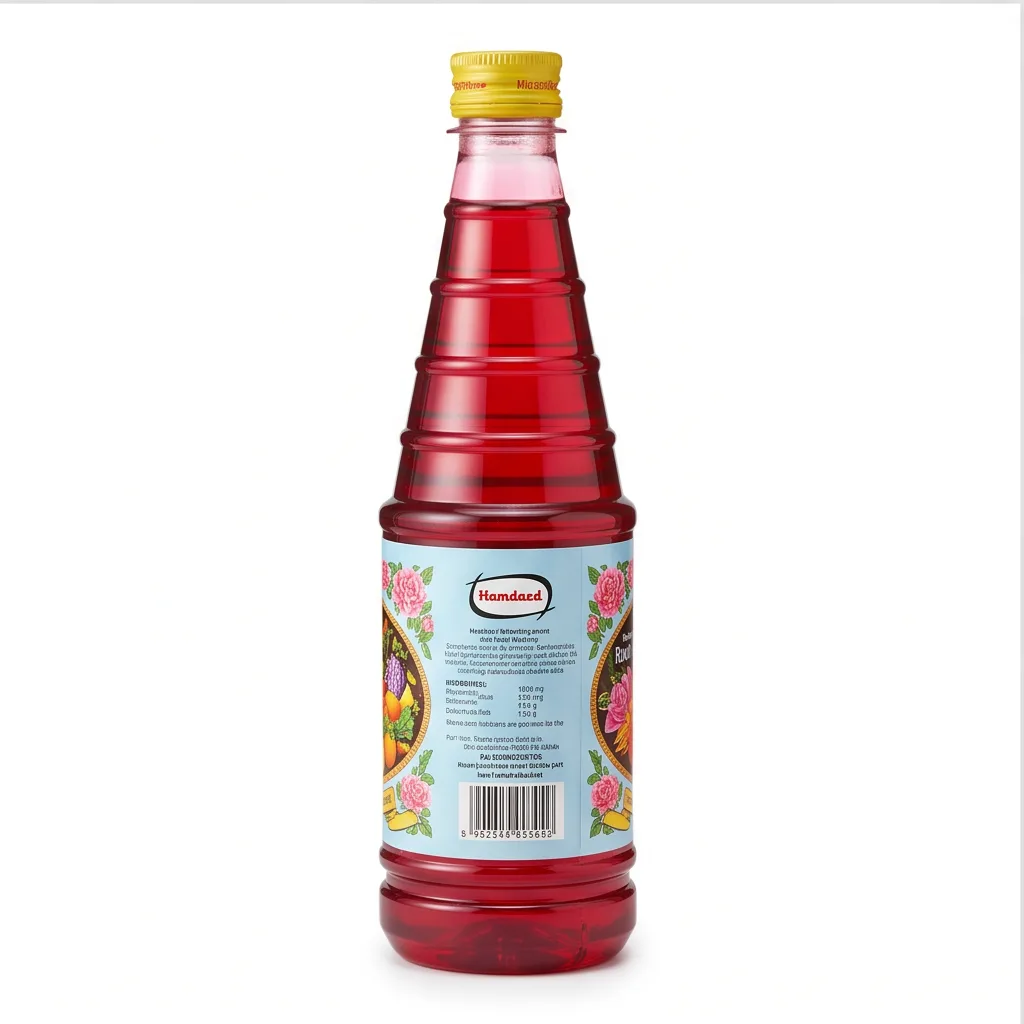
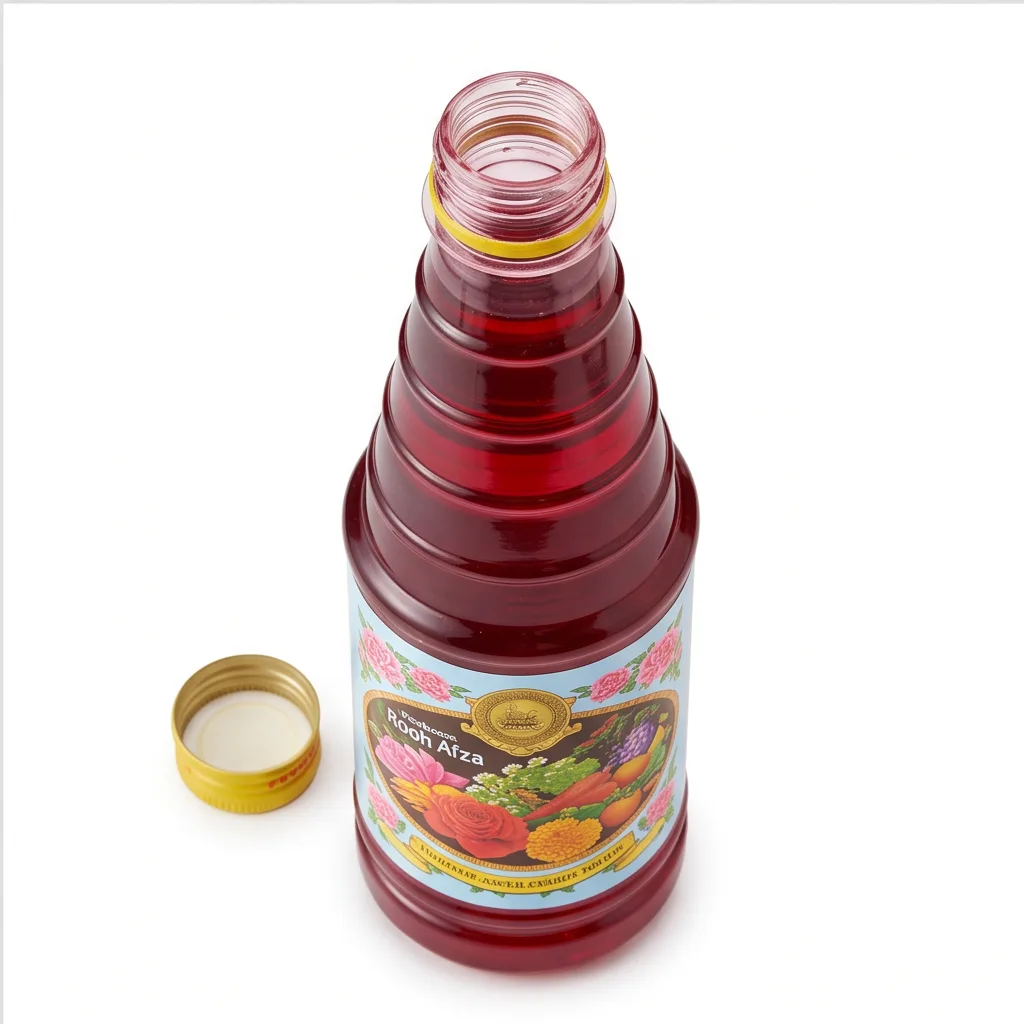
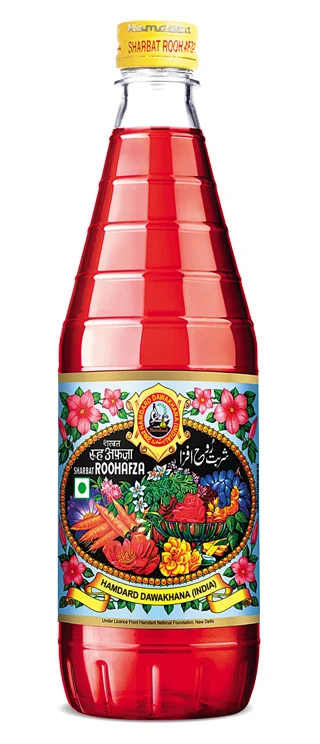
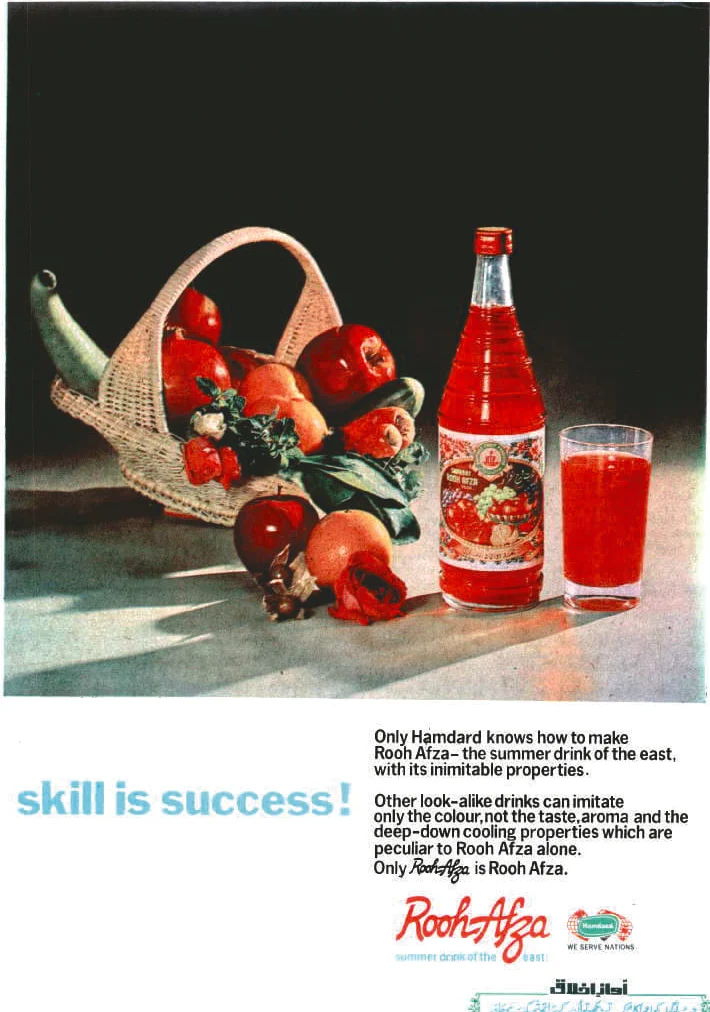
Rooh Afza is a concentrated syrup the colour of a rose, sold in a tall bottle ribbed with horizontal rings and wrapped in a painted label of flowers, fruit and vegetables. Spoonfuls are stirred into cold water or milk to make a sharbat; it is poured over falooda and kulfi, and across India, Pakistan and Bangladesh it is a fixture of iftar, the meal that breaks the Ramadan fast. Its maker describes a blend of herbal ingredients; Wikipedia lists rose, kewra, vetiver, citrus and several fruits and vegetables among the original formulation.
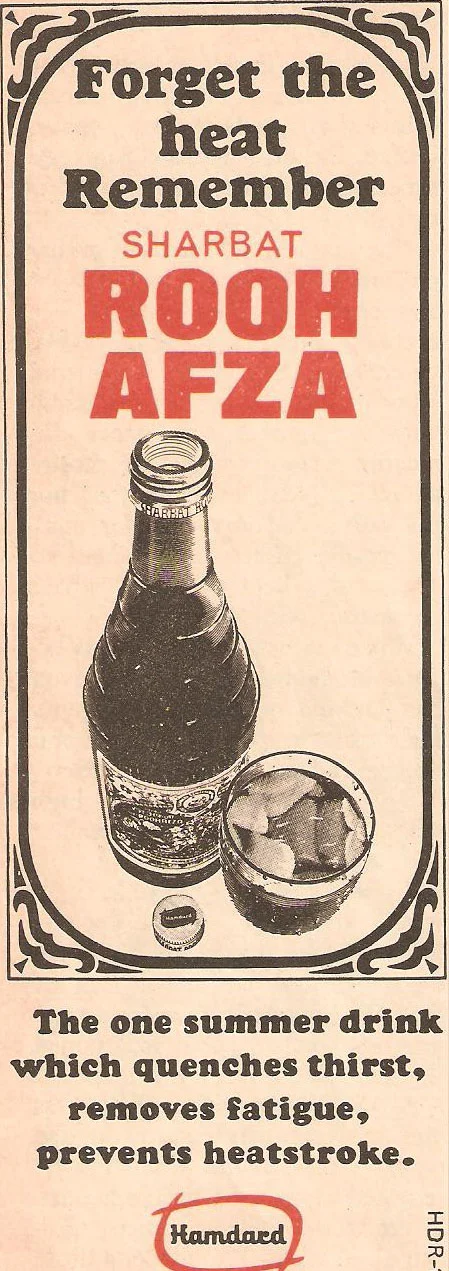
It was made by a Unani physician, Hakim Hafiz Abdul Majeed, who in 1906 opened a dispensary called Hamdard, "companion in pain", in the lanes of Old Delhi. Hamdard India dates the syrup to the following year, 1907, as do the Hindi, Bengali and Urdu Wikipedias; the Hindi places its launch in Lal Kuan. It was meant to counter the loo, the scorching summer wind of the northern plains, and its name, the soul's refresher, is said to come from a character in Pandit Daya Shankar Nasim's poem Gulzar-e-Nasim. In 1910 the artist Mirza Noor Ahmad designed the coloured labels, printed in Bombay because no Delhi press could do the work.
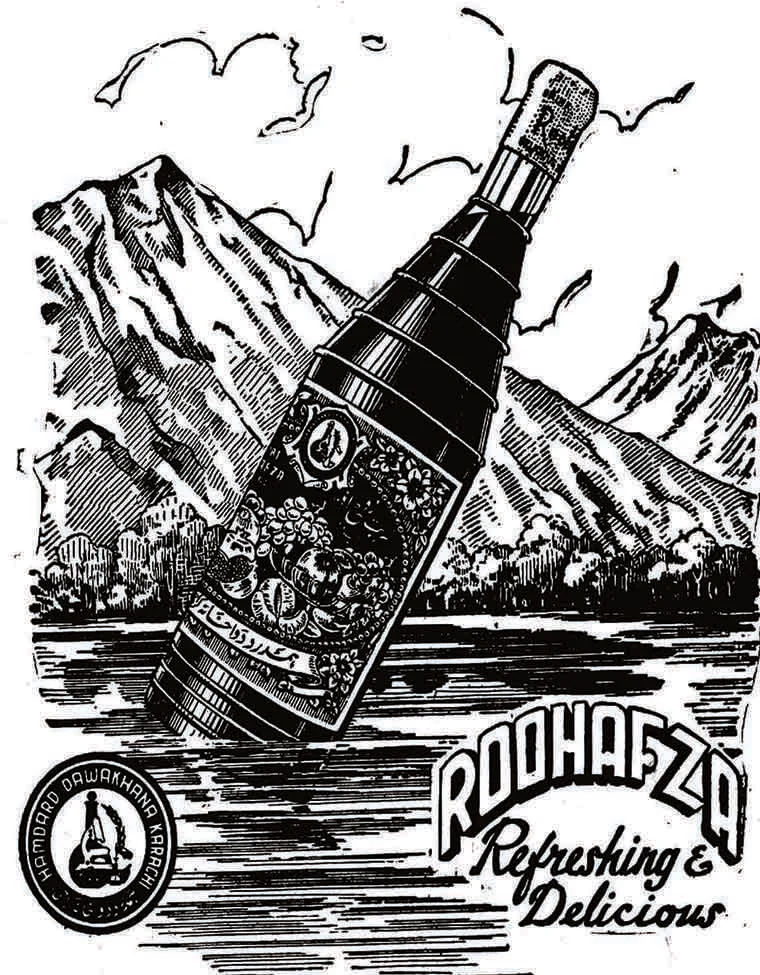
Partition divided the family and the drink. The elder son, Hakim Abdul Hameed, stayed in Delhi; the younger, Hakim Mohammed Said, went to Karachi in January 1948 and began Hamdard again in two rented rooms. A branch in East Pakistan later became Hamdard Bangladesh. All three make Rooh Afza to this day, and one writer quoted in 2019 found the Pakistani syrup tasted exactly the same as the Indian.
Bottles have moved from glass to plastic, and in 2019 the Indian syrup vanished from shops for some months before Hamdard India restored supply. Its 750 ml bottle is still sold at a list price of 170 rupees, and imported bottles are sold in Britain, more than a century after the first batch was stirred in Old Delhi.
Timeline
- 1907 First made · Disputed Rooh Afza enters production in Delhi, India.
- 1907 Rooh Afza is developed at Hamdard's dispensary in Old Delhi, a year after the business was founded.
- 1910 Designed The artist Mirza Noor Ahmad designs coloured labels for the bottle, printed in Bombay.
- 1948 Production After Partition, Hakim Mohammed Said starts Hamdard Pakistan in Karachi; Rooh Afza is made in both countries, and later in Bangladesh.
- 2019 Production After months of shortage in Indian shops, Hamdard India says supply has been restored.
Milestones as we found them, not as we've checked them.
From the archive
More like this
-
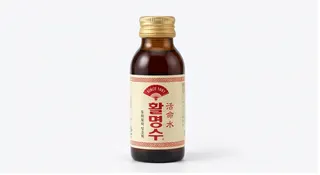 Tonics · since 1897 Hwalmyungsu A court officer's stomach remedy, sold in the same small brown bottle since 1897. Read the entry →
 -
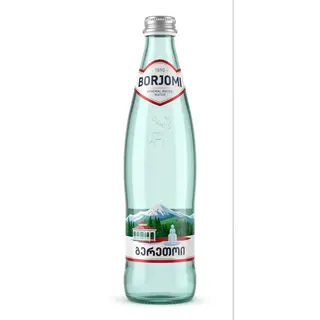 Tonics · since 1890 Borjomi A warm, salty water from a Georgian gorge, bottled under one name since 1890. Read the entry →
 -
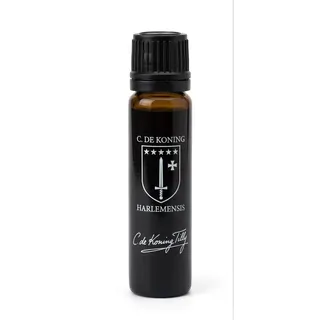 Tonics · since 1696 Oprechte Haarlemmerolie A Haarlem schoolmaster's drops of sulphur and terebinth, sold by his successors since 1696. Read the entry →
 -
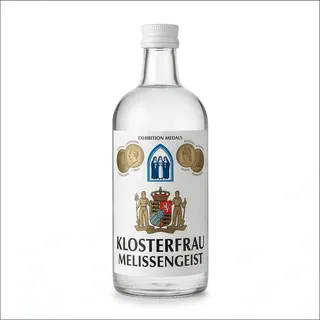 Tonics · since 1827 Klosterfrau Melissengeist A nun's herbal spirit from beside Cologne cathedral, sold under her name since 1827. Read the entry →